Business Concepts
Cannabis Business Social Network Guide (2026)
Cannabis business social network explained: how operators trade financing tips, benchmark margins, and navigate banking gaps. See real examples and FAQs.

A cannabis business social network gives growers, dispensary owners, and ancillary vendors a place to trade real numbers instead of guesses. Traditional banking still treats the plant-touching side of the business concepts world with caution, so operators lean on peer communities for financing tips, compliance updates, and blunt talk about margins.
Disclaimer: This article is for general information only and isn’t financial, investment or tax advice. Rates, fees and rules change; check the provider’s or regulator’s official source or talk to a qualified professional about your situation.
Quick answer
A cannabis business social network is an online community, forum, or membership platform where cannabis industry operators connect to trade licensing advice, financing leads, and financial benchmarks. Because many banks still avoid the sector, these networks often double as informal financial education hubs covering cash flow, depreciation, and margin questions that a normal small business would just ask its accountant.
Key takeaways
- A cannabis business social network connects licensed operators, cultivators, and vendors who face banking restrictions elsewhere.
- Members trade practical finance knowledge, and depreciation meaning, working capital definition, and cash flow definition come up constantly.
- Overproduction in legal cannabis markets has crushed wholesale prices in states like Oregon and California, making these networks useful for price benchmarking.
- Economies of scale definition matters here because larger, better-capitalized operators can undercut smaller growers on cost per gram.
- Financial literacy, including balance sheet definition, accounts receivable definition, and gross margin definition, separates cannabis businesses that survive from those that fold.
What Is Cannabis Business Social Network?
Cannabis sits in a stranger category of business concepts than most industries. Federal illegality still blocks normal banking, SBA loans, and most business credit cards for plant-touching companies.
That gap pushed operators toward private groups, LinkedIn-style directories built for the plant industry, and closed forums where people post real balance sheets instead of pitch-deck fantasies. A cannabis business social network fills the advisory role a bank or trade association would normally play.
Most active members are cultivators, dispensary owners, extraction labs, packaging vendors, and compliance consultants. The conversation ranges from state-by-state licensing rules to which point-of-sale system actually reconciles cash correctly.
Most networks require some form of license verification before granting full access, since federal illegality still makes some members wary of scrutiny. That vetting step also keeps the conversation useful: a licensed cultivator posting real numbers is worth more than an anonymous account fishing for leads.

Cannabis Business Social Network Explained
Depreciation meaning matters more in cannabis than in most retail categories. Grow lights, HVAC systems, and extraction equipment lose value fast under twenty-four hour cultivation cycles, and most operators still depreciate that equipment on the same MACRS schedule the IRS applies to any other industry.
Operators who ignore depreciation definition rules on their books often overstate profit to investors, then get surprised at tax time. Section 280E of the federal tax code already blocks most standard deductions for plant-touching businesses, so accurate depreciation schedules are one of the few levers left to manage taxable income legally.
This is exactly the kind of detail that spreads through a cannabis business social network faster than through a generic small business forum. Members have already made the mistakes and are usually willing to share the fix, down to which equipment class life the IRS actually accepts on audit.
Cannabis Business Social Network Examples
Examples range from broad trade groups like the National Cannabis Industry Association to niche Slack and Discord communities built around a single state's licensing cycle. Some are free, some charge dues, and the best ones vet members to keep out spam and competitor scraping.
Overproduction is a running topic in almost every one of these groups. Oregon and California both saw wholesale flower prices collapse after licensed cultivation outpaced demand, and members use the network to compare current per-pound prices before signing new grow contracts.
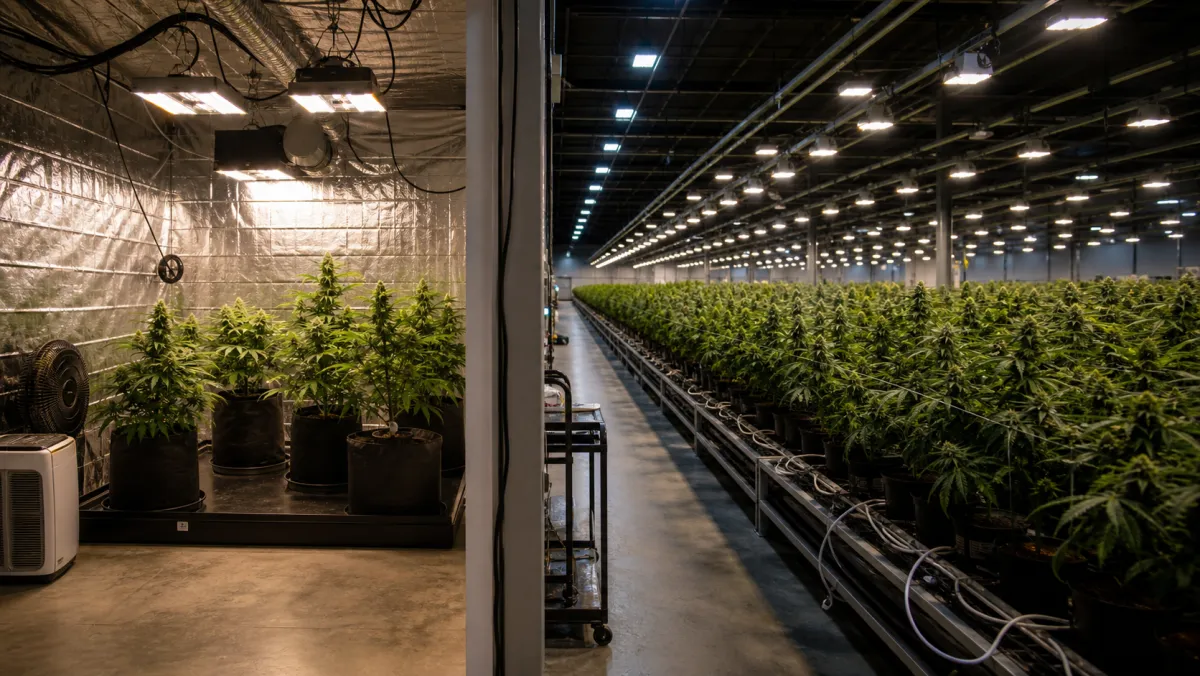
Economies of scale definition also comes up often, because a 50,000 square foot facility can push cost per gram far below what a 2,000 square foot craft grower can hit. The economies of scale concept explains why: fixed costs like HVAC, security, and compliance staff spread across a much larger harvest, so the per-unit cost keeps falling as output grows.
New delivery platforms and licensed marketplaces have added a layer of reintermediation to cannabis distribution, inserting new middlemen between growers and retailers even as everyone talks about cutting them out.
Seed-to-sale tracking software and new POS integrations are debated constantly too, and members swap honest reviews on the benefits and risks of innovation before committing to a system that locks them into a multi-year contract.
How to Apply Cannabis Business Social Network
Start by using the network to benchmark, not just to vent. Ask other operators in your state what working capital definition they actually use to survive a slow season, since cannabis businesses often can't get a normal line of credit.
Cash flow definition matters even more here than in most retail. Cannabis businesses run mostly on cash due to limited banking access, so a clear weekly cash flow definition tracked by hand often beats a fancy accounting app nobody updates.
Accounts receivable definition and accounts receivable meaning come up when wholesale growers sell to dispensaries on 30 or 60 day terms. Members trade notes on which retail buyers actually pay on time and which ones need cash on delivery.
Ask to see how peers structure a balance sheet definition and balance sheet meaning for a plant-touching business, since standard templates rarely account for inventory that literally loses weight and potency while it sits in a vault.
Gross margin definition and gross margin meaning are the numbers most cannabis operators get wrong first, usually because they forget to fully load cultivation labor and compliance testing costs into cost of goods sold. Members also swap notes on staffing, and more than one dispensary manager has posted about spotting the signs you are being set up to fail at work before accepting a general manager role with no real budget or authority.
Mandatory lab testing for potency, pesticides, and mold adds a cost line most retail businesses never see, and skipping it in the cost of goods sold calculation is the single most common gross margin mistake new operators make. Network members who have already failed a batch or two are usually the fastest way to learn which labs are reliable and which testing costs to budget for upfront.
In an industry banks still won't touch, the group chat is the credit committee.
Cannabis Business Social Network: FAQ
What do balance sheet examples look like for a cannabis business?
Balance sheet examples for cannabis operators usually list cultivation equipment, inventory at cost, and cash on hand as major assets, with licensing fees and 280E tax liabilities as notable line items most other industries don't carry.
What is accounts receivable?
Accounts receivable is money customers owe a business for goods or services already delivered, and in cannabis it typically means unpaid wholesale invoices from dispensaries buying flower or products on credit terms.
What is working capital?
Working capital is the cash and short-term assets a business has available to cover day-to-day expenses, calculated as current assets minus current liabilities, and it's especially tight in cannabis due to limited bank credit.
What do profit and loss statement examples show?
Profit and loss statement examples show revenue minus cost of goods sold and operating expenses over a period, and cannabis versions often separate out 280E-disallowed deductions to show true after-tax profitability.
What is gross margin?
Gross margin is revenue minus cost of goods sold, divided by revenue, and it tells a cannabis operator how much of every sale is left after covering cultivation, extraction, or product costs before overhead.