Software
Best Marketing Automation Software (2026)
We tested 7 marketing automation platforms on pricing and automation depth to find the best marketing automation software for your team in 2026.

The best marketing automation software turns repetitive email, SMS, and lead-scoring work into workflows that run themselves, so your team spends less time on manual sends and more time on strategy. We tested seven platforms on pricing, automation depth, and ease of use to find out which ones actually deliver.
Picking the right platform matters more than most teams realize, because switching tools later means rebuilding workflows, re-importing contacts, and retraining your team from scratch. Our software buying guides break down pricing and features across categories so you can compare options before committing to one.
Key takeaways
- ActiveCampaign starts at $15/month and includes visual automation builders that most competitors reserve for higher tiers.
- HubSpot's free tools work well for very small teams, but costs climb quickly once you need Professional-level automation.
- Klaviyo charges by contact count, not seats, making it predictable for ecommerce teams with growing lists.
- Mailchimp remains the easiest platform to learn, though its automation logic is simpler than ActiveCampaign's or Klaviyo's.
- Brevo and Mautic are the two most budget-friendly options, with Mautic offering a free self-hosted version.
What Is Marketing Automation Software?
Marketing automation software triggers emails, texts, and other actions based on what a contact does, like opening an email, visiting a pricing page, or abandoning a cart. Instead of a marketer manually sending each message, the software watches for the trigger and sends the right message automatically.
Most platforms combine three core pieces: a contact database, a visual workflow builder, and reporting that shows which sequences drive opens, clicks, and revenue. The workflow builder is usually what separates a basic email tool from true marketing automation software.
Because these platforms send commercial email and text messages at scale, compliance matters. The CAN-SPAM Act sets the legal baseline for commercial email in the US, and most platforms include built-in unsubscribe handling to help you stay compliant.
How We Evaluated These Tools
We compared each platform on four factors: starting price at a realistic contact volume, the depth of its automation builder, how steep the learning curve is for a small team, and whether support and documentation actually help when something breaks. We prioritized current, verified pricing over marketing claims, since published rates change often.
Best Marketing Automation Software for 2026
The table below summarizes what each platform does best and what it costs to get started. Full breakdowns for each tool follow underneath.

| Tool | Best for | Starting price | Standout feature |
|---|---|---|---|
| ActiveCampaign | Deep automation on a budget | $15/month | Visual automation builder at every tier |
| HubSpot | Teams that want CRM and marketing together | Free tools, paid plans from ~$15/month/seat | Native CRM integration |
| Klaviyo | Ecommerce email and SMS | Free up to 250 profiles | Shopify and ecommerce data sync |
| Mailchimp | Beginners and simple campaigns | Free up to 500 sends/month | Easiest interface to learn |
| Brevo | Budget-conscious growing lists | Free, unlimited contacts | Send-volume pricing, not contact-based |
| Mautic | Teams that want full control | Free (self-hosted) | Open-source, no vendor lock-in |
| GetResponse | Combining email with webinars or funnels | Free plan available | Built-in webinar and funnel tools |
ActiveCampaign
ActiveCampaign's Starter plan begins at $15/month for 1,000 contacts, with Plus at $49/month, Professional at $79/month, and Enterprise at $145/month as you add contacts and features. Every tier includes the same visual automation builder, which is unusual since most competitors lock advanced automation behind their top plans. There's no permanent free plan, but a 14-day trial lets you test the builder before paying.
HubSpot Marketing Hub
HubSpot offers genuinely useful free tools for small lists, then scales through Starter, Professional, and Enterprise tiers priced per seat, with Professional-level automation costing significantly more than ActiveCampaign or Klaviyo at similar contact volumes. The tradeoff is a native CRM, so sales and marketing data live in the same record instead of syncing between two systems.
Klaviyo
Klaviyo's free plan covers up to 250 profiles and 500 email sends a month, then its Email plan starts around $20/month at 500 contacts and scales with your list, reaching roughly $150/month at 10,000 contacts and $400/month at 25,000. Pricing is based on contacts, not seats, which makes costs predictable as your team grows even if your list doesn't.
Mailchimp
Mailchimp's free plan allows up to 500 contacts and 500 sends a month, followed by Essentials at $13/month, Standard at $20/month, and Premium at $350/month for advanced segmentation and multivariate testing. It remains the most beginner-friendly interface on this list, though its automation logic is less flexible than ActiveCampaign's or Klaviyo's once workflows get complex.
Brevo
Brevo's free plan includes unlimited contacts and 300 emails a day, and paid plans start around $9/month, priced by email volume rather than contact count. That makes it a strong option for teams with a large contact list but modest sending frequency, where contact-based pricing elsewhere would cost far more.
Mautic
Mautic is open-source and free to self-host, which appeals to technical teams that want full control over their data and no per-contact fees. The tradeoff is setup time: you'll need server access and some technical comfort to get it running, and paid cloud-hosted plans are available if you'd rather skip that step.
GetResponse
GetResponse combines email automation with built-in webinar hosting and conversion funnels, which is useful if you're currently paying for those as separate tools. It offers a free plan for very small lists, with paid tiers adding automation depth and removing sending limits as your list grows.
The platform that wins isn't the one with the most features. It's the one your team will actually keep using six months from now.
Marketing Automation Software Examples
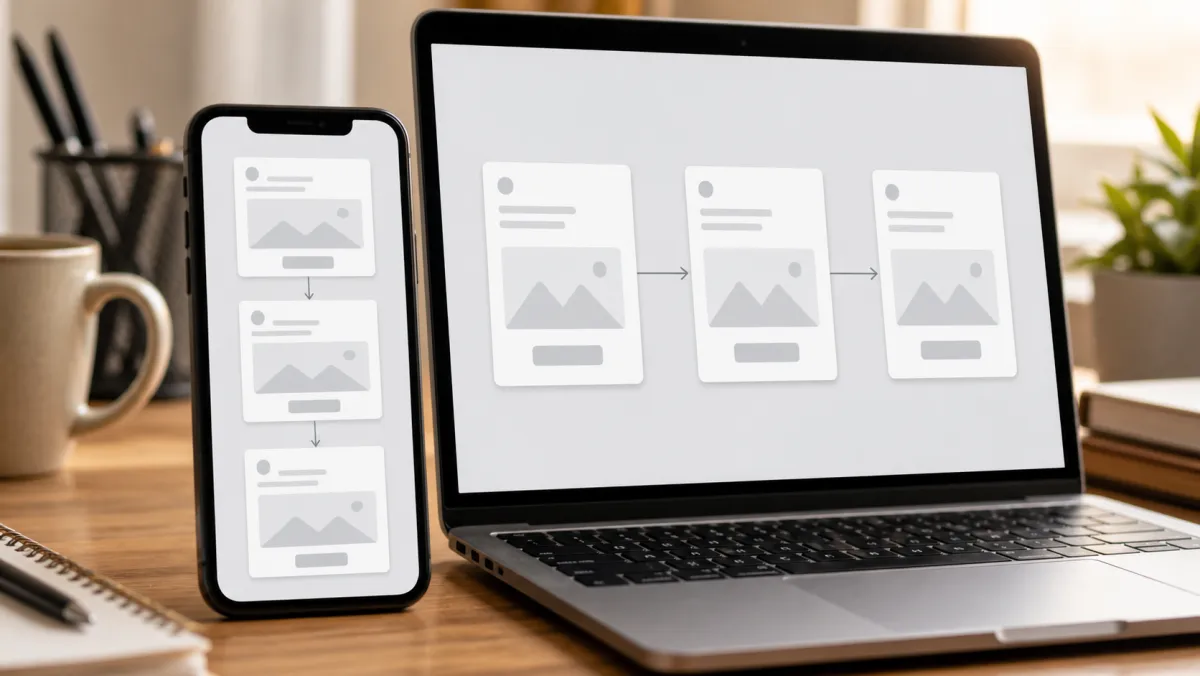
A typical welcome sequence triggers the moment someone joins your list: an immediate welcome email, a follow-up two days later introducing your best content, and a third email a week in with a soft offer. None of it requires a human to press send.
Ecommerce teams often build cart-abandonment flows that message a shopper an hour after they leave items in their cart, then again the next day with a reminder, and sometimes a small discount on the third touch if the first two didn't convert. Klaviyo and ActiveCampaign both handle this natively.
How to Choose the Right Platform
Start with your contact list size and sending frequency, since pricing on most platforms scales with one or both. A list of 2,000 contacts sent to twice a month costs very differently on Klaviyo than on Brevo, so run your actual numbers before comparing feature lists.
Next, consider whether you need a CRM built in or already have one. HubSpot makes sense if you want sales and marketing data unified, but if your team already uses a separate CRM, a lighter tool like ActiveCampaign or Mailchimp avoids paying for a CRM you won't use.
Think about your team's technical comfort too. Mautic rewards technical teams willing to self-host, while Mailchimp and GetResponse are built for marketers who want to build a workflow without touching code.
Finally, marketing automation rarely runs in isolation. If your team also needs help managing projects, our guide to productivity tools for teams covers the planning side most marketing teams end up needing too.
Securing customer data matters just as much once your automation platform is storing contact info and purchase history. Our guide to security software for small business walks through the options built for that job.
Beyond Marketing Automation: Other Software to Automate Your Business
Marketing automation is usually just one piece of a broader push to cut manual work across the business. If your HR team is still tracking onboarding and time-off requests in spreadsheets, our breakdown of HR software covers tools built specifically for that.
Teams running multiple campaigns or product launches at once often need a way to visualize timelines and dependencies alongside their automated sends. Gantt chart software handles that scheduling layer without forcing your marketing tool to do a job it wasn't built for.
On the finance side, the revenue your automation generates still needs to be tracked and reconciled. Our guide to free accounting software lists options that won't cost you anything while your marketing spend is still ramping up.
If your business sells physical products alongside the campaigns you're automating, keeping stock levels in sync with demand matters just as much as the emails themselves. The search terms here vary, but they mostly point to the same need. Some owners look for inventory management software small business teams can set up in an afternoon, while others search small business inventory management software or small business inventory software expecting the same shortlist of tools either way.
The wording shifts depending on the problem. Shops worried about shrinkage search inventory control software small business or small business inventory control software, since those tools focus on flagging discrepancies and setting reorder points rather than just listing what's in stock.
Teams that only need real-time counts usually search small business inventory tracking software or inventory tracking software small business, and vendors sometimes label the same product inventory software small business or small business software inventory in their own marketing. Our inventory management software guide compares the tools built for each of these needs.
Frequently Asked Questions
What's the best marketing automation software for a small business?
ActiveCampaign is usually the best starting point for small businesses because it includes full automation features even on its cheapest $15/month plan, unlike competitors that reserve advanced workflows for higher tiers.
Is HubSpot or ActiveCampaign better for marketing automation?
HubSpot wins if you want marketing and CRM data in one place, while ActiveCampaign wins on automation depth per dollar, especially for teams that already have a separate CRM or don't need one.
What's the cheapest marketing automation software?
Mautic is free if you're willing to self-host it, and Brevo's free plan supports unlimited contacts with 300 emails a day, making both strong choices for teams on a tight budget.
Can I use marketing automation software for free?
Yes. Mailchimp, Klaviyo, Brevo, HubSpot, and GetResponse all offer free plans, though each caps either your contact count or your monthly send volume, so free plans work best for small or early-stage lists.
How long does it take to set up marketing automation?
A basic welcome sequence can be live within a day on most platforms, but a full automation program with lead scoring and multiple workflows typically takes two to four weeks to build and test properly.