Software
Inventory Management Software Small Business (2026)
Compare inventory management software small business owners actually use in 2026, from free Zoho plans to POS-integrated tools, and pick the right fit fast.

If you are still tracking stock in a spreadsheet, you already know the pain: miscounts, double-booked orders, and a 2am scramble before a big sale. Inventory management software small business owners pick in 2026 spans a much wider price range than most people expect, from free to nearly $700 a month.
Quick answer
For most small businesses, Zoho Inventory is the best starting point: it has a genuinely usable free plan and paid tiers from $39/month. If you run a busy retail counter, Square for Retail's Plus plan (about $49/month per location) ties inventory directly to your POS. Manufacturers and makers should look at inFlow Inventory instead.
Key takeaways
- Zoho Inventory offers the best free tier; paid plans start at $39/month and scale to $299/month.
- Square for Retail suits businesses that already use Square hardware for checkout.
- inFlow Inventory and Cin7 Core fit higher order volumes but cost $129 to $349+ per month.
- Match the tool to your order volume first; features are secondary once a plan fits your budget.
- Most platforms sync with the productivity tools your team already uses, so check integrations before you commit.
What Is the Best Inventory Management Software Small Business?
There is no single winner because small business inventory management software splits by use case. A boutique with 200 SKUs needs something different than a distributor shipping 3,000 orders a month.
Zoho Inventory wins on value. It has a real free plan (one user, two locations, 50 orders a month), and the Standard tier at $39/month covers composite items and serial tracking for up to 500 orders.
Square for Retail is the pick if you already process payments through Square. The Plus plan runs about $49/month per location and folds inventory counts, purchase orders, and COGS reporting into the same dashboard as your register.
For manufacturers and workshop-based sellers, inFlow Inventory tracks raw materials through finished goods, something pure retail inventory software small business owners often do not need.
QuickBooks Commerce keeps stock and books in the same place if you already run QuickBooks Online, syncing counts as you invoice or reconcile. Cin7 Core costs more, around $349/month, but pays off for omnichannel sellers who need serious warehouse and multi-channel order routing.
The best inventory system is the one your staff will actually update every day, not the one with the longest feature list.
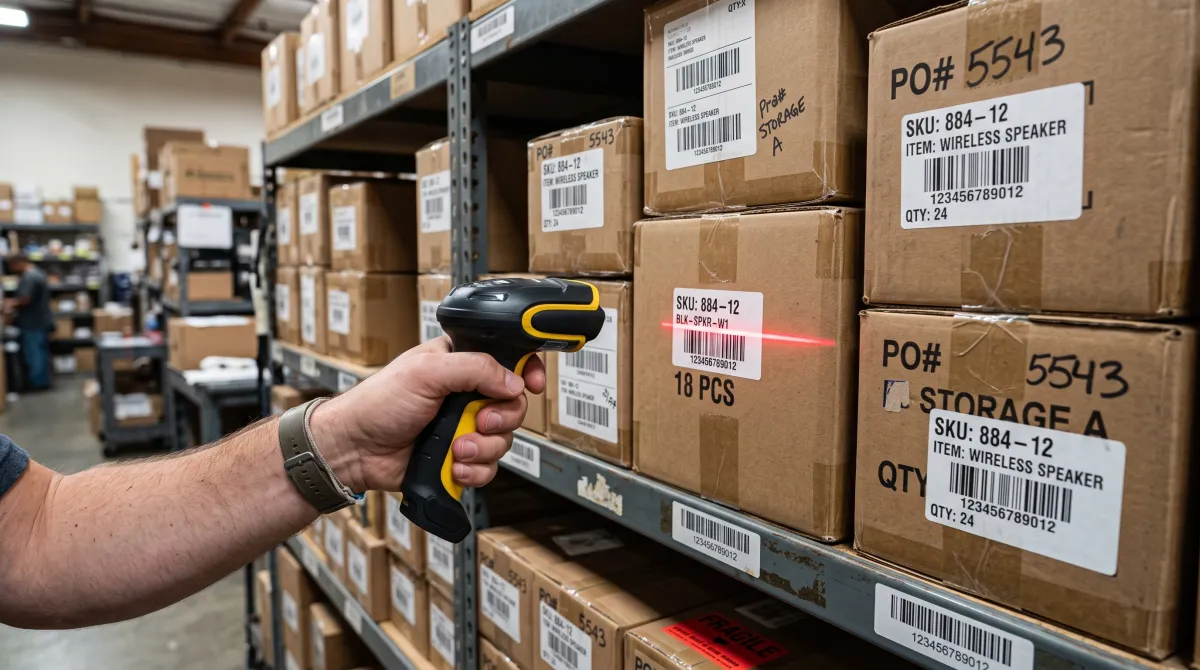
Best Inventory Management Software Small Business Compared
Here is how the main options stack up on price and fit as of 2026. Annual billing typically knocks 15 to 25 percent off the monthly rate shown below.
| Tool | Starting price | Best for | Order limit (entry tier) |
|---|---|---|---|
| Zoho Inventory | Free, then $39/mo | Overall value | 50/mo free, 500/mo Standard |
| Square for Retail | $49/mo per location | POS-integrated retail | No hard cap |
| inFlow Inventory | $129/mo | Simplicity, 2 users | 1,200/year |
| QuickBooks Commerce | Bundled with QBO plans | Accounting sync | Varies by QBO tier |
| Cin7 Core | $349/mo | Omnichannel, warehouses | High volume |
Best overall value
Zoho Inventory Free, or from $39/mo
The free plan is genuinely usable for a one-person shop with light order volume, and the Standard tier adds serial tracking without a steep price jump.
Pros
- Real free tier, not just a trial
- Multi-warehouse support from Standard up
- Native ties to Zoho's own accounting and CRM apps
Cons
- Advanced automation locked behind Professional and above
- Interface feels dated next to newer entrants
Best for POS-first retailers
Square for Retail From $49/mo per location
If checkout already runs on Square hardware, Retail Plus adds stock counts, vendor management, and reorder alerts without a second login for staff.
Pros
- One system for payments and stock
- Free plan available for very small counts
- Fast setup, minimal training
Cons
- Processing fees rose again in January 2026
- Multi-location fees add up per site
Best for simple, non-retail stock
inFlow Inventory From $129/mo
inFlow works well for wholesalers and small manufacturers who need purchase orders and barcode labels without a full ERP learning curve.
Pros
- Built-in B2B ordering portal
- Straightforward barcode and label tools
- Unlimited products on every tier
Cons
- Entry price is steep next to Zoho or Square
- Sales order caps require add-ons once you scale
Best for omnichannel and warehouses
Cin7 Core From $349/mo
Cin7 Core suits small businesses that have outgrown simple stock counts and now juggle multiple sales channels, a real warehouse, and complex purchasing.
Pros
- Over 700 integrations across sales channels
- Strong warehouse and multi-location tools
- Handles complex purchasing workflows
Cons
- Highest starting price on this list
- Overkill for a single small storefront
Sourcing Bulk Stock Without Overspending
Software only helps if you can actually restock efficiently. Many small retailers and caterers buy bulk supplies through Costco Business Center locations rather than standard warehouses, since the commercial-grade cases and case-lot pricing beat regular retail options.
There are 27 Costco Business Center locations in the US as of 2026, plus a new Winnipeg location marking Costco's first move into Canada for the format. Whether you search for costco business center locations or costco business centers locations, both point to the same official store locator, so check it before planning a supply run around one specific site.
A Costco membership business account also unlocks tax-exempt purchasing for resellers and simpler receipts for bookkeeping, which matters once your inventory software needs clean cost data to calculate margins accurately. The SBA's guide to business taxes covers resale certificates and exemption paperwork in more detail if this is new territory for you.
If there is no Costco Business Center near you, Sam's Club Business and local restaurant supply depots offer similar case-lot pricing on food, packaging, and office essentials. Compare per-unit cost against your regular supplier before switching, since membership fees only pay off with consistent bulk buying.

How to Choose Inventory Management Software Small Business
Start with order volume, not features. A tool that handles 10,000 orders a month is wasted money if you process 200.
Check integration depth next. The best small business inventory software connects to your point of sale, your accounting platform, and the rest of your small business software stack so stock data does not live in a silo.
Inventory rarely runs alone. Most owners also end up managing a task management app for restocking workflows, HR software for scheduling warehouse staff, and sometimes gantt chart software for larger purchase order timelines.
Set a cycle count schedule from day one, even a simple weekly spot check on your top-selling SKUs. Software only stays accurate if someone compares the screen to the shelf on a regular basis. Assign one person to own this check each week; shared ownership across a rotating schedule almost always slips once a busy month hits.
Staff reviews matter here too. If your team runs an annual cycle and wants respectful phrasing for feedback about a manager, our guide on nice things to say about your boss in a review has practical examples.
Financing matters as well. A secured business credit card can smooth cash flow for bulk orders while you build a stronger business credit score, and pairing your inventory system with free accounting software keeps the books honest without another paid subscription.
Before signing an annual contract, run a 30-day trial with your real product catalog. Import your actual SKUs, not the vendor's demo data, so you see true performance on your own messy edge cases.
If data security becomes a concern once you are handling more purchase orders and vendor accounts, pair your inventory stack with proper security software for small business.
Inventory Management Software Small Business: FAQ
What are the best business credit cards for buying inventory?
The best business credit cards for inventory purchases combine low or 0% intro APR periods with strong cash back on wholesale and office supply spending, since that is where most restocking costs land.
What is the best business credit card for a new inventory-heavy business?
Look for a business credit card with no annual fee and a straightforward approval process for newer businesses, since a long 0% period matters more early on than a high rewards rate you cannot yet use.
What are the best credit cards for a small business buying in bulk?
Cards offering elevated cash back or points on wholesale clubs and shipping costs work best for businesses that buy inventory in bulk, since those categories usually account for the largest recurring charges.
Which business credit card works best for regular bulk purchases?
A card with category bonuses on wholesale and office supply stores works best for regular bulk purchases, since that is where recurring inventory spend concentrates for most small retailers.
What are the top rated business credit cards for small business owners in 2026?
Top rated business credit cards for 2026 typically pair no annual fee with flexible redemption and strong wholesale or shipping category bonuses, which lines up well with regular inventory restocking.