AI for Business
Email Marketing Automation (2026): Tools & Playbook
Email marketing automation explained: the AI marketing tools, workflows, and free options that turn list growth into revenue. See what to automate first.

AI for Business · Marketing Automation
Email Marketing Automation
Email marketing automation is the difference between blasting a list and running a revenue channel that works while you sleep. Set up the right triggers once, and welcome series, abandoned cart flows, and re-engagement sequences fire automatically, no manual send required.
Quick answer
Email marketing automation uses trigger based workflows, list segments, and AI marketing tools to send the right email at the right moment without a human clicking send each time. Start with three flows: welcome series, abandoned cart, and re-engagement. Platforms like Brevo and Klaviyo cover most small teams for free before you need to upgrade.
Key takeaways
- Start small: three flows (welcome, abandoned cart, re-engagement) cover most of the revenue upside.
- AI does the busywork: subject lines, send-time optimization, and segmentation now run on AI marketing tools, not manual rules.
- Free tiers are real: Brevo and Beehiiv both offer genuinely free plans strong enough to launch on.
- Pricing scales with contacts: most platforms charge by list size, so pick a tool before your list outgrows the free tier.
- Test before you commit: run the same welcome flow through two platforms before picking one long term.
What Is Email Marketing Automation?
Email marketing automation sends pre-built emails automatically when a contact takes an action, like joining a list, abandoning a cart, or going quiet for 60 days. The trigger fires the workflow, so no one has to remember to hit send.
Modern platforms add AI marketing tools on top of that trigger logic: send-time prediction, subject line testing, and product recommendations that adjust per contact. See our full AI for business toolkit for how automated email fits with the rest of your AI stack.
Email Marketing Automation Explained
A workflow is a sequence of emails connected by conditions. A new subscriber gets email one immediately, email two three days later if they opened it, and a different email three if they did not.
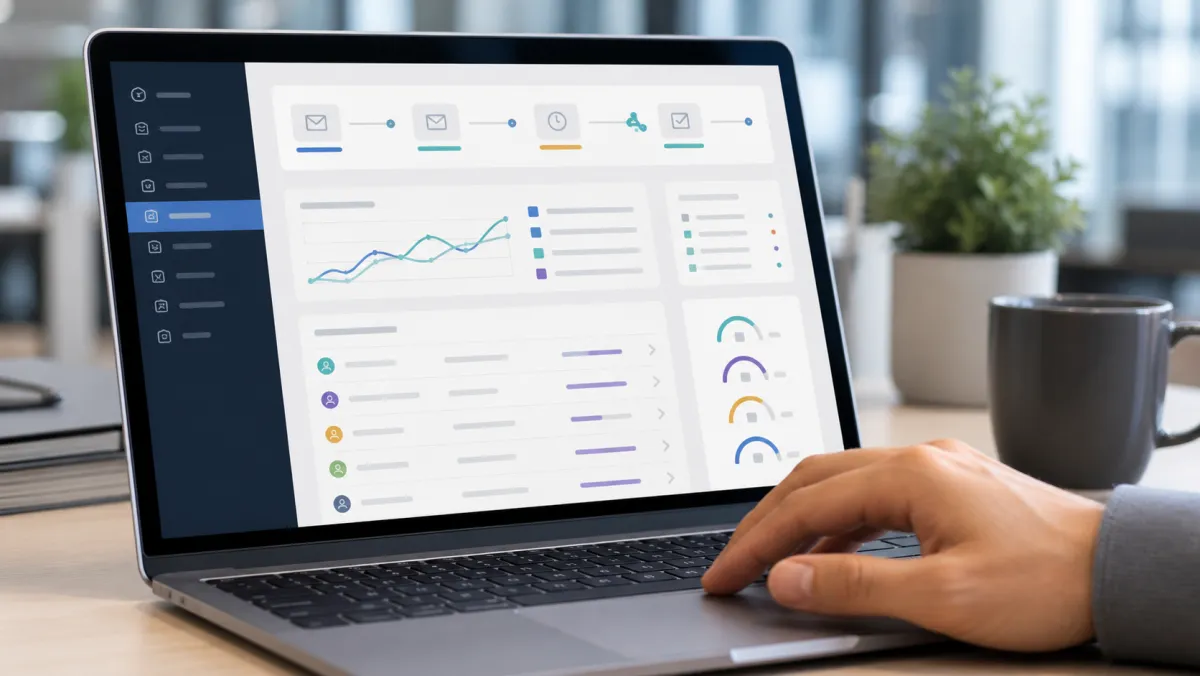
That branching logic is what separates automation from a simple autoresponder. The best ai workflow automation tools let you build these branches visually, test them, and see exactly where contacts drop off before you launch.
Content is the other half of the job. ai content marketing tools now draft subject lines, body copy, and product blurbs pulled straight from your catalog, so the bottleneck shifts from writing to reviewing. Klaviyo drafts layouts, HubSpot's Breeze personalizes copy per contact using CRM data, and Snov.io builds sequences around your ideal customer profile.
Which category you pick depends on the business behind it. Ecommerce brands lean on Klaviyo or Omnisend for order and browse data, B2B teams lean on HubSpot or ActiveCampaign for CRM-linked scoring, and solo creators lean on Beehiiv or Brevo for a newsletter-first setup with room to grow.
Marketing automation grew out of CRM and email marketing practices from the 1990s, long before workflow automation added AI scoring and content generation on top.
The benefits of ai marketing show up fastest in email. McKinsey and Zebracat data puts AI-driven campaigns at 22% higher ROI and 29% lower acquisition cost than manual sends, with most of that gain coming from send-time optimization rather than a creative overhaul.
We checked the latest ai marketing tools reviews and current ai marketing tools pricing before building this table. Numbers below are current as of August 2026.
| Platform | Best for | Free plan | From | AI features |
|---|---|---|---|---|
| Brevo | Free-tier automation | Yes (300 emails/day, unlimited contacts) | $9/mo | AI subject lines, send-time optimization |
| Klaviyo | Ecommerce flows | Yes (250 contacts) | $20/mo | AI content drafts, product recommendations |
| ActiveCampaign | Multichannel sequences | 14-day trial only | $19/mo | Predictive sending, AI content generator |
| HubSpot (Breeze) | CRM-driven personalization | Yes, limited | Free, paid AI add-ons | Breeze Copilot, per-contact personalization |
| Omnisend | Email + SMS in one flow | Yes (250 contacts) | $16/mo | AI product recommendations |
| Beehiiv | Newsletter-first automation | Yes (2,500 subscribers) | $34/mo | Built-in AI writing tools |
Switching platforms later is common, and it costs less than people expect. Most tools support CSV import of your list and flow history, so the real work is rebuilding two or three core flows, not migrating years of data by hand.
The platform matters less than the first three flows you build. Get welcome, cart, and re-engagement right, and the rest is optimization.
Email Marketing Automation Examples
The clearest ai marketing use cases in email are the ones tied to a specific action, not a calendar date. Five flows cover most of the revenue upside for a typical online business.
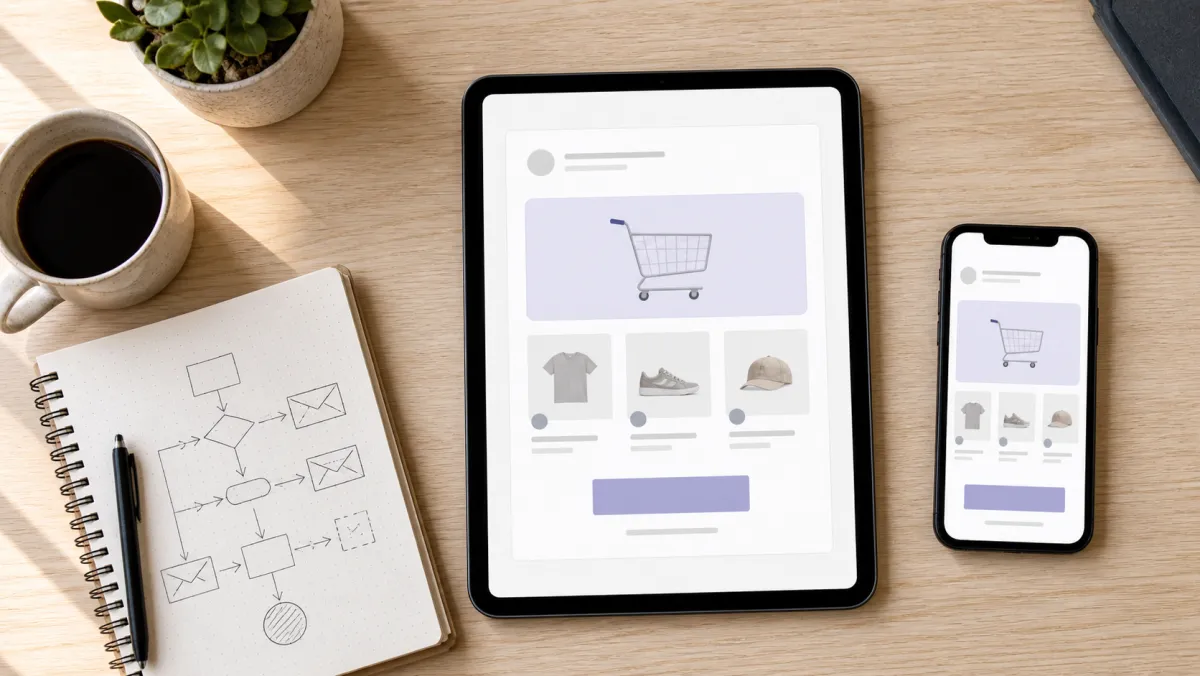
- Welcome series: three to five emails over two weeks that introduce the brand and push toward a first purchase.
- Abandoned cart: a reminder one hour after checkout drop-off, then a second email with a small incentive at 24 hours.
- Post-purchase: order confirmation, shipping updates, then a review request and a cross-sell email two weeks later.
- Re-engagement: a win-back sequence for contacts who have not opened an email in 60 to 90 days, ending in a list-cleaning unsubscribe prompt.
- Lead nurture: a multi-week B2B sequence that scores engagement and hands off to sales once a contact crosses a threshold.
Pair these flows with matching visuals instead of stock photography. Our guide to high-converting ad creatives with AdCreative AI covers building on-brand images for the same campaigns your emails promote.
How to Apply Email Marketing Automation
Below is the ai marketing step by step process we use for every new account, from list import to first send.
- Pick a platform. Match the tool to your channel: Beehiiv or Brevo for a free start, Klaviyo for ecommerce, HubSpot if you already run your CRM there.
- Segment the list. Split by behavior, such as opened in the last 90 days, made a purchase, or never engaged, before writing a single email.
- Build the welcome flow first. It converts new signups while every other flow is still in progress.
- Add abandoned cart and re-engagement. These two flows typically recover more revenue than any single broadcast.
- Draft with AI, edit by hand. Use free ai marketing tools like ChatGPT or Gemini to draft subject lines and body copy, then edit for voice before you schedule.
- Test send times. Let the platform's send-time prediction run for two weeks before you lock in a fixed schedule.
- Review monthly. Check open, click, and unsubscribe rates per flow, not just per campaign.
The most common mistake is launching too many flows at once. Teams that ship five or six automations in week one rarely have time to fix the two that are actually broken, so stick to the welcome and cart flows until both convert well.
Fewer than a third of marketers use AI for deeper agentic tasks like full workflow automation, according to a 2026 Jasper survey. That gap is exactly what this playbook closes: most teams stop at subject line testing when the bigger win is the full trigger logic behind the send.
For teams testing before they buy, free ai automation tools cover more ground than most marketers expect. Zapier's free tier connects a signup form to your email platform without writing code.
A free ai email assistant handles the first draft. Gemini writes directly inside Gmail, while ChatGPT produces the strongest all-purpose drafts you paste into the flow builder.
Need visuals for the emails themselves? Our free AI image generator picks cover header graphics without a design budget.
Short product clips work too. See our free AI video generator options for embeddable clips that boost click-through without any paid tool.
Adoption backs up the shift toward automation. HubSpot's 2026 State of Marketing puts AI usage among marketing teams at 91%, up from 52% in 2022, and Salesforce data shows 87% of marketers now use generative AI in at least one workflow. The ai marketing statistics all point the same direction: manual send lists are the exception now, not the default.
Email Marketing Automation: FAQ
What are the best ai marketing tools for email?
Klaviyo leads for ecommerce, Brevo and Beehiiv lead on free plans, and HubSpot's Breeze suite leads for CRM-driven personalization. Match the tool to your channel before comparing AI features.
What is the best ai email assistant?
ChatGPT and Gemini are the best free ai email assistant options for drafting copy you paste into your platform. Gemini drafts directly inside Gmail, while ChatGPT produces the strongest all-purpose drafts.
What is ai marketing?
AI marketing uses machine learning models to automate tasks like send-time prediction, subject line testing, audience segmentation, and content drafting. In email, that means the workflow adjusts itself per contact instead of running one fixed schedule.
What are the best ai marketing tools for small business?
Brevo and Beehiiv cover small business budgets with real free tiers, while Mailchimp's ecosystem of 800+ integrations helps once you outgrow the basics. Start free, then upgrade only when list size forces it.
What are the best ai automation tools beyond email?
Zapier remains the default for connecting apps without code, while HubSpot and ActiveCampaign extend automation into SMS and ad retargeting. Pick one hub tool before adding more platforms to the stack.