Leadership
Leaders Eat Last by Simon Sinek (Summary + 9 Habits)
Leaders eat last summary: Simon Sinek's Circle of Safety, why some teams pull together and others don't, plus 9 habits and HR policies for eating last.

“Leaders eat last” means the person in charge takes care of the team before taking care of themselves: they absorb the risk, the blame and the cost first, and take the credit and the comfort last. Simon Sinek built a 2014 book on the idea. Below is a short book summary, then nine habits and the HR policies that make them stick.
Quick answer
Leaders Eat Last by Simon Sinek argues that teams trust each other and work hard when their leader protects them from danger, inside and outside the company. Sinek calls that protection the Circle of Safety. Eating last is the symbol: the leader's needs come after the team's.
Key takeaways
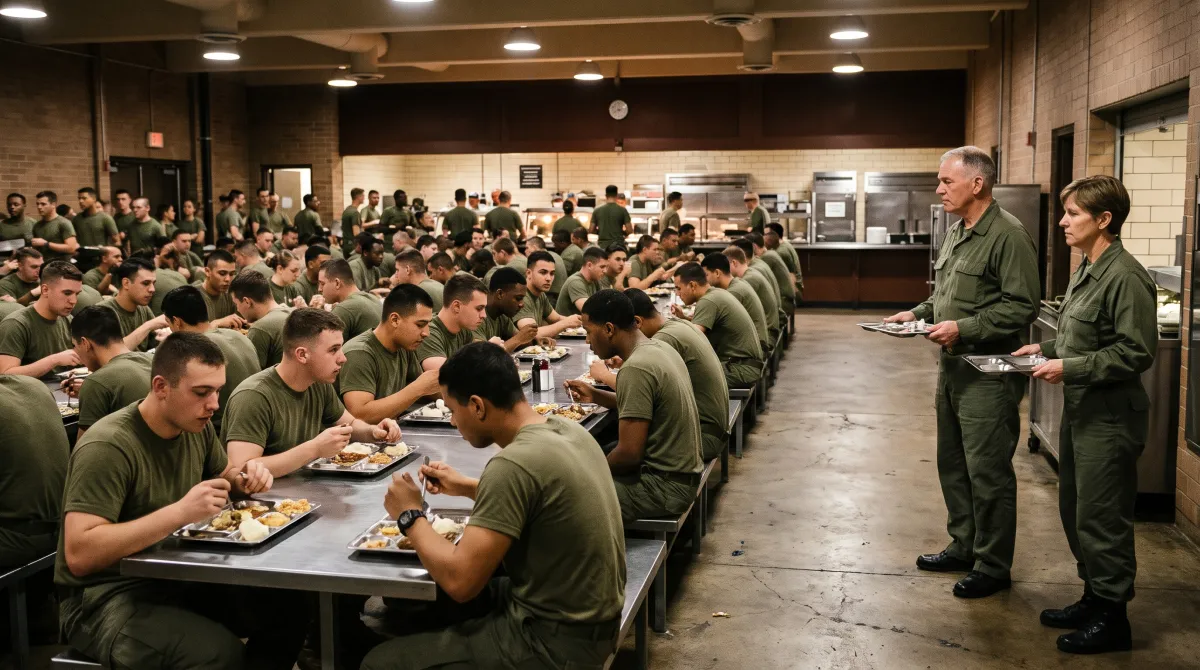
- The phrase comes from a Marine Corps habit: junior troops eat first in the chow hall and officers eat last.
- The book's core idea is the Circle of Safety: when people feel safe from their own colleagues and bosses, they spend their energy on the outside threats.
- Sinek explains the behavior with four body chemicals, and links serotonin and oxytocin to trust and cooperation.
- At work, eating last shows up in policies: who takes the hit in a downturn, who gets credit, and whether reporting a mistake is safe.
- It fails when "eating last" becomes martyrdom or an excuse to avoid hard calls on performance.
What does "leaders eat last" mean?
In Sinek's book, “leaders eat last” means a leader puts the needs of the people they lead ahead of their own comfort, status and self-interest. The leader is the last to get food, praise or a bonus and the first to face a hard conversation, a client complaint or a budget cut.
For Sinek, a true leader is someone people would follow even if the title disappeared tomorrow. Rank gives you authority. Trust comes from how you behave when things go wrong.
The idea sits close to other people-first approaches you can compare on our leadership guides hub. Sinek's version stands out for the reason he gives: humans evolved in groups, and in his view leaders take care of the weak because a group only survives when the strong protect them.
Where does the phrase come from?
Sinek tells the story of asking a Marine Corps general, Lt. Gen. George Flynn, what made his troops so effective. The answer was a mealtime habit: in the chow hall, the most junior Marines eat first and the most senior eat last.
Nobody issues it as a written order. Officers eat last because a leader's job there is to look after the people below them. If the food runs out, the person with the most rank goes hungry.
The image stuck because every workplace has its own version of the chow hall. Watch who gets the good parking spot, the window office, or the first pick of holiday dates and you can see who eats first.
What are the main points of Leaders Eat Last? (Book summary)
The full title is “Leaders Eat Last: Why Some Teams Pull Together and Others Don't.” The book grew out of a simple question. Simon Sinek noticed that some teams trust each other completely, while others are full of infighting and politics, even in the same industry.
Sinek watched military units, factories and banks, and his answer was leadership, not talent or pay. Below is the short summary of Leaders Eat Last by Simon Sinek, in the order the ideas build.
The Circle of Safety
Every organization faces dangers it cannot control: competitors, new technology, recessions. Sinek's point is that teams can only face those outside dangers if the inside is safe.
Leaders build what Sinek calls the Circle of Safety. Inside it, people do not fear being laid off to hit a quarterly number, humiliated in a meeting, or blamed for a manager's mistake. They feel safe, so they share ideas, admit errors and help each other.
When the circle is weak, people spend their energy protecting themselves from their own colleagues. Sinek treats this as a basic human need for safety at work: you cannot ask people to take risks for the company if the company is the risk.
The four chemicals: why serotonin and oxytocin count
Sinek illustrates his ideas with four chemicals our bodies use to reward behavior. He calls endorphins and dopamine the "selfish" chemicals: they reward effort and hitting a goal, like finishing a run or closing a sale.
Serotonin and oxytocin are his "selfless" chemicals. Serotonin comes with pride and status, the feeling when people you respect recognize you. Oxytocin comes with trust, friendship and generosity, and Sinek links it to the warm feeling of helping someone or being helped.
The book adds cortisol, the stress hormone. Sinek argues that a workplace run on fear keeps cortisol high, which makes people defensive and less generous. A strong Circle of Safety lowers it.
Abstraction and destructive abundance
The later chapters explain how big companies lose the circle. Abstraction is the distance between a decision maker and the people it affects. A manager who sees a team every day struggles to cut it; an executive who sees a row in a spreadsheet does not.
Destructive abundance is Sinek's name for a culture that chases money, numbers and growth for their own sake. Short-term rewards feed the dopamine loop and push out the slower serotonin and oxytocin that keep a team together.
Leading millennials
A later expanded edition added a section on leading millennials. Sinek's argument is that younger employees grew up with instant feedback from phones and social media, so leaders have to teach patience and build real relationships rather than relying on screens.
Why do some teams pull together and others don't?
Sinek's answer is that people return the trust they receive. Teams show trust and cooperation because their leaders build safety first, and the people inside then spend their effort on the work and on each other.
The book opens with an example. An Air Force pilot with the call sign Johnny Bravo flies low under thick cloud, at real risk to himself, to protect troops on the ground he has never met. He does it out of duty to them, and they trust that someone like him will come.
Sinek's business example is Barry-Wehmiller, a US manufacturer. When orders collapsed in the 2008 recession, the company chose a furlough over layoffs: every employee took four weeks of unpaid leave so nobody lost their job. Some staff volunteered extra weeks so colleagues who could least afford it took fewer.
Great leaders sacrifice something visible, and the team sees it. Sinek's whole argument rests on that, and most companies skip it. A movement to inspire people inside a company starts with one manager giving something up on one team.
You cannot ask people to take risks for the company if the company is the risk.
How do you apply leaders eat last at work? 9 habits
Eating last is easy to admire and hard to schedule. These habits turn it into things a manager does in a normal week. You become a true leader in Sinek's sense by repeating them, not by agreeing with the book. Each one includes words you can use.
- Take the blame in public, give it in private. When a project slips, tell the client or your boss "That deadline was my call." Then talk to the person responsible one-to-one.
- Give credit by name. In a status update, write "Priya rebuilt the forecast that caught this" rather than "the team delivered." Named credit feeds the serotonin Sinek describes.
- Say no upward to protect the team. When a senior leader adds a rush request, answer "We can do it by Friday if we drop X. Which one comes first?" instead of passing the pressure down.
- Make mistakes safe to report. Thank the first person who flags a problem, even when the problem is theirs: "Thanks for raising this early. What do you need to fix it?"
- Go last in the hard queue. Pick holiday dates after your team, take the first on-call shift of a new rotation, and fly economy if they do.
- Spend time, not just money. A 20-minute weekly one-to-one with each report builds more trust than a team dinner, because it shows each person they feel valued, not just paid.
- Close the abstraction gap. Before approving a cut, list the names it affects. If you cannot name them, you are too far from the decision.
- Speak last in meetings. Ask the most junior person for their view first. If you open with your own opinion, the room will agree with it.
- Hold the line on performance. Protecting the team includes protecting it from a colleague who does not pull their weight. Address it within weeks, not at the annual review.
Start with two habits for the next month, not all nine. You become a better leader through small proof repeated every week, and your team will notice the second week more than the first.
Reserved managers often do several of these by default. If that sounds like you, our guide to how introverted leaders build trust shows how to turn listening into a strength.

Which HR policies build a Circle of Safety?
Habits fade when the system rewards the opposite. HR teams can check whether company policy lets leaders eat last or pushes them to eat first. Use the table below as an audit of policies that foster trust and cooperation, for leaders and organizations of any size.
| Policy area | Leaders eat first | Leaders eat last | Question to ask HR |
|---|---|---|---|
| Downturns | Layoffs first, executive bonuses unchanged | Pay cuts or furloughs start at the top | Who gave something up in the last bad quarter? |
| Incident reviews | Find the person who caused it | Blameless review of the process | Has anyone been punished for reporting their own error? |
| Recognition | Manager presents team work as their own | Named credit in writing | Do award nominations come from peers or only bosses? |
| Manager goals | Only revenue and output targets | Team retention and engagement count too | What share of a manager's bonus depends on their people? |
| Perks | Best perks tied to rank | Same benefits at every level | Which perks does a new hire not get? |
| Promotion | Rewards individual heroics | Rewards people who grew others | How many of their reports has this person helped promote? |
Pick the row where your company scores worst and fix that one first. One visible change, such as the CEO taking the first pay cut, does more for good leadership culture than a values poster.
Policy also shapes the kind of leader you promote. A culture that rewards only hitting targets tends to produce the deal-based style you see in these examples of transactional leaders, which can deliver results but rarely builds the circle.
When does eating last backfire?
Eating last is a good default, not a rule for every situation. It breaks down in four common cases.
- When it turns into martyrdom. A manager who skips leave and works every weekend "for the team" burns out and teaches the team that exhaustion is the price of loyalty.
- When it protects low performers. Shielding one person from feedback makes the rest of the team carry them, which shrinks their Circle of Safety.
- When the company does not back it. A team lead cannot promise "no layoffs" if leadership above them has not agreed to it. Promise only what you control.
- When the science is taken too literally. The four-chemicals model is a simplified popular explanation, not a management test. Use it as a metaphor for why people behave as they do, not as a way to measure staff.

Every one of these is a strength pushed too far. Our breakdown of the strengths and weaknesses of a leader covers how to spot that tipping point in yourself.
Is leaders eat last the same as servant leadership?
Mostly, yes. Both put the needs of the team first. Servant leadership is the older, broader model, described by Robert Greenleaf in 1970; Sinek's book is a modern argument for the same instinct, with a focus on safety and trust.
| Model | Main idea | Best fit |
|---|---|---|
| Leaders eat last | Protect the team so it can face outside threats | Teams under pressure, change or downsizing |
| Servant leadership | Leader exists to help people grow | Long-term development and coaching cultures |
| Transactional leadership | Rewards and penalties for set targets | Routine, measurable work with clear rules |
| Five levels of leadership | Influence grows from title to respect | New managers mapping their own progress |
If the last row is new to you, John Maxwell's five levels of leadership model pairs well with Sinek: the higher levels are earned the same way, by people choosing to follow.
Should you read this book?
We recommend this book for new managers, HR partners and founders hiring their first team leads. It is easy to read, full of stories of leaders, and the Circle of Safety gives you a shared phrase to use with your team.
Skip it if you want a step-by-step manual. Based on Simon Sinek's own framing, the book is long on stories and short on process, so pair it with the nine habits above. His smaller illustrated book, Together Is Better, covers similar ground in a few minutes.
If you prefer video first, Sinek's TED talk "Why good leaders make you feel safe" sums up the book in about 12 minutes and has well over a million views on TED's site.
Leaders eat last: FAQ
What does the phrase "leaders eat last" mean?
It means a good leader puts the team's needs before their own. The phrase comes from a US military mealtime custom where junior troops eat first and officers eat last, so the leader goes without if there is not enough.
What are the main points of Leaders Eat Last?
The main points are the Circle of Safety, the four chemicals that drive behavior, and the danger of abstraction. Leaders who protect their people from internal threats get trust and cooperation in return, so the team can focus on outside challenges.
Why do leaders always eat last?
Leaders eat last to show the team that their welfare comes first. The act is symbolic: a leader willing to eat last is signalling that they will also take the first hit when something goes wrong, which makes people feel valued and safe.
How do you become a true leader, according to Sinek?
You become a true leader when people choose to follow you, not because your title says they must. In the book, that choice follows proof: the leader takes risks for the team first, so the team trusts them with risks of its own. Read that way, “leaders eat last” is a daily habit, not a slogan.
What is Simon Sinek's most famous quote?
His most quoted line is "People don't buy what you do; they buy why you do it," from his 2009 TED talk "How great leaders inspire action". It is the core idea of his first book, Start With Why, rather than of Leaders Eat Last.
Who is Simon Sinek?
Simon Sinek is a British-American author and speaker on leadership. He is best known for Start With Why and the Golden Circle, and Leaders Eat Last was his second book.
When was Leaders Eat Last published?
Leaders Eat Last was first published in January 2014. An expanded edition followed in 2017 and added the section on leading millennials.