Business Concepts
Lufthansa A380 Business Class Flight Review (2026)
Lufthansa A380 business class review: seat map, cabin layout, and whether the Airbus A380's older suite still beats newer business class seats in 2026.
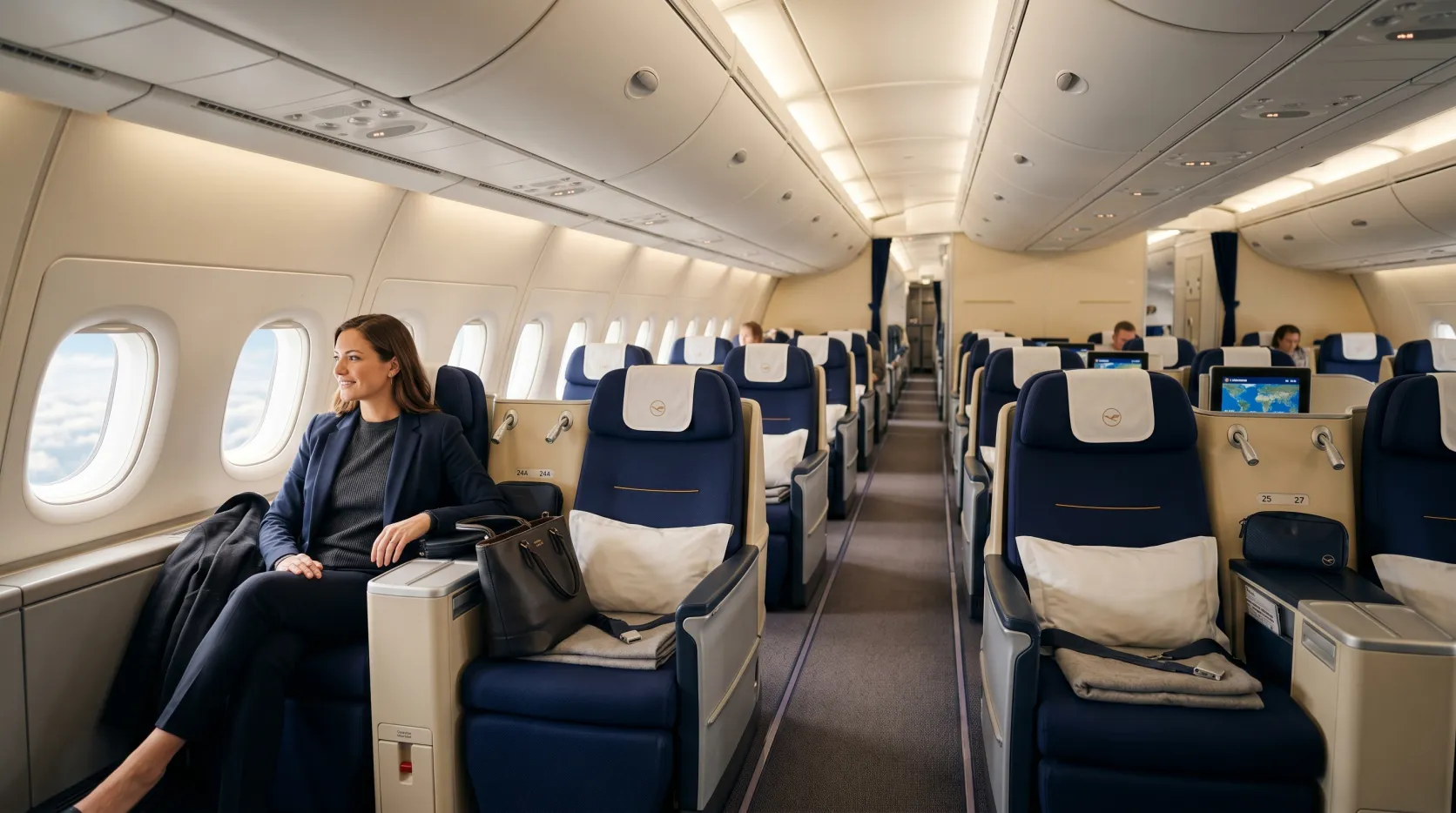
The Lufthansa A380 business class has a strange story: retired during the pandemic, then quietly brought back once demand returned. This flight review of Lufthansa business class A380 travel covers the seat map, the cabin feel, and whether the older 2-2-2 product still holds up against newer suites.
Quick answer
Lufthansa A380 business class is a solid, reliable product flown mostly out of Munich (MUC) since the fleet returned in 2023. The upper-deck cabin is quiet and spacious, but the seat is an older 2-2-2 layout, so direct aisle access is not guaranteed. It is a strong deal when business class tickets drop in price, less impressive against the new business class suites some airlines now fly.
Key takeaways
- The A380 fleet was retired in 2020 and reactivated from 2023 onward, based mainly in Munich (MUC).
- Lufthansa dropped first class seats from the reactivated jets, so business class is now the top cabin onboard.
- Business class sits on the upper deck in a 2-2-2 configuration: aisle, window, no guaranteed aisle access.
- Window seats feel private; middle pairs suit couples, but feel awkward for solo travelers.
- It is a strong points and cash deal when fares fall, weaker against the new business class suites other Lufthansa aircraft are getting.
- The jet doubles as a case study in depreciation, overproduction, and economies of scale.
What Is Lufthansa A380 Business Class?
It is the premium cabin Lufthansa flies on its Airbus A380-800 aircraft, on the upper deck above the main economy class cabin. Business class passengers board via a separate staircase, turn left at the top, and step into a long, calm cabin that feels removed from the rest of the plane.
The business class product is built for long-haul comfort: a lie-flat seat, full dining, lounge access, and priority handling on the ground. It is not Lufthansa's newest business class, but it is dependable, and that is what this flight review is here to unpack.
This flight review also connects to broader business concepts, since the jet's story mirrors ideas like depreciation and economies of scale explained later in this guide.
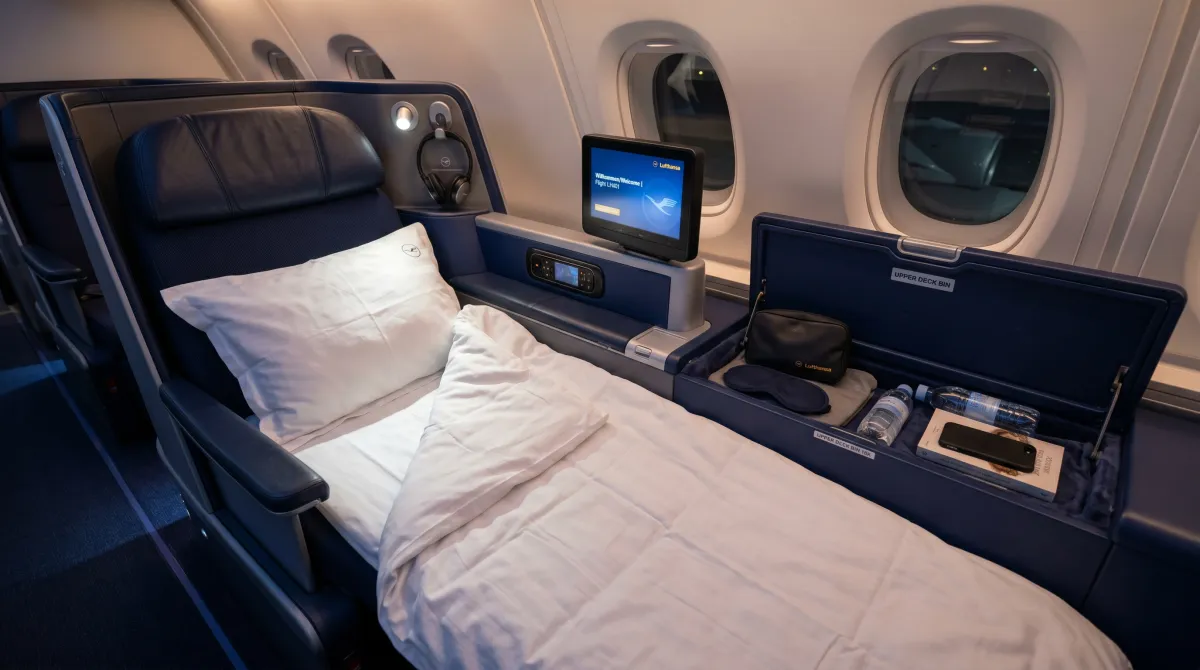
The defining trait is the aircraft itself. The A380 aircraft is heavy, smooth, and remarkably quiet on the upper deck, which is why frequent flyers seek out Lufthansa's A380s even when the seat hardware is older.
The Basics: Aircraft, Codes, and Cabin Layout
Lufthansa flies the jet under code LH, and Munich (MUC) is now its main A380 base after the fleet's 2023 comeback. Frankfurt has hosted occasional rotations for Lufthansa's A380 too, though schedules shift by season.
Lufthansa’s A380 comeback in 2023 remains one of aviation’s most closely watched revivals, proof that Lufthansa’s appetite for the jumbo returned once demand justified the risk.
As a founding Star Alliance member, Lufthansa slots the A380 into the same network as United and Air Canada, so elite status and miles carry across partner flights. That matters if you are pairing a Lufthansa flight with onward connections.
In its current configuration, the A380 has a capacity of about 509 seats across business class, premium economy, and economy class. Before 2023, first class passengers boarded via a separate cabin on the lower deck that Lufthansa has since removed from the A380.
For comparison, Lufthansa operates a similar upper-deck cabin on its Boeing 747-8, another jumbo in the fleet. Both aircraft share the same idea: a wide upper deck reserved for business class onboard, away from the noise of the main cabin below.
Lufthansa A380 Business Class Explained
The business class seats sit in a 2-2-2 layout across the business class cabin. That means two seats by each window and two in the middle, with aisles between them. It is an honest, older design, and the trade-off is real: not every seat touches an aisle.
If you take a window seat, the person beside the aisle has to be stepped over when you get up. For solo travelers who value direct aisle access, that is the main drawback of flying business class in this cabin in 2026.
The A380 wins on calm and space, not on seat tech, so pick your seat like it matters, because it does.
Where it shines is the cabin feel. The upper deck has generous side bins by the windows, low engine noise, and a sense of width you rarely get elsewhere. Every flight attendant on this route worked the aisle unhurried, and the service and food felt like a proper multi-course meal, not a reheated tray.
The seat, honestly
The seat converts to bed mode, and the flat beds are long enough for most adults, with decent legroom by wide-body standards. Storage at your seat is modest, and the touch screen on the entertainment system is smaller than on Lufthansa's new business class seats elsewhere in the fleet.
The IFE runs a solid mix of films and shows, and it supports bluetooth connectivity, so you can pair your own headphones instead of using the wired set. Wifi is available for a fee, which matters most on the longer long-haul legs.
Across the top deck, the business class cabin holds around 78 business class seats depending on the exact aircraft. Window seats near the front, such as 24A, tend to book out first because they combine early meal service with a private feel.
For couples, the middle pair is genuinely pleasant: you sit together, talk easily, and share the experience. For everyone else, aim for a window.
Lufthansa A380 Business Class Examples
Here is how the cabin choices actually play out, based on how travelers use them.
| Seat type | Best for | Watch out for |
|---|---|---|
| Upper-deck window | Solo travelers, sleepers, privacy seekers | You must climb over your neighbor to reach the aisle |
| Upper-deck middle pair | Couples and companions flying together | Less private; shared armrest space |
| Front of cabin | Faster meal service and quicker exit | Slightly more galley and lavatory traffic |
| Rear of cabin | Quieter boarding, fewer passers-by | Served later in the meal sequence |
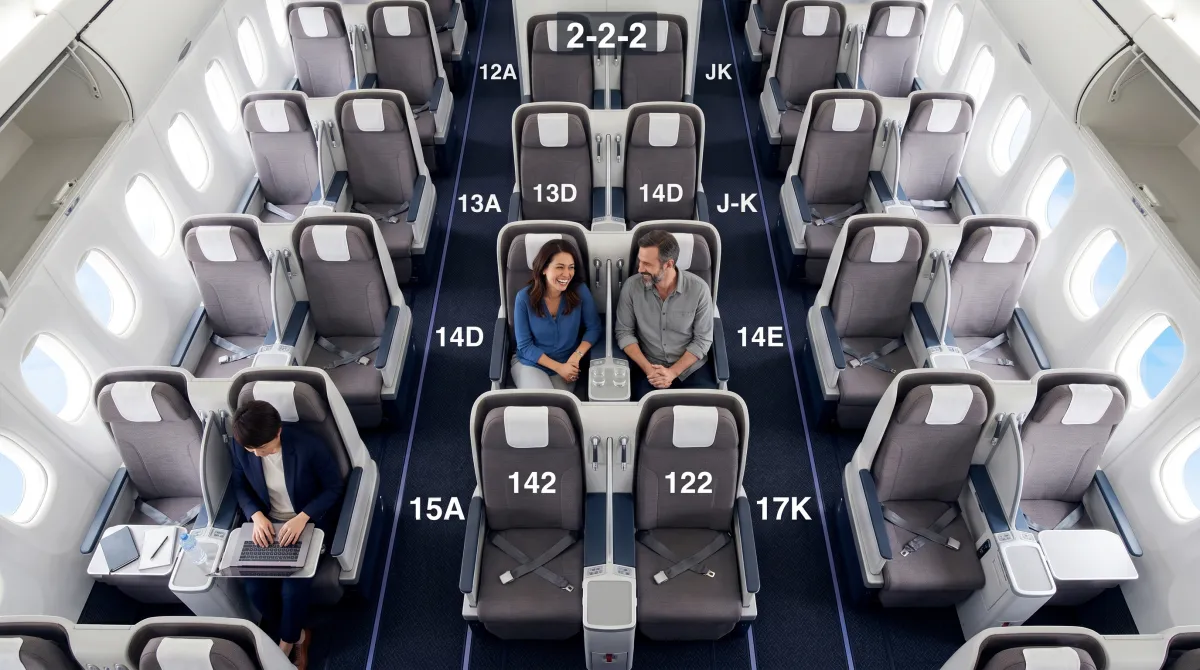
A practical example: a couple flying long-haul to Asia picks the middle pair, sleeps the overnight leg, and arrives rested. A solo business traveler picks a window, accepts the step-over trade-off, and treats it as a quiet office in the sky.
Will the A380 Get Lufthansa's New Business Class?
Lufthansa has been rolling out a new business class suite with sliding doors across parts of its long-haul fleet, a refurbished business class product that starts with the newest aircraft first. As of now, the A380 has not been included in that push, so the jumbo still flies the older 2-2-2 seat described above.
A new A380 retrofit is not officially scheduled, and Lufthansa has given no firm date for new seats on this aircraft. If you are booking specifically to try Lufthansa's newest suite, look at other long-haul routes instead of the A380.
The Business Story Behind the Jet
This cabin is also a live lesson in business, a case study in what happens when ambition meets the realities of an airline balance sheet. The numbers tell the story better than any press release.
Start with overproduction. The overproduction here is simple: Airbus built far more capacity than airlines could profitably fill, so frames sat underused and orders dried up. That mismatch is the same risk any factory faces when supply outruns real demand.
Then there is depreciation. The depreciation meaning, or depreciation definition if you prefer the textbook version, is the way an asset loses value as it ages and is used. A jumbo jet depreciates fast on the balance sheet, so retiring it early can actually make accounting sense.
The economies of scale definition is what the A380 was supposed to deliver: more seats per flight should mean a lower cost per passenger. The catch is that scale only pays off when you reliably fill those seats, which is exactly what the pandemic broke.
The decision to ground and then revive the fleet was a cash flow definition problem at heart, weighing the cash burn of parked jets against the revenue of flying them. When demand returned, the working capital definition logic flipped, and operating the paid-off aircraft became the cheaper path.
You can read the same tension on any airline's accounts. The balance sheet meaning is a snapshot of what a company owns and owes, and the balance sheet definition treats aircraft as long-term assets sitting against debt. A revived, depreciated A380 is a low-cost asset already on the books.
Revenue per flight feeds the gross margin meaning, the share of sales left after direct costs, and the gross margin definition makes clear why filling premium seats matters so much. Each business-class booking carries a far higher margin than an economy fare behind it.
Even the customer side has an accounting echo. The accounts receivable meaning, or accounts receivable definition, covers money owed to a business after a sale, the way corporate travel and agency bookings are often invoiced and collected later rather than paid upfront.
How to Apply Lufthansa A380 Business Class
Booking well is mostly about timing and seat selection. The cabin is the same; your experience depends on the details you control.
- Confirm the aircraft. Schedules change. Check that your flight is genuinely an A380, not a swapped twin-jet, before you get attached to the upper deck.
- Choose your seat early. Windows go first for a reason. If you are solo, grab one the moment booking opens.
- Compare cash versus miles. Lufthansa business class tickets swing widely in price. When a sale lands, the value beats most airlines business class fares; when it does not, points often win.
- Use the lounge. The ground lounge experience is part of the product, so arrive early enough to use it properly before your Lufthansa flight.
One honest caveat for 2026: always verify the live route and seat map on the official site, because A380 deployment shifts by season and demand. Treat any route list you read online, including older guides, as a starting point, not gospel.
Is It Worth It in 2026?
Yes, with eyes open. If you value a quiet, wide cabin and a reliable lie-flat bed, the A380 upper deck delivers. If your benchmark is a sliding-door suite with direct aisle access for every seat, this older 2-2-2 will feel a step behind. It suits long haul travelers who prize quiet and space over the newest seat tech.
The smart move is to book it when the price is right and the route fits, then choose your seat deliberately. The same disciplined judgment shows up when companies weigh the benefits and risks of innovation before betting on a new product.
The A380 itself is proof that even bold ideas can be revived once the numbers work, a reminder that markets and middlemen can return, much like the cycle we describe in reintermediation.
Lufthansa A380 Business Class FAQ
Where does Lufthansa fly the A380 from?
Lufthansa bases its reactivated A380 fleet in Munich, serving selected long-haul routes. Because deployment changes seasonally, check the airline's current schedule before booking rather than relying on older route lists.
What is the seat layout in Lufthansa A380 business class?
It is a 2-2-2 configuration on the upper deck. Each pair has one aisle seat and one window seat, so window passengers must step past their neighbor to reach the aisle.
Is the A380 business class seat lie-flat?
Yes. The seat converts to bed mode with a fully lie-flat bed long enough for most adults, with full bedding for overnight legs. It is comfortable, though the hardware is older than Lufthansa's newest suites.
What is a balance sheet, and are there simple balance sheet examples?
A balance sheet is a snapshot of assets, liabilities, and equity at one moment. Simple balance sheet examples list aircraft and cash as assets against loans as liabilities, the same structure airlines use to show a paid-off jet.
What is working capital in plain terms?
Working capital is current assets minus current liabilities, the money a business has to run day to day. For an airline, it covers fuel, wages, and parts owed before ticket revenue fully lands.
What is accounts receivable, and what is gross margin?
Accounts receivable is money customers owe after a sale, such as invoiced corporate bookings. Gross margin is sales minus direct costs, which is why a full premium cabin matters far more than a full economy one. Profit and loss statement examples show both lines clearly.