Leadership
Examples of Leadership Roles in High School (By Type)
See examples of leadership roles in high school, from class president to peer tutor, plus which leadership style fits each role and how colleges read them.
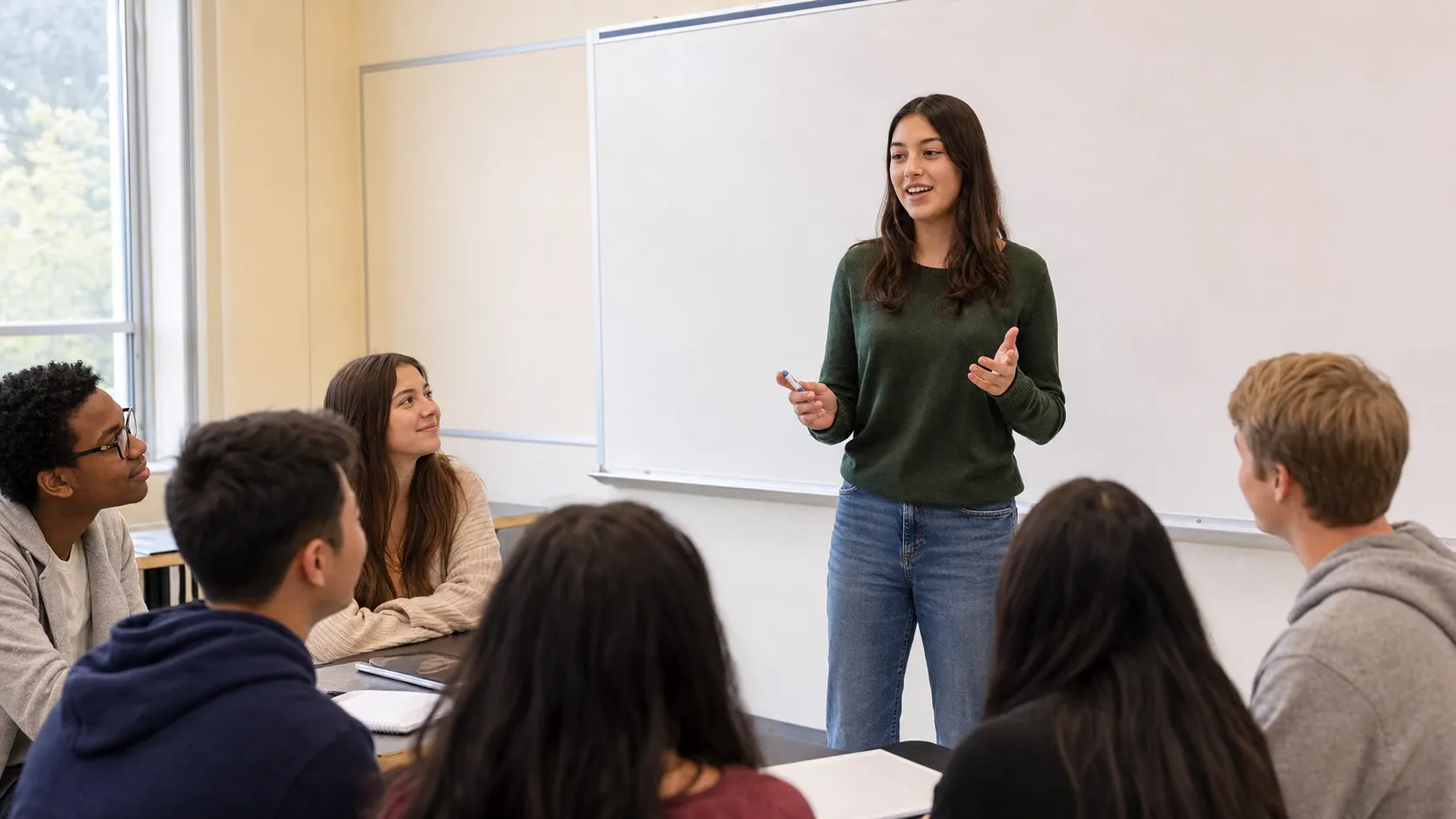
Examples of leadership roles in high school are the positions where a student takes charge of an outcome other people depend on: class president, team captain, club founder, section leader, National Honor Society officer, and peer tutor. Some are elected, some appointed, and some informal.
Quick answer
Leadership roles in high school include elected positions like class president, appointed roles like team captain or editor-in-chief, and informal roles like peer tutor or study group leader. The best role for you is the one that matches how you naturally lead and lets you show a measurable result on your college application.
Key takeaways
- Leadership comes as formal titles and as informal influence, and both count as leadership experience.
- College admissions reward depth and impact over a long list of titles.
- Founding a club or leading a project often beats inheriting a position.
- Different roles call for different leadership styles, from autocratic to servant leadership.
- Pick a role that fits how you lead, then set one concrete goal for your term.
What counts as a leadership role in high school?
A leadership role in high school is any position, elected, appointed, or informal, where a student takes responsibility for a group outcome. Examples range from class president to club founder to peer tutor.
Many students assume leadership needs a badge or a title. It does not. The student who organizes a study group or quietly mentors a freshman is leading, even without a line on a ballot.
The distinction worth learning early is between authority and influence. Authority comes from a position. Influence comes from how people respond to you, and it is the trait admissions readers look for first.
Formal leadership carries a title, while informal leadership runs on trust and follow-through. High school rewards both, which means there is a real leadership opportunity for every kind of student, not only the outgoing ones.
For a wider view of how these positions map to adult careers, the guide to common leadership roles at work shows how a club president today becomes a project lead later.
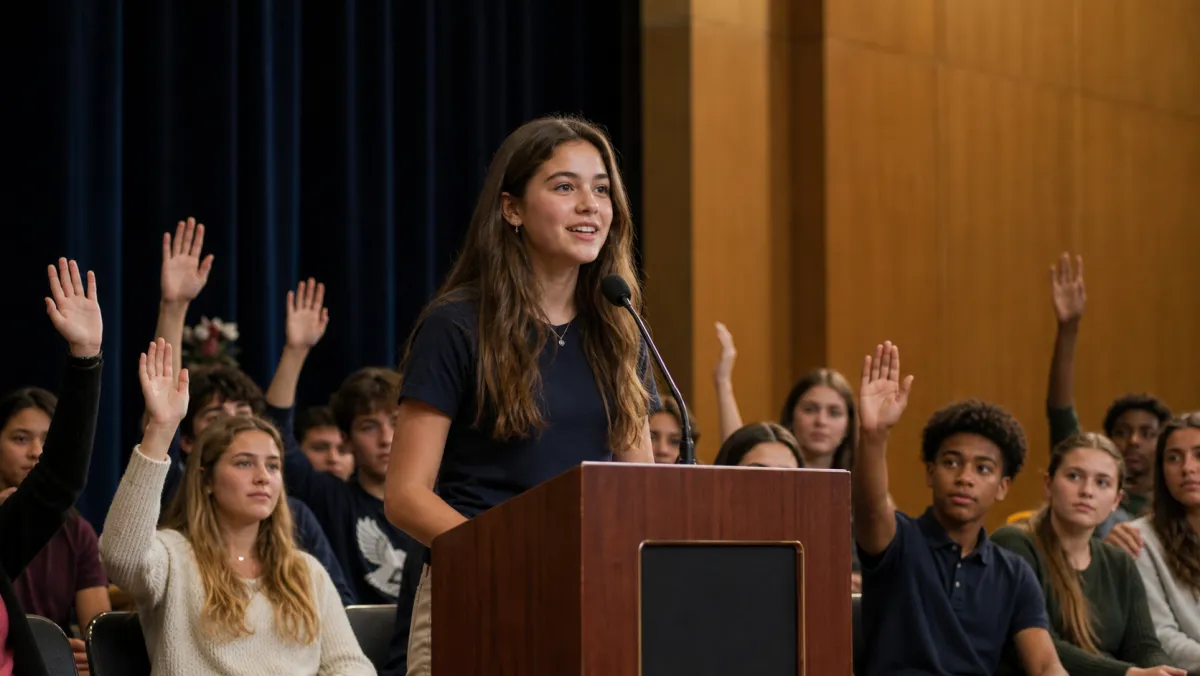
Student government and class leadership examples
Student government is the most visible group of leadership roles in high school. These positions are elected, public, and accountable to peers, so every decision is visible to the people who voted.
- Class president: sets priorities, runs meetings, represents the grade to staff.
- Vice president: backs up the president and often owns logistics.
- Treasurer: manages budgets for events and fundraisers.
- Secretary: records decisions and keeps the group organized.
- Student council representative: carries classmate concerns to administration.
These roles teach negotiation, public speaking, and budgeting under pressure. They show leadership because the outcomes are measurable: an event that ran, a budget that balanced, a policy that changed.
The catch is that an election can hinge on popularity, so the title alone does not prove impact. What you did with the seat is what counts.
Clubs, teams, and captain leadership positions
Clubs and teams reward initiative more than popularity, which suits students who lead by doing. The table below lists the most common roles, where you find them, and what each one builds.
| Role | Where you find it | What it builds |
|---|---|---|
| Team captain | Sports teams | Accountability, motivation under pressure |
| Club president | Debate, robotics, Model UN | Vision, delegation, recruiting |
| Club founder | Any new interest group | Initiative, organization from scratch |
| Section leader | Band, choir, orchestra | Mentoring, technical standards |
| Editor-in-chief | Newspaper, yearbook, literary magazine | Editorial judgment, deadlines |
A captain is chosen for character as much as skill, because the job is holding teammates to a standard when the coach is not watching. Owning that for a full season reads as genuine leadership.
Club president is a different muscle: building something and keeping people engaged. Robotics, debate, and Model UN all hand the club to a student who can pull people toward a shared goal.
Founding a club is often the strongest move of all. It shows you saw a gap and built something to fill it. If no club matches your interest, starting one is a leadership role in itself.
Not ready to lead yet? Join clubs that match your interests and show up consistently. Club leaders notice who arrives on time and helps without being asked, and those students are usually offered the next officer role.
The most impressive title on any application is the one you created yourself.

Service and community leadership roles in high school
Service roles show leadership tied to a cause, and they carry the most weight when sustained. A one-off cleanup is nice. A year-long program shows commitment and a result other people can see.
- Volunteer coordinator: recruits and schedules other students for projects.
- National Honor Society officer: blends academics with service leadership.
- Fundraising chair: sets goals and rallies the school behind them.
- Eagle Scout project lead: plans and runs a service project from start to finish.
- Peer mentor: supports younger students with steady guidance.
The National Honor Society was founded in 1921 by the National Association of Secondary School Principals and selects members on four pillars: scholarship, service, leadership, and character. An NHS officer role therefore signals leadership before you add a single project.
An Eagle Scout project works the same way. Eagle is the highest rank in Scouts BSA, and the service project requires the Scout to plan, fund, and direct other people, which is exactly what an admissions reader wants to see.
Service roles are among the most meaningful ways to lead because they help people who cannot vote for you. Learning to spot that quiet impact in yourself matters, much like learning the signs that someone already sees you as a leader at work.
Can high school students lead beyond their school?
Yes. Some of the clearest leadership examples in modern history came from secondary students organizing peers far beyond a club or team.
In the 2006 student protests in Chile, nicknamed the Penguin Revolution after school uniforms, high school students elected spokespeople, coordinated across schools, and pushed education reform onto the national agenda.
The Chile leadership lesson for any student is not to stage a protest. It is that coordination, clear demands, and chosen spokespeople are leadership skills at any age, whether the goal is national policy or a new recycling program.
History is full of leaders who led through influence rather than office. Studying influential leaders across history shows how vision and service often mattered more than the formal title attached to them.
Academic and peer leadership experience
Some of the best leadership roles in high school live in the classroom and the library, not on a stage. They reward a student who leads through knowledge and patience.
- Peer tutor: turns a strength into help for classmates, often through a school tutoring program.
- Study group leader: sets the agenda and keeps everyone moving before AP exams.
- Lab or project lead: coordinates roles on a graded team task.
- Teaching assistant: supports a teacher and younger students at once.
These roles build a specific set of leadership skills skills-based roles reward most: explaining a hard idea simply, planning a session, and staying patient when a classmate is stuck.
Academic leadership runs on influence, not authority. You are helping others reach a result, not giving orders. That is close to facilitative leadership, where you guide a group to its own answers instead of dictating them.
These roles are easy to undervalue because nothing ceremonial comes with them. Yet they are a true test, because nobody elected you and no title protects you. People follow only because the help is real.

Which leadership styles fit which high school roles?
Leadership styles are the patterns a leader uses to make decisions and motivate people, such as autocratic, democratic, servant, or transformational. Each high school role tends to reward one or two of them more than the others.
The types of leadership styles most people learn today trace back to a study of children. According to a 1939 study by Kurt Lewin, Ronald Lippitt, and Ralph White in the Journal of Social Psychology, autocratic, democratic, and laissez-faire leadership were first compared in after-school clubs of 10-year-old boys.
| High school role | Style that often fits | Why it works |
|---|---|---|
| Team captain in a game | Autocratic (in short bursts) | Fast calls under time pressure |
| Class president | Democratic | Decisions need buy-in from voters |
| Peer tutor or mentor | Servant | Success is measured by the other student's growth |
| Club founder | Transformational | Members join a vision before it exists |
| Study group leader | Facilitative | The group finds its own answers |
When autocratic leadership works, and when it fails
Autocratic leadership means one person decides and the group follows. Autocratic leadership skills, like making a quick call when a drill falls apart, help a captain in the final minutes of a game.
It fails when it becomes the default. A club president who decides everything alone usually ends the year with fewer members than they started with, because nobody feels ownership.
Servant leadership definition and meaning for students
The servant leadership definition is simple: the leader's first job is the growth of the people they serve. Robert K. Greenleaf coined the term in his 1970 essay The Servant as Leader, according to the Greenleaf Center for Servant Leadership.
For a student, the servant leadership meaning is concrete. A peer mentor who measures success by a freshman's confidence, not by their own visibility, is practicing it. The overview of other types of leadership styles shows how it compares with the rest.
How the 5 levels of leadership apply to a student club
John C. Maxwell's 5 levels of leadership, from his 2011 book, rank influence in five stages: Position, Permission, Production, People Development, and Pinnacle. The model explains why a title alone rarely makes a leader.
- Level 1, Position: members follow because you were elected club president.
- Level 2, Permission: they follow because they trust and like working with you.
- Level 3, Production: they follow because the club gets results, like a trophy or a sold-out event.
- Level 4, People Development: you train a successor who can run the club without you.
- Level 5, Pinnacle: the club's culture outlasts your time at the school.
Most students stop at level 1 or 2. Reaching level 3 or 4, even once, gives you the before-and-after story that college essays need. That is the real use of the 5 level leadership model for a teenager: a map from title to influence.
How leadership roles strengthen your college application
Admissions committees are not counting titles. They look for students who took on a leadership role and changed something because of it.
More than 1,000 colleges and universities accept the Common Application, according to the Common App, so one activities section reaches most schools on a typical applicant's list. A generic officer line blurs into the pile there.
A specific story does not. For example, a student who grew a tutoring program from five members to forty, and trained a successor, gives the reader a number, a result, and proof of level 4 leadership in one line.
Extracurricular activities matter most when they connect to a theme. If your record points in one direction, your application reads as a person, not a checklist.
How to choose the right leadership position for you
Choose the role that matches how you naturally operate, fits your schedule, and lets you produce one measurable result. One role with real impact beats five with none.
Ask yourself whether you energize a room or fix the broken process behind the scenes. Both are leadership, but the first points to student government and the second to treasurer, editor, or project lead.
Be honest about your time. A demanding sport plus a club presidency plus a tutoring schedule tests anyone's time management. Doing two things well beats spreading yourself thin and leading nothing fully.
It also helps to write a short leadership philosophy: two or three sentences on how you want to treat people and make decisions. The guide to leadership philosophy examples gives templates you can adapt for a college essay.
Many schools offer leadership coaching through an adviser, a leadership class, or a summer program. A good coach helps you set a goal for your term and review what worked, which is how skills grow.
How to turn a role into growth and handle setbacks
Growth comes from what you do after you get the position, especially when something goes wrong. Set one concrete goal, expect friction, and record your results as you go.
Pick a specific target, like growing a club by ten members or running an event that breaks even. A specific outcome is what people remember.
Expect setbacks. A budget will fall short, a teammate will quit, an event will half-fill the room. Handling these calmly teaches more than a smooth term ever could.
Document your impact as you go. When applications arrive, the student with numbers and a clear before-and-after will stand out. For the bigger picture of styles and habits, the leadership skills hub covers what carries from school into a career.
Related guides
Frequently asked questions about high school leadership
What is considered a leadership role in high school?
A leadership role in high school is any position where you take responsibility for an outcome involving other people, such as class president, team captain, club founder, or peer tutor. It can be a formal elected seat or an informal role built on influence.
What are some leadership examples for high school students?
Common leadership examples include student council member, club president, team captain, section leader in band or choir, yearbook editor-in-chief, National Honor Society officer, and peer mentor. Each builds a different set of leadership skills.
What are leadership qualities examples?
Leadership qualities examples include reliability, clear communication, empathy, decisiveness, and follow-through. A team captain shows decisiveness in a game, while a peer tutor shows patience and empathy.
What is servant leadership?
Servant leadership is a style where the leader puts the growth and well-being of the group first. Robert K. Greenleaf introduced the term in 1970, and peer mentors and tutors are natural examples in high school.
What is transformational leadership?
Transformational leadership is a style where the leader inspires people with a shared vision and helps them grow beyond what they thought possible. Political scientist James MacGregor Burns described it in his 1978 book Leadership, and a student who founds a club around a new idea is a good example.
What is leadership styles?
Leadership styles are the consistent ways a leader makes decisions and motivates people, such as autocratic, democratic, laissez-faire, servant, and transformational. Most effective student leaders switch styles depending on the situation.
What is an example of a leader in high school?
A student who starts a robotics club, recruits members, secures funding, and guides the team to a competition is a clear example of a high school leader. They combined initiative, organization, and the ability to work with others toward a goal.