Workplace & Career
Diversity and Inclusion in the Workplace: Types + Steps
Diversity and inclusion in the workplace, explained: 7 types, 10 inclusive practices, a 90-day plan and 6 KPIs to measure progress. Start this week.

Diversity and inclusion in workplace settings means two things working together. Diversity is the mix of people on your team: different backgrounds, ages, genders, ethnicities, abilities and ways of thinking. Inclusion is whether those people are treated fairly, heard in meetings and given equal access to opportunities. You need both, and you can build and measure them in a 90-day cycle.
Disclaimer: This article is for general information only and isn’t legal, financial or tax advice. Laws vary by state and change; check the official source or talk to a qualified professional about your situation.
Quick answer
Diversity counts who is on the team; inclusion decides whether each person can contribute and grow there. To build a diverse and inclusive workplace, fix how you hire, run meetings, assign work and promote. Then track a few numbers every quarter: who applies, who gets hired, who gets promoted, who leaves, and who says they feel respected.
Key takeaways
- Diversity without inclusion tends to fail: people from different backgrounds join, feel shut out, and leave within a year.
- Most inclusion work is ordinary management: structured interviews, clear promotion criteria, fair rotation of stretch projects.
- A first 90-day plan has three phases: measure (weeks 1-4), fix two processes (weeks 5-10), report and repeat (weeks 11-13).
- Track six KPIs you can calculate from HR data you already have, split by group where the law and group size allow.
- Programs must open doors for everyone; using protected traits to decide who gets a job or promotion is generally illegal in the US.
What is diversity and inclusion in the workplace?
The workplace diversity definition is simple: diversity refers to the range of human differences inside a company. That covers visible traits like race, gender and age, and less visible ones like sexual orientation, religion, disability, education and how a person solves problems. The business sense of diversity grew out of US equal employment law and later widened to include thinking styles.
Workplace inclusion is the experience of working there. In an inclusive work environment, people feel valued for their skills, feel respected by peers and managers, and get the same shot at good projects, raises and promotions.
Put plainly, the workplace diversity meaning is “who is here”, and inclusion is “how it feels to be here, and who gets ahead”. Many companies add equity (fair processes) and belonging (feeling part of the group), so you will also see the acronyms DEI and DEIB.
Inclusion and diversity together shape company culture. An inclusive workplace is one where people from different backgrounds can disagree about ideas and still feel part of the group. Building that culture uses the same habits covered in our guides to managing people at work.
What is the difference between diversity and inclusion?
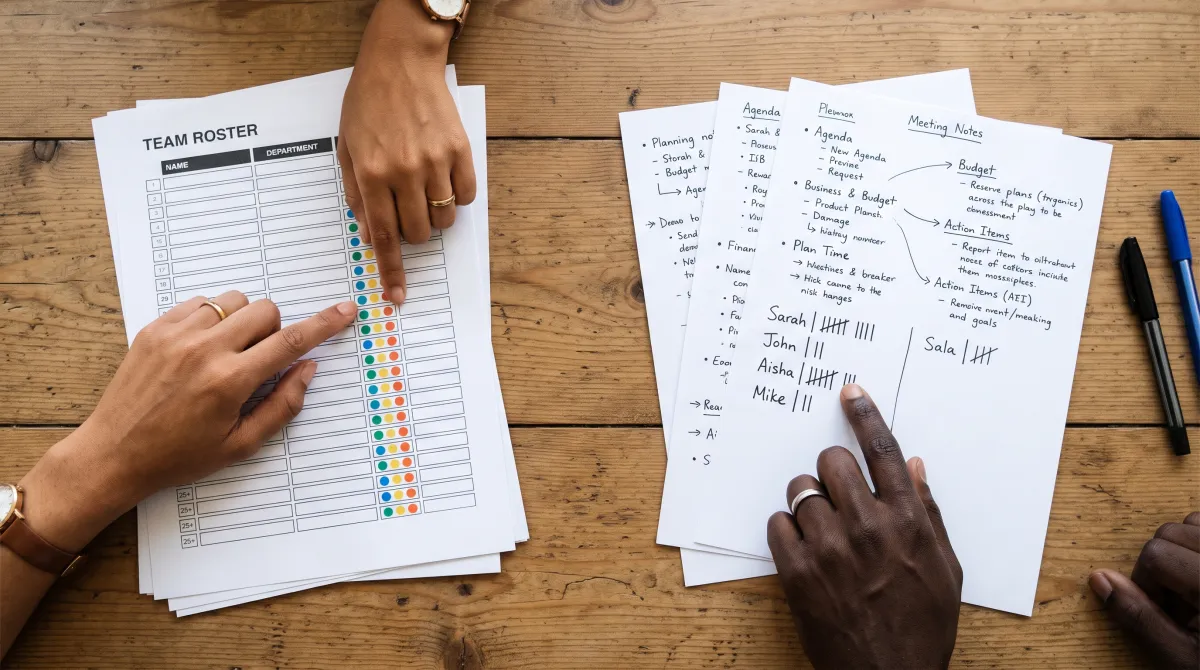
The difference between diversity and inclusion shows up in what you can count. Diversity shows in your headcount report. Inclusion shows in promotion rates, exit interviews and who talks in meetings.
| Question | Diversity | Inclusion |
|---|---|---|
| What it describes | The mix of people on the team | How those people are treated and heard |
| Where you see it | Applicant pools, hiring data, team rosters | Meetings, project assignments, promotions, exits |
| Typical metric | Share of hires from each source or group | Promotion rate and retention by group, survey scores |
| Fails when | Hiring draws from one network or school | New voices are ignored and quit within a year |
| Owner | Recruiting and hiring managers | Every manager, every week |
A team can score well on one and badly on the other. A varied roster where the same three people make every decision is diverse but not inclusive.
What are the 7 types of diversity in the workplace?
There is no single official list. Most HR frameworks split the types of workplace diversity into internal diversity (traits you are born with) and external diversity (traits shaped by life and choices). These seven types cover what most managers of a diverse workforce will meet:
- Race and ethnicity. Example: a support team that serves customers in Spanish and English needs people who can do both well.
- Gender and gender identity. Gender diversity on executive teams is the most tracked version; also check who gets assigned client-facing work.
- Age and generation. A 24-year-old and a 58-year-old often read the same customer email very differently. Use that.
- Sexual orientation. Inclusion here is often small things: benefits that cover all partners, and no assumptions in small talk.
- Disability and neurodiversity. A written agenda sent the day before helps people who process information differently, and everyone else too.
- Religion and belief. Example: a floating holiday policy lets people mark Eid, Diwali or Yom Kippur without using sick days.
- Cultural diversity and background. Nationality, language, education, social class and career path. A former teacher on a sales team brings different habits than a career rep.
Some lists add organizational diversity: department, seniority, location and work schedule. Remote and on-site staff, for example, often get very different access to leaders.
Why is workplace diversity important?
The importance of diversity comes down to better work and lower costs. These are the benefits of diversity most teams notice first:
- Fewer blind spots. A diverse team is more likely to catch the feature that confuses older users or the ad that reads badly in another culture.
- A bigger hiring pool. If you only recruit from three schools or your own referrals, you compete for the same small group of candidates as everyone else.
- A higher employee retention rate. People stay where they feel respected and see a path up. Each resignation costs you recruiting time, onboarding and lost output.
- Higher employee engagement. When people believe decisions are fair, they raise problems early instead of coasting.
- Customers who see themselves in your team. Clients notice who shows up to the pitch. A diverse workplace can relate to a wider market.
You can run the retention math yourself. Hypothetical example: a 200-person company loses 30 people a year. If replacing each one costs $15,000 in recruiting and ramp-up time, cutting exits to 24 saves $90,000 a year. Use your own numbers.
The flip side is diversity without inclusion. Hiring people from new backgrounds into a culture that ignores them raises turnover, not performance, and it teaches the next candidates to avoid you.
Inclusion is critical in the first year. A company that values diversity and inclusion backs it with practices and policies: fair interviews, written promotion rules, and managers who step in when someone is talked over. Greater diversity follows when candidates hear from current staff that the place is fair.
Diversity gets people in the door. Inclusion decides whether they are still there, and promoted, two years later.

What do diversity and inclusion look like at work? 10 examples
Inclusion practices are policies you can write down and check. Each of these ten practices in the workplace fixes one specific leak.
Hiring
- Structured interviews. Every candidate gets the same questions, scored on the same rubric before the panel talks. Write the questions and the scoring scale down before the first interview.
- Job ads that list real must-haves. Cut “degree required” if the job does not need one, and replace “culture fit” with the actual skills.
- Diverse interview panels. At least two interviewers with different roles or backgrounds, so one person's taste does not decide.
- Diversity interview questions for candidates. Ask: “Tell me about a time you worked with someone whose working style was very different from yours. What did you change?”
Daily work
- Meeting rules. Send the agenda a day ahead, collect written input first, and have the chair say: “Let's hear from someone who hasn't spoken yet.”
- Rotation of stretch work. Keep a simple list of who got the last high-visibility project, so the same two people do not get every chance.
- Clear workplace communication norms. Respect shows in small habits; these examples of respect in the workplace make the norms concrete for managers.
Growth and belonging
- Written promotion criteria. Publish what “ready for senior” means, with examples, so promotions do not depend on who knows the boss.
- Employee resource groups. Volunteer-led groups (for women in tech, veterans, parents or LGBTQ+ staff) with a small budget and an executive sponsor, open to any employee.
- An onboarding buddy. Pair each new hire with a peer for 90 days. A strong employee onboarding process is where a sense of belonging starts.
How long does it take to build a diverse and inclusive workplace? A 90-day plan
A first round of change takes about 90 days. A shift in company culture takes one to three years of repeating it. Use the plan below as a starting framework for diverse and inclusive work in a team or company of 20 to 500 people, and adjust the timing to your size.
Weeks 1-4: measure where you are
- Pull 12 months of HR data: applicants, hires, promotions and exits.
- Run a short anonymous survey with four statements on a 1-5 scale: “I feel respected by my manager”, “I can voice a different opinion without fear”, “Promotions here are fair”, “I see a future for myself here.”
- Read your last ten exit interviews and note every mention of fairness, favoritism or feeling left out.
Weeks 5-10: fix two processes, not ten
Pick the two biggest gaps from your data. If you need to increase diversity among applicants, fix job ads and sourcing first. If one group applies but rarely gets hired, fix interviews. If people join and leave fast, fix onboarding and manager behavior.
Run each fix as a small initiative with one owner, one deadline and one number to watch.
Train managers on the specific new process, not on abstract concepts. Diversity training works best when it ends with a changed behavior, such as using a scoring rubric or rotating meeting chairs. Managers also need interpersonal skills like active listening to make the new habits stick.
Weeks 11-13: report and repeat
Share results with the whole team: what you measured, what you changed, what you will check next quarter. Keep the report to one page, then repeat the cycle with the next two gaps. Diversity efforts that never report back lose trust fast.

How do you measure inclusion in the workplace?
You measure inclusion with rates, not headcounts. Diverse and inclusive cultures show up in these six KPIs, built from data most companies already hold. Compare each one across groups where group sizes allow it, and keep individual data private.
| KPI | How to calculate | Warning sign |
|---|---|---|
| Applicant mix | Applicants by source or group ÷ total applicants | One referral network supplies most applicants |
| Hire rate | Hires ÷ applicants, per group | A group applies often but is rarely hired |
| Promotion rate | Promotions ÷ headcount, per group, per year | Gaps of more than a few points that repeat each year |
| First-year retention | New hires still here after 12 months ÷ new hires | One group leaves early far more often |
| Inclusion score | Average of the four survey statements (1-5) | Score below 3.5, or one group 0.5 below the average |
| Stretch-project share | High-visibility projects per person over six months | The same few names every time |
Hypothetical example: your team of 60 has 40 people in group A and 20 in group B. Last year 6 people from A were promoted (15%) and 1 from B (5%). That ten-point gap is your first question to investigate, not a verdict on any manager.
Small teams should combine two or three years of data before reading anything into it. With five people in a group, one promotion moves the rate by 20 points.
Is diversity training enough to improve diversity?
No. A one-off workshop rarely changes how decisions get made. Training helps when it supports a new process people use the next day. These common workplace diversity mistakes undo most inclusion efforts and stall an inclusive culture:
- Counting heads only. Hiring targets with no look at retention or promotion fill the front door while people walk out the back.
- Leaving it to HR. Inclusion lives in each manager's weekly choices: who speaks, who gets the project, who gets feedback.
- Making ERGs do unpaid work. If a resource group plans events, recruits and advises leaders, recognize that work in reviews.
- Ignoring conflict. Teams with different views will disagree more. Managers need a clear conflict management style to keep debate about the work, not the people.
- Tolerating disrespect. One unchecked senior person who talks over others can undo a year of work. Raise it with them in private the same week, naming the behavior and its effect on the meeting.
Can companies still run diversity initiatives in the US?
Yes, generally, as long as they open opportunities to everyone. As of November 2026, federal law bars employers from basing hiring, pay, promotion, training or firing decisions on race, color, religion, sex, national origin, age (40 or older), disability or genetic information. The EEOC's list of prohibited employment practices covers the details.
In general terms, a mentoring program, ERG or training slot should be open to any employee who wants it. Widening where you recruit, using structured interviews and publishing promotion criteria help every candidate. Rules change and vary by state, so check specific programs with employment counsel.
How can a manager promote diversity this week?
You do not need a company program to start. Here are five things any manager can do in the next five working days:
- Look at your last three stretch assignments. If they went to the same person, give the next one to someone else.
- In your next meeting, ask for written ideas first, then discuss.
- Ask each direct report in your one-on-one: “Is there anything that makes it harder for you to speak up in team meetings?”
- Check your calendar. Recurring meetings at 7 a.m. or 6 p.m. shut out parents and people in other time zones.
- Thank someone publicly for a dissenting view that improved a decision. People repeat what gets rewarded.
Start with one of these habits, then check your numbers again next quarter.
Diversity and inclusion in the workplace: FAQ
Can you give me some examples of diversity and inclusion in the workplace?
Common examples are structured interviews with the same questions for every candidate, written promotion criteria, employee resource groups open to all, floating holidays for different religions, and meeting rules that collect written input before discussion. Each one makes access to opportunities depend less on who you know.
What are the 4 P's of inclusion?
There is no single official 4 P's model; consultants use different versions. Many group inclusion work into people, policies, practices and place (or purpose). Use it as a checklist: who you hire, what rules you write, how managers act daily, and whether the physical and digital workspace works for everyone.
What are the 7 types of diversity in the workplace?
The seven types most lists use are race and ethnicity, gender and gender identity, age, sexual orientation, disability and neurodiversity, religion and belief, and cultural background (nationality, language, education and class). Some frameworks add organizational diversity such as role, seniority and location.
What are the most common problems faced in the workplace?
The most common problems are poor communication, unclear expectations, unfair workload, conflict between colleagues, and favoritism in projects or promotions. Many of these hit people from minority groups harder, so fixing them is also inclusion work.
Why is workplace diversity important?
Workplace diversity is important because mixed teams catch more blind spots, widen your hiring pool and relate to more customers. Paired with inclusion, it also supports retention, since people stay where they feel valued and see a fair path up.
How can a company improve workplace diversity?
Start by measuring applicants, hires, promotions and exits by group, then fix the two biggest gaps. Widen where you recruit, rewrite job ads to list real requirements, use structured interviews and diverse panels, and report results every quarter.
How does workplace diversity work day to day?
Day to day, workplace diversity works through small, repeated decisions: who gets invited to meetings, who speaks, who gets the visible project, and who gets honest feedback. Policies set the rules, but managers apply them every week.