Software
Best Fulfillment Services For Startups (2026)
The best fulfillment services for startups, ranked by order minimums, product fit, and hidden fees. See which 3PL fits your volume before you sign.

Picking the best fulfillment services for startups is less about the biggest brand and more about matching a provider to your product, your volume, and your runway. Pick wrong and you bleed margin on storage fees and minimums you never hit.
Quick answer
For most early-stage brands, eFulfillment Service is the safest start because it carries no order minimums and no contract. ShipBob wins on global reach once your volume justifies it, and Red Stag is the only realistic option if you ship heavy or bulky goods.
Key takeaways
- eFulfillment Service has zero order minimums and no contract, plus a 30-day Test Drive that refunds your fees (including shipping, up to $250). It is the lowest-risk home for a young fulfillment startup.
- ShipMonk runs a roughly $250/month pick-and-pack minimum (not a per-order floor) across 12 owned centers in the US, Canada, Mexico, the UK, and mainland Europe.
- ShipBob has the largest network (50+ centers globally, 40+ in the US) but uses custom, quote-based pricing that lands around $7 to $8 all-in per order.
- Heavy or oversized products (10+ lbs)? Red Stag is built for them and backs accuracy with money-backed guarantees.
- Audit invoice line items, not headline rates. Hidden fees are where small business fulfillment budgets die.
What Is Best Fulfillment Services For Startups?
A fulfillment service stores your inventory, then picks, packs, and ships each order when a customer buys. For a startup, outsourcing this to a third-party logistics provider (3PL) means you skip the warehouse lease, the staff, and the shipping-software headache.
The catch is pricing. Most 3PLs don't publish flat rates because cost depends on your size, weight, and shipping speed. Expect roughly $3 to $10 per order, plus storage at about $0.40 to $0.60 per cubic foot per month.
That variability is why a generic top-10 list is useless. The right choice for a 5-orders-a-day candle brand looks nothing like the right choice for a 50-lb furniture seller. If you want the wider context, our business software hub tests every category a young brand touches.
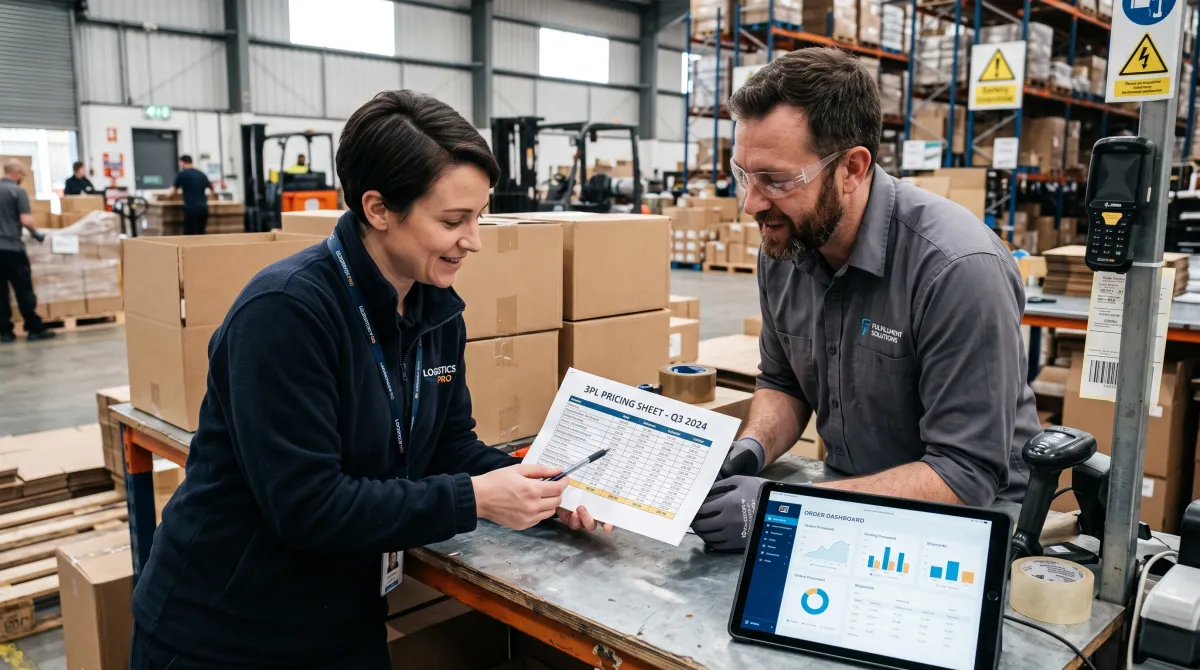
Small Business Fulfillment Services Compared
Here is the honest shortlist for small business fulfillment in 2026. It is weighted toward what actually matters for early brands: order minimums, product fit, and how badly the fees can surprise you.
| Provider | Best for | Order minimums | Watch out for |
|---|---|---|---|
| eFulfillment Service | No-minimum, no-contract early brands | None | Single Michigan location, slower coastal transit |
| ShipMonk | Subscription boxes, scaling DTC | ~$250/mo minimum | Billing complexity; read the exit clause |
| ShipBob | DTC needing global reach | Quote-based | Custom pricing you don't control; surprise charges |
| Red Stag | Heavy, bulky, high-value goods | Custom (selective onboarding) | Pricier per order; FedEx-only carrier discounts |
| ShipStation | In-house shipping with software | Subscription tiers | It's software, not a 3PL |
| Easyship | International shipping software | Free tier available | Rate aggregator, not full fulfillment |
eFulfillment Service, best no-minimum pick
Based in Traverse City, Michigan and family-owned since 2001, eFulfillment Service offers genuinely transparent terms: no setup fees, no minimums, no long-term contracts. There's even a 30-day Test Drive that refunds your fees, including shipping costs up to $250, if you walk away.
The single Michigan warehouse is the compromise. Western and coastal customers may wait an extra day in transit compared with a bicoastal network, and some reviewers flag slower check-in at very high volumes.
ShipMonk, best for scaling subscription brands
ShipMonk built its name on kitting and subscription boxes, running 12 owned fulfillment centers across the US, Canada, Mexico, the UK, and mainland Europe. For a fulfillment startup, the structure is a monthly pick-and-pack minimum (around $250), not a rigid per-order floor.
One thing to read closely: several operators report billing complexity and slow exit timelines. Below roughly 400 orders a month, compare it against lighter options first, and check the termination clause before you sign.
ShipBob, best for global reach
ShipBob's network of 50+ centers across the US, Canada, UK, EU, and Australia lets you split inventory and cut shipping zones. Pricing is fully quote-based, customized to your volume, SKU count, and storage needs, landing around $7 to $8 all-in per order.
The recurring complaint is cost predictability. Reviews cite quotes that drifted upward, plus a 3% credit-card processing fee on USD accounts and Q4 storage surcharges, both worth catching before you sign.
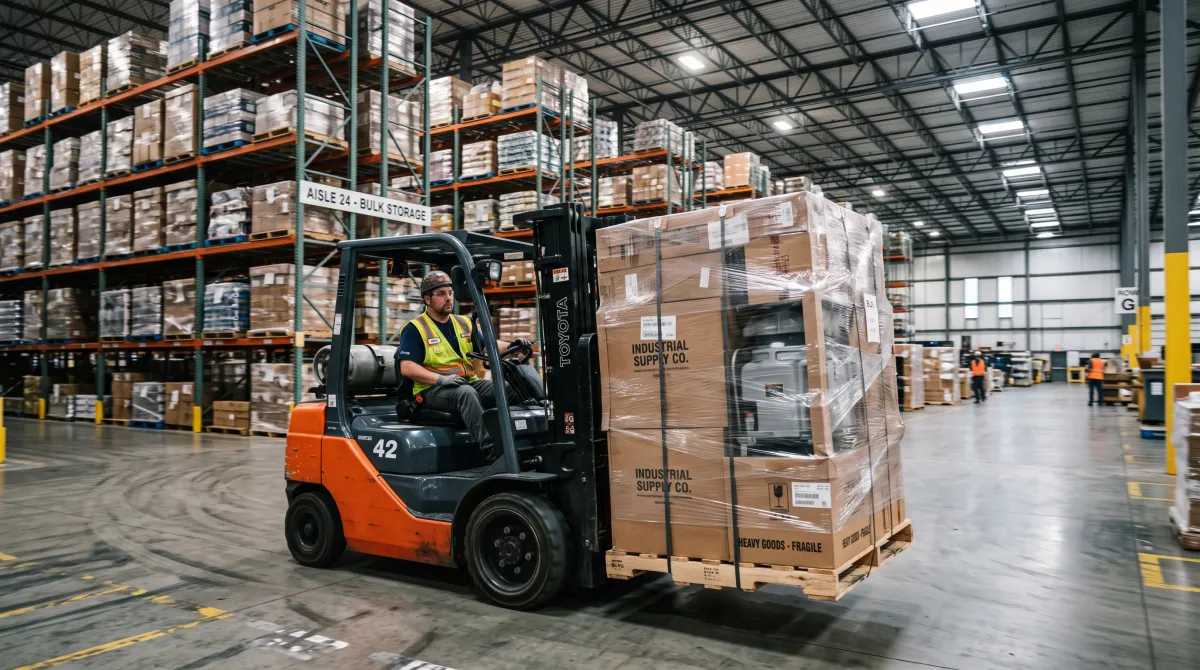
Red Stag, best for heavy and bulky
Red Stag runs two warehouses, Sweetwater, Tennessee and Salt Lake City, Utah (about 1.2 million sq ft combined), and specializes in big, heavy, and bulky goods (anything over 10 pounds or larger than a shoebox). Most automated 3PLs choke on freight; Red Stag is built for it, claiming 96% of the US reachable in 2 days via ground.
The differentiator is accountability: published 99.99% inventory and pick accuracy, a zero-shrinkage guarantee, and $50 paid directly to you for each late, lost, or inaccurate order. It leans FedEx-heavy for carrier discounts and is selective on onboarding, so apparel and thin-margin commodity DTC are usually better served elsewhere.
The best fulfillment service isn't the one with the most warehouses, it's the one whose fee structure survives your actual order mix.
Best Fulfillment Services For Startups Explained: How Pricing Works
Every 3PL stacks the same three core fees, then differentiates on the edges. Understanding the stack is how you avoid the dollar-per-order bait that hides cost elsewhere.
- Pick and pack: charged per order, often $3 to $8 for small items.
- Storage: per cubic foot ($0.40 to $0.60) or per pallet ($10 to $40/month).
- Receiving and returns: most providers charge to receive inventory; returns typically run $2 to $5 each.
Ask any provider for a cost-per-order schedule at 500, 2,000, and 10,000 monthly shipments. That single request exposes how the math changes as you scale, and it is the closest thing to a proper merchant services comparison you'll get before committing.
How to Apply Best Fulfillment Services For Startups
Treat onboarding like a trial, not a marriage. The most common reasons brands leave a 3PL are surprise fees, minimums that don't fit early volume, and support that buckles as orders climb.
Run this checklist before you move inventory:
- Insist on no-contract terms or a short, enforceable trial window to lower switching risk.
- Audit invoice line items, storage method, long-term fees, and carrier pass-throughs, because small charges compound.
- Match the provider to your product weight first, then to your shipping geography.
- Confirm integrations with your store (Shopify, Amazon, WooCommerce) are free to set up.
If your team is distributed, fulfillment becomes one more remote workflow to manage. The same remote teams best practices that keep your staff aligned, clear ownership, documented SLAs, and one source of truth for inventory, apply directly to managing a 3PL you'll rarely meet in person. Our productivity tools for teams guide pairs well with a tight fulfillment stack.
Working with remote teams best practices also means setting response-time expectations in writing. A 3PL three time zones away should have a named contact and a guaranteed reply window, not a generic ticket queue.
Best Fulfillment Services For Startups Examples In Practice
A subscription coffee brand shipping 300 small boxes a month fits eFulfillment Service or ShipMonk: low or no minimums and predictable pick fees. ShipBob would technically work, but the storage premium isn't worth it yet.
A home-gym startup shipping 40-lb racks has exactly one sensible answer: Red Stag. ShipBob and ShipMonk's automated lines would either reject the freight or bury it in oversized handling fees.
A brand selling internationally from day one pairs an in-house team with Easyship's landed-cost calculator, which shows duties at checkout and cuts refused deliveries. That's a software layer, not full fulfillment, but for cross-border startups it earns its place.
Notice the pattern: product first, geography second, brand name last.
Funding The Operation: Business Credit And Merchant Services
Fulfillment costs hit before revenue lands, so float matters. This is where the best business credit cards earn their keep, smoothing the gap between paying your 3PL's monthly minimum and collecting from customers.
Look for cards with no personal guarantee where possible, plus rewards on shipping and software spend. The same scrutiny applies to payment processing: run a real merchant services comparison on rates, payout speed, and chargeback handling before you lock in.
Two underrated questions when vetting processors: do they offer merchant services no personal guarantee, and what are the actual merchant services requirements, meaning credit checks, time in business, and monthly volume floors. Early founders are often surprised that merchant services requirements can be stricter than the fulfillment contract itself. Securing those accounts matters too, and our security software for small business roundup covers the basics.
Best Fulfillment Services For Startups: FAQ
What are the best business credit cards for a fulfillment startup?
The best business credit cards for fulfillment costs reward shipping and software spend and, ideally, carry no personal guarantee. Prioritize a card with a billing cycle long enough to cover the gap between paying your 3PL and collecting customer revenue.
What is the best business credit card if I have limited history?
The best business credit card for thin credit history is usually one tied to your business revenue rather than personal score, often a charge card from a fintech issuer. Confirm whether it reports to business bureaus so you build credit as you spend.
Which are the best credit cards for business shipping rewards?
The best credit cards for business shipping rewards offer elevated points on logistics and SaaS categories. Match the card's bonus categories to where your fulfillment dollars actually go each month.
Is there a single best credit card for business fulfillment spend?
There's no single best credit card for business across the board. The right pick depends on your volume and whether you need a personal guarantee. Compare annual fees against the rewards you'll realistically earn on shipping and storage.
What about the best company credit cards for teams?
The best company credit cards for teams let you issue employee cards with spending limits, which helps when remote staff approve fulfillment or restock charges. Look for free sub-cards and real-time spend controls.
Do fulfillment startups need order minimums?
No. eFulfillment Service and Red Stag both serve fulfillment startups without strict order minimums. ShipMonk uses a roughly $250 monthly pick-and-pack minimum rather than a per-order floor, which still suits inconsistent early volume.