Software
What Is The Best Spelling And Grammar Checker (2026)
What is the best spelling and grammar checker in 2026? Grammarly wins for most writers, while ProWritingAid, LanguageTool, and QuillBot lead in specific niches.
What is the best spelling and grammar checker in 2026? For most writers it is Grammarly, thanks to its accuracy and wide app coverage. Fiction writers get more from ProWritingAid, and multilingual writers do better with LanguageTool.
Quick answer
Grammarly is the best all-around spelling and grammar checker for most people in 2026. ProWritingAid wins for novelists and long-form fiction, LanguageTool is the top pick for multilingual writers, and QuillBot is the budget option for students who also want paraphrasing.
Key takeaways
- Grammarly Pro costs $12/month on an annual plan and stays the strongest general-purpose checker in 2026.
- ProWritingAid is built for fiction, with craft-level reports Grammarly does not offer, plus a $399 lifetime plan.
- LanguageTool supports 30+ languages, though its free tier was cut back in 2026 to roughly 10,000 characters per check.
- QuillBot pairs grammar checking with paraphrasing, starting around $8.33/month on an annual plan.
- No single tool wins every category. The right pick depends on your language, genre, and budget.
What Is a Spelling and Grammar Checker?
A spelling and grammar checker scans text for misspellings, punctuation errors, and grammatical mistakes, then suggests fixes in real time. Early tools like a basic word processor spell check only matched words against a fixed dictionary.
Modern checkers use natural language processing to catch style, tone, wordiness, and clarity issues too. Some also flag plagiarism or generate full-sentence rewrites, which pushes them closer to writing assistants than simple proofreaders.
If you are comparing writing software alongside other categories for your business, our software buying guides use the same test-with-real-documents approach covered below.
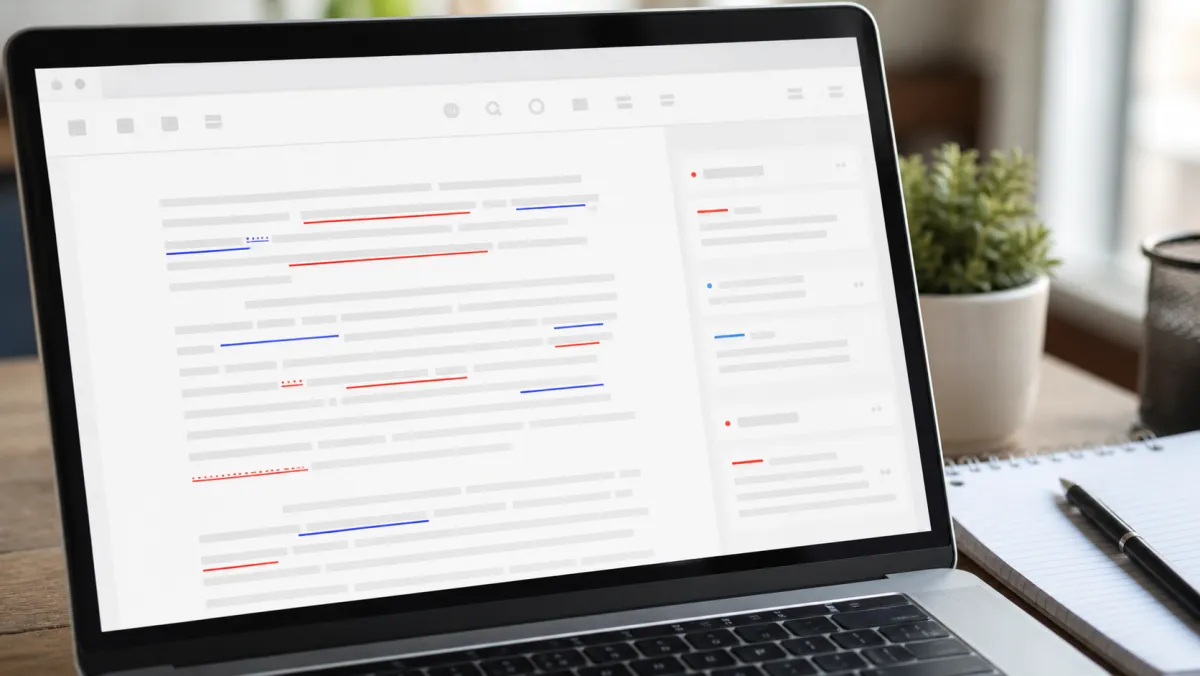
The Best Spelling and Grammar Checkers, Explained
These four tools cover almost every use case, from daily email proofreading to full manuscript edits. Pricing and features below reflect current 2026 plans, since providers change tiers often.
Grammarly: Best All-Around Checker
Grammarly remains the default pick for most writers in 2026. Its free plan covers grammar, spelling, punctuation, and basic tone detection, plus 100 generative AI prompts a month. Grammarly Pro costs $12 a month on an annual plan, or $30 a month if you pay monthly, and adds full-sentence rewrites, unlimited plagiarism checks, and advanced tone control.
Grammarly hit a rough patch in March 2026, when its "Expert Review" feature drew a class-action lawsuit for attributing AI-generated feedback to real authors like Stephen King and Carl Sagan without their permission. The company shut the feature down after the backlash.
The core spelling and grammar checker still tests as the most accurate for English writing. It now sits inside the broader "Superhuman" productivity suite following the company's 2025 rebrand, though Pro pricing has not changed.
ProWritingAid: Best for Fiction and Long-Form Writing
ProWritingAid is the stronger choice for novelists and long-form writers. It ships 25-plus craft-level reports covering pacing, sensory detail, dialogue tags, and comparisons against published authors, none of which Grammarly offers.
Premium runs about $120 a year, roughly $10 a month, undercutting Grammarly Pro. A $399 lifetime plan removes recurring billing entirely. The free tier caps checks at 500 words, which is limiting for manuscript-length editing.
LanguageTool: Best for Multilingual Writers
LanguageTool is the clear leader if you write in more than one language. It supports over 30 languages with dedicated grammar rules for each, rather than a single English-first engine translated elsewhere.
Premium costs about $59.90 a year, close to $5 a month. LanguageTool cut its free tier in 2026 to roughly 10,000 characters per check, down from a far more generous limit before. English-specific suggestions are still less nuanced than Grammarly's in some advanced style cases, which is the trade-off for that language breadth.
QuillBot: Best Budget Pick for Students
QuillBot bundles a grammar checker with paraphrasing and an AI detector. Premium starts around $8.33 a month on an annual plan, cheaper than Grammarly Pro, and the AI detector is free to use.
In head-to-head tests, Grammarly still catches more grammar errors than QuillBot on the same document. Students who need affordable paraphrasing and citation help alongside basic proofreading tend to prefer QuillBot anyway.
| Tool | Best for | Starting price | Free tier |
|---|---|---|---|
| Grammarly | All-around English writing | $12/month (annual) | Basic checks + 100 AI prompts/mo |
| ProWritingAid | Fiction and long-form | $10/month (annual) or $399 lifetime | 500 words per check |
| LanguageTool | Multilingual writers | ~$5/month (annual) | ~10,000 characters per check (cut in 2026) |
| QuillBot | Students, paraphrasing | $8.33/month (annual) | 125-word paraphrase limit |
The best grammar checker is the one that matches how you actually write, not the one with the longest feature list.
Grammar Checker Examples: Grammarly vs ProWritingAid vs LanguageTool vs QuillBot
A blogger publishing three posts a week gets the most from Grammarly's browser extension, since it catches errors directly in the CMS editor. A novelist drafting a 90,000-word manuscript benefits more from ProWritingAid's pacing and dialogue reports.
A marketing team writing in English, German, and Spanish needs LanguageTool's multilingual rules instead of running three separate tools. A student writing research papers on a tight budget can pair QuillBot's free grammar checker with its citation generator.
Professional writing tasks matter here too. Polishing high-stakes text like a performance review benefits from a second pass through any of these tools; see our examples of nice things to say about your boss in a review for the kind of wording a grammar checker helps you tighten.
Why Grammar Checkers Matter for Remote Teams and Small Businesses
Solid remote teams best practices always include a shared style guide, and a grammar checker enforces that guide automatically across every writer on the team. Working with remote teams best practices also means agreeing on one tool so feedback inside Slack or Google Docs stays consistent instead of scattered across five different opinions on comma usage.
The same logic applies when you evaluate software for other departments. Comparing the best business credit cards or choosing productivity tools for teams both come down to testing real use cases before you commit to an annual plan.
How to Choose the Right Grammar Checker for Your Writing
Start with what you actually write most. Daily emails and blog posts favor Grammarly, fiction favors ProWritingAid, and multilingual content favors LanguageTool.
Check the free tier limits before paying for anything. A 500-word cap is fine for emails but useless for a novel chapter, while a 10,000-character cap covers a short blog post but not a long one.
For the grammar rules themselves, not just the automated flags, university resources like the Purdue Online Writing Lab are worth bookmarking. They explain the reasoning behind a rule, which helps you catch mistakes a checker misses.
Review the privacy policy, especially if your text includes client or company data. The same due diligence you would apply when picking security software for a small business applies to any tool that reads and stores your writing.
Test the free version on a real document before subscribing. A 15-minute trial on your actual writing tells you more than any comparison table, including this one.
Spelling and Grammar Checker FAQ
Is Grammarly still the best grammar checker in 2026?
Grammarly is still the most accurate general-purpose grammar checker in 2026 for English writing, despite the March 2026 controversy over its unauthorized "Expert Review" feature.
What is the best free grammar checker?
LanguageTool has the most generous free tier among the major tools, even after its 2026 cutback to roughly 10,000 characters per check, making it a strong free option for multilingual writers.
Which grammar checker is best for non-native English writers?
LanguageTool is the strongest pick for non-native and multilingual writers, since it applies dedicated grammar rules across more than 30 languages instead of one English-first engine.
Do professional editors still use grammar checkers?
Yes, most professional editors run a grammar checker as a first pass before a manual edit, since it catches typos and obvious slips faster than reading alone.
What are the best business credit cards for freelance writers?
The best business credit cards for freelance writers usually offer no annual fee and cash back on recurring software subscriptions; compare current offers directly since terms change often.
Is there one best business credit card for a one-person writing business?
There is no single best business credit card for every solo writer, since the right one depends on how much you spend monthly on software, travel, and equipment.
What should I look for in the best company credit cards for a small content team?
The best company credit cards for a small content team combine per-employee cards, spending controls, and rewards on recurring bills like grammar checkers and project management software.