Software
Gartner Competitors (2026): Forrester, IDC + 6 Picks
Gartner competitors ranked: Forrester, IDC, and 6 alternatives, plus how the same analysis sizes up Starbucks, Tesla, and Caterpillar rivals.

If you are mapping Gartner competitors, you are really doing two jobs at once. You are finding a research firm that fits your budget, and learning how to read a competitive landscape. Gartner still leads technology research, but its entry subscriptions run roughly $25,000 to $60,000 a year. That price pushes many buyers to look elsewhere.
Quick answer
Gartner's biggest competitors are Forrester and IDC, the other two firms in the "FIG" trio that dominate analyst research. Below them sit specialists like Everest Group, TSIA, Nucleus Research, and 451 Research, plus peer-review platforms such as G2. The right pick depends on budget and how specialized your sector is.
Key takeaways
- Gartner, Forrester, and IDC are the three giants that set the agenda for IT research.
- Forrester leans into customer experience; IDC is the data-and-numbers firm; both undercut Gartner on flexibility.
- Specialists like Everest Group, TSIA, and Nucleus Research often beat Gartner on depth in one niche.
- The same competitor-analysis logic applies to any brand, so this guide also breaks down Starbucks, Tesla, Caterpillar, Etsy, CVS, and Topgolf.
- Pick on budget and specialization, not brand name.
What Is Gartner Competitors Analysis, Really?
Gartner sells research subscriptions, advisory calls, and events, anchored by the Magic Quadrant and Hype Cycle frameworks. With around 17,000 employees and over $4.2 billion in annual revenue, it is the largest analyst firm by a wide margin.
A "Gartner competitor" is any firm that helps you make the same buying or strategy decision for less money or with deeper focus. Some replicate Gartner's analyst model. Others flip it entirely, using peer reviews instead of analyst opinion.
That peer-review lens is the same one our software hub uses to compare tools side by side. It rewards real user signals over a single analyst's verdict.
Most buyers do not need Gartner. They need one good answer in their niche, and that is where the specialists win.

Gartner Competitors Explained: The 6 That Matter
The market splits into three groups: analyst-led rivals, specialized boutiques, and peer-review platforms. Here is how the real alternatives stack up in 2026.
| Firm | Best for | Methodology | Entry price (approx.) |
|---|---|---|---|
| Forrester | Customer experience and tech strategy | Forrester Wave | High, custom |
| IDC | Market sizing and data | IDC MarketScape | From ~$12,000 |
| Everest Group | Sourcing and digital transformation | PEAK Matrix | Custom |
| TSIA | Tech and services benchmarks | Benchmark data | Custom |
| Nucleus Research | Case-based ROI proof | Real deployments | Custom |
| G2 / PeerSpot | Peer software reviews | User ratings | Free tier |
Forrester
Forrester is the closest match to Gartner's model: reports, advisory, and events. Its edge is customer experience and how technology shapes buyer behavior. With roughly 600 analysts and about $537 million in revenue, it is smaller than Gartner.
Its flagship Forrester Wave reports rate vendors much like a Magic Quadrant. So the learning curve is small if you already read Gartner research.
IDC
IDC, part of International Data Group, is the most data-driven of the three. With over 1,300 analysts, it is the firm you call for market sizing, share numbers, and forecasts. Its documented entry point near $12,000 makes it the most accessible traditional analyst firm, and the IDC MarketScape is its vendor-evaluation tool.
The specialists
Everest Group owns sourcing and digital-transformation depth. TSIA delivers hard benchmarks for technology and services teams. Nucleus Research is the only firm building case-based research on real deployments, which is gold if you want ROI proof. 451 Research, now part of S&P Global, focuses on emerging tech and disruption.
One shift matters in 2026. G2 completed its acquisition of Gartner Digital Markets (Capterra, Software Advice, GetApp) on February 5, 2026, for about $110 million. The deal pushed G2's verified-review pool toward 6 million and doubled its annual buyer reach to roughly 200 million.
For the best Gartner alternatives on a tight budget, pair a peer-review platform like G2 with one specialist subscription. You get crowd validation plus expert depth without an enterprise contract.
Gartner Competitors Examples: Same Logic, Six Brands
Competitor analysis is not unique to research firms. The same method works for any company: list the rivals, find the moat, name the budget challenger. Here are six worked examples using current 2026 data, including several that buyers search for constantly.
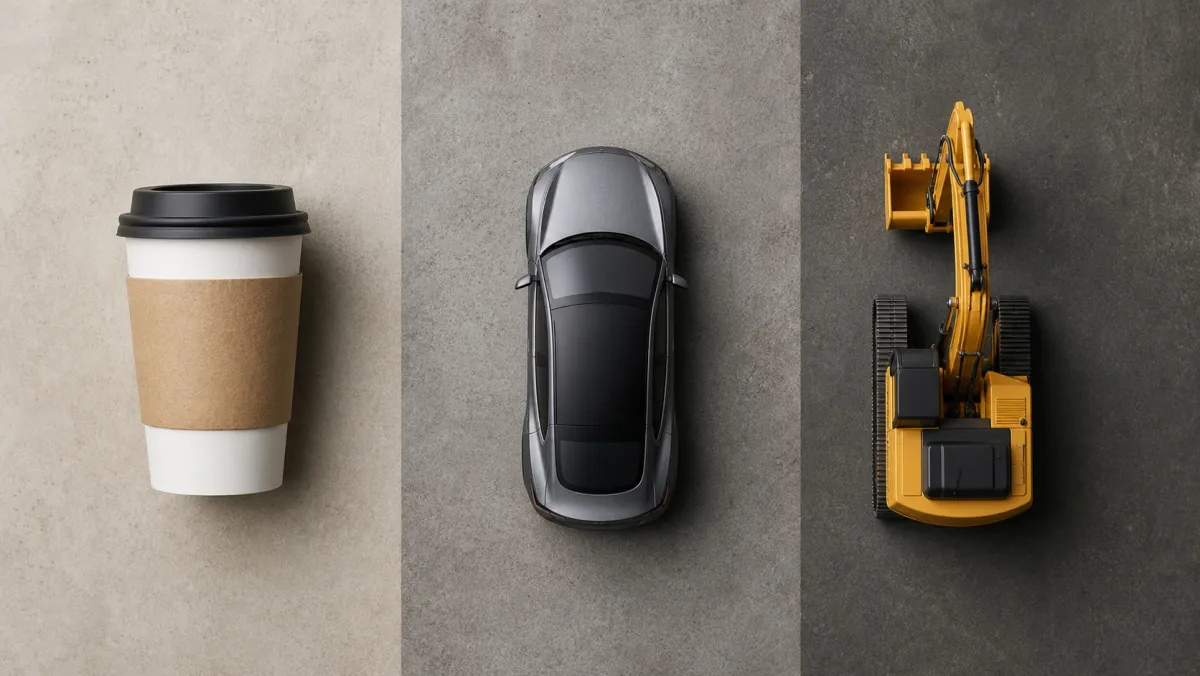
Starbucks competitors
The top Starbucks competitors in 2026 are McDonald's McCafe, Dunkin', Dutch Bros, 7 Brew, Luckin Coffee, and Tim Hortons. Starbucks runs more than 40,000 stores worldwide, including over 16,000 in the US, so the competitors of Starbucks attack from below on price or speed.
Dunkin' is the legacy value rival, now near 10,000 US locations. Dutch Bros is the fast-growing drive-thru challenger, at 1,177 units as of March 31, 2026, after 19 straight quarters of opening 30 or more stores.
7 Brew is the new disruptor, past 777 stands and on pace to top 1,000 by the end of 2026. Third-wave roasters like Blue Bottle chip at the premium end. Those specialty shops are the starbucks biggest competitors for the high-margin customer, even if they are tiny on store count.
Tesla competitors
The main tesla competitors in 2026 are BYD, Rivian, Ford, GM, Toyota, and Volkswagen. The split is sharp. BYD now outsells Tesla globally, yet Tesla still commands roughly 45 to 59% of the US EV market after the federal tax credit ended in late 2025.
Rivian started delivering its affordable R2 in mid-2026, making it the biggest near-term US threat to the Model Y. Trade and regulatory hurdles keep BYD nearly absent from the US, so Tesla often wins at home by default. Meanwhile several legacy giants are scaling back EV plans, an unusual case where the incumbents retreat while pure-play challengers push.
Caterpillar competitors
The leading caterpillar competitors are Komatsu, Volvo CE, John Deere, SANY, and XCMG. The other competitors of caterpillar include Hitachi, Liebherr, and JCB. Caterpillar still leads with about 17% global share, so the field stays fragmented below it.
Komatsu, the second-largest maker, held roughly 11.2% in late 2025 and invests heavily in autonomous machines. Volvo is the electric-equipment aggressor, leading Europe in battery compact gear. These are the caterpillar inc competitors that matter when you weigh durability against sustainability roadmaps.
Etsy, CVS, and Topgolf
The biggest etsy competitors are Amazon Handmade, eBay, and Shopify, with rising fees pushing many sellers toward Shopify for control. The top cvs competitors span pharmacy and care, so the real cvs health competitors are Walgreens, UnitedHealth's Optum, Cigna's Express Scripts, Walmart, and Amazon Pharmacy.
In golf entertainment, the closest topgolf competitors are Puttshack, Drive Shack, Five Iron Golf, and X-Golf, with Topgolf out-scaling all of them on locations and tracked-ball tech. Note that BigShots Golf is now owned by Topgolf's own parent, not a rival. Even niche services follow the pattern: searching marketerhire competitors surfaces Toptal, Growtal, and similar platforms for on-demand marketing talent.
How to Apply Gartner Competitors Analysis
You do not need a six-figure subscription to run this well. Use the structure the analyst firms use, just at your scale.
- List the field. Name 5 to 10 direct and indirect rivals, like the Starbucks or Tesla lists above.
- Find the moat. Ask what each rival cannot easily copy: Starbucks' store density, Tesla's charging network, Caterpillar's dealer reach.
- Name the budget challenger. There is always a cheaper, faster option eating the bottom, like IDC against Gartner or Dutch Bros against Starbucks.
- Score on fit, not fame. Pick the rival or tool that matches your specific job, not the loudest brand.
If you are choosing software to run that analysis, our productivity tools for teams guide pairs well with this framework. It covers the apps that keep a research project organized end to end.
Security-conscious buyers should also skim our small-business security software picks before signing any vendor contract. A research subscription often means new logins and shared data.
Gartner Competitors: FAQ
Who are Starbucks competitors?
Starbucks' main competitors are McDonald's McCafe, Dunkin', Dutch Bros, 7 Brew, Luckin Coffee, Tim Hortons, and third-wave roasters like Blue Bottle. Dunkin' is the largest legacy US rival, near 10,000 locations, while Dutch Bros and 7 Brew are growing fastest.
Who are Caterpillar's competitors?
Caterpillar's competitors are Komatsu, Volvo CE, John Deere, SANY, XCMG, Hitachi, Liebherr, and JCB. Komatsu, the second-largest manufacturer, is the closest global rival with about 11.2% market share against Caterpillar's 17%.
What is Starbucks' market share vs competitors?
Starbucks leads US coffee by scale with more than 16,000 US cafes and over 40,000 stores worldwide. Dutch Bros (1,177 units) and 7 Brew (777-plus) are taking share fastest, while Dunkin' remains the largest established rival near 10,000 locations.
What are the best Gartner alternatives?
The best Gartner alternatives are Forrester and IDC for broad analyst research, plus specialists like Everest Group, TSIA, Nucleus Research, and 451 Research. IDC is the most budget-friendly, with entry near $12,000 a year.
How does Starbucks differ from specialty coffee competitors?
Starbucks competes on scale, loyalty, and consistency across 40,000-plus stores, while specialty coffee competitors win on craft, single-origin beans, and roast quality. Starbucks defends the mass premium tier; third-wave shops own the connoisseur tier.