Marketing
Intensive Distribution (2026): Strategy & Examples
Intensive distribution places a product in the maximum number of outlets to capture impulse buyers. See which model fits your goods and margins.
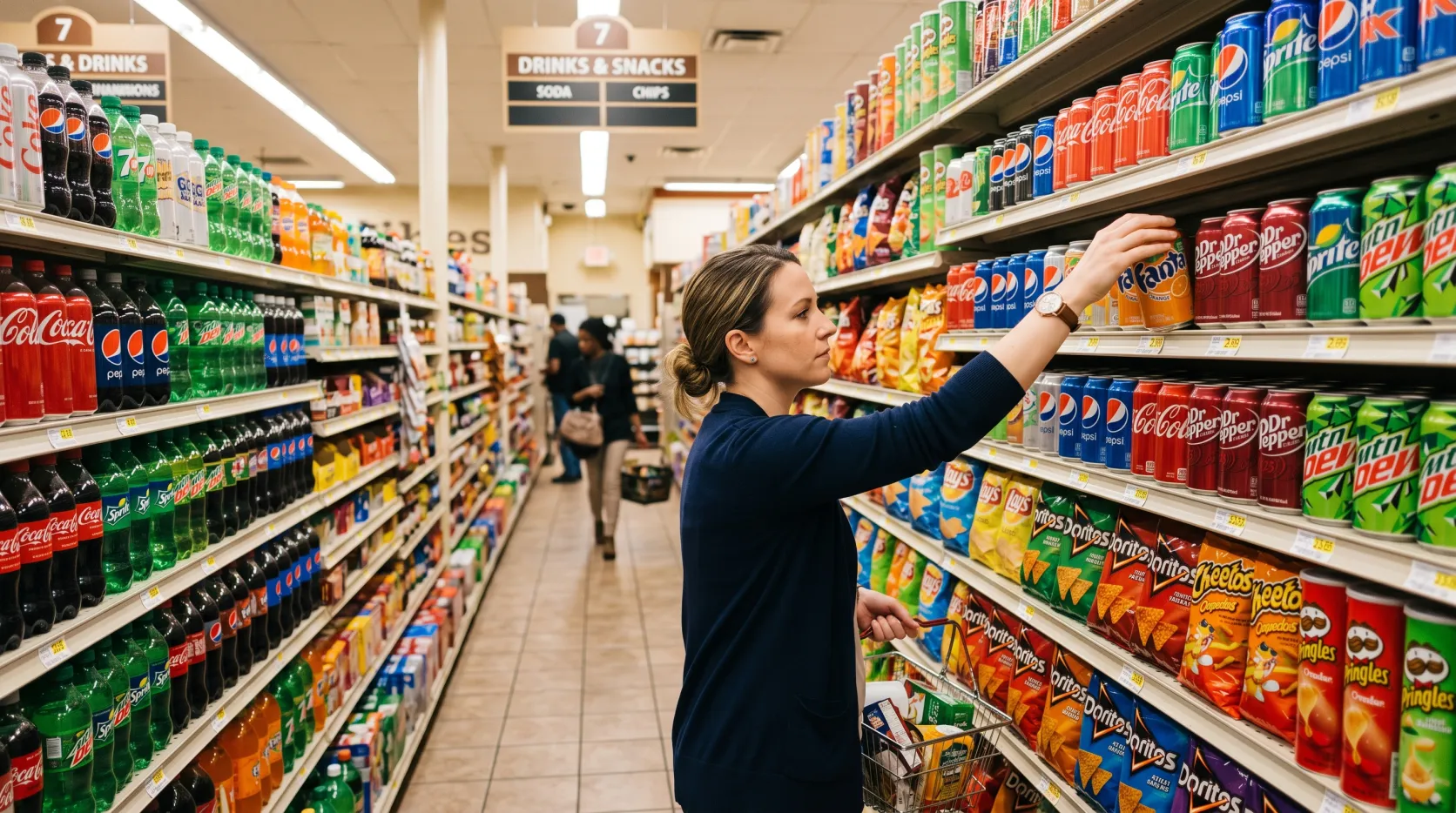
Walk into any gas station, supermarket, vending machine, or corner shop and you will find a can of Coca-Cola. That ubiquity is not luck. It is intensive distribution at work, a deliberate strategy to place a product in as many outlets as humanly possible.
I have built distribution plans for FMCG brands, and the logic never changes. When a buyer decides on impulse and brand loyalty is thin, the brand that is physically present wins. Availability beats persuasion.
Quick answer
Intensive distribution is a marketing strategy that places a product in the maximum number of retail outlets to capture impulse buyers and dominate shelf presence. It suits low-cost, high-frequency convenience goods where availability drives the sale more than brand storytelling.
Key takeaways
- Intensive distribution maximizes outlet coverage; selective distribution limits it to chosen retailers.
- It works best for convenience goods: snacks, soft drinks, batteries, cigarettes, chewing gum.
- The trade-off is thin margins, weak channel control, and heavy logistics.
- Use it when purchase decisions are impulsive and switching costs are near zero.
- Luxury and technical products almost always use selective or exclusive models instead.
What Is Intensive Distribution?
Intensive distribution is a strategy where a company sells its product through every viable outlet in a market. The goal is total market saturation, so the customer never has to look hard or wait.
To frame it properly, start with the distribution channels definition. A distribution channel is the chain of intermediaries, wholesalers, retailers, and agents, through which a product travels from manufacturer to end consumer.
The distribution channels meaning goes beyond logistics. The channel shapes price, availability, and brand perception. Choose the wrong one and even a great product stalls on the wrong shelves.
If you want the full picture, our marketing strategy hub places distribution alongside the other levers that move a product. Distribution rarely works in isolation from price and promotion.
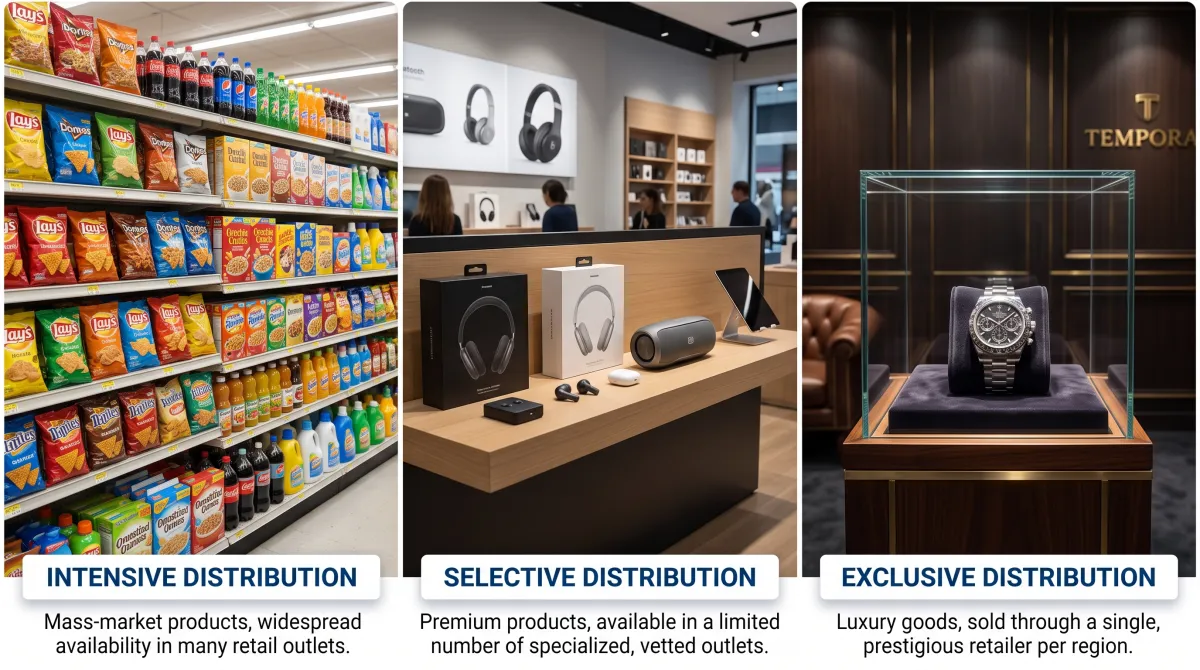
Within that framework, intensive distribution sits at one extreme: cast the widest net. The opposite end is exclusive distribution, where a single retailer carries the product in a region.
Intensive Distribution Explained: The Three Strategies Compared
There are three core types of distribution channels intensity levels, and picking the right one decides how your product reaches shoppers. Each fits a different product category and buyer mindset.
An intensive distribution strategy chases volume through ubiquity. A selective distribution approach picks a limited set of qualified retailers. Exclusive distribution grants rights to one partner per area.
| Strategy | Outlet coverage | Best for | Channel control |
|---|---|---|---|
| Intensive | Every possible outlet | Convenience goods, impulse buys | Low |
| Selective | Chosen qualified retailers | Shopping goods, electronics, apparel | Medium |
| Exclusive | One retailer per region | Luxury, cars, specialty | High |
The selective distribution definition is straightforward: the brand hand-picks retailers that match its image and service standards. Think Bose speakers in audio specialists, not every corner shop.
A good selective distribution strategy trades reach for control and margin. You lose some volume, but you protect price points and brand equity, which is why premium electronics and fashion lean this way.
The reason these distribution channels strategies diverge comes down to one question: does presence or persuasion close the sale? Cheap, frequent buys reward presence. Considered, expensive buys reward curation.
If a shopper decides in three seconds at the register, presence is your whole strategy. If they research for three weeks, presence means almost nothing.
Intensive Distribution Strategy: When It Wins
The case for going distribution intensive is strongest when three conditions align. Get these right and saturation pays off; get them wrong and you bleed margin for no reason.
- Low price, frequent purchase. Gum, soda, batteries. Customers buy often and barely think about it.
- Impulse-driven decisions. The product sells because it is there, not because of a sales pitch.
- Low brand switching cost. If your brand is missing, the shopper grabs a substitute without hesitation.
This is the heart of intensive distribution marketing: you win the sale at the moment of availability. The marketing job is to support that presence with recall, so the eye lands on your label first.
That said, a distribution strategy intensive in coverage demands serious logistics muscle. You need reliable wholesalers, replenishment systems, and the cash to fund thousands of small placements across stores.
Saturation also raises an ethical edge most brands ignore. Flooding every channel with high-sugar or high-impact products invites scrutiny, which is where the societal marketing concept earns its keep. Reach has consequences worth weighing.

Intensive Distribution Examples
Real brands make the concept concrete. These companies treat shelf presence as a competitive moat, and their distribution channels strategies reflect that.
- Coca-Cola. Sold in over 200 countries through supermarkets, vending machines, restaurants, kiosks, and vending fridges. The mantra is to be within an arm's reach of desire.
- Mars and Mondelez. Snack bars and gum positioned at nearly every checkout lane, the prime impulse zone.
- Duracell. Batteries stocked in pharmacies, grocery stores, electronics shops, and gas stations alike.
- Lay's. PepsiCo's chips appear in convenience stores, vending machines, and big-box retailers worldwide.
Contrast that with selective brands. Apple uses authorized resellers and its own stores; Rolex sells only through approved jewelers. Those selective distribution strategies protect exclusivity that intensive coverage would destroy.
How to Apply Intensive Distribution
If your product fits the convenience-goods profile, here is the practical sequence I use to build coverage without burning cash.
- Map the outlets. List every channel where your buyer could plausibly grab the product: grocery, convenience, vending, online marketplaces.
- Secure wholesalers first. You cannot reach thousands of small retailers directly. Distributors are the backbone of intensive reach.
- Standardize the offer. Consistent packaging and pricing keep the product easy to stock and reorder.
- Win the shelf, not just the store. Negotiate eye-level and checkout placement. Being in the store but invisible defeats the purpose.
- Measure availability rate. Track the percentage of target outlets that actually carry you. That number is your real scoreboard.
Pair this with a clear view of your full marketing system. Distribution is one lever, and it interacts with the other levers covered in our guide to the 5 Ps of the marketing mix, where product, price, place, and promotion all pull together.
One honest warning. Intensive distribution erodes your control over how the product is presented and priced. Discount channels can undercut your positioning, so weigh reach against the brand discipline you are willing to surrender.
Intensive Distribution FAQ
What is distribution channels?
Distribution channels are the routes a product takes from manufacturer to consumer, including wholesalers, retailers, and agents. They determine where, how, and at what price customers can buy the product.
What are distribution channels examples?
Common distribution channels examples include direct online sales, retail supermarkets, wholesalers supplying corner shops, vending machines, and authorized dealer networks. A single brand often uses several at once.
What are selective distribution examples?
Selective distribution examples include Bose speakers sold through chosen audio retailers, premium cosmetics in department stores, and mid-range electronics in approved chains rather than every outlet.
Can you give a selective distribution example?
A clear selective distribution example is Samsung placing its flagship phones in carrier stores and vetted electronics chains, not in every gas station or kiosk, to protect service quality and image.
What are intensive distribution examples?
Intensive distribution examples include Coca-Cola, Lay's chips, Wrigley's gum, and Duracell batteries, all stocked in the maximum number of outlets to capture impulse purchases everywhere.