Business Concepts
De Sos Business Search (2026): Vet Any Company Free
The de sos business search is Delaware's free entity lookup. See how to confirm a company is real, active, and in good standing before you sign or wire a cent.

The de sos business search is the official Delaware Secretary of State tool for looking up any company registered in the state. If you are vetting a supplier, a partner, or a target you might buy, this free lookup is where serious due diligence starts, long before you read a single financial statement.
Quick answer
The de sos business search is Delaware's free entity lookup, run by the Division of Corporations. You type a company name or file number and it returns the entity's status, formation date, type, and registered agent. It confirms a company legally exists before you sign anything or move money.
Key takeaways
- Delaware hosts over a million entities, so the search is a core first step in any US business check.
- The lookup confirms legal status, not financial health, so pair it with the company's own books.
- Once an entity checks out, read its financials using the definitions covered below.
- A clean search plus honest numbers beats a slick pitch every time.
What Is De Sos Business Search?
De SOS business search stands for the Delaware Secretary of State business entity search. It is the public database of every corporation, LLC, and partnership formed in Delaware.
Delaware is where more than 60% of Fortune 500 companies incorporate, thanks to its Court of Chancery and the Delaware General Corporation Law. That popularity is exactly why this search matters far beyond the state line.
You use it to confirm a company is real, active, and in good standing. Skipping that check is how people wire deposits to shells that never existed. If you want the wider vocabulary of vetting, our business concepts hub maps every term you will meet.
De Sos Business Search Explained
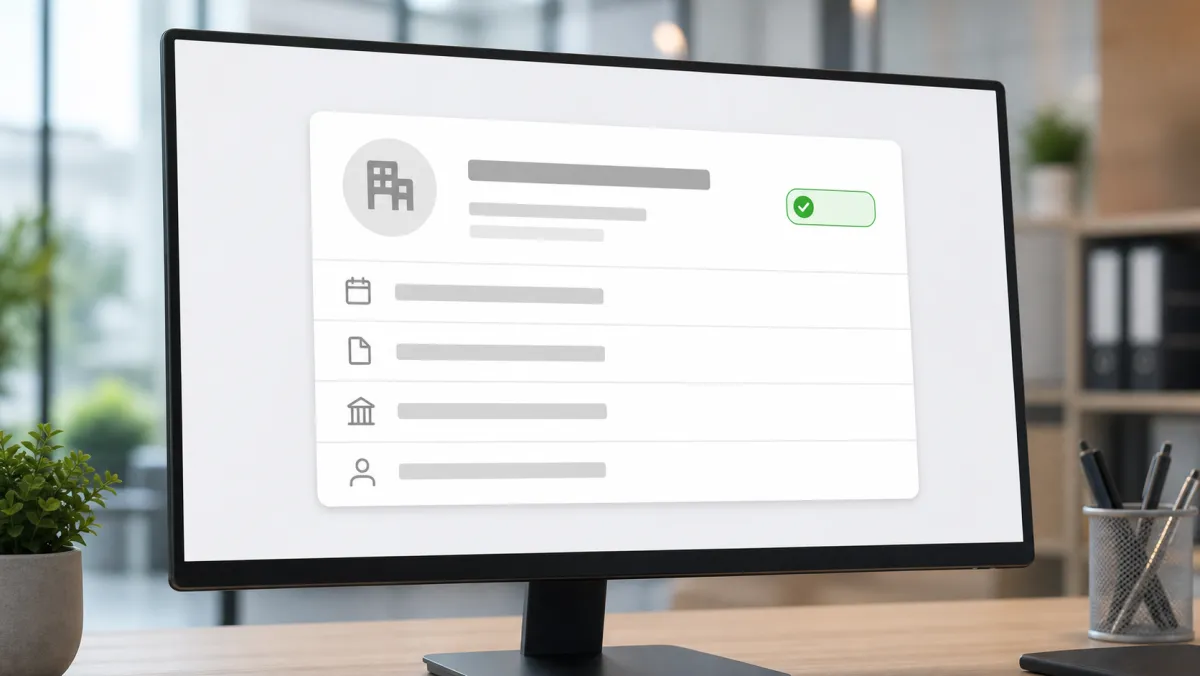
The tool sits on the Division of Corporations website. You enter a name or a seven-digit file number, then read the result card the system returns.
Each result shows four things that decide your next move.
- Entity name and file number, your unique reference.
- Status: active, good standing, void, or forfeited.
- Formation date and entity type (LLC, corp, LP).
- Registered agent, the legal contact for service.
A status of "void" or "forfeited" is a red flag. It usually means unpaid franchise tax and a company you should not trust with a contract.
The search is deliberately thin on detail. Delaware does not publish owner names or financials, so the tool proves existence and standing, nothing more. That same instinct that spots a fake entity should also spot bad behaviour inside a real one, the kind covered in our guide to the signs you are being set up to fail.
A company that cannot pass a free public search will not survive a paid audit.
De Sos Business Search Examples
Say you are about to onboard a SaaS vendor billing you $40,000 a year. You run the de sos business search, confirm the LLC is active and in good standing, and note the formation date matches their pitch.
Now flip it. A "partner" claims a decade of trading, but the entity was formed six weeks ago. That gap is your cue to slow down and ask hard questions.
One more case: a middleman resells a service and takes a cut. The entity is real, yet the model matters, which is where reintermediation shapes how much margin actually reaches them. The search clears the legal gate; the business model decides the risk.
The search is binary at this stage: the entity clears, or it does not. The real analysis begins once you move from legal status to the numbers.
How to Apply De Sos Business Search
A clean lookup is step one. Step two is reading the financial statements a legitimate company will happily share. Here are the terms you will meet, in plain English.
The balance sheet
The balance sheet definition is a snapshot of what a company owns and owes on a single date. The balance sheet meaning in practice: assets on one side, liabilities plus equity on the other, always in balance.
Inside it you will find accounts receivable. The accounts receivable definition is money customers owe the business for goods or services already delivered. The accounts receivable meaning for you is simple: high receivables that never get collected signal weak cash discipline.
Cash and working capital
The cash flow definition is the actual movement of money in and out of the business over a period, not accounting profit. A company can look profitable on paper and still run dry.
The working capital definition is current assets minus current liabilities. Positive working capital means the company can pay its near-term bills without borrowing.
Watch how the two connect. Slow-paying receivables inflate assets but starve cash, so a business with a strong balance sheet can still miss payroll. Read both statements together, never one alone.
Margins and asset wear
The gross margin definition is revenue minus the direct cost of goods, shown as a percentage. The gross margin meaning tells you how much each sale contributes before overhead, and thin margins leave no room for error.
Fixed assets lose value over time. The depreciation meaning is that wear captured in the accounts. The depreciation definition is the systematic spreading of an asset's cost across its useful life, so one big purchase does not distort a single year. Read more on how depreciation is calculated across methods.
Scale and operational red flags
The economies of scale definition is the cost advantage a business gains as output grows, since fixed costs spread over more units. It explains why bigger competitors can undercut you, and why chasing scale carries its own trade-offs, a theme in our look at the benefits and risks of innovation.
Watch for overproduction too. Overproduction is making more than the market wants, which ties up cash in unsold stock and quietly drains working capital. On a balance sheet it hides inside bloated inventory.
Put these together and a pattern emerges. A vendor that passed the search but shows shrinking gross margin, rising receivables, and swelling inventory is not thriving, it is stalling. The public lookup opened the door; the numbers tell you whether to walk through.
Related guides
De Sos Business Search FAQ
What are balance sheet examples?
Balance sheet examples include a startup listing cash, equipment, and a bank loan, or a retailer showing inventory, receivables, accounts payable, and owner equity. Each one balances total assets against liabilities plus equity on a set date.
What is accounts receivable?
Accounts receivable is money owed to a business by customers who bought on credit. It appears as a current asset on the balance sheet and converts to cash once invoices are paid.
What is working capital?
Working capital is current assets minus current liabilities. It measures whether a company can cover its short-term obligations, and positive working capital signals healthy day-to-day liquidity.
What are profit and loss statement examples?
Profit and loss statement examples show revenue at the top, then cost of goods sold, gross margin, operating expenses, and net profit at the bottom. A cafe's monthly P&L or a freelancer's annual summary both follow this flow.
What is gross margin?
Gross margin is revenue minus the direct cost of producing goods or services, shown as a percentage of revenue. It reveals how efficiently a company turns sales into money before overhead.
Run the search first, then read the numbers. Together they turn a gut feeling into a decision you can defend, whether you are hiring a vendor or buying a company outright.