Software
CVS Competitors (2026): Who Rivals the Pharmacy Giant
See who really competes with CVS Health in 2026, from Walmart and Amazon Pharmacy to pharmacy benefit rivals like Optum Rx and Express Scripts.
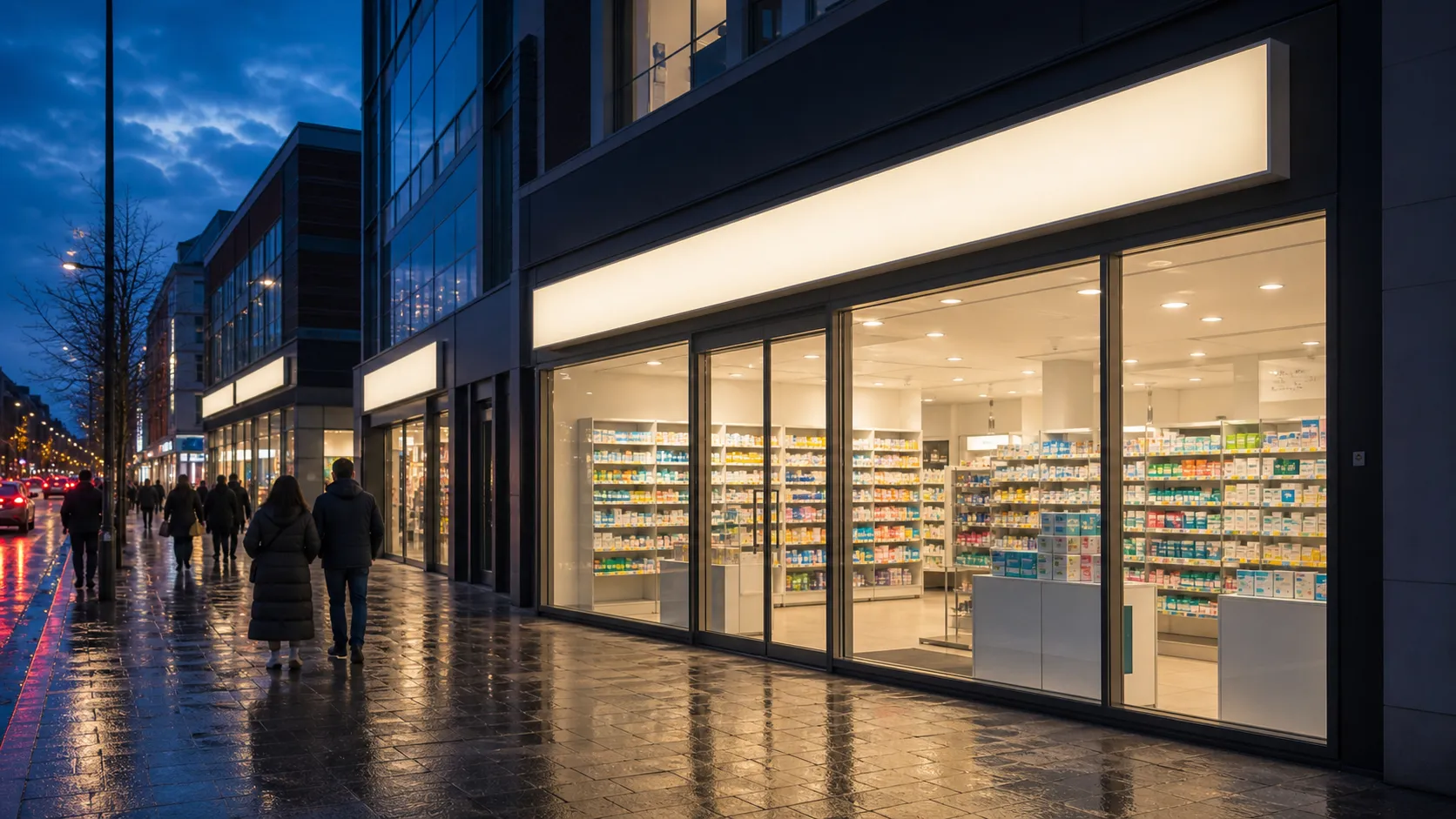
CVS competitors used to be a short, predictable list: Walgreens, Rite Aid, maybe a grocery pharmacy counter down the street. That list just got rewritten. Walgreens went private in 2025 and Rite Aid closed for good, leaving CVS Health as the only major publicly traded U.S. drugstore chain still standing.
Quick answer
CVS Health's main competitors in 2026 are Walgreens, Walmart, Kroger, Albertsons and Amazon Pharmacy, with Optum Rx and Cigna's Express Scripts competing on the pharmacy benefits side. Rite Aid is gone and Walgreens is now privately held, leaving CVS as the last major public drugstore chain.
Key takeaways
- Rite Aid closed all its stores in 2025 and Walgreens went private under Sycamore Partners, leaving CVS Health as the only major publicly traded U.S. drugstore chain.
- Walmart, Kroger and Albertsons are absorbing pharmacy customers who lost their nearest Rite Aid or Walgreens location.
- Amazon Pharmacy and Mark Cuban's Cost Plus Drugs are pulling price-sensitive shoppers away from traditional counters entirely.
- On the insurance side, Optum Rx and Cigna's Express Scripts compete directly with CVS Caremark for pharmacy benefit management contracts.
- The same consolidation pattern, fewer giants and one fast-moving challenger, shows up in coffee, EVs and heavy equipment too.
This kind of competitor mapping sits alongside our other software and business tools research, tracking how established leaders respond once specialists start eating into their share.
Who Are CVS Health's Real Competitors in 2026?
CVS Health's most direct competitors are the retailers still standing after 2025's drugstore shakeout. CVS Health now competes primarily with Walmart, Kroger and Albertsons, all of which operate in-store pharmacies alongside general merchandise and groceries. Each of those chains can use pharmacy traffic to drive sales in higher-margin categories, something CVS itself has leaned on for years.
Rite Aid filed for bankruptcy twice before liquidating its remaining stores in 2025, and Walgreens was taken private the same year after years of falling profits. That consolidation removed two of CVS's oldest rivals almost simultaneously. It also means CVS now faces less direct competition from chains built the same way it was, and more from retailers with different business models entirely.
CVS Health still operates thousands of retail pharmacies across the country and remains one of the largest healthcare companies by revenue in the United States. That scale is not something a new entrant can replicate overnight. But scale alone did not save Rite Aid, and it has not stopped Walgreens from struggling either, so size is no longer the advantage it used to be.
CVS Health Competitors at a Glance
The table below summarizes how CVS Health's main rivals differ in focus, from general retail to pure digital pharmacy plays.
| Competitor | Primary Angle | Biggest Advantage |
|---|---|---|
| Walgreens | Traditional drugstore, now private | Still has thousands of U.S. locations |
| Walmart | Pharmacy inside big-box retail | Lower prices, one-stop shopping |
| Kroger | Pharmacy inside grocery stores | High-frequency customer visits |
| Amazon Pharmacy | Digital-first prescription delivery | Prime membership and convenience |
| Cost Plus Drugs | Transparent, low-markup generics | Simple flat pricing model |
| Optum Rx | Pharmacy benefit management | UnitedHealth's massive insurance base |
| Cigna Express Scripts | Pharmacy benefit management | Large employer plan contracts |
The CVS Health Competitors You Won't See in a Store
Some of CVS Health's toughest competitors never show up in a storefront comparison at all. CVS Caremark, its pharmacy benefit manager, competes with Optum Rx and Cigna's Express Scripts for the contracts that decide which drugs employers and insurers will cover. Losing one of those contracts can matter more to CVS than losing a single retail location.
These three companies together control most of the pharmacy benefit management market in the United States, which means the real competitive battle is fought in contract negotiations most consumers never see. A shift of even a few large employer accounts can move billions of dollars in prescription volume between rivals.
The Same Competitive Squeeze Is Playing Out Far Beyond Pharmacy
The pattern reshaping CVS Health's competitive set, fewer legacy giants and one or two fast-moving challengers, is not unique to pharmacy. The same dynamic is playing out in coffee, electric vehicles and heavy equipment, industries that look unrelated on the surface but are consolidating for similar reasons.
Starbucks Competitors: Coffee's Fastest-Growing Rivals
Starbucks holds roughly 31% of the U.S. coffee and snack shop market, about 2.7 times the share of its closest rival, Dunkin'. Starbucks also runs far more U.S. stores, roughly 16,800 versus Dunkin's 10,000. So when people search for starbucks biggest competitors, the real story is not who has more locations. It's who is growing fastest right now.
Dutch Bros has nearly doubled its footprint since 2022 and plans about 175 new shops in 2026 alone. Luckin Coffee has overtaken Starbucks in China on store count by a wide margin, running more than 33,000 locations there against roughly 8,000 for Starbucks. Competitors of Starbucks also include a growing wave of independent specialty coffee shops that win on atmosphere and local loyalty even without matching its scale.
Tesla Competitors: The EV Race Keeps Tightening
Tesla competitors have gained real ground worldwide, and the global lead keeps changing hands. BYD outsold Tesla in battery-electric vehicles for full-year 2025, then Tesla reclaimed the crown in the first quarter of 2026, only for BYD to retake it in the second quarter. Across the first half of 2026, BYD delivered about 867,000 BEVs against Tesla's 838,000, a gap that narrows or widens most quarters depending on Chinese subsidy policy and U.S. tax credit rules.
Rivian is widely seen as Tesla's most credible U.S. challenger, even though its sales volumes remain far smaller. Legacy automakers, including Ford and GM, keep expanding their electric lineups too, so Tesla's competitors now span everything from Chinese mass-market EVs to American trucks built by century-old manufacturers.
Caterpillar Competitors: Heavy Equipment's Global Rivals
Caterpillar remains the world's largest construction equipment maker, holding about 15% of global sales in 2025. Komatsu holds a clear second place at roughly 11%, staying Caterpillar's closest rival in scale even as China's XCMG has climbed past John Deere into third place. Volvo Construction Equipment has pushed harder into electrified construction machinery than either market leader.
A full list of competitors of Caterpillar goes beyond Komatsu alone. Anyone researching caterpillar inc competitors should also watch Hitachi Construction Machinery, which competes closely in excavators across Asia and beyond. Chinese manufacturers like XCMG and SANY keep undercutting on price, pressuring Caterpillar and Komatsu alike in markets where budget matters more than brand.

Every industry eventually gets the CVS treatment: fewer giants left standing, and a challenger nobody was watching three years ago.
A similar reshuffling shows up in smaller markets too. Etsy competitors like eBay and Amazon's marketplace keep chipping away at its handmade-goods niche, while Gartner competitors such as Forrester and IDC compete for the same research and advisory contracts. Topgolf competitors including Puttshack and Drive Shack are opening venues in the same cities, and MarketerHire competitors like Superside and Toptal are chasing the same freelance-marketing clients.
What This Means If You're Sizing Up CVS
If you're evaluating CVS Health as a customer, investor or competitor, the real question is not which drugstore chain is biggest. It's which company controls the most pharmacy benefit contracts and which retailer can keep customers coming back after a location closes nearby. Watching Walmart, Kroger and Amazon Pharmacy matters as much as watching Walgreens now.
The same lesson applies well beyond pharmacy. Teams researching productivity tools for teams see a familiar pattern: a handful of legacy leaders and one fast-growing challenger squeezing the middle.
The same holds for security software for small business buyers, where a few established vendors face fast-moving newcomers. Watching how competitors respond to disruption is useful well past the pharmacy aisle.
Related guides
CVS Competitors: FAQ
Who are Starbucks' biggest competitors?
Starbucks' biggest competitors include Dunkin', Dutch Bros and Luckin Coffee, along with McDonald's McCafe line and a growing number of independent specialty coffee shops. Dutch Bros is currently the fastest-growing chain challenging Starbucks in the U.S.
Who are Caterpillar's competitors?
Caterpillar's main competitors are Komatsu, Volvo Construction Equipment, John Deere, Hitachi Construction Machinery and Chinese manufacturers like XCMG and SANY. Komatsu is Caterpillar's closest rival by global market share.
How does Starbucks' market share compare with its competitors?
Starbucks holds roughly 31% of the U.S. coffee and snack shop market, about 2.7 times the share of its closest rival, Dunkin'. No single specialty chain comes close on share, but Dutch Bros and Luckin Coffee are growing far faster than Starbucks itself.
How is Starbucks different from specialty coffee competitors?
Starbucks competes on convenience, consistency and nationwide reach, while specialty coffee competitors typically win on quality, atmosphere and local loyalty. That trade-off is why specialty shops keep gaining ground in cities even as Starbucks keeps its lead nationally.
Who are CVS Health's biggest competitors?
CVS Health's biggest competitors are Walmart, Kroger, Albertsons and Amazon Pharmacy on the retail side, plus Optum Rx and Cigna's Express Scripts on pharmacy benefits. Walgreens still competes too, but now as a private company.
What replaced Rite Aid after it closed?
No single chain absorbed all of Rite Aid's former customers. Research from Coresight found only a small share of CVS and Walgreens stores sit within a mile of a closed Rite Aid, so Walmart, Kroger and Albertsons picked up much of the overflow instead.