Business Concepts
Business Plan Examples: 7 Samples (+ Free Template)
Business plan examples for 7 small businesses, each with the one number it must prove, plus a free business plan template. See which format fits your startup.

Most business plan examples online are finished documents with polished charts, and that is exactly why they are hard to learn from. You see the result but not the decisions behind it. This guide is part of our business concepts library, and it breaks seven sample plans down to the one number each must prove.
Whether you are drafting a small business plan for a bank loan or a new business plan to test an idea before starting a business full time, the structure is the same. What changes is the reader, the length and the evidence you need to show.
Quick answer
A business plan example is a sample document that shows how a real or hypothetical company describes its offer, market, team, marketing and finances. The most useful examples match your type of business and your reader. A bank wants cash flow and collateral, an investor wants market size and growth, and you want a plan you can act on.
Key takeaways
- Pick the format by reader: traditional for lenders, lean or one-page for testing a business idea.
- Every business plan needs the same core: executive summary, market analysis, marketing plan, operations and financial projections.
- Each industry has one number that decides the plan, such as cups per day for a coffee shop or margin per guard-hour for a security company.
- Copying a sample business plan template word for word is the fastest way to end up with a generic, unconvincing document.
What a Good Business Plan Example Should Show You
A business plan is a written document that explains what a company sells, who buys it, how it reaches them and how the numbers work. A good business plan example shows you the reasoning behind each section, not only the headings.
When you read any example of a business plan, ask three questions. Who was it written for? Which assumption carries the most weight? What evidence supports that assumption? An example that cannot answer those is decoration, not a model.
The best examples also show trade-offs. A food truck plan that admits revenue drops in the rainy season is more credible than one with flat monthly sales. Lenders and investors read dozens of plans, and they notice when every line trends upward.
Type of Business Plan: Traditional vs Lean Startup vs One-Page
The U.S. Small Business Administration describes two main formats as of November 2026: a traditional business plan and a lean startup business plan. In practice, a third kind of business plan sits between them: the one-page plan.
| Business plan format | Typical length | Best reader | When it works | When it fails |
|---|---|---|---|---|
| Traditional business plan | 15 to 40 pages | Banks, SBA lenders, landlords | You need a loan or a lease and must show detail | The market is unproven and the detail is guesswork |
| Lean startup business plan | 1 page (canvas) | Founders, early partners | You are testing a business model quickly | A lender asks for financial statements |
| One-page business plan | 1 to 2 pages | Angel investors, internal teams | You need a summary that fits one meeting | The deal needs due diligence |
When people say a complete business plan, they usually mean the traditional format. According to the U.S. Small Business Administration, a traditional business plan has nine sections: executive summary, company description, market analysis, organization and management, service or product line, marketing and sales, funding request, financial projections and an appendix.
The lean startup plan replaces long prose with nine boxes: key partnerships, key activities, key resources, value proposition, customer relationships, channels, customer segments, cost structure and revenue streams. It is fast to build and easy to change.
Our view: start lean, then expand. When you build a plan on one page first, every vague idea has nowhere to hide. The traditional plan then becomes a matter of adding evidence to decisions you have already made, instead of writing your way toward them.
The 7 Elements Every Business Plan Needs
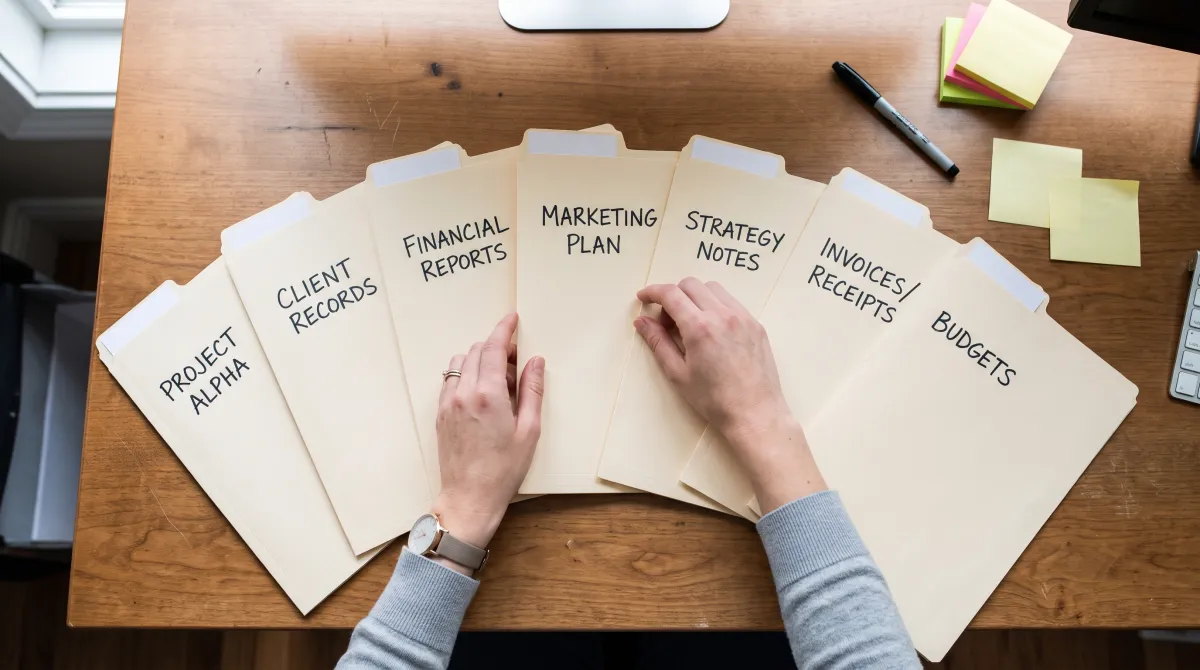
Formats differ, but every business plan answers the same seven questions. If you outline your business around them, you can expand or shorten the document for any reader.
- Executive summary: the whole plan in one page, written last.
- Company description: business name, legal structure, mission and what makes the offer different.
- Market analysis: market size, target customer, competitors and pricing.
- Products or services: what you sell, how it is made or delivered and its margin.
- Marketing plan: channels, customer acquisition cost and sales process.
- Operational plan and team: location, suppliers, staff, management and milestones.
- Financial plan: startup costs, a balance sheet, a cash flow statement and three years of financial projections.
The executive summary deserves extra effort because many readers stop there. In under a page, it should state the problem, the offer, the target market, how much money you need and what that money buys.
In the financial plan, the projected income statement does most of the work. If you have never built one, our profit and loss statement examples show how revenue, cost of goods and operating expenses add up to net profit.
7 Sample Business Plan Examples by Type of Business
Below are seven short sample business plans. Each example business is hypothetical, and every figure is rounded. The numbers show the logic of each plan, not real market data, so replace them with your own market research before you use them.
1. Coffee shop business plan
The number to prove: cups per day at break-even. Imagine a café with $14,000 in monthly fixed costs (rent, staff, loan payment) and a $3.20 margin per drink after beans, milk and cups. It needs about 4,375 drinks a month, or roughly 146 a day over 30 days.
A coffee shop business plan template that skips foot-traffic counts is weak. The market analysis section should show counts taken at the actual location at different times of day, plus the prices of the three nearest competitors.
2. Food truck business plan
The number to prove: meals per service. A hypothetical truck with a $12 average ticket and a 65% gross margin earns about $7.80 per order. If each service costs $450 in permits, fuel, staff and commissary fees, it must sell about 58 meals just to cover the day.
A good food truck business plan template includes a location calendar that lists which lots, events and office parks the truck serves on which days, and why. Weather and seasonality belong in the financial projections, not in a footnote.
3. Bakery business plan
The number to prove: waste rate. Baked goods spoil fast, so a bakery business plan template should model unsold product. A shop that produces $1,500 of goods a day at 10% waste loses $150 daily. That is around $4,500 a month, enough to erase a thin margin.
Wholesale accounts with cafés and restaurants smooth out demand. A restaurant business plan follows the same logic, using table turns and food cost percentage instead of waste.
4. Vending machine business plan
The number to prove: payback period per machine. Suppose a used machine costs $3,000, brings in $400 a month in sales and keeps $160 after product cost and the location commission. Payback takes about 19 months, before repairs.
A vending machine business plan lives or dies on placement agreements. The strongest version lists signed or verbally agreed locations with expected daily foot traffic, rather than a target number of machines.
5. Security company business plan
The number to prove: margin per guard-hour. If a client pays $32 an hour and a guard costs $22 an hour including payroll taxes and insurance, the gross margin is $10. The business plan of a security company must show how many contracted hours it takes to cover overhead.
Licensing and insurance requirements vary by state, so this section should cite the state licensing board. Lenders also look at contract length: a two-year contract is worth more than one busy month.
6. Event planning business plan
The number to prove: events per planner per year. An event planning business plan template should show the average fee, the hours each event takes and how many events one person can realistically run. Without that, growth projections are guesses.
This business's real assets are its vendor relationships with venues, caterers and rental companies. List them in the operational plan with any referral or commission terms.
7. Home care business plan
The number to prove: billable hours per caregiver per week. A care business plan template should model caregiver turnover, because recruiting and training costs can exceed the margin on a new client for several months.
Payer mix matters too. Private pay, long-term care insurance and public programs reimburse at different rates and speeds, which affects the cash flow statement more than the income statement.
Every business plan has one number that decides it. Find yours before you write the other 30 pages.
Free Business Plan Template: A One-Page Outline

If you need to create a business plan in an afternoon, use this free template, then expand each row into a full section when a lender or investor asks for one. It works as a startup business plan template and as a planning tool for an existing company.
| Section | Answer in 1 to 3 lines | Evidence to attach |
|---|---|---|
| Problem and offer | What you sell and the problem it solves | Customer interviews, pre-orders |
| Target customer | Who buys, where they are, how many exist | Market research, census or industry data |
| Competition | Three alternatives and why you win | Price and feature comparison |
| Marketing and sales | Main channel and the cost to win a customer | Test campaign results |
| Operations | Location, suppliers, team, key milestones | Quotes, leases, résumés |
| The deciding number | Break-even point or payback period | Worked calculation |
| Funding | How much, for what, repaid how | Use-of-funds table |
| Business goals | Targets for 12 and 36 months | Financial projections |
This sample business plan template is short on purpose. An effective business plan is not measured in pages. It is measured by whether a stranger can understand your business and check your numbers.
How to Write Your Business Plan in 6 Steps
If you want to write a business plan that someone actually reads, follow this order. Whether you develop a business plan for a lender or only for yourself, you make the decisions first and leave the writing for last.
- Define the reader. A lender, an investor and a business partner want different things. Decide which one you are writing for before you start.
- Do the market research. Size the market, talk to at least ten potential customers and check what competitors charge.
- Find the deciding number. Calculate break-even or payback, using the examples above as models.
- Build the financials. Start with startup costs, then monthly cash flow for year one, then annual projections for years two and three.
- Write the sections. Develop your business plan section by section, using the seven elements as your business plan format.
- Write the executive summary last. Summarize the entire business plan in one page and test it on someone outside your industry.
Think about who else the plan affects. Employees, suppliers, landlords and the local community all have a stake in a new venture. Our guide to stakeholder theory and who a company answers to explains how to account for them.
You do not need to hire a consultant to write a professional business plan. If you plan to secure funding, the SBA and its partner SCORE both point small business owners to free mentoring and templates. A mentor who has read hundreds of plans will spot a weak assumption faster than any checklist.
Why a Startup Business Plan Still Pays Off

Some founders argue that plans are obsolete because markets change too fast. The evidence suggests otherwise, with one caveat about how the plan is used.
Research by Francis Greene and Christian Hopp, summarized in Harvard Business Review in 2017, found that entrepreneurs who wrote a formal plan were 16% more likely to reach viability than similar founders who did not.
The stakes are real. Bureau of Labor Statistics survival data shows that roughly one in five new establishments closes within its first year, and about half are gone by year five. A plan does not prevent failure, but it exposes a weak assumption before that assumption costs you your savings.
Here is the caveat: the benefit comes from planning, not from the document. A business plan helps when you revisit it every quarter and compare actual results to your projections. Left in a drawer, it is just an expensive essay.
When a Sample Business Plan Template Misleads You
Templates are useful for structure and dangerous for content. Three problems show up again and again in plans built by copying a business plan example too closely.
- Borrowed market size. A national figure for the coffee industry says nothing about demand on your street.
- Hockey-stick projections. Revenue that doubles every year without a matching rise in marketing spend or staff signals wishful thinking.
- Generic risks. "Competition" and "economic downturn" apply to every business. Name the specific risk to yours, like a lease renewal or dependence on a single large client.
A winning business plan reads like it could only belong to one company. If you could swap in a different business name without changing anything else, keep editing.
Business Plan vs Business Continuity Plan and Other Similar Terms
Several terms sound alike but mean different things. A business continuity plan explains how a company keeps running during a disruption such as a fire, an outage or a cyberattack. It is an operational document, often managed with business continuity plan software, and it complements a business plan rather than replacing it.
A strategic business plan is an internal document for an existing company. It focuses on direction over three to five years rather than on raising money. A plan for expanding a business usually combines both: a strategy section plus new financial projections for the expansion.
If you arrived here searching for Verizon business plans, those are mobile and internet service packages for companies, not planning documents. This guide covers the planning document a business owner writes to describe and fund a company.
Business Plan Examples FAQ
How to write a business plan?
To write a business plan, define your reader, research the market, calculate your break-even point and build financial projections. Then write each section, finishing with the executive summary. Start with a one-page outline and expand only what your reader needs.
What are the 7 elements of a business plan?
The seven elements are the executive summary, company description, market analysis, products or services, marketing plan, operational plan and team, and financial plan. Some formats split or merge these, but every successful business plan covers all seven.
What are the 5 key components of a business plan?
The five key components are the executive summary, business description, market analysis, marketing and sales strategy, and financial projections. Shorter plans often fold operations and management into the business description.
What are the six sections of a business plan?
A common six-section format is executive summary, company overview, market analysis, products and services, marketing and sales, and financial plan. The SBA traditional format expands this to nine sections by adding management, a funding request and an appendix.
What are some examples of a business?
Examples of a business include a coffee shop, a food truck, a bakery, a vending machine route, a security company, an event planning firm and a home care agency. Each is a different type of business with its own deciding number, as the examples above show.
What are examples of ethical dilemmas in business?
Common ethical dilemmas in business include pressure to inflate sales figures, conflicts of interest with suppliers and choosing between cost cuts and employee safety. Our collection of business ethics examples and dilemmas walks through real cases and how to reason about them.