Software
Best Business Credit Card for Small Business (2026)
The best business credit card for small business depends on your spend, annual fee, and credit. Compare 6 picks and find the right card for your team.

Picking the best business credit card for small business use is less about the flashiest sign-up bonus and more about matching the card to how you actually spend. We have run business cards across agencies, e-commerce, and a small services firm, so this guide ranks them the way an operator would, not a points blogger.
Quick answer
For most owners, the Chase Ink Business Cash is the best all-around pick: no annual fee and strong cash back on everyday business purchases. If you carry inventory and travel, the Ink Business Preferred earns more points. If your personal credit is thin, start with a secured business credit card to build business credit first.
Disclaimer: This article is general information, not financial or investment advice. Consult a licensed financial advisor before making decisions about money, credit or investments.
Key takeaways
- No annual fee wins for low spenders: the Ink Business Cash and Capital on Tap business credit card cost nothing to hold.
- Heavy travel and ad spend favor the Ink Business Preferred and its 3x points on everyday business purchases.
- A secured business credit card is the fastest way to build business credit when your business credit history is short.
- Add employee cards with spend limits so business and personal finances never blur.
- Applying triggers an inquiry on your personal credit, so check your personal credit before you apply.
What Is the Best Business Credit Card for Small Business?
The best business credit card for small business owners is the one whose rewards match your largest expense category, with an annual fee you can earn back in the first quarter. To find the best business credit fit, group cards by how you spend, not by brand loyalty.
A business credit card also separates business expenses from personal spending, which matters at tax time and when you build business credit. Keeping a clear petty cash system alongside the card makes those small, untracked costs easier to reconcile. Most business credit cards offer rewards and report to bureaus, so steady, paid-on-time use of the card raises your business credit score over time.
The right card also fits the rest of your stack. Owners who track spend inside the tools on our small business software hub find it easier to reconcile business credit card account activity each month, instead of chasing receipts.
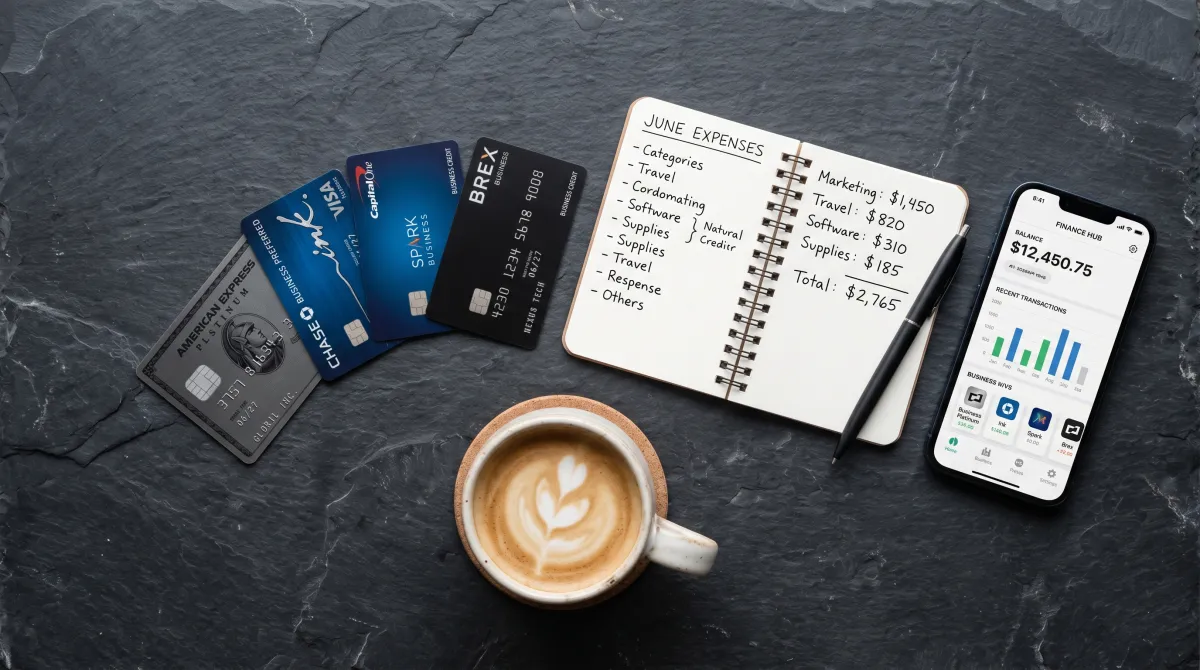
Before you apply, know that almost every issuer checks your strong personal credit on the first application. That inquiry on your personal credit is normal, but it means you should not apply for a business credit card the same week you finance a car or a home.
Best Business Credit Card for Small Business Compared
Here is how the picks stack up on annual fee, rewards, and who each card fits. Use it as a shortlist, then read the operator notes below to find the right card for your business needs.
| Card | Annual fee | Best for | Rewards highlight |
|---|---|---|---|
| Ink Business Cash | $0 | Everyday spend | 5% back at office supply and internet/phone |
| Ink Business Preferred | $95 | Travel + ad spend | 3x points on everyday business purchases |
| Ink Business Unlimited | $0 | Flat-rate simplicity | 1.5% business cash on everything |
| Capital on Tap | $0 | Newer businesses | Unlimited cashback, higher credit limits |
| Secured business card | Varies | Building credit | Reports to build your business credit |
None of these is a debit product, so the question of credit or debit is settled: a credit card builds history a debit card never will. Depending on the card, these credit card options also add purchase protection and revolving lines of credit a traditional credit line lacks.
Chase Ink Business Cash: best no-annual-fee everyday card
Best for everyday business purchases
Ink Business Cash $0 annual fee
This is the default best small business credit card for owners who want business cash back without a fee. It rewards the categories most firms actually spend in, and pairs well with a travel card later.
Pros
- No annual fee, easy to justify
- 5% in common business categories
- Free employee cards with limits
Cons
- Category caps on bonus spend
- Needs strong personal credit to approve
We keep this card for software, internet, and office supplies. If your spend is concentrated there, the 5% rate beats most flat cards, and this card for business owners carries no annual fee dragging on the math.
Chase Ink Business Preferred: best for travel and ad spend
Best for travel + advertising
Ink Business Preferred $95/year
If you run paid ads or book travel, the Chase Ink Business Preferred earns 3x points on those everyday business purchases, which easily covers the fee. It is the premier business credit card most agencies graduate into.
Pros
- 3x points on travel and ads
- Points transfer to travel partners
- Higher credit limits than entry cards
Cons
- $95 annual fee
- Best value only if you travel
For owners who already max a no-fee card, this is the upgrade. Its card rewards on business travel and the transfer partners make it our pick over a generic signature credit card, the Ink Business Premier, or a Sapphire Reserve for business stand-in.

Ink Business Unlimited & Capital on Tap: flat-rate and newer firms
Best flat-rate cash
Ink Business Unlimited $0 annual fee
One rate on everything. If you hate tracking categories, the Ink Business Unlimited gives 1.5% business cash on every purchase with no annual fee, the simplest way to get rewarded on business spending.
Pros
- Flat 1.5% on all spend
- No annual fee or category math
Cons
- Lower than category bonuses
- No travel transfer perks
The Capital on Tap business credit card is our pick for newer firms with a shorter credit history. Approval is friendlier, the credit line scales, and this tap business credit card keeps rewards simple with unlimited cashback.
Want a bank-linked option? The Bank of America business checking route rewards loyalty. Hold a top business bank account and the Preferred Rewards for Business tier lifts your earn rate across cards.
That perk also stacks if you open a Bank of America® business checking account and pair it with the right card. With an America® business checking account in the mix, your everyday business spend earns a higher tier than it would alone.
For travelers, the Business Advantage travel rewards world Mastercard® credit card is the natural pick. That rewards world Mastercard® credit card earns extra on flights and hotels, and an America business checking account boosts the rate further.
Two more names worth a look: a performance business credit card like the U.S. Bank Triple Cash, and the Costco Anywhere business card by Citi. Each is a solid alternative once you outgrow the entry tier.
The best business credit card is the boring one whose rewards match your biggest bill, not the one with the loudest bonus.
How to Choose a Business Credit Card for Small Business
Start with your top two expense categories, then choose the best business card whose rewards cover them. A travel-heavy firm should not hold a flat-rate card, and a low-spend consultancy should not pay $95 for perks it never uses.
Next, weigh the annual fee against realistic spend. If a $95 fee buys you more in rewards business credit than a free card, take it. If a card alone will not cover a big purchase, knowing how to get a business loan gives you a cleaner financing path than carrying a balance. If not, a no-fee traditional credit card keeps things clean and your business credit card offers manageable.
If you are still mapping your whole back office, our roundup of the best productivity tools for teams shows how to wire card data into the apps you already run. Reconciling when you use a business credit card then takes minutes, not hours.
Match the card to your credit profile
Your business credit score is young, so issuers lean on your personal credit card history to approve you. Check your free credit score first, because a soft look at your own report costs nothing and tells you which card offers you can realistically get.
If your personal credit is thin or rebuilding, skip the premium cards. A secured business credit card reports your payments, helps build your business credit, and graduates to an unsecured corporate card once your business credit history matures. Remember every application can impact your personal credit score.
Deciding which credit card is right comes down to one question: does the reward rate beat what you would earn on a free card? If yes, the fee pays for itself. If not, the simpler card wins, and your business credit card rewards still stack month over month.
Add employee cards and set guardrails
Free employee cards let your team buy without sharing one number. The right number of cards keeps business purchases visible, so a stray charge never blurs personal and business credit. Most issuers let you add employee cards in minutes, and managing multiple credit cards stays simple in one dashboard.
Discipline matters more than the card you hold. Using your credit card on a fixed budget, then paying the balance in full, is what actually builds business credit and avoids interest erasing your rewards.
For sensitive accounts, lock down access the same way you would your apps. Our guide to the best security software for small business covers protecting card data and statements when a credit card due date rolls around.

Where Costco Fits for Small Business Buyers
Plenty of owners ask about Costco because a Costco membership business plan pairs well with the right card. Costco business center locations stock bulk supplies, pallets, gift cards, and restaurant-grade inventory that small firms reorder often.
Costco business centers locations differ from regular warehouses: fewer consumer goods, more commercial supply. If you reorder there monthly, a flat-rate small business card like the Ink Business Unlimited captures business cash on every run, while a category card may not.
Pairing the warehouse with a rewards business credit card turns a recurring expense into points and purchases for your business you would make anyway. Because business credit cards come with category quirks, check which Costco business center locations are near you, then pick the card that earns most on that spend and helps you grow your business.
Best Business Credit Card for Small Business: FAQ
Which credit card is best for an LLC?
The Chase Ink Business Cash is the best business credit card for most LLCs because it has no annual fee and rewards everyday business purchases. An LLC applies the same way a sole proprietor does, using the owner's strong personal credit for approval.
Can an LLC get a business credit card?
Yes, an LLC can get a business credit card, and most issuers approve based on the owner's personal credit plus business revenue. You can apply for a business credit card with your EIN or SSN, and the account helps build your business credit separately from personal finances.
Can I use my EIN to get a credit card?
You can use a business EIN on the application, but nearly every issuer still checks your personal credit and adds an inquiry on your personal credit report. EIN-only cards exist mostly for established firms with a strong business credit history and revenue.
What is the best credit card system for small business?
The best small business credit setup is one no-fee card for everyday spend plus a category card for your biggest expense, with employee cards on spend limits. That mix keeps rewards high and personal and business finances cleanly separated.
What are the top rated business credit cards right now?
The top rated business credit cards are the Chase Ink lineup, the Capital on Tap business credit card, and the Bank of America Business Advantage travel rewards world Mastercard® credit card for travelers. Each fits a different spend profile, so match the card to yours.
This content is for general informational purposes only and is not financial or investment advice. Consult a licensed financial professional before making financial decisions.