Business Concepts
Define Petty Cash (2026): The Operator's Plain-English Guide
Define petty cash the right way: a fixed, custodian-controlled fund for small expenses. See how it works, what it covers, and how to set one up in five steps.
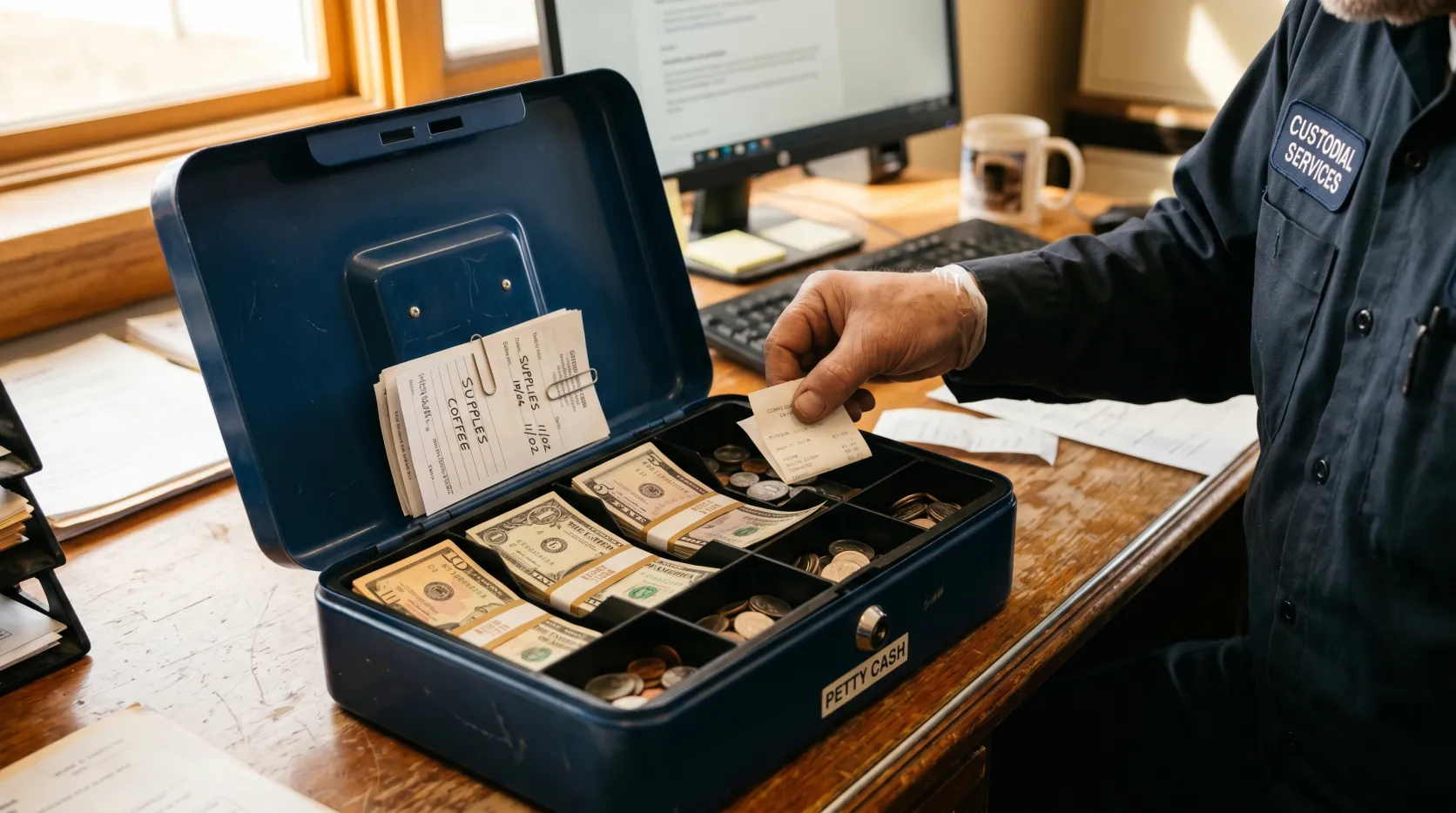
If you have ever fronted $12 for office coffee filters and scribbled it on a sticky note, you already understand why companies define petty cash as a formal system. Small cash purchases happen constantly, and without a structure they turn into untracked leaks that quietly distort your core financial records.
Quick answer
Petty cash is a small reserve of physical money kept on-site to pay for minor, everyday expenses that are too small or too urgent to justify a check, invoice, or company card. It is controlled by a custodian, tracked with receipts, and replenished back to a fixed amount on a set schedule.
Key takeaways
- Petty cash is a fixed fund of physical cash for small, routine purchases.
- One person, the custodian, is accountable for every dollar in and out.
- Every withdrawal needs a receipt or a signed voucher, no exceptions.
- The fund is replenished to its original balance, not topped up randomly.
- Typical fund sizes run $50 to $500 depending on company size and spend.
What Is Petty Cash?
Petty cash is the small amount of physical currency a business keeps accessible for low-value expenses. Think postage stamps, a last-minute pack of printer paper, parking, or a coffee run for a client meeting.
The whole point is speed and convenience. Cutting a check or filing an expense report for a $4 purchase costs more in admin time than the purchase itself. A locked cash box solves that friction.

Here is the short version of the petty cash def most accountants use: a fixed-balance cash fund, controlled by one accountable person, replenished to its original amount once the receipts are reconciled. That last part is what separates it from a random drawer of bills.
How a Petty Cash Fund Actually Works
The mechanics are simple once you see the loop. A company sets an opening balance, spends it down on small items, documents each spend, then tops it back up to the starting figure.
This is called the imprest system. The fund always returns to the same fixed amount, so the cash on hand plus the receipts should always equal the original balance.
| Step | What happens | Who is responsible |
|---|---|---|
| 1. Establish | Set a fixed balance (e.g. $200) and withdraw it from the bank | Finance / owner |
| 2. Disburse | Pay small expenses, collect a receipt every time | Custodian |
| 3. Record | Log each spend with date, amount, and purpose | Custodian |
| 4. Reconcile | Cash left + receipts must equal the fixed balance | Custodian / finance |
| 5. Replenish | Restore the fund to its original amount | Finance |
If the box started at $200 and holds $63 in cash, you should have $137 in receipts. A gap means a missing receipt or a mistake, and you catch it before it compounds.
Who Controls the Fund: The Custodian Role
Every petty cash fund needs a single owner. Spreading access across a team is the fastest way to lose accountability and end up with phantom withdrawals nobody remembers.
The custodian holds the key, approves each disbursement, and reconciles the box. Their name is on the line if the numbers do not add up, which is exactly the kind of clear ownership good team management practices depend on.
A petty cash box without one accountable custodian is just a drawer of money you have decided to stop counting.
For larger operations, separate the duties. The person spending the cash should not also be the one approving replenishment. That small split removes most of the temptation and most of the honest errors.
What Petty Cash Should and Should Not Cover
The line is about size and frequency, not category. If a purchase is small, urgent, and routine, petty cash fits. If it is large, recurring, or needs a paper trail for tax, it does not belong here.
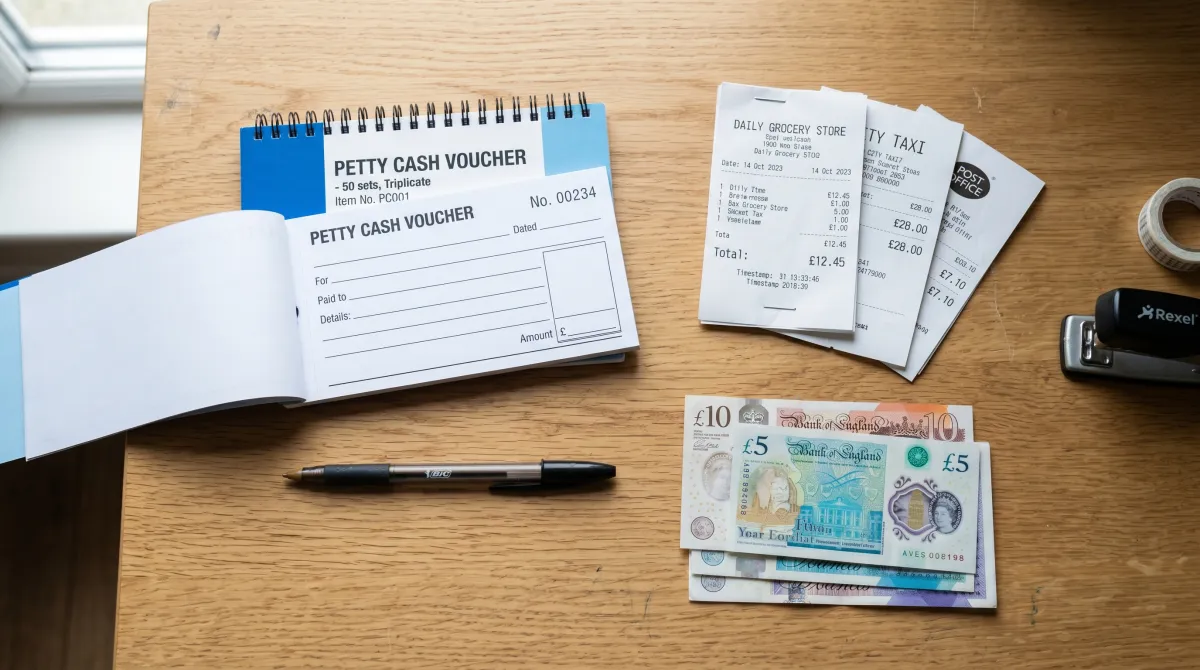
Good uses for petty cash:
- Office supplies bought in a pinch
- Postage and small shipping fees
- Parking, tolls, or local taxi fares
- Coffee, snacks, or supplies for a meeting
- Minor repairs under your set limit
Poor uses for petty cash:
- Employee salaries or advances
- Recurring vendor payments
- Anything over your per-transaction cap (often $50)
- Personal expenses, even with intent to repay
Set a hard ceiling per transaction. When a request exceeds it, route it through normal accounts payable so it stays visible in the books and is properly documented for tax purposes.
How to Set Up Petty Cash in Five Steps
Standing up a fund takes an afternoon. The discipline to maintain it is what actually matters, but the setup itself is straightforward.
First, decide the fixed amount based on a month of small spend. Second, assign one custodian. Third, buy a lockable box and a simple log. Fourth, withdraw the cash and record the opening balance. Fifth, set a recurring reconciliation date.
Keep the log brutally simple: date, amount, purpose, and the person who took it. A clear routine here protects the fund far better than any expensive tool, and it keeps the rest of the day-to-day workplace running without cash disputes.
Treat that reconciliation date as fixed, the same way you treat payroll. When the count slips from weekly to whenever, the fund stops being a controlled asset and starts being a guess. A calendar reminder is enough to keep it honest.
Petty Cash and the Books: The Accounting View
On the balance sheet, petty cash sits inside current assets, usually folded into cash. It is a small line, but it still has to reconcile cleanly at period close.
When you replenish, you do not record the cash as a new expense. Instead, the individual receipts get coded to their proper expense accounts, and the replenishment simply restores the asset balance.
This is why the receipt rule is non-negotiable. Each slip becomes a journal entry, and a missing one means an expense that never gets recorded and a fund that quietly shrinks. The IRS recordkeeping guidance expects every business expense to be backed by documentation, and petty cash is no exception.
Common Petty Cash Mistakes to Avoid
Most petty cash problems are not theft. They are drift, the slow erosion that comes from skipping small steps until the box no longer ties out.
The classic failures: no single custodian, IOUs instead of receipts, no fixed reconciliation date, and a balance that creeps up because nobody resets it. Each one is minor alone and corrosive together.
Fix them with one rule each: one owner, no receipt means no cash, reconcile on a calendar date, and always replenish back to the original figure. That is the entire system in four sentences.
FAQ
What is the petty cash def in simple terms?
The petty cash def is a small, fixed fund of physical money a business keeps on hand for minor everyday expenses. One custodian controls it, every withdrawal needs a receipt, and the fund is replenished back to its set balance.
How much money should be in petty cash?
Most small businesses keep between $50 and $500, based on roughly one month of small cash purchases. Set it high enough to cover normal spend but low enough that a loss would not hurt.
Is petty cash an asset?
Yes. Petty cash is a current asset and is reported as part of cash on the balance sheet. It must reconcile to its fixed balance at each accounting period close.
Who should manage the petty cash fund?
A single designated custodian should manage it. That person holds the box, approves each disbursement, logs every transaction, and reconciles the fund so accountability is never spread across multiple people.
What is the difference between petty cash and a company card?
Petty cash is physical currency for tiny, immediate purchases, while a company card creates a digital record and suits larger or online spend. Many businesses use both, with cash reserved for the smallest items.