Business Concepts
What Is Absorption Costing (2026): Full Guide
What is absorption costing? It assigns all factory costs to each unit, including fixed overhead. See how it shapes profit, inventory, and your reports.
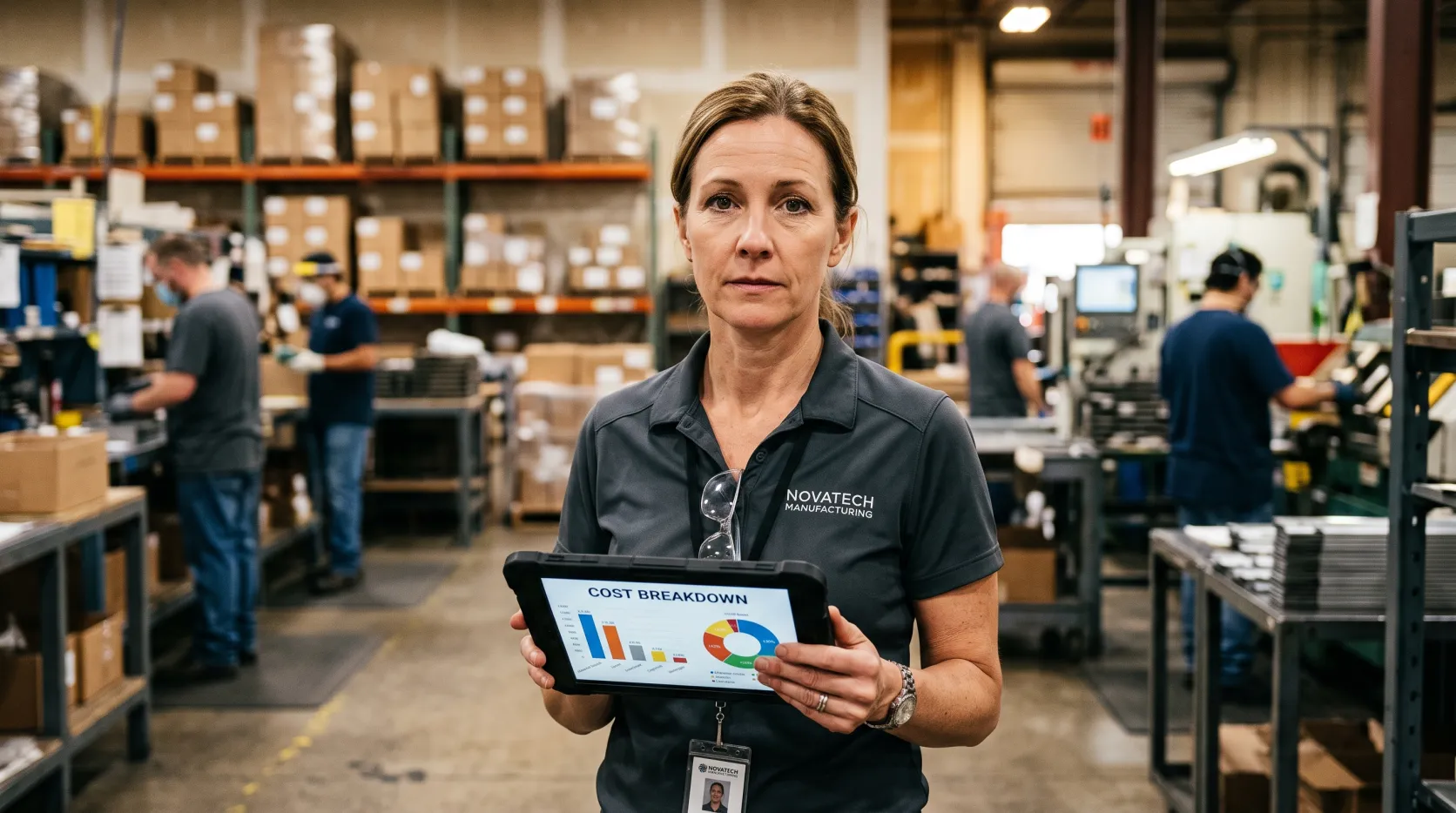
If you have ever wondered why your income statement shows a healthy profit while your bank account disagrees, absorption costing is often the culprit. It is the quiet accounting rule that decides which costs ride along with each unit you make, and which costs hit your books today.
Quick answer
Absorption costing is a method that assigns every manufacturing cost to a product, including direct materials, direct labor, and both variable and fixed factory overhead. Because fixed overhead gets baked into inventory, profit can look higher when you build more units than you sell.
Key takeaways
- Absorption costing, also called full costing, puts all factory costs into each unit produced.
- It is required by GAAP and IFRS for external financial statements and tax reporting.
- Fixed overhead sits in inventory until the unit sells, which can defer cost and inflate short-term profit.
- Variable costing is the internal counterpart managers use for clearer decisions.
- The gap between the two methods grows when production and sales volumes diverge.
What Is Absorption Costing, in Plain Terms?
Absorption costing is a costing method where a product absorbs the full cost of making it. Every dollar that touches the factory floor gets attached to the units coming off the line.
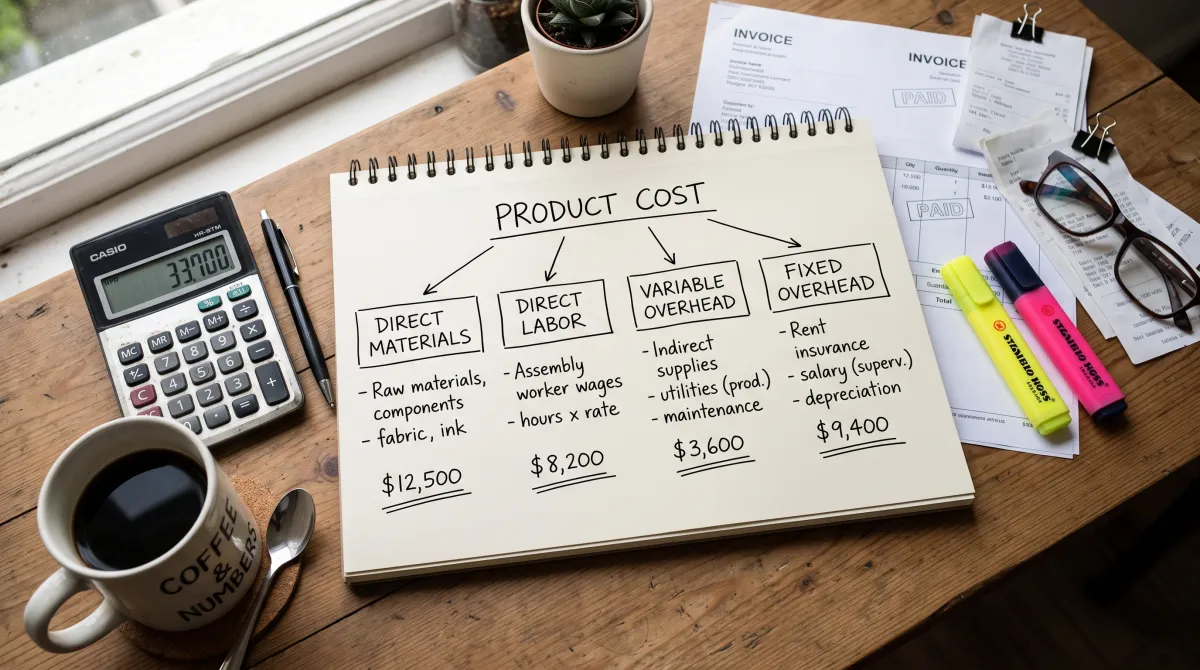
That includes four buckets: direct materials, direct labor, variable manufacturing overhead, and fixed manufacturing overhead. The last bucket is the one that trips people up, and it is worth seeing how core business concepts connect before you trust a single number.
Fixed overhead covers things like factory rent, equipment depreciation, and the plant manager's salary. These costs do not change when you make one more widget, yet absorption costing still spreads them across every unit.
The logic is simple. To make the product, you needed the factory. So the cost of the factory belongs in the cost of the product. Accountants call this matching, and regulators love it.
Absorption Costing Explained: The Formula
The per-unit math is short. You add the four cost buckets and divide the fixed portion by the units produced.
Unit cost = Direct materials + Direct labor + Variable overhead + (Fixed overhead / units produced). The first three are easy. The fourth changes depending on how many units you build.
Here is the part operators miss. If you produce more units, the fixed overhead per unit drops, because you are spreading the same rent across more pieces. Build fewer, and each unit carries a heavier share.
Absorption costing rewards production, not sales, and that single quirk has rescued and ruined more quarterly numbers than any spreadsheet error.
Absorption Costing Examples You Can Follow
Picture a workshop that makes 1,000 chairs in a month. Direct materials run $20 per chair, direct labor $15, and variable overhead $5. Fixed overhead for the month is $10,000.
Fixed overhead per chair is $10,000 divided by 1,000 chairs, or $10. So the full absorption cost per chair is $20 plus $15 plus $5 plus $10, which equals $50.

Now change one number. Suppose the workshop makes 2,000 chairs but still sells only 1,000. Fixed overhead per chair drops to $5, so unit cost falls to $45. The 1,000 unsold chairs carry $5,000 of fixed overhead into next month as inventory.
That deferred cost is the magic trick. Profit this month looks better, not because you sold more, but because you parked expenses inside inventory on the balance sheet.
Absorption Costing vs Variable Costing
Variable costing treats fixed overhead as a period expense. It hits the income statement in full, the month it happens, no matter how many units you make.
Under variable costing, the unit cost in our chair example would be $40, not $50, because the $10 of fixed overhead never enters the product. The two methods report different profit whenever production and sales do not match.
| Factor | Absorption costing | Variable costing |
|---|---|---|
| Fixed overhead | Included in unit cost | Expensed as a period cost |
| GAAP/IFRS compliant | Yes, required externally | No, internal use only |
| Profit when stock builds | Higher | Lower |
| Best for | External reporting, taxes | Internal decisions, pricing |
| Inventory valuation | Higher | Lower |
Most companies run both. They report to the tax authority and shareholders with absorption costing, then use variable costing inside the building to make pricing and product calls.
How to Apply Absorption Costing Without Fooling Yourself
Start by tagging your costs honestly. Sort every factory expense into the four buckets, and keep selling and admin costs out. Those are never part of product cost.
Next, pick a sensible base to allocate fixed overhead. Units, labor hours, or machine hours all work. The wrong base quietly distorts every unit cost downstream.
Then watch your inventory swings. When finished goods pile up, ask whether your profit is real or just deferred overhead sitting in the warehouse. Reported profit means little if it leans on unsold stock.
This is where good operators get burned. A team chasing a production target can hit its profit number while cash quietly drains, a pattern that often shows up alongside the early signs you are being set up to fail at work.
When Absorption Costing Helps and When It Hurts
It helps when you need compliant statements. Lenders, auditors, and tax authorities expect absorption costing, so there is no choice for external reporting.
It hurts when you use it for internal decisions. Because fixed overhead hides inside units, the method can make a money-losing product look profitable, or push managers to overproduce just to absorb costs.
The cure is to read both views side by side. Pair absorption numbers with variable costing before you set prices or cut a product line, much like you weigh the benefits and risks of innovation before committing budget.
Absorption Costing and Your Wider Financial Picture
Absorption costing does not live alone. It feeds your inventory value, your cost of goods sold, and ultimately your reported margin.
That ripple touches strategy. A method that shifts costs between periods can mask whether a new channel or partner truly adds value, the same scrutiny you would give reintermediation in a supply chain.
Treat the number as one input, not gospel. The most useful founders read the absorption figure, then cross-check it against cash, demand, and the variable-cost truth underneath.
Related guides
What Is Absorption Costing: FAQ
What is accounts receivable?
Accounts receivable is the money customers owe your business for goods or services already delivered but not yet paid for. It sits on the balance sheet as a current asset and turns into cash once customers settle their invoices.
What is working capital?
Working capital is current assets minus current liabilities, the short-term cash buffer that keeps a business running. Positive working capital means you can cover near-term bills, while negative working capital signals a possible cash squeeze.
What is gross margin?
Gross margin is revenue minus cost of goods sold, shown as a percentage of revenue. Because absorption costing shapes cost of goods sold, the method you choose directly moves the gross margin you report.
What is a profit and loss statement?
A profit and loss statement, also called an income statement, summarizes revenue, costs, and expenses over a period to show net profit or loss. It is where absorption costing decisions surface as cost of goods sold and reported earnings.
What is cash flow?
Cash flow is the actual movement of money into and out of your business over time. It can diverge sharply from accounting profit, which is exactly why absorption costing can show a profit while cash flow stays flat or negative.
For the regulatory backbone behind this method, see the overview of total absorption costing and the broader cost accounting framework that governs how these rules apply.