Business Concepts
Team Building Activities For Teens (2026): 15 That Work
15 team building activities for teens that actually work, sorted by what they teach. Pick fast, run short blocks, and debrief so the lesson sticks.

Team building activities for teens only work when they respect how teenagers actually operate: socially alert, allergic to forced fun, and quick to disengage the moment something feels babyish. Get the format right and a quiet group turns into a real team in under an hour.
Quick answer
The best team building activities for teens are short, low-embarrassment, and goal-driven: think problem-solving challenges, creative builds, and trust games with a clear point. Pick activities that match the group's comfort level, run them in 15-30 minute blocks, and always debrief so the lesson sticks.
Key takeaways
- Teens engage when the activity has a real goal, not just "bonding" for its own sake.
- Mix physical, creative, and problem-solving formats so different personalities get a win.
- Keep public-speaking and physical-contact games optional to avoid embarrassment.
- The debrief matters more than the game: ask what worked and why.
- Rotate group makeup so cliques break and new connections form.
What Are Team Building Activities for Teens?
Team building activities for teens are structured group challenges designed to build trust, communication, and cooperation among 13 to 18 year olds. They show up in classrooms, sports teams, youth groups, summer camps, and clubs.
The goal is simple. Give teenagers a shared problem they can only solve together, then let the social skills follow. The activity is the excuse; the connection is the point.
What separates teen activities from adult or kid versions is the embarrassment threshold. Teenagers are hyper-aware of how they look to peers. An activity that feels childish or exposes them socially will fail fast, no matter how clever it is. The same coordination challenge sits behind grown-up business concepts like dividing roles and avoiding wasted effort.
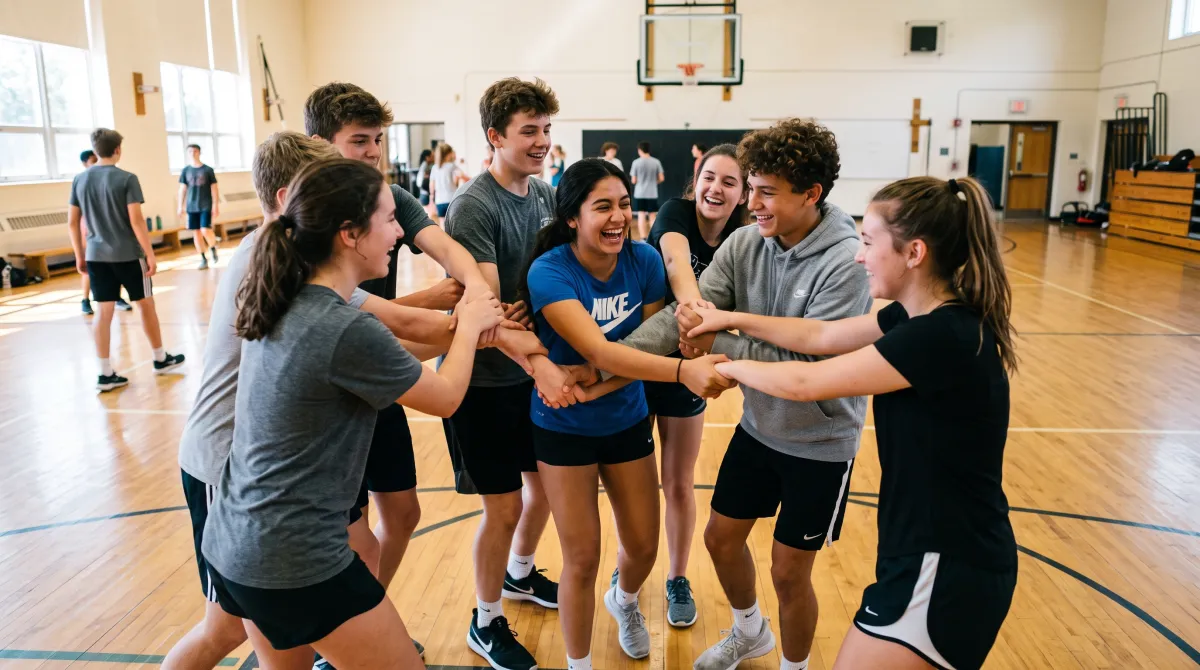
Team Building Activities for Teens Explained
Good activities fall into a few clear categories. Knowing which type you need helps you pick fast instead of scrolling endless lists. The structure mirrors how team building works in any setting.
Problem-solving challenges
These give the group a puzzle with one correct path and a ticking clock. Escape-room style boxes, the marshmallow-spaghetti tower, or a "survival" ranking task all force teens to negotiate, test ideas, and divide roles.
Creative and build challenges
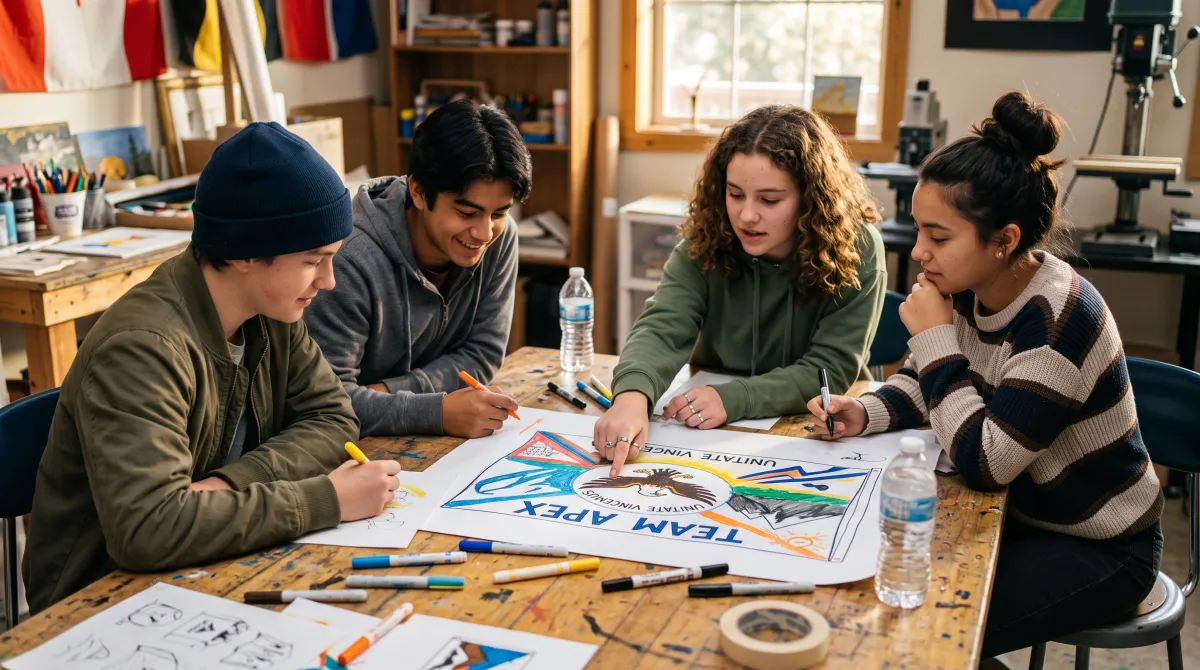
Hand each small group identical materials and one brief: build the tallest structure, design a team flag, film a 30-second ad. Creative tasks let quieter teens contribute without having to perform socially.
Physical and outdoor games
Relay races, the human knot, blindfolded obstacle courses, and capture-the-flag burn energy and lower defenses. Keep contact optional and check for anyone sitting out.
Trust and communication games
"Two truths and a lie," back-to-back drawing, and the trust walk build the softer muscles. These work best after a group has already warmed up with something lighter.
The game is never the lesson. The debrief is where teenagers actually learn what just happened.
Team Building Activities for Teens Examples
Here are 15 activities that hold up with real teenage groups, sorted by what they teach.
| Activity | Best for | Group size | Time |
|---|---|---|---|
| Marshmallow Tower | Collaboration under pressure | 3-5 | 20 min |
| Escape Box Challenge | Problem-solving | 4-6 | 30 min |
| Human Knot | Communication | 8-12 | 10 min |
| Team Flag Design | Identity and creativity | 4-8 | 25 min |
| Blind Drawing | Listening | Pairs | 15 min |
| Survival Ranking | Negotiation | 4-6 | 20 min |
| Scavenger Hunt | Strategy and movement | 4-6 | 45 min |
| 30-Second Ad | Creative confidence | 4-6 | 30 min |
| Capture the Flag | Energy and tactics | 10+ | 30 min |
| Two Truths and a Lie | Getting acquainted | Any | 15 min |
A few worth calling out from experience. The Marshmallow Tower works because failure is cheap and fast, so teens iterate instead of arguing. The 30-Second Ad lights up groups that hate "sharing feelings" but love being funny on camera.
The five others I keep in rotation: minefield obstacle course, group juggle, story-building circle, paper plane contest, and the classic trust fall (only with a coached, willing group).
Why Team Building Doubles as a Business Skill Primer
The instincts these games train, dividing roles, cutting waste, and reading value, are the same ones that power how companies run. Naming that link out loud helps teens see why the work matters.
Take wasted effort. When a group builds three towers nobody needs, that is overproduction: making more than the task requires, the same trap factories try to avoid. A clean debrief turns that mess into a lesson about focus.
Other ideas map just as neatly. The slow loss of a tool's usefulness over many sessions is a plain depreciation meaning, and the textbook depreciation definition simply puts a number on that decline each year. Both come up the first time a teen asks why old gear is treated as worth less.
When a bigger group solves a puzzle faster per person than a small one, they have felt the economies of scale definition first-hand: cost per unit drops as volume rises. Pair that with the working capital definition, the cash a team keeps on hand to keep operating, and abstract finance starts to feel concrete.
The money words follow the same pattern. The cash flow definition is just money moving in and out over time; the accounts receivable definition and the matching accounts receivable meaning describe money owed to you but not yet collected. A snack-stand activity makes both click.
Finish with the scoreboard ideas. A balance sheet definition lists what a group owns against what it owes, and the everyday balance sheet meaning is simply that snapshot of position. The gross margin definition, and the plainer gross margin meaning, measure what is left after the direct cost of making something. Teens grasp these faster after living the trade-offs in a game.
How to Apply Team Building Activities for Teens
Picking a good game is half the job. Running it well is the other half, and it is where most adults lose the room.
Match the activity to the group's stage
A brand-new group needs low-stakes icebreakers first. Save trust walks and personal-sharing games for later, once teens feel safe with each other.
Keep blocks short and rotate
Run 15 to 30 minute blocks, then switch. Attention drops fast, and a clean cut leaves energy high instead of dragging an activity past its peak.
Mix the groups on purpose
Let teens self-select once, then assign groups yourself. Mixing cliques is uncomfortable for five minutes and valuable for the whole session.
Always debrief
Spend three minutes after each activity asking: what worked, what broke down, who stepped up. This is where the soft skills move from the game into real life. Skip it and you ran a fun game, not team building.
One honest warning. Forced fun is obvious to teenagers and it backfires. If you sense an activity dying, cut it early and move on. Reading the room beats finishing the plan.
These same principles, clear goals, honest feedback, and roles that fit the person, carry straight into adult workplaces. If you want the grown-up version, our guide to balancing the benefits and risks of innovation covers how teams take smart creative risks together.
Common Mistakes to Avoid
Most failed sessions share the same root causes. Watch for these.
- Public embarrassment. Never single out a teen to perform alone unless they volunteer.
- No clear win condition. Vague activities feel pointless. Give every game a finish line.
- Skipping the debrief. Without reflection, the lesson evaporates the moment the game ends.
- Ignoring the quiet kids. Build in non-verbal roles so introverts contribute too.
Recognizing when a dynamic is quietly working against someone is a skill that pays off well beyond youth groups. Our piece on the signs you are being set up to fail at work applies the same read-the-room instinct to adult teams.
The way value shifts between players in a game mirrors real markets too. Watching who suddenly matters more is much like reintermediation reshaping who adds value in a chain.
Team Building Activities for Teens FAQ
What are good team building activities for shy teens?
Creative and build challenges work best for shy teens because they let them contribute through making rather than performing. Team flag design, blind drawing in pairs, and quiet problem-solving puzzles give introverts a real role without putting them on the spot.
How long should a teen team building session last?
Keep total sessions to 60 to 90 minutes, broken into 15 to 30 minute activity blocks. Teenage attention drops sharply past the half-hour mark, so several short, varied games beat one long one.
What team building games work for large teen groups?
For groups of ten or more, use capture the flag, scavenger hunts, the human knot, or relay races. These scale easily and let you split into competing teams, which raises energy and engagement fast.
Do team building activities for teens actually work?
Yes, when they include a clear goal and a debrief. The game builds the shared experience; the reflection afterward turns it into lasting communication and trust skills. Activities without a debrief are just entertainment.
What is a good icebreaker for teenagers?
Two truths and a lie is the reliable default: it is fast, funny, and low-risk. For movement, try a group lineup where teens silently order themselves by birthday using only gestures.