Marketing
Influencer Marketing Strategy: A Practical Guide for SMBs
Influencer marketing for SMBs: pick creators by niche fit, set KPIs tied to revenue, measure ROI on margin, and lock FTC disclosure into every contract.

Most small teams treat influencer marketing as a leap of faith: send free product, hope a post moves something, never quite know if it worked. That is how budgets vanish. The brands winning in 2026 run it like any other acquisition channel inside their wider marketing strategy, with selection criteria, KPIs tied to revenue, and contracts that protect them.
The market backs the discipline. Influencer marketing hit 32.55 billion USD in 2025 and analysts expect it to clear 40 billion in 2026. Adoption is near-universal, yet only about 40% of marketers have automated attribution in place. That gap is the opening for any SMB willing to instrument tracking early.
Quick answer
An influencer marketing strategy for an SMB means choosing creators by niche fit and conversion history, not follower count. Anchor KPIs to a real business outcome, measure ROI on margin with per-creator UTMs, and lock deliverables plus FTC disclosure into a written contract before anything ships.
Key takeaways
- Favor a roughly 30/70 macro-to-micro mix: micro-influencers (10K-100K) average 3.86% engagement versus 1.21% for mega accounts.
- Pick KPIs that sit two steps from revenue, not vanity likes. CPA and ROAS beat reach every time.
- Calculate ROI on margin, not gross revenue, and use unique UTMs plus promo codes from day one.
- Average return runs 5.78-6.50 USD per 1 USD spent; top performers hit 11-20 USD.
- FTC violations now cost roughly 53,088 USD each and stack per post. The brand shares liability.
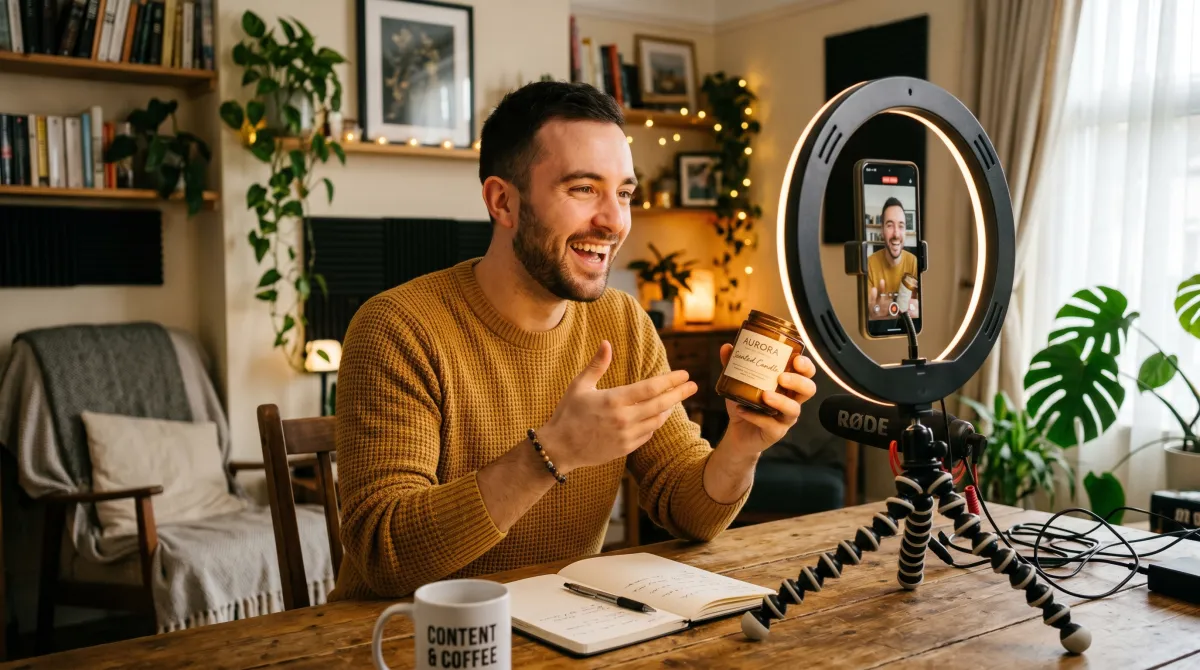
Choosing influencer partners: fit beats follower count
Follower count is the worst proxy for results, and it is the one most SMBs over-weight. A creator with 18,000 engaged niche followers will usually out-convert a 600,000-follower generalist, because their audience trusts them on the exact topic you sell.
The data is blunt here. Micro-influencers in the 10K-100K range deliver an average engagement rate of 3.86%, more than triple the 1.21% of mega-influencers. A hybrid allocation of roughly 30% macro and 70% micro has shown about 23% better ROI than betting on a single tier.
Macro accounts still earn their place for awareness and social proof. The point is not to ban them, it is to stop paying premium rates for reach you cannot convert.
Vet for fraud before you sign anything. Over 42% of Instagram influencers carry a meaningful share of fake followers, and inflated audiences quietly burn budget. Check engagement quality, comment substance, and audience geography, not just the headline number.
If you cannot explain why a creator's specific audience will buy your specific product, you are buying reach, not results.
Setting KPIs that map to a business outcome
Pick metrics that sit no more than two steps from a result you actually care about. Reach and impressions are fine for testing creative, never as the headline measure of success.
A clean KPI ladder usually looks like four layers. Each one answers a different question, so name your primary KPI before launch, not after.
| Stage | What it measures | Metrics to track |
|---|---|---|
| Awareness | Did the right people see it? | Reach, saves, qualified impressions |
| Engagement | Did they care? | Shares, comment quality, click-through |
| Conversion | Did they buy? | CPA, ROAS, conversion rate |
| Retention | Did they stick? | LTV, repeat purchase rate |
Comment quality matters more than comment count. Ten replies asking where to buy beat a thousand fire emojis. Read the actual conversation under a creator's posts before you judge their engagement.

Measuring influencer marketing ROI honestly
The number that fools small teams is gross revenue. Calculate ROI on margin instead, because a campaign that drives sales at a loss is not a win, it is a slow leak.
Average influencer ROI lands around 5.78 to 6.50 USD per 1 USD spent, with top performers reaching 11 to 20 USD. Roughly 89% of marketers say the channel matches or beats their other paid channels. Those averages only hold if you measure cleanly.
Use three layers of attribution. Direct response captures the obvious clicks and codes. Assisted conversions catch the multi-touch path, since people rarely buy on first exposure. Long-term brand lift accounts for the demand a creator builds over months.
Tag everything from day one. Give each creator a unique UTM parameter and a dedicated promo code so you can isolate their contribution. Spreadsheets break down past roughly ten creators, so move to a tracking platform before that point, not after the data turns to mush.
The influencer contract: eight clauses that protect you
A handshake and a DM is not a deal. In 2026, 73% of brands reported disputes over content ownership or usage rights, almost all of them avoidable with a written contract.
Build every agreement on eight base clauses:
- Scope: exactly what gets created, where, and when.
- Compensation: fee, commission, and any performance bonus.
- Deliverables: post count, platform, format, and dates.
- Exclusivity: by category, not by single brand, so it is enforceable.
- IP and usage rights: a time-boxed license (90 days is common) rather than perpetual transfer.
- FTC disclosure: written into the contract body, not assumed.
- Kill fee: what you owe if you cancel after work begins.
- Dispute resolution: the process when things go sideways.
Add a 2026 clause the old templates miss: AI and synthetic media. Spell out whether the creator can use AI-generated likenesses or voices, because that question now lands in real disputes.
On compensation, hybrid models won the year. A base fee plus 10-15% commission and a performance bonus aligns the creator's incentives with your business outcomes far better than a flat fee.
FTC compliance: the brand shares the liability
This is the clause SMBs most often skip and most regret. The FTC Endorsement Guides, updated in 2023 and in force in 2026, carry a civil penalty of roughly 53,088 USD per violation, and each non-compliant post counts separately.
Disclosure has to be clear and conspicuous in the first lines or first frame. Use #ad, the Instagram "Paid Partnership" label, or TikTok's "Branded Content" tag. "Spon" buried in a hashtag stack does not count.
The contract clause alone does not protect you. The FTC holds the brand jointly liable when disclosure fails, so you have to verify each post actively. Pointing at the creator is not a defense the agency accepts.
Running your first campaign without overspending
Define success criteria before launch, then test small. Run three to five campaigns with clear briefs covering post count, platform, dates, disclosure placement, review deadlines, and the usage-rights window.
Measure each creator against your primary KPI, then scale the ones with low CPA and cut anyone who blows past your threshold. The same discipline that runs a balanced marketing mix and the 5 Ps applies here: allocate to what performs, prune what does not.
How a creator frames your product also reinforces your market positioning, so brief them on the message, not just the discount.
Most SMBs sell more than one item, so watch how influencer-driven demand shifts your sales mix across products before you scale the channel.
Related guides
Frequently asked questions
How do I choose influencers for my small business?
Prioritize niche fit and conversion history over follower count. Favor micro-influencers (10K-100K), who average 3.86% engagement versus 1.21% for mega accounts, in a hybrid mix of roughly 30% macro and 70% micro. Screen for fraud first, since over 42% of Instagram influencers carry a meaningful share of fake followers.
What KPIs should I track for influencer marketing?
Anchor KPIs to objectives that sit two steps from a business result: awareness (reach, saves), engagement (shares, comment quality), conversion (CPA, ROAS, conversion rate), and retention (LTV, repeat purchase). Treat vanity metrics as creative-test signals only, never as your headline measure of success.
How do I calculate influencer marketing ROI?
Calculate ROI on margin, not gross revenue. Use three attribution layers: direct response, assisted multi-touch conversions, and long-term brand lift. Assign unique UTMs and promo codes per creator from day one, and move off spreadsheets once you pass roughly ten creators, where manual tracking breaks down.
What should an influencer contract include?
Build on eight base clauses: scope, compensation, deliverables, exclusivity (by category, not single brand), IP and usage rights (a time-boxed license rather than perpetual transfer), FTC disclosure written into the contract body, a kill fee, and dispute resolution. In 2026, add a clause covering AI and synthetic media use.