Workplace & Career
Employee Recognition Plan (2026): Build One That Sticks
An employee recognition plan turns appreciation into a repeatable system. Here is how to build one with owners, cadence, channels, and a budget that sticks.

An employee recognition plan is the difference between a team that feels seen and one that quietly polishes its resume. Almost every company says it values recognition. Far fewer write down how it happens, who owns it, and what it costs. That gap is where engagement leaks out.
I have rolled out recognition programs that landed and ones that died in a quarter. The plans that stick share the same backbone: they are written, repeatable, and cheap enough to survive a bad month.
Quick answer
An employee recognition plan is a written, repeatable system for noticing and rewarding good work. It defines who gives recognition, how often, through which channels, and on what budget, so appreciation becomes a habit instead of a mood. Start with one weekly ritual, one peer-to-peer channel, and a small budget, then expand from there.
Key takeaways
- A plan beats good intentions: write down the who, when, how, and how much.
- Pair frequent low-cost recognition (peer shout-outs) with rare high-value moments (awards, bonuses).
- Tie recognition to specific behaviors and company values, not vague praise.
- Make it timely. Recognition more than a week late barely registers.
- Measure participation and retention, not just how good the program feels.
What Is an Employee Recognition Plan?
An employee recognition plan is a documented framework that turns appreciation into a system. Instead of hoping managers remember to say thank you, the plan assigns owners, sets a cadence, and names the channels and rewards people can actually use.
Think of it as the operating manual for how your company notices effort. A good plan covers four pillars: who gives recognition, how often it happens, through which channels, and what budget backs it up. It sits inside your wider workplace culture work, not off to the side.
The best employee recognition plans mix two speeds. Frequent, low-cost moments keep morale warm week to week. Rare, high-value moments mark the milestones that deserve real weight. Run only one speed and the program feels either cheap or distant.
Recognition is not the same as compensation. Employee recognition is about acknowledgment and belonging, while pay is about fairness. Both matter, but a raise rarely fixes a culture where good work goes unseen.
Why Most Employee Recognition Plans Fail
The usual failure is not a lack of budget. It is a lack of rhythm. A program launches with a kickoff email, gets a burst of activity, then fades because nobody owns the weekly habit.
The second failure is vagueness. "Great job, team" recognizes no one and changes no behavior. Recognition has to name the person, the action, and why it mattered to land.
The third is timing. Gallup research consistently finds recognition works best when it is frequent and specific. Praise that arrives weeks after the work feels like an afterthought, because it is one.
A recognition program is not a budget line. It is a habit you protect every single week.
The last trap is top-down only. When recognition flows solely from managers, you capture a fraction of the great work that happens between peers. Peer-to-peer channels surface the wins leaders never see.
Employee Recognition Plan: The Practical Guide
Here is the build sequence I use. Treat each step as a decision you write down, not a feeling you carry in your head.
1. Define what you are recognizing
Anchor recognition to your company values and a handful of target behaviors. If "ownership" is a value, recognize the engineer who caught a bug before release. Specific criteria make recognition fair and repeatable.
2. Pick your channels
Choose where recognition lives. Common channels: a dedicated Slack or Teams channel for peer shout-outs, a monthly all-hands segment, and a quarterly award. Fewer channels used consistently beat many channels used once.
3. Set the cadence
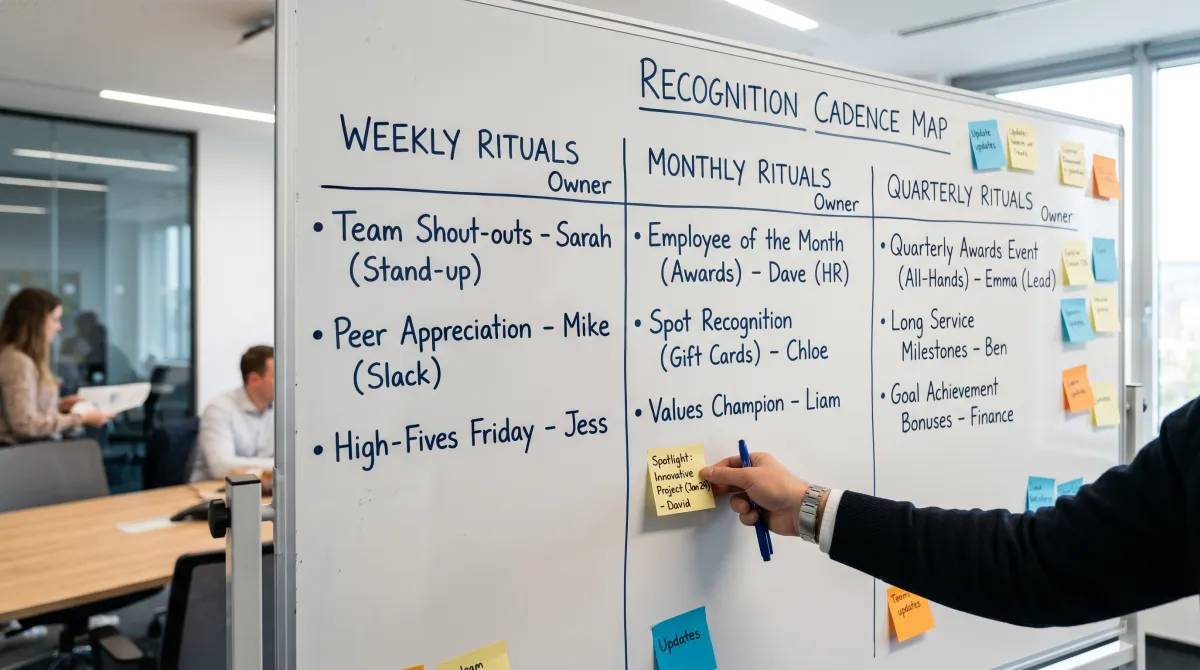
Cadence is the heartbeat of the plan. Weekly peer recognition, monthly manager recognition, and quarterly or annual awards is a reliable default. Put each ritual on a calendar with a named owner.
4. Assign owners
Every ritual needs one person accountable for it happening. The weekly shout-out reminder, the monthly write-up, the award nominations: each gets an owner. Unowned rituals quietly disappear.
5. Fund it realistically
You do not need a huge budget. A mix of free recognition, small gift cards, and a larger annual award covers most teams. The point is to decide the number up front so the program survives lean quarters.

Building Your Recognition Cadence
Cadence is where most plans win or lose. The goal is steady frequency at the bottom and meaningful weight at the top. This layered rhythm keeps recognition both routine and special.
| Layer | Frequency | Owner | Typical reward |
|---|---|---|---|
| Peer shout-outs | Daily / weekly | Whole team | Public thanks, kudos channel |
| Manager recognition | Weekly / monthly | People managers | 1:1 praise, small gift card |
| Spot awards | As earned | Managers / leads | $25 to $100 reward |
| Formal award | Quarterly / annual | Leadership | Bonus, trophy, public moment |
Pair this with a yearly anchor. A dedicated Employee Recognition Day gives the whole company one shared moment to celebrate, and it forces the program back into focus once a year.
The award tier deserves the same rigor as the daily rituals. Take time to structure a recognition award with clear, written criteria before you announce any winners, or the honor starts to feel arbitrary.
Budgeting Your Employee Recognition Plan
A common benchmark is roughly 1 to 2 percent of payroll for recognition and rewards, though plenty of strong programs run on far less. The split matters more than the total.
Put most of your budget into frequent, smaller rewards and reserve a meaningful chunk for the annual award. Spreading money thin across one-size prizes makes every reward forgettable.
Free recognition does heavy lifting too. Public thanks, a handwritten note, or a mention in the all-hands costs nothing and often outlasts a gift card. Money buys attention; specificity buys meaning.
Write the budget down by tier so each owner knows their limit. A manager with a standing $50 monthly spot-award allowance acts faster than one who has to ask finance every time. Pre-approved small budgets keep recognition timely.
Measuring Whether It Works
Track participation first. If only managers post in the kudos channel, the peer layer is broken. Healthy programs show recognition flowing in every direction, not just downward.
Then watch the outcomes that matter: voluntary turnover, engagement survey scores, and retention of your strongest performers. Recognition is a leading indicator, and it shows up in who stays.
Review the plan quarterly. Cut the rituals nobody uses, double down on the ones people love, and keep the framework light. Recognition tied to consistent good management habits compounds, while a bloated program collapses under its own weight.
One more honest check: ask your people. A single survey question, "Do you feel recognized for your work?", tells you more than any dashboard. If the score stays flat after two quarters, your plan looks good on paper but is not landing.
FAQ
What should an employee recognition plan include?
An employee recognition plan should include four things: the behaviors and values you recognize, the channels recognition flows through, the cadence (weekly, monthly, quarterly), and the budget. Name an owner for each ritual so it actually happens.
How do employee recognition plans improve retention?
Employee recognition plans improve retention by making people feel seen for their work, which strengthens belonging and reduces the quiet disengagement that precedes resignation. Frequent, specific recognition correlates with lower voluntary turnover.
How often should you recognize employees?
Recognize employees frequently and in layers. Peer shout-outs can happen daily or weekly, manager recognition monthly, and formal awards quarterly or annually. Timeliness matters more than grand gestures: recognize good work within days, not weeks.
Do employee recognition plans need a big budget?
No. Many effective employee recognition plans run on a small budget by leaning on free recognition like public thanks and notes, adding modest spot rewards, and reserving real money for one meaningful annual award. The structure matters more than the spend.