Workplace & Career
Employee Appreciation Day 2026: 15 Ideas That Land
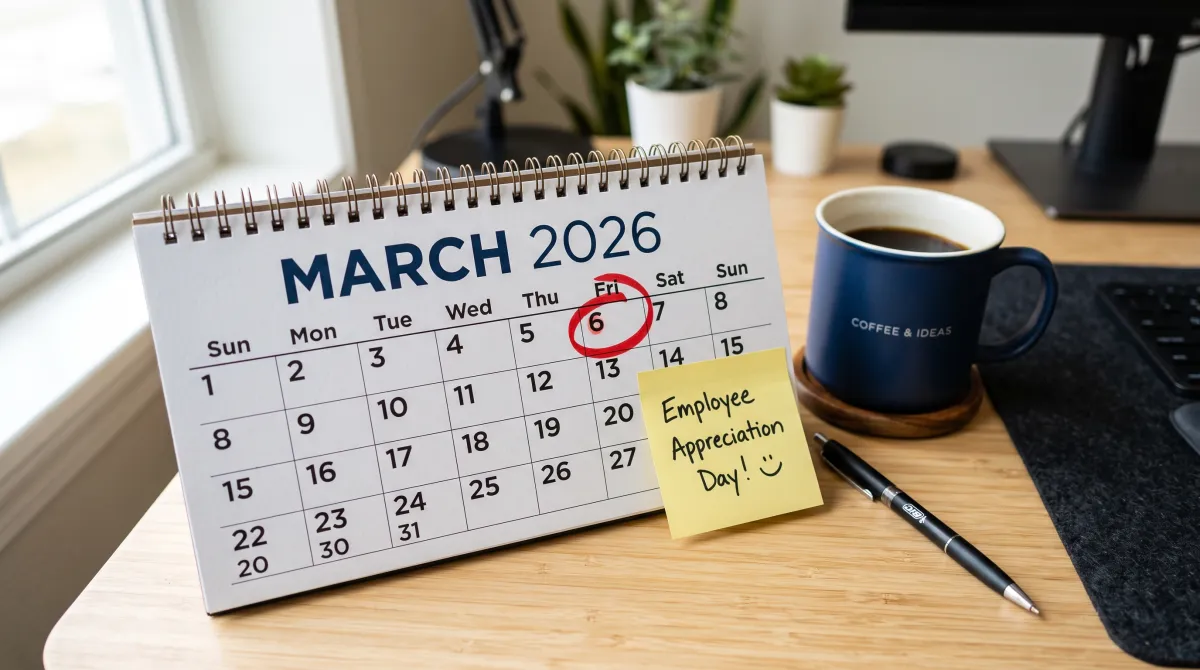
Employee Appreciation Day 2026 falls on Friday, March 6, the first Friday in March. Get 15 meaningful ways to recognize your team on any budget.

Employee recognition day is the one date on the calendar built to do something most managers know they should do more often: stop, look up, and tell people their work mattered. It is observed on the first Friday in March, which makes employee appreciation day 2026 fall on Friday, March 6. This guide covers what the day is, why it moves real business metrics, and 15 ideas for employee appreciation day you can run on any budget.
Quick answer
National Employee Appreciation Day is observed annually on the first Friday of March, so employee appreciation day 2026 falls on March 6. It is a dedicated day to show your appreciation through specific, sincere thanks rather than generic perks. The best meaningful ways to celebrate employee appreciation are personal, timely, and tied to behavior you actually want repeated.
Key takeaways
- 2026 date: Friday, March 6, the first Friday of March.
- Meaningful recognition works when it is specific and prompt, not when it is expensive.
- Peer-to-peer shoutouts often beat top-down praise for daily morale.
- One day is a prompt, not a recognition program: pair it with an ongoing habit.
- Skip the generic pizza party if it replaces real, named appreciation to your employees.
What Is Employee Recognition Day?
Employee recognition day is an annual day of celebration dedicated to acknowledging the contributions of every team member across an organization. It overlaps closely with Employee Appreciation Day, which shares the same first-Friday-of-March slot and was popularized in 1995 by Bob Nelson.
Nelson, a recognition author published by Workman Publishing, designed the day as a forcing function for thanks that usually goes unsaid. The intent is simple. Set aside deliberate time to recognize employees whose effort normally passes unspoken.
The name varies by company, but the spirit does not. Some call it staff appreciation, some run it quarterly, and some fold it into a year-round habit of named, specific praise any manager can sustain.
What unites the strong versions is real recognition and appreciation rather than a blanket gesture aimed at everyone and no one. That distinction is the whole game in today's workplace, where people read past empty ritual fast.
Recognition itself is a well-studied driver of employee engagement and employee retention. When employees feel seen and valued, discretionary effort and job satisfaction rise while turnover falls.
A single day cannot carry that weight, but a steady habit reinforces it. A recognition rhythm that you run all year as a manager is what turns one afternoon into a system where people feel connected to the work.
When Is National Employee Appreciation Day in 2026?
In 2026, national employee appreciation day falls on Friday, March 6. Employee appreciation day falls on the first Friday of March each year, so the date shifts annually rather than sitting on a fixed number. In 2025 it landed on March 7.
That Friday timing is deliberate. It lets teams close the week on a high note and gives managers a natural window for an afternoon gathering, an early finish, or a round of personal thank-you notes before the weekend. It is observed on the first Friday across most U.S. workplace calendars.
If March 6 is awkward for your team, the date is a guideline, not a rule. The principle that matters is consistency: pick a day, protect it, and back it with specific, written praise rather than a once-a-year scramble.
Why Employee Recognition Day Matters
People do not leave jobs only over pay. They leave when effort feels invisible. Recognition is the cheapest, fastest lever a manager controls, and it is wildly underused because it feels soft.
It is not soft. Gallup's long-running research consistently ties regular recognition to higher engagement and retention, and finds most employees say they do not get enough of it. The gap between how often leaders think they recognize their employees and how often staff feel recognized is large.
Recognition that arrives a month late, addressed to no one in particular, reads as a memo. Recognition that is specific and same-week reads as respect.
The mechanism is straightforward. Specific praise tells someone exactly which behavior to repeat, which is why "great job this quarter" lands flat. Naming unique contributions, like the way someone caught a billing error before it hit the client, lands hard because it points to work only that person did.
There is also a multiplier effect. When recognition is public and peer-driven, it teaches the whole team what good looks like. A consistent culture where teamwork is the standard grows from that, because it sets the bar without a single policy document.
The cost of skipping it is real, too. Disengaged employees coast, withhold ideas, and start scanning job boards months before they quit. Recognition tied to real results, not just attendance, closes that gap.
That is why a serious recognition habit almost always starts with this day and builds outward. It is one of the few low-cost interventions that touches morale, retention, and output at once, which is why recognition professionals treat it as core management.
Which kind of recognition fits the moment
Different wins call for different formats. Recognition professionals agree that matching the gesture to the contribution is what makes it resonate.
A good map of options helps you show appreciation in ways that fit the moment, instead of committing to one big gesture for everyone, and it keeps your company culture from defaulting to a single tired ritual.
| Recognition type | Best for | Rough cost | Common mistake |
|---|---|---|---|
| Handwritten note | Personal, lasting impact | $0 | Staying vague instead of naming the moment |
| Public shoutout | Teaching the team what good looks like | $0 | Praising the same few people every time |
| Peer-to-peer | Daily morale and visibility | $0 | No channel, so it never actually happens |
| Spot bonus | Rewarding a named, recent win | $50-$250 | Paying weeks later, killing the link |
| Gift cards | Letting employees choose their reward | $25-$100 | Generic amount with no message attached |
15 Ideas for Employee Appreciation Day
Here are 15 appreciation ideas and ways to celebrate employee appreciation day, sorted by budget. The cheapest ones are often the most memorable, because sincerity reads louder than spend.
You can show your employees you mean it in ways that cost nothing yet stick for months. The trick is to show employees the gesture is for them by name, then mix one personal touch with one shared moment for a full day.
Zero-budget ways to show appreciation
- Handwritten notes. One card per person, naming a real moment. This single act outperforms most paid perks.
- A public shoutout round. Open a meeting and have each lead name one specific contribution from someone on their team. A simple script keeps managers from freezing on the spot.
- Skip-level thanks. Have a senior leader email three people directly, referencing their dedication and hard work.
- Peer recognition wall. A shared channel or board where anyone can post a thank-you, building a culture of gratitude all day.
- Protected focus afternoon. Cancel non-essential meetings and gift people uninterrupted time. Time is a real, motivational reward.
Low-budget ways to show your team appreciation
- Coffee or lunch delivered. Send a gift code so remote employees and in-office staff are treated equally.
- Wellness perks. Book chair massages on-site, or send a small wellness credit to remote teams.
- Early finish on March 6. Close two hours early and say plainly why.
- Charity donation in their name. Let employees choose a cause; you donate a small fixed amount.
- Skill or book stipend. A modest credit toward something they want to learn, reinforcing that you value growth.

Bigger-budget ways to recognize your team
- A real award with a story. Not a generic trophy, but a named honor tied to a specific achievement, so it feels earned rather than arbitrary.
- Extra paid day off. A floating recognition day costs little relative to the goodwill it buys.
- Team-building experience. A shared meal, workshop, or structured group activity chosen by the team, not imposed on it.
- Spot bonuses or gift cards. Small, immediate rewards attached to a named win, paid fast. Link the money to the moment, not the calendar.
- Growth opportunity. Hand someone a stretch project they have wanted. Trust is the highest form of recognition.
One rule cuts across all three tiers. Do not forget first responders, frontline staff, and anyone whose work is easy to take for granted because it only gets noticed when it breaks. A short, named thank-you to those roles often resonates harder than any perk, because they so rarely hear it.
Celebrate Employee Appreciation Day 2026: The Practical Guide
Ideas are easy. Execution is where most recognition dies, usually because it is rushed the morning of and feels generic. The best way to celebrate is to run this day of celebration like a small project instead, in four simple steps.
- Gather specifics a week early. Ask each manager for two specific contributions per direct report. Specificity is the whole game, and it cannot be improvised at 9am on the day.
- Pair personal with public. Give everyone one private gesture and one shared moment. Personal makes employees feel valued; public makes the win feel celebrated.
- Include remote and fully remote staff by design. Use gift codes, a shared channel, and a video shoutout round so nobody who does remote work watches an in-office party through a screen and feels disconnected.
- Capture what you said. Run quick employee surveys afterward and save the notes. That feedback turns one afternoon into the raw material for an ongoing rhythm.
That last step is the difference between a party and a practice. Run the day this way and you celebrate your team's wins in ways that outlast a single afternoon. It separates companies that retain people from those that throw an annual event and watch morale dip in June.
How to Create a Culture of Recognition Beyond a Single Day
Beyond employee appreciation day, the goal is a steady culture of recognition that runs every week, not once a year. The day is the kickoff. The habit is what shows your employees how much they matter and keeps engagement high. It is also how you boost morale in the long, quiet stretches between events.
The most common failure is the generic blast. A company-wide "thanks everyone" email names no one and moves nothing. It can even backfire, signaling that leadership sees the team as a unit, not as people who deserve meaningful recognition.
The second mistake is recognition that is really a demand. "Thanks for staying until midnight" praises burnout and quietly asks for more of it. Recognize outcomes and judgment, not just sacrifice, to reinforce culture you actually want rather than the one you fear.
The third is letting one feel-good day stand in for a positive workplace. In today's workplace, employees who feel appreciated only once a year still feel disconnected the other 364 days.
The fix is structure. Make thanks frequent and low-friction enough that any manager can do it on a Tuesday, even something as small as a sincere note up the chain, without permission or budget.
The strongest move is to tie the day to your stated employee values and an ongoing habit. Consistent thanks across every team member is what makes the whole effort resonate well past March 6, and it is the backbone of a workplace culture people stay for.
FAQ
What day is National Employee Appreciation Day?
National Employee Appreciation Day is observed annually on the first Friday in March. In 2026 that means Friday, March 6. The date moves each year because it tracks the first Friday of March rather than a fixed number.
Is there a theme for Employee Appreciation Day 2026?
There is no official national theme for Employee Appreciation Day 2026. Many companies set their own, such as "seen and valued" or a culture of gratitude focus, then build their ways to show appreciation around it. The strongest theme is simply specific, sincere thanks.
What is recognition day at work?
A recognition day is a dedicated day for employers to show their appreciation to staff through named, specific praise. It exists to make managers pause and recognize employees whose contributions usually go unspoken, boosting morale and job satisfaction.
What is the theme for 2026 Public Service Week?
Public Service Recognition Week 2026 runs the first full week of May and honors government and first responders rather than private-sector staff. It has no fixed corporate theme; agencies set their own, distinct from Employee Appreciation Day in March.
How do you recognize remote employees?
Use digital gift cards, a shared recognition channel, and a video call shoutout round so remote teams get the same named appreciation as in-office staff. Avoid celebrations that only work in person and leave fully remote people feeling disconnected.