Marketing
Digital Marketing Courses (2026): What Actually Works
Compare the digital marketing courses worth your time in 2026, what each teaches, who they fit, and how to turn the certificate into a real skill.

Picking the right digital marketing courses in 2026 comes down to one filter: does the program teach you to run a real campaign, or does it just hand you a certificate. The gap between those two outcomes is wider than most course catalogs admit.
Quick answer
Digital marketing courses teach the practical skills behind SEO, paid ads, email, and analytics, built around the marketing definition of creating and delivering value profitably. The strongest programs in 2026 pair hands-on channel work with real marketing management practice, not just a certificate at the end.
Key takeaways
- Solid digital marketing courses teach the marketing definition and concept of marketing before any software.
- Look for programs that cover the full marketing mix, not just one channel like paid social.
- Google, HubSpot, and Coursera remain popular starting points for digital marketing courses in 2026.
- Content marketing strategies and digital marketing strategies both deserve their own dedicated module.
- Free courses build vocabulary fast; paid certificates add structured projects and peer feedback.
- A finished course only proves value once you apply it to one channel with a measurable result.
What Are Digital Marketing Courses?
Digital marketing courses teach the practical skills behind running campaigns online: paid ads, SEO, email, and analytics. Most programs start with the marketing definition itself, because you cannot run a channel you do not understand at the root.
The plain-English marketing meaning is simple: identify what people need, then create and deliver something that meets that need at a profit. Once you can define marketing that way, every module that follows makes more sense. That split between selling and understanding demand is documented in the Wikipedia overview of marketing as a discipline.
Good programs anchor lessons in that core marketing foundation before they touch a single ad platform. Courses that skip straight to software tend to produce students who can click buttons but cannot explain why the campaign worked.
These courses fit three groups well: marketers switching from traditional advertising, small business owners running their own campaigns, and career changers building a portfolio piece. Each group should weigh time investment against how fast they need results.
Digital Marketing Courses Explained: The Concepts Behind the Tools
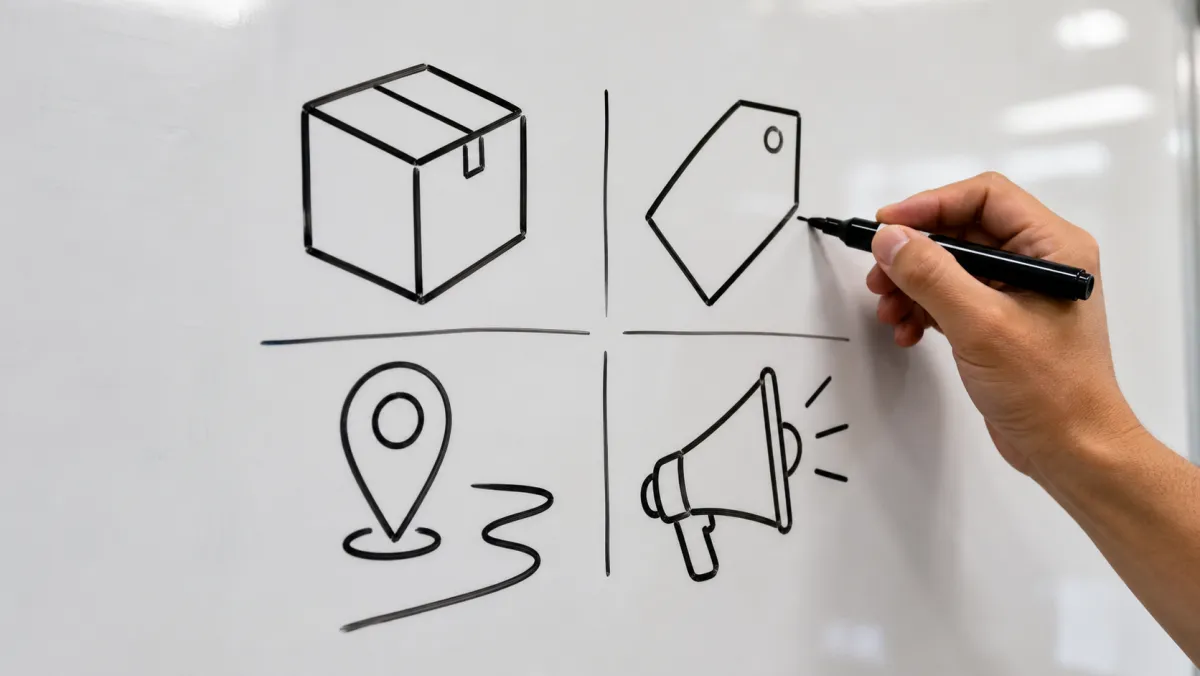
Every solid curriculum walks through the concept of marketing before it walks through software. That means understanding customer needs, competitive positioning, and how a brand earns attention before it earns a sale.
Marketing management is the next layer: planning, executing, and measuring campaigns against a budget and a deadline. Courses that skip this step leave graduates who can build an ad but cannot judge whether it actually worked.
Most programs also cover the marketing mix definition, the four Ps of product, price, place, and promotion. For a full breakdown of how those pieces fit together, see our guide to the marketing mix and the 5 Ps.
The marketing mix meaning matters here because digital tools only work well when they support a coherent mix decision, not when they try to replace one. A great landing page cannot fix a price that is wrong for the market. The original four Ps framework, laid out in the Wikipedia entry on the marketing mix, still anchors most course syllabi today.
Digital Marketing Courses Examples: What Top Programs Actually Cover

Google's Digital Marketing & E-commerce Certificate, HubSpot Academy's free courses, and Coursera's Meta Social Media Marketing Certificate are three of the most enrolled digital marketing courses right now. Each leans into a different mix of paid and organic skills.
Strong courses teach digital marketing strategies across channels: search, social, email, and paid media, so you are not locked into one platform's playbook the moment it changes its algorithm.
Content marketing strategies get their own module in nearly every serious program, covering editorial calendars, SEO writing, and repurposing one piece of content across five formats.
Case studies vary by school, but instructors often reach for recognizable brand stories, from a soft drink's cause campaign to a sneaker company's good sportsman marketing push around a major athlete endorsement, to show how positioning and channel choice work together.
A few programs also connect campaign ethics to the societal marketing concept, the idea that a company's offers should serve customer wellbeing and society, not just short-term sales.
Free vs. Paid Digital Marketing Courses
Budget is usually the first filter. The table below breaks down what you get at each price point, so you can match the course to the outcome you actually need.
| Course type | Typical cost | Best for |
|---|---|---|
| Free (HubSpot Academy, Google Skillshop) | $0 | Learning vocabulary and one channel fast |
| Paid certificate (Coursera, Google Career Certificates) | Monthly subscription | Structured projects and a credential for a resume |
| Cohort-based bootcamp | Highest upfront cost | Live feedback and a portfolio built with peers |
None of these formats replace running a real campaign. Treat the certificate as the starting line, not the finish.
A certificate proves you sat through the course. A campaign that hit its number proves you learned it.
How to Apply Digital Marketing Courses to Your Career or Business
The fastest way to test what you learned is the marketing of marketing itself: watch how course providers sell their own programs. Notice the funnel, the email sequence, the social proof, then reverse-engineer it for your own offer.
Before you touch a paid channel, revisit the four Ps framework so pricing and product decisions come first. Ads amplify a good offer and expose a weak one just as fast.
If your role touches product decisions, apply the place variable from the mix directly. Reading up on selective distribution helps you decide which retailers or channels should carry a product, a decision most digital courses rarely cover in enough depth.
Career stage matters as much as budget. Early-career marketers benefit most from broad free courses that cover many channels, while specialists already running paid media get more value from a narrow, advanced course in one platform.
Build a 90-day plan: one channel, one metric, one weekly review. Most course graduates who stall never picked a single channel to prove the skill on first.
Track one number before and after the course, cost per lead, conversion rate, or organic traffic, so the training has a measurable before-and-after instead of just a certificate on LinkedIn.
Digital Marketing Courses: FAQ
What is marketing?
Marketing is the process of identifying customer needs and creating, communicating, and delivering value that meets those needs at a profit. It covers everything from product decisions to the message that finally reaches a buyer, and it sits at the center of every digital marketing course worth taking.
What is marketing about?
Marketing is about understanding an audience well enough to build offers, messages, and channels that turn their needs into a sale and, ideally, a repeat customer over time. That is why courses spend so much time on customer research before touching a single ad platform.
What is digital marketing?
Digital marketing is marketing carried out through online channels: search engines, social platforms, email, and paid ads, measured with real-time data instead of guesswork or delayed reporting.
What is marketing mix?
The marketing mix is the set of controllable variables, product, price, place, and promotion, that a business combines to reach its target market and support one clear positioning.
What is concept of marketing?
The concept of marketing holds that a business succeeds by starting with customer needs and building the product, price, and promotion around meeting them profitably, rather than pushing whatever is easiest to make.