Business Concepts
The 5 Determinants of Demand (+1 Most Guides Miss) 2026
The 5 determinants of demand are the non-price forces that shift the whole demand curve, plus the 6th most guides miss. Real examples and how each hits your books.

The determinants of demand are the handful of forces that move how much of a product people will buy at any given price. Get them wrong and your forecast misses, your inventory piles up, and your cash flow tightens. Get them right and you stock, price, and hire ahead of the curve instead of chasing it.
Quick answer
The 5 determinants of demand are the non-price factors that shift the entire demand curve. A price change moves you along the curve; a determinant change moves the whole curve left or right.
- Buyer income (and whether the good is normal or inferior)
- Prices of related goods (substitutes and complements)
- Tastes and preferences
- Expectations about future prices and income
- Number of buyers in the market
Most textbooks stop at these five. The sixth force below, whether a good is normal or inferior, is the one most guides miss because it decides which direction income actually pushes demand.
Key takeaways
- Price moves quantity demanded; determinants move demand itself, the entire curve.
- The five classic determinants are income, related-goods prices, tastes, expectations, and number of buyers; the sixth factor most guides miss is whether the good is normal or inferior, which sets the direction income moves demand.
- Each shifter shows up in your financials, from accounts receivable timing to gross margin pressure.
- Operators who track these signals adjust pricing and production before competitors react.
What Are the Determinants of Demand?
Demand is the relationship between a product's price and the quantity buyers want. The determinants of demand are everything besides that product's own price that changes how much people buy.
Economists separate two ideas that beginners blur together. A price cut increases the quantity demanded, a slide along a fixed curve. A determinant, like rising incomes, shifts the whole curve outward, so people buy more at every price.
That distinction is not academic. It tells you whether a sales bump is a temporary discount effect or a durable shift you should staff and stock for. If you want the wider vocabulary behind these mechanics, our business concepts hub maps the core terms every operator should know.

The 5 Determinants of Demand Explained
Five forces do the heavy lifting, plus a sixth that most guides miss. Each one shifts the curve, and each one leaves a fingerprint on your numbers. The economics behind them is well documented in the study of demand.
1. Buyer income
When incomes rise, demand for normal goods rises with them. For inferior goods, demand falls as people trade up. A recession that cuts household income can hollow out demand for premium lines overnight.
2. Prices of related goods
Substitutes and complements move demand sideways. If a rival drops its price, your demand falls. Mapping who those rivals are matters here, and studies like our breakdown of the Top 12 Starbucks Competitors show how crowded a substitute field can get. If the price of a complement, like printers to ink, drops, demand for your product can climb.
3. Tastes and preferences
Trends, reviews, and culture shift what people want. A viral product can see demand spike for reasons no spreadsheet predicted. The hard part is durability: a taste shift driven by a fad fades fast, while one driven by a real behavior change can reset your baseline for years.
This is where pattern recognition beats forecasting. Operators who study how markets evolve, including how reintermediation brings middlemen back into a channel, read taste shifts earlier than rivals stuck on last quarter's data.
4. Expectations
If buyers expect prices to rise, they buy now. If they expect a recession, they hold back. Expectation-driven demand is volatile and hard to forecast, because it can reverse the moment the news cycle turns.
5. Number of buyers
More buyers in the market means more demand at every price. Population growth, new geographies, and new segments all expand the curve. Expansion also rewards the firms ready to scale, which is why understanding the benefits and risks of innovation matters when a wider market opens up.
The 6th factor most guides miss: normal vs inferior goods
Whether a product behaves as normal or inferior decides how it reacts to the income shifter. Same store, two products, opposite responses to the same downturn.
A price change is a tactic. A demand shift is a trend, and the operators who tell them apart win the quarter.
Determinants of Demand Examples
Theory is cheap. Here is how the shifters land on a real business and its financial statements.
Say you run a mid-market furniture brand. Incomes climb, demand for your premium sofas rises, and orders outpace stock. That demand surge widens your accounts receivable definition reality: more invoices outstanding as wholesale buyers pay on net-30 terms. The accounts receivable meaning here is simple, money owed to you for goods already delivered, and a demand spike inflates it fast.
To fund the extra production, you lean on working capital. The working capital definition is current assets minus current liabilities, the cushion that pays for inventory and labor before customers pay you. Strong demand without enough working capital is how growing companies run out of cash.
That cash pressure shows up in your cash flow definition: the movement of money in and out of the business. A demand boom can crush cash flow if you buy inventory now and collect revenue later.
How to Apply Determinants of Demand
Reading the shifters is useless unless it changes a decision. Here is the operator's loop.
First, watch your balance sheet definition in motion. The balance sheet meaning is a snapshot of what you own and owe at a point in time. When a demand shifter moves, inventory and receivables on that statement move with it, often before the income statement reacts. The balance sheet for an operator is early warning, not just compliance.
Second, price against your margin. Watch your gross margin definition, revenue minus cost of goods sold, as a percentage. The gross margin meaning tells you whether a demand-driven price increase actually sticks profit or just covers rising input costs.
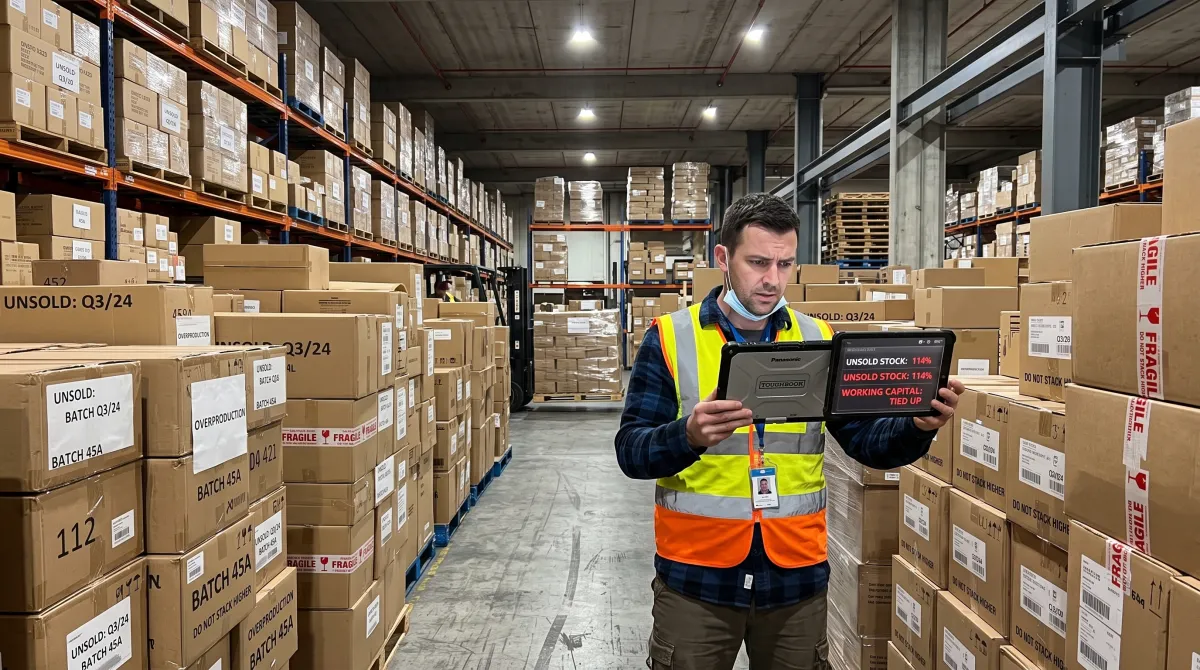
Third, plan capacity around the shifter's durability. Scaling production to chase demand can lower unit cost through economies of scale definition: the cost advantage that comes as output rises and fixed costs spread thinner. But chase a fad and you risk overproduction, the trap of making more than the market will buy, which forces fire-sale discounts and dead stock.
Fourth, account for your assets honestly. The depreciation meaning matters when you buy equipment to meet demand. The depreciation definition is the spreading of an asset's cost over its useful life, and overbuying capacity for a demand spike that fades leaves you depreciating idle machines. The accounting treatment of depreciation turns that idle capacity into a recurring drag on profit.
| Shifter | Demand effect | Where it hits your books |
|---|---|---|
| Rising income | Up (normal goods) | Receivables, working capital |
| Substitute price drop | Down | Gross margin pressure |
| Tastes shift | Up or down | Inventory, overproduction risk |
| Expected price rise | Up now | Cash flow timing |
| More buyers | Up | Capacity, economies of scale |
Related guides
Determinants of Demand: FAQ
What are balance sheet examples?
Balance sheet examples include a small retailer listing $50,000 in inventory and cash as assets against $20,000 in supplier payables as liabilities, with the $30,000 difference as owner's equity. The statement always balances because assets equal liabilities plus equity.
What is accounts receivable?
Accounts receivable is money customers owe your business for goods or services already delivered but not yet paid for. It sits as a current asset on your balance sheet and turns into cash once collected.
What is working capital?
Working capital is your current assets minus your current liabilities. It measures the short-term liquidity available to fund daily operations, inventory, and payroll before customer payments arrive.
What are profit and loss statement examples?
Profit and loss statement examples show revenue at the top, minus cost of goods sold to reach gross profit, then minus operating expenses to reach net income. A demand spike lifts revenue but can compress margin if costs rise faster.
What is gross margin?
Gross margin is revenue minus the cost of goods sold, usually shown as a percentage of revenue. It reveals how much profit each sale generates before overhead, and it is the first number to watch when demand shifts your pricing.