Business Concepts
Best Business Schools in the US (2026): M7 Ranked
The best business schools in the US for 2026: Stanford leads, Wharton, Booth and the M7 follow. See real costs, salaries, and which fits your career.

If you are weighing a two-year bet that costs a quarter of a million dollars, you want more than a logo. The best business schools in the US are not interchangeable, and the 2026 rankings just reshuffled the top tier in ways that matter for your application.
Disclaimer: This article is for general information only and isn’t financial, investment or tax advice. Rates, fees and rules change; check the provider’s or regulator’s official source or talk to a qualified professional about your situation.
Quick answer
For 2026, U.S. News ranks Stanford GSB #1, followed by Wharton, then Chicago Booth, with Harvard and Kellogg tied at #4. The top seven are all M7 schools. The right pick depends on your target career, not the rank number.
Key takeaways
- Stanford reclaimed sole #1 in the 2026 U.S. News ranking, pushing Wharton to #2.
- All top-seven programs belong to the elite "M7" group.
- Total two-year cost at an M7 school runs roughly $248,000 to $267,000 with living expenses.
- Rankings disagree: Poets&Quants leads with Kellogg, QS tops Wharton, the FT excludes Stanford entirely.
- Fit, network, and post-MBA placement beat a one-spot ranking gap every time.
What Is the Best Business School in the US?
The best business schools in the US are the seven programs known as the "M7": Stanford, Wharton, Harvard, Chicago Booth, Northwestern Kellogg, MIT Sloan, and Columbia. They cluster at the top of every credible ranking, year after year.
What sets them apart is not a single course. It is the mix of selective admissions, faculty who write the textbooks, and an alumni network that opens doors for thirty years after you graduate.
Here is how the 2026 U.S. News full-time MBA ranking shakes out at the top, based on its April 2026 release.
| School | 2026 Rank | Known for |
|---|---|---|
| Stanford GSB | 1 | Tech, VC, lowest acceptance rate |
| Wharton (UPenn) | 2 | Finance, quant depth |
| Chicago Booth | 3 | Analytical rigor, flexibility |
| Harvard | 4 (tie) | Case method, leadership, network |
| Northwestern Kellogg | 4 (tie) | Marketing, teamwork culture |
| MIT Sloan | 6 | Analytics, entrepreneurship |
| Columbia / NYU Stern | 7 (tie) | Finance, NYC access |
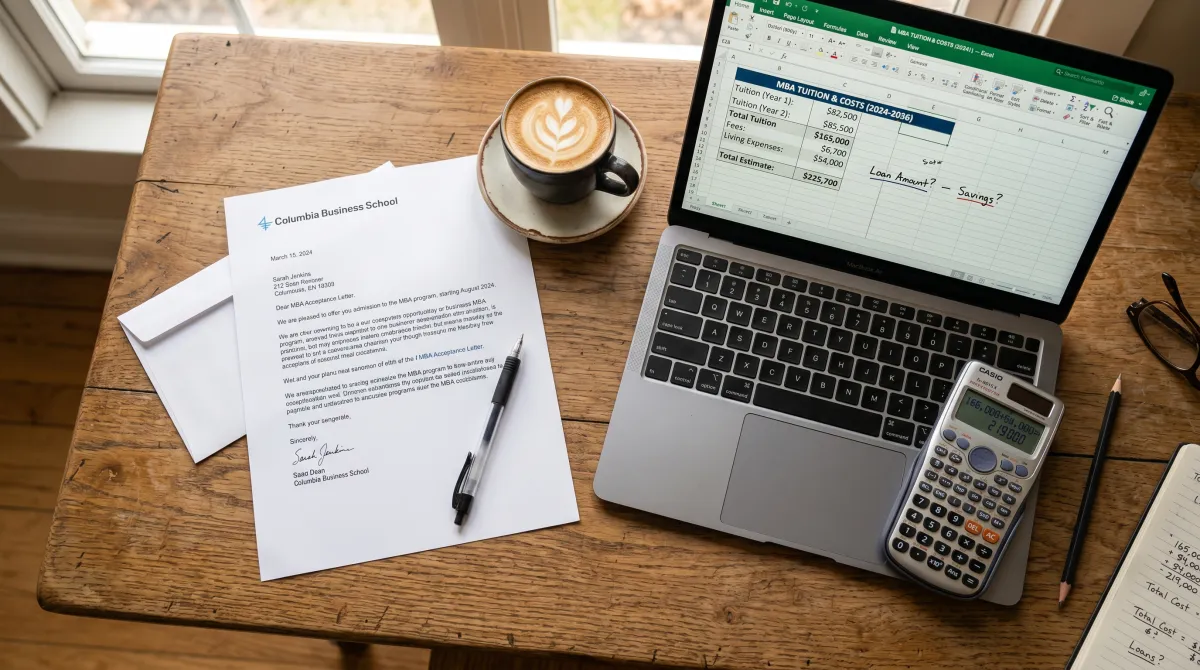
If you are still mapping out the support stack you will lean on as a manager, our business software hub pairs well with this guide once you move from classroom to operator.
Best Business Schools in the US Explained: Why the Rankings Disagree
Compare four ranking lists and you will see four different #1 schools. That is not a glitch. Each publisher measures different things.
U.S. News now ties half its score to career outcomes, plus GMAT scores and peer assessment. That methodology rewarded Stanford in 2026, which posts the highest starting salaries and an acceptance rate near 7 percent, the only school under 10 percent.
Other lists tell other stories. Poets&Quants, a composite of five rankings, has put Kellogg at #1. QS ranked Wharton top in the US. The Financial Times excluded Stanford entirely, since the school chose not to participate in 2025 and 2026. For the global picture beyond U.S. borders, our look at the best business schools worldwide compares the M7 against INSEAD, LBS and HEC Paris.
Chase the school that places people into the job you want, not the one sitting one spot higher on a single list.
The takeaway: a one-position gap between two M7 schools is noise. The signal is which program sends graduates into the industry, city, and role you are targeting.
Best Business Schools in the US Examples: Cost vs Outcomes
An M7 MBA is expensive, and the sticker price has climbed again for 2025-2026. The honest way to judge value is total two-year cost against realistic salary outcomes, not tuition alone.
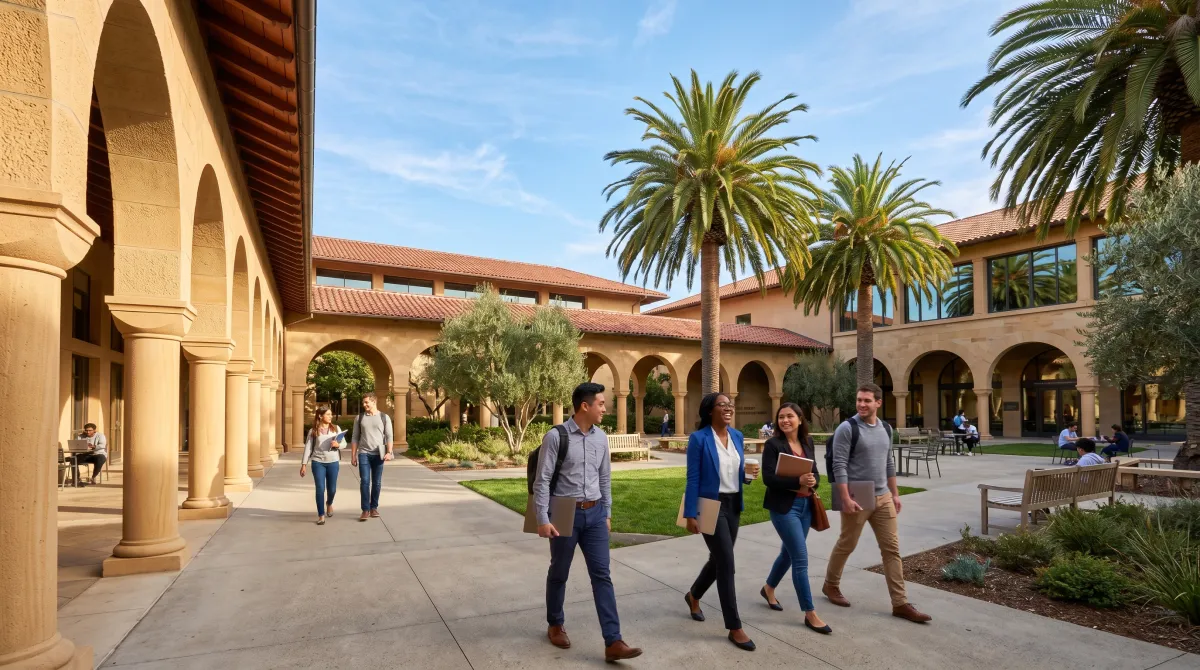
These figures come from each school's published cost of attendance and recent employment reports. They are accurate as of June 2026.
| School | Annual Tuition | Total 2-Yr Cost (with living) | Avg Starting Pay |
|---|---|---|---|
| Harvard | ~$78,700 | ~$250,000 | mid-$200,000s |
| Stanford | ~$85,755 | ~$260,000+ | ~$206,174 |
| Wharton | ~$87,970 | ~$267,000 | mid-$200,000s |
| Kellogg | ~$86,370 | ~$248,000 | mid-$200,000s |
Two caveats matter. Roughly half of Harvard MBA students receive financial aid, so few pay full sticker. And none of these numbers count opportunity cost, the salary you give up during two years out of work.
That forgone income can add $100,000 to $300,000 to the true cost. Factor it in before you call any program a bargain.
How to Apply to the Best Business Schools in the US
Admission to an M7 school is brutally selective. Stanford accepts around 7 percent of applicants, the lowest rate in the U.S. News ranking. A strong file is built over months, not weeks.
Focus your energy on the four levers admissions committees actually weigh:
- GMAT or GRE score: aim for the school's median. Across the M7, legacy GMAT averages cluster around 730 to 740, or roughly 685 on the Focus Edition.
- Career story: a clear, specific reason this MBA bridges where you are and where you want to go.
- Recommendations: from people who managed you and can give concrete examples, not vague praise.
- Essays and fit: evidence you understand that program's culture, from Kellogg's teamwork to Booth's analytical edge.
Apply in Round 1 if you can. Later rounds compete for fewer seats, especially for scholarship money. The Graduate Management Admission Council publishes free GMAT prep timelines worth following.
After the MBA: Running the Business You Wanted to Start
Plenty of M7 graduates skip the corporate path and launch something. The skills you sharpen there, finance, operations, leadership, are the same ones a founder uses on day one, and choosing the right legal wrapper matters too, from sole proprietorship to a Smart Innovation LLC: Structure, Steps & When It Fits. The wiring is just more practical.
Two early money moves set the tone. First, build a strong business credit score so banks and suppliers extend real terms, which in turn protects your What Is Working Capital as the business scales. If your file is thin, a secured business credit card reports your activity and grows that score before you need a larger line.
Then comes the back office. Once you hold real stock or run payroll, lightweight inventory and accounting tools save you from hiring a finance team too early, and they keep What Is Accounts Receivable from slipping through the cracks. If you want a head start on that tooling, our best productivity tools for teams roundup covers the stack most founders assemble in year one.
Security cannot wait either, since one breach can sink a young company. Our security software guide for small business walks through the protective layer to set up early.
Still deciding where to apply? The ranking above tells you who leads, but not which program fits you. Our guide on how to choose a good business school walks through judging faculty, network, and ROI against your own goal.
Best Business Schools in the US: FAQ
Which business school is ranked #1 in the US for 2026?
Stanford GSB is ranked #1 in the 2026 U.S. News full-time MBA ranking, edging out Wharton. Other lists differ: Poets&Quants has ranked Kellogg first and QS has ranked Wharton first in the US.
How much does a top US MBA cost in 2026?
A top M7 MBA costs roughly $248,000 to $267,000 over two years once living expenses are included. Annual tuition runs from about $78,700 at Harvard to $87,970 at Wharton for 2025-2026.
Is an MBA from a top business school worth it?
For most M7 graduates, yes. Average starting pay reaches the low $200,000s, and the investment typically pays back in three to four years, before counting long-term network value.
Do I need work experience to apply?
Almost always. Full-time M7 MBA classes average four to five years of work experience. A few schools admit younger candidates through deferred enrollment programs straight from undergrad.