Management
What Is Project Management? 5 Stages + Best Tools (2026)
What is project management? It's how a project manager turns a goal into a finished result on time and on budget. See the 5 stages, methods, and best tools.

If you have ever watched a launch slip three months while everyone insisted they were "almost done," you already understand why what is project management is a question worth answering properly. The job is simple to describe and brutal to do well: turn a fuzzy goal into a finished result, on time and within budget, without burning out the people doing the work.
I have run delivery teams for over a decade, and the pattern repeats. Effective project management is the difference between a finished project and an expensive lesson. This guide explains what project management is, how the project management process actually works, and which project management software earns its keep.
Quick answer
Project management is the application of skills, methods, and tools to plan, execute, and complete a specific project within a defined scope, timeline, and budget. A project manager guides the project from start to finish across five stages, initiation, planning, execution, monitoring, and closing, to deliver the project objectives and increase the chances of project success.
Key takeaways
- Project management is the process of leading a project from start to finish to hit defined project goals.
- Every project moves through five stages: initiation, planning, execution, monitoring, and closing.
- The project manager owns project scope, budget, risk management, and stakeholder management.
- Methodologies (Agile, Waterfall, Lean) are just structured ways to run the same project lifecycle.
- The right project management tool keeps the project on track and visible to the whole project team.
What Is Project Management, in Simple Words?
Project management is the discipline of applying knowledge, skills, and project management techniques to deliver a unique result. Unlike day-to-day operations, a project has a start and an end. It produces specific project deliverables, then it is done.
The Project Management Institute frames it cleanly: project management is the application of processes, methods, skills, and experience to achieve project objectives. That definition matters because it separates the project manager role from simply "being busy."
The basics of project management rest on three constraints in constant tension: scope, time, and cost. Stretch one and the others move. Managing a project means making those trade-offs on purpose instead of by accident, and keeping the project on track when reality pushes back.
Project management is not about controlling people. It is about removing the obstacles between your team and a finished result.
This is also where good management styles show up. The best project managers lead, they do not hover. They set clear project goals, then trust the project team to deliver against them across the entire project.
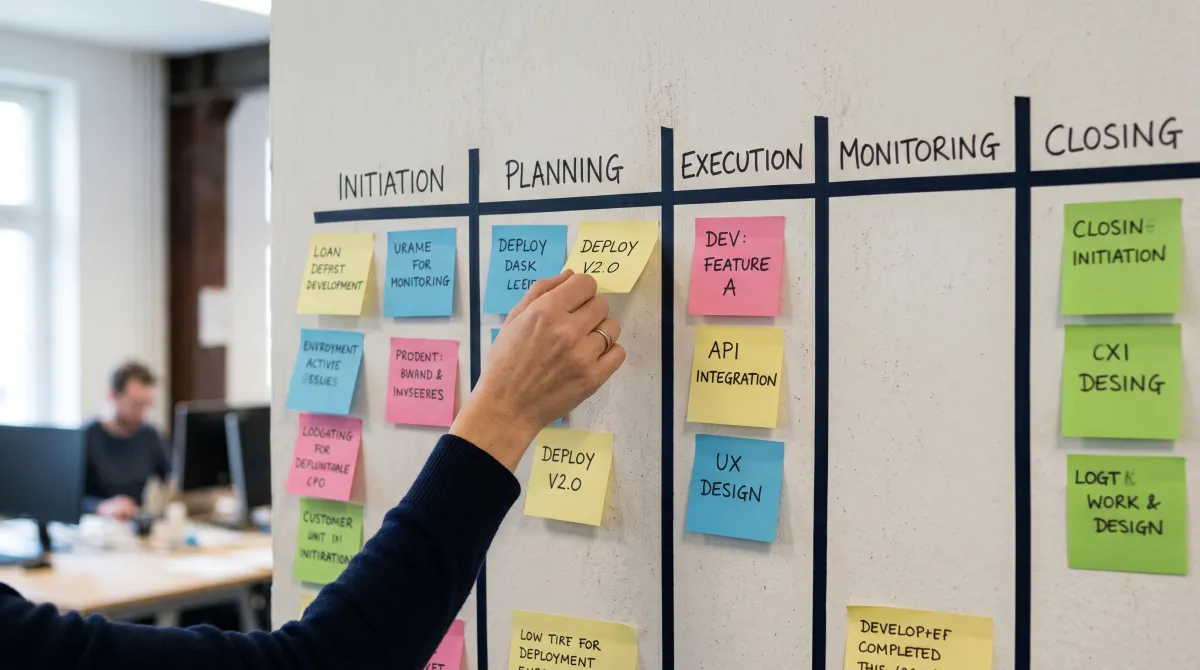
The 5 Stages of Project Management
Every project, no matter the project management approach, flows through the same project life cycle. These stages of project management give you a shared map so the whole team knows what phase of the project they are in.
1. Project initiation
Project initiation is where you decide the project is worth doing. You define the business case, the project objectives, the project requirements, and the rough project scope. Skip this phase of a project and you build the wrong thing efficiently.
2. Project planning
You build the project plan: tasks, dependencies, the duration of the project, budget, and resources. This phase also covers risk management, mapping what could derail the project early in the project before it costs you.
3. Project execution
Executing a project means the project team does the work. The project manager coordinates project activities, unblocks people, and runs stakeholder management so expectations stay aligned with reality. Most project failures trace back to weak execution discipline, not bad ideas.
4. Monitoring and control
You track project progress against the plan using clear metrics. This is where a KPI keeps the project honest. Good monitoring ensures that the project stays inside scope and budget according to the project plan you agreed.
5. Project closing
The project is completed, deliverables are handed off, and you run a retrospective. Closing captures lessons in your project documentation so the next project starts smarter. This full cycle is also the project management body of knowledge in miniature.
What Exactly Does a Project Manager Do?
A project manager needs to be part planner, part diplomat, part firefighter. On paper they own the project plan. In practice they own the outcome. They make sure the project is completed within the agreed scope, delivering the project on time and within budget.
The strongest project managers I have worked with share a habit: they protect the team's focus. They handle the noise so engineers, designers, and writers can do the actual work required to complete a project that drives project success.
That protection is also why good time management matters here. A project manager juggling ten threads needs real time management skills to keep the project on track without becoming the bottleneck.
Core responsibilities
- Scope of a project: define it, defend it, and stop scope creep.
- Schedule: set the project duration and sequence project activities.
- Budget: manage the budget and resources against plan.
- Risk management: spot risk early and build mitigations.
- Stakeholder management: keep sponsors informed and aligned.
Earn a project management professional credential and these responsibilities become second nature. The role is one whole area of project management, and it is the element of project management that most often decides whether the project ships. Strong project management skills are what turn that list into reliable delivery.
The micro management trap
Here is the contrarian take. The fastest way to wreck a project is micro management. When a project manager inspects every task, throughput collapses and good people leave.
Micro management feels like control, but it signals distrust. Set clear project goals, agree on check-ins, then step back. The manager's job is to make decisions and remove blockers, not to re-do the team's work. How you talk about issues matters too, the way managers discuss employees with other employees can build or destroy team trust fast.
Project Management Methodologies Compared
A methodology is just a structured project management method, an agreed flow of a project. There is no single best approach to project management. The right one depends on the complexity of the project and how much the requirements will change.
Agile project management uses an iterative approach to project management, shipping in short cycles. Waterfall is a linear, structured project management method that suits fixed requirements. Lean project management strips waste and focuses on value. Each is a popular project management method used by project managers, and each is a different type of project management you can match to the work.
| Methodology | Best for | How it runs | Watch out for |
|---|---|---|---|
| Agile / Scrum | Changing requirements, software | Short iterative sprints | Needs discipline to avoid chaos |
| Waterfall | Fixed scope, regulated work | Sequential project phases | Slow to absorb change |
| Lean | Efficiency, process work | Eliminate waste, maximize value | Can under-invest in planning |
| Hybrid | Most real teams | Mix of the above | Requires a clear owner |
One rule of thumb: the higher the uncertainty, the more iterative you should be. If you cannot see the finish line clearly, an iterative approach to project management beats a rigid plan every time. Sound project management practices favor adapting the method to the work, not forcing the work into the method.
The Best Project Management Software Compared
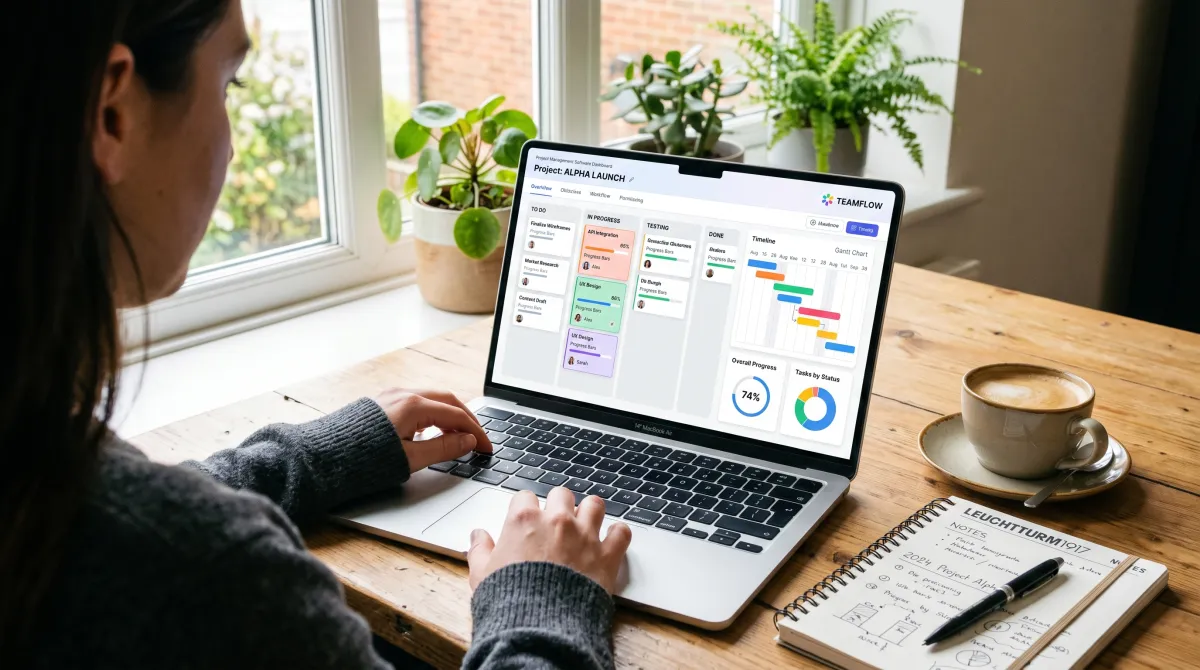
Methodology is theory. Project management software is where the work lives. The right project management tool gives the whole project team one source of truth, so project progress is visible and nothing falls through the cracks.
I have run real projects on each of these tools used in project management. Here are the picks that consistently help project managers keep the project on track from start to finish. (Prices are accurate as of June 2026, billed annually.)
Best all-in-one project management tool
ClickUp Free plan, Unlimited from $7/user/mo
The most flexible tool we run for managing a project end to end. Tasks, docs, goals, and dashboards live in one place, which suits teams that want every project visible without ten apps.
Pros
- Deeply customizable views and workflows
- Strong free plan for small project teams
- Goals and KPIs built in
Cons
- Steep learning curve early
- ClickUp Brain AI is a $9/user/mo add-on
Best for visual project planning
monday.com Standard from $12/seat/mo
The friendliest project management software for non-technical teams. Its colorful boards make project progress obvious at a glance, which is gold for stakeholder management updates.
Pros
- Intuitive, fast to onboard
- Great automation and dashboards
- Solid templates per project phase
Cons
- 3-seat minimum, then seats sold in fives
- Advanced features behind higher tiers
Best for agile project management
Jira Free for 10 users, Standard from $7.91/user/mo
The default for software teams running an iterative approach to project management. Sprints, backlogs, and reporting are best in class for agile delivery.
Pros
- Purpose-built for Agile and Scrum
- Powerful reporting and roadmaps
- Huge integration ecosystem
Cons
- Overkill for non-software projects
- Confluence and add-ons cost extra
How to choose your project management tool
Match the tool to the work, not the hype. For software, Jira fits agile project management. For mixed teams that want one home, ClickUp wins. For visual, lightweight planning, monday.com is the easiest sell to stakeholders.
Whatever you pick, the tool only works if the team actually updates it. A neglected project management tool is just an expensive to-do list.
The Components of Project Management That Decide Success
Tools and methodologies are scaffolding. These components of project management are what actually increases the chances of project success, and they show up in common project management work regardless of method.
Clear project objectives
If the team cannot state the project goals in one sentence, the project is already at risk. Ambiguity early in the project compounds into rework later. A clear charter ensures that the project starts pointed at the right outcome.
Tight scope control
Scope creep kills more projects than any technical problem. Define the scope of a project, then guard it. Every new request gets weighed against time and budget, never waved through. This is the key project habit that protects delivery.
Honest risk management
Good project managers are always asking what could go wrong. They log risk openly and plan responses, instead of hoping. A clear risk register helps project managers act before a small issue becomes a missed deadline. Adaptability in project management is what keeps a project alive when something breaks.
Time management techniques
At the team level, simple time management techniques like timeboxing, prioritization, and protecting deep-work blocks keep the project on track. The time management definition that matters here is practical: spend effort on what moves the project objectives forward, and cut the rest.
Visible project progress
You cannot manage what you cannot see. Dashboards and KPIs ensure the project stays measurable, so problems surface while you can still fix them, not at the deadline. This visibility is what separates a successful project from a late one.
Get these components right and successful project management stops being luck. It becomes a repeatable system that delivers the project on time and within budget, again and again.
Why Project Management Is Essential in 2026
Project management is important because work has only gotten more complex and distributed. Remote teams, tighter budgets, and faster cycles mean ad-hoc coordination no longer scales. Good project management can help any team replace chaos with structure.
The future of project management is expected to lean heavier on automation and AI, and the modern project increasingly runs on tools that surface risk before it bites. But the fundamentals hold. Define the work, run it through the project lifecycle, manage risk, and close cleanly. Master that and you can use project management to run almost anything.
If you want to learn more about project management and the people side of leading delivery, our management hub covers the leadership skills that turn a competent project manager into a great one.
What Is Project Management - FAQ
What are KPIs in project management?
KPIs are key performance indicators, the measurable signals that show whether a project is on track. Common project KPIs include budget variance, schedule adherence, and scope completion. They let project managers monitor project progress objectively instead of relying on gut feel.
What is delegation?
Delegation is the act of assigning ownership of tasks to the right team members while retaining accountability for the outcome. Strong delegation is the opposite of micro management, it builds capacity and keeps the project manager focused on decisions rather than busywork.
What is change management?
Change management is the structured approach to handling changes in scope, requirements, or process during a project. It ensures every change is reviewed, approved, and communicated, so the project stays controlled instead of drifting whenever someone requests something new.
What is risk management?
Risk management is the process of identifying, assessing, and planning for events that could harm a project. It happens early in the project and continues throughout the project lifecycle, helping project managers reduce surprises and keep the project on track.
What is time management?
Time management is the practice of organizing and prioritizing how time is spent to achieve goals efficiently. In project work, time management strategies like timeboxing and prioritization help the project team deliver the project objectives within the agreed project duration.
What are the 5 fundamentals of project management?
The five fundamentals are initiation, planning, execution, monitoring, and closing. Together they form the project lifecycle that every project follows from start to finish, regardless of which project management methodologies you use.