Business Concepts
Walmart Rollbacks Explained: 250+ Items Cut in 2026
Walmart just cut prices on 250+ items, dropping a grocery basket 25%. See what a rollback means, why it's happening now, and what small businesses can learn.
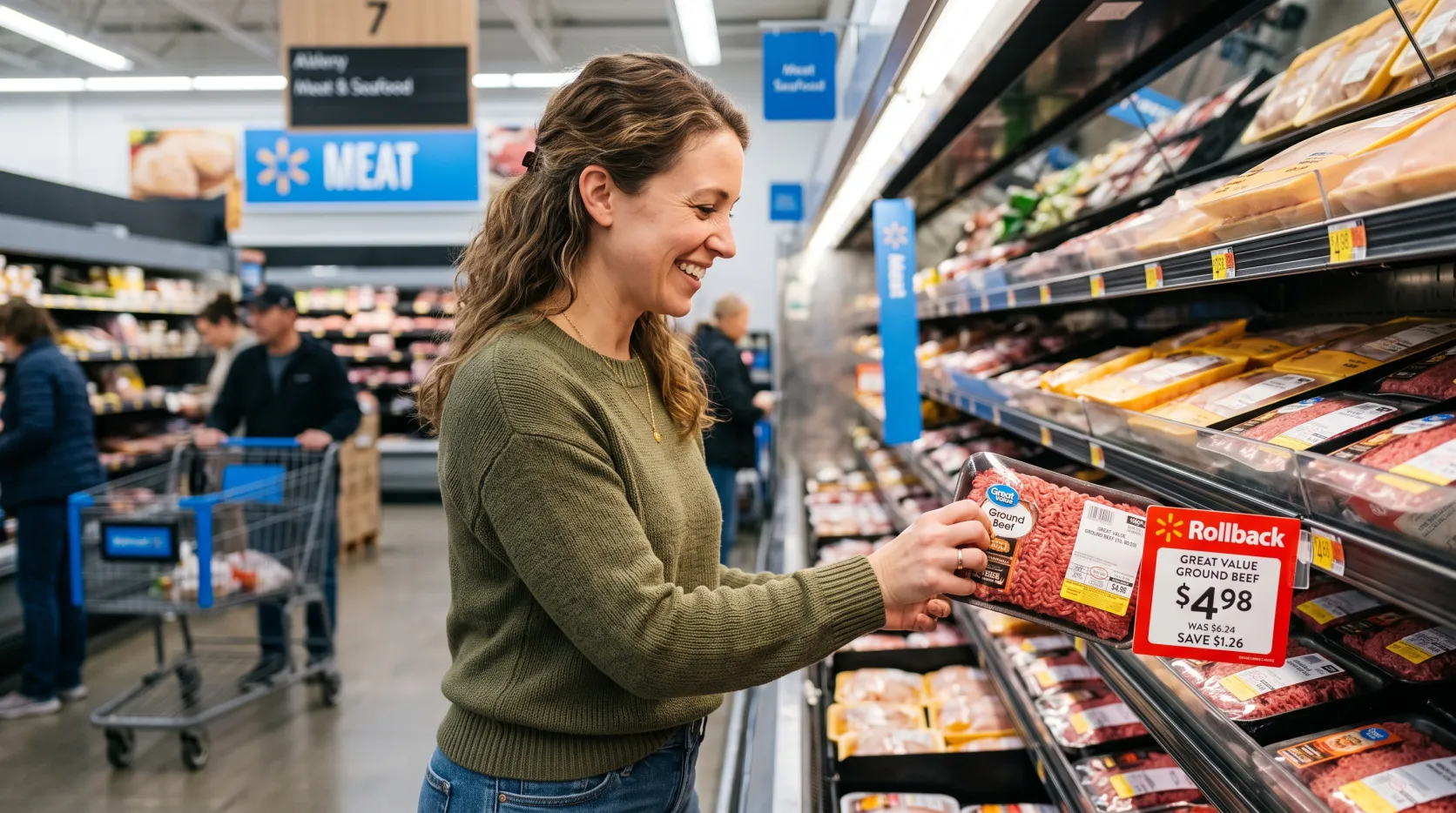
Walmart product cost rollbacks are back in the headlines. On July 6, 2026, Walmart and Sam's Club announced price cuts on more than 250 items, from ground beef to pool floats, just as summer grocery bills hit shoppers hardest.
Quick answer
A Walmart rollback is a temporary price cut on a specific item, not a clearance sale. Walmart just applied that playbook to 250+ summer items, cutting a nine-item grocery basket by 25%. The strategy blends inflation response, supply chain efficiency, and competitive pressure from Amazon, Target, and Costco.
Key takeaways
- Walmart and Sam's Club cut prices on 250+ items starting July 6, 2026, spanning grocery, household essentials, and summer gear.
- A rollback is a temporary price reduction, usually up to 90 days and sometimes six months, not a permanent cut or a clearance sale.
- A nine-item grocery basket dropped 25%, from $73.42 to $54.70, according to Walmart's own announcement.
- Walmart increasingly self-funds rollbacks from its own margin instead of relying only on supplier discounts, trading profit for volume.
- Walmart publicly rejects surveillance pricing and surge pricing, keeping one visible price per item under its Every Day Low Price philosophy.
What the July 2026 rollback actually covers
Julie Barber, Walmart U.S.'s Chief Merchant, said the retailer is "making even more investments in price, with thousands of Rollbacks" on beef, fresh produce, beverages, grills, pools, toys, and summer apparel. The list runs from everyday staples to seasonal impulse buys. Retailers use this business concept constantly, so it helps to know exactly how it works before you copy it.
Specific cuts include a pound of 73% ground beef falling from $6.74 to $5.94, sweet corn dropping from 68 cents to 25 cents an ear, and a 2.25-pound bag of cherries going from $11.18 to $5.63. Coca-Cola and Pepsi 24-packs fell from $14.97 to $9.97.
Sam's Club ran a parallel set of cuts on Member's Mark items, including bone-in chicken wings, beef hot dogs, and 88/12 ground beef. Both chains framed the move as help for road-trip and backyard-cookout budgets.
What "rollback" means at Walmart, and what it doesn't
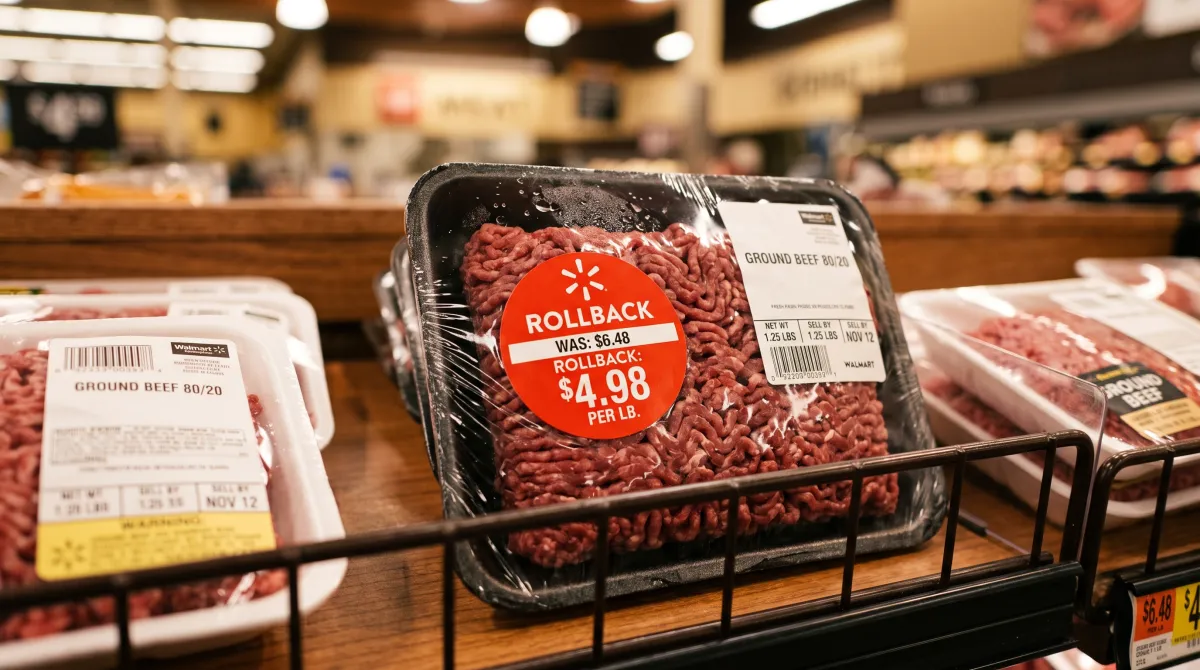
A rollback is a temporary price reduction on a permanent item, marked with red "Was/Now" signage in stores and online. It's not the same as clearance, which permanently discounts a product Walmart is discontinuing.
Rollbacks typically run up to 90 days, though some extend to six months depending on the category and inventory levels. When the window closes, the price snaps back to its regular level, usually with no advance notice on the shelf or product page.
Executives estimate Walmart runs more than 7,000 active rollbacks in any given quarter. That scale is why rollbacks function as a constant pricing lever rather than an occasional promotion.
| Pricing move | Typical duration | Purpose | Returns to old price? |
|---|---|---|---|
| Rollback | Up to 90 days (sometimes 6 months) | Drive traffic, respond to cost or competitor changes | Yes |
| Clearance | Until stock sells out | Discontinue a product | No, item is removed |
| Everyday Low Price | Ongoing | Baseline price commitment | Not applicable |
A rollback is not a sale. It's a temporary price cut on a permanent item, and it always snaps back.
Why Walmart is lowering prices right now
Walmart lowering prices this summer lines up with real pressure on household budgets. Twelve-month inflation sits at 4.2%, and 63% of Americans name grocery shopping as their top financial stressor. An Independence Day cookout for ten cost $73.82 this year, up 4% from 2025, according to the American Farm Bureau Federation.
The rollback strategy traces back to founder Sam Walton and Walmart's Every Day Low Price philosophy. Walmart says it will not use surveillance pricing or surge pricing, meaning no charging different customers different amounts based on personal data or peak demand.
Increasingly, Walmart self-funds rollbacks from its own margin rather than leaning only on supplier-funded discounts. That's a deliberate trade of short-term profit for unit volume and market share against Amazon, Target, and Costco.
Macro watchers track inflation through several lenses, from grocery baskets to bond markets like the 10-year treasury yield, which reflects investor expectations for future price growth. Walmart's rollback cadence tends to track that broader inflation picture closely.
The politics around the price cuts
President Trump publicly credited himself for the cuts, calling Walmart "one of the biggest, best and smartest retailers in America" and saying the reductions came "at my request," tying the timing to the nation's upcoming 250th anniversary. Walmart's official announcement made no mention of the White House.
The episode shows a real risk for any brand running a high-visibility pricing move: the narrative can get claimed by outside voices faster than a company can control it. Proactive, specific communication about the reasoning behind a price change helps keep that story anchored to the company's own facts.

What small businesses can learn from Walmart's playbook
Few small businesses can run 7,000 simultaneous discounts, but the underlying logic scales down fine. Pick specific, high-traffic SKUs, cut the price for a defined window, and label the before-and-after price clearly.
Rollbacks aren't just a marketing hook. They also solve an operational problem: moving inventory faster, lowering the cost of carrying stock, and giving customers a reason to visit more often. Pricing decisions that serve supply chain goals tend to outlast pricing decisions that only chase a one-time sale.
The trust angle matters too. Walmart's refusal to charge different shoppers different prices for the same item, and its clear signage, keeps the deal legible. A single visible price for everyone builds more repeat trust than pricing that shifts by customer or time of day. Barber's tight, specific messaging is also worth studying if you're polishing your own 1-minute self-introduction for a leadership role: lead with the concrete number, not the fluff.
FAQ
Is a Walmart rollback the same as a clearance sale?
No. A rollback is a temporary price cut on an item Walmart keeps selling long-term, usually lasting up to 90 days before the price returns to normal. Clearance permanently discounts a product being discontinued, with no return to the old price.
Does Walmart pay for rollbacks itself, or do suppliers fund them?
Both, increasingly with more coming from Walmart's own margin. Self-funded rollbacks let Walmart move faster and go deeper on price, trading short-term profit for volume and market share against Amazon, Target, and Costco.
Is a rollback just a marketing tactic?
No, it also serves supply chain goals. Rollbacks speed up inventory turnover, cut the cost of carrying stock, and increase how often customers visit, so the pricing move solves an operational problem alongside driving traffic.
Why did Walmart cut grocery prices now, during high inflation?
Because grocery costs are the top financial stress point for most shoppers right now. With 12-month inflation at 4.2% and 63% of Americans citing groceries as their biggest budget pressure, the timing directly targets that pain point.