Business Concepts
What Are the Effects of Overproduction in Economics?
Overproduction in economics means making more than buyers will pay for: falling prices, thin margins, layoffs, and deflation risk. See how the glut unfolds.

Understanding what are the effects of overproduction in economics starts with one uncomfortable truth: making too much of something is rarely a happy accident. When supply races past demand, prices crack, profits shrink, and the people who built the surplus often pay for it with their jobs.
Quick answer
The effects of overproduction in economics are falling prices, shrinking profit margins, rising inventories, layoffs, wasted resources, and deflationary pressure. Left unchecked, a glut can trigger a wider recession as firms cut output and spending dries up across the whole economy.
Key takeaways
- Overproduction means supply exceeds the demand buyers are willing to pay for at current prices.
- The first signal is usually unsold inventory piling up, followed by price cuts to clear it.
- Lower prices squeeze margins, which pushes firms toward layoffs and production cuts.
- Severe, economy-wide gluts can feed deflation and deepen recessions, as the Great Depression showed.
- Markets self-correct over time, but the adjustment is slow and painful for workers and weaker firms.
What overproduction actually means
Overproduction happens when producers create more goods than the market can absorb at a profitable price. It is a problem of relative demand, not just raw volume. You can sell a billion units if buyers want them.
The classic economic framing comes from the debate over Say's law, which claimed supply creates its own demand. Reality is messier. People do not automatically buy everything that gets made, especially when wages stall or confidence drops.
This is why overproduction is often called a glut or a problem of overcapacity, one of the most misread ideas in the foundations of economics. The factories, workers, and capital are all there. What is missing is enough paying customers to justify the output.
The 7 main effects of overproduction in economics
Overproduction does not hit all at once. It moves through a chain of consequences, each one feeding the next. Here is how the surplus typically plays out.
| Effect | What happens | Who feels it first |
|---|---|---|
| Falling prices | Firms slash prices to clear unsold stock | Producers and competitors |
| Shrinking margins | Lower prices erode profit per unit | Business owners, shareholders |
| Rising inventory | Unsold goods tie up cash and storage | Manufacturers, retailers |
| Layoffs | Firms cut output and headcount | Workers |
| Wasted resources | Materials and labor produce unsold goods | The wider economy |
| Deflation risk | Broad price falls discourage spending | Everyone, eventually |
| Recession spillover | Cuts ripple across linked industries | Entire regions or sectors |
1. Prices fall as firms scramble to sell
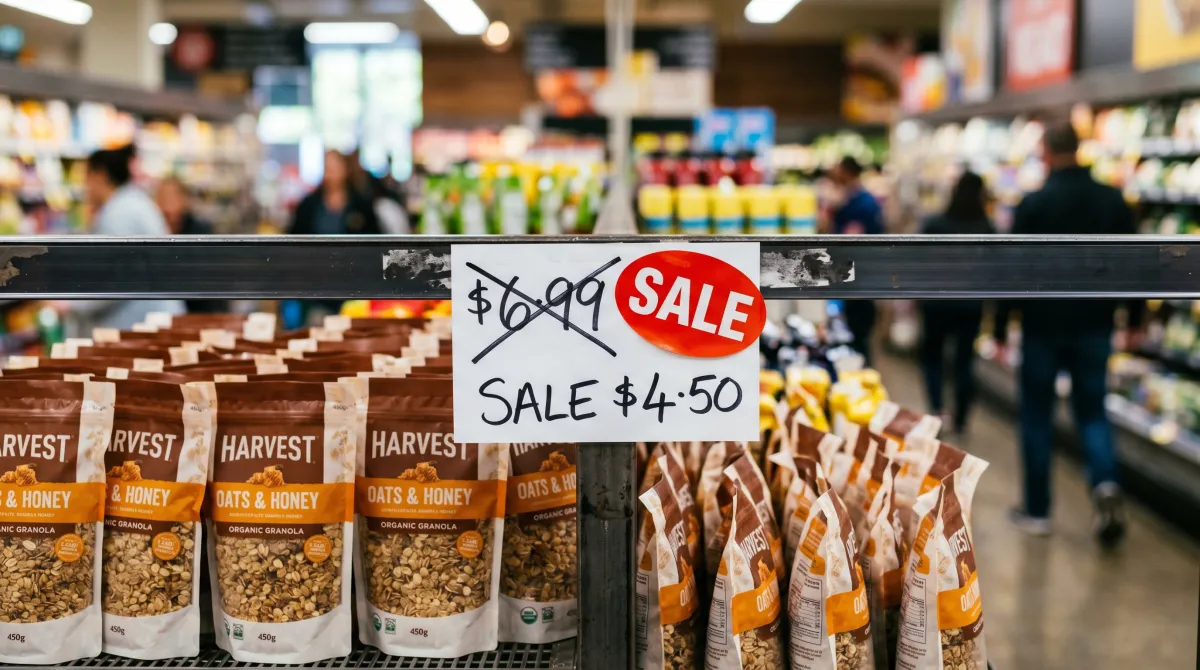
The most immediate effect is downward pressure on prices. When warehouses fill with unsold product, the fastest way to move it is to cut the price. Discounts, clearance sales, and bulk deals all signal a supply glut.
This is good for a shopper hunting a bargain. It is brutal for the producer, who may now sell below the cost of making the item just to recover some cash.
2. Profit margins get squeezed
Falling prices hit the bottom line directly. A firm that planned to earn a steady margin per unit watches that margin evaporate. Selling more units at a loss does not fix the math, it deepens the hole.
Weaker companies with thin reserves feel this first. Some cannot survive a sustained price war and exit the market entirely.
3. Inventory piles up and traps capital
Unsold goods are not free to hold. They occupy warehouses, require insurance, and sometimes spoil or go obsolete. Every unit sitting on a shelf is cash the business cannot reinvest or use to pay wages.

4. Layoffs follow production cuts
Once a firm accepts that demand will not catch up, it slows production. Idle factories need fewer workers, so layoffs begin. This is where overproduction stops being an accounting problem and becomes a human one.
Job losses then reduce household spending, which lowers demand even further. It is one of the cruel feedback loops in economics, and a reason workers sometimes find themselves set up to fail at work through no fault of their own when a company quietly winds down a product line.
5. Resources and labor are wasted
Every unsold item represents raw materials, energy, and hours of work that produced no value for anyone. From a whole-economy view, this is pure waste. The inputs could have gone toward goods people actually wanted.
Overproduction is not abundance. It is the economy spending real resources to manufacture things nobody is willing to pay for.
6. Deflation can take hold
When overproduction spreads across many industries, the general price level can fall. That sounds harmless until you see the trap: if buyers expect prices to keep dropping, they delay purchases, which kills demand even more.
This deflationary spiral is far harder to escape than ordinary slow growth. It punishes anyone holding debt, since the real value of what they owe rises as prices fall.
7. The glut spills into recession
In serious cases, overproduction in one sector drags down its suppliers, lenders, and the towns built around it. The 1929 crash and the Great Depression that followed are the textbook example of a demand collapse meeting massive industrial and agricultural surplus.
You can read more on the broader mechanics in the overview of overproduction from Wikipedia, which traces the idea through several schools of economic thought.
Why overproduction keeps happening
If the effects are so damaging, why do firms keep doing it? Usually because they are guessing about the future. Production decisions are made months ahead of sales, based on forecasts that can be wrong.
Optimism plays a role too. During a boom, every producer expects demand to keep climbing, so they all expand at once. The combined output overshoots, and the market floods. This is a known risk in the wider topic of innovation and its risks, where new capacity often arrives faster than buyers adapt.
Technology adds pressure. Cheaper, faster production means a single firm can scale output enormously, raising the odds of overshoot when many do it together. The shift toward direct models, sometimes described through reintermediation, also reshapes who carries the inventory risk.
How markets and policymakers respond
Markets do self-correct. Loss-making firms cut output or fail, supply shrinks, and prices eventually stabilize. The problem is timing. That correction can take years, and the cost lands on workers and small producers.
Policymakers sometimes step in. Central banks may cut interest rates to revive demand, governments may boost spending, and in farming, supply-management schemes try to prevent gluts before they form.
For a business owner, the practical defence is demand discipline: produce against real orders, watch inventory turnover, and resist the urge to chase volume for its own sake. Pairing that habit with a clear grasp of how new technology scales helps teams avoid building capacity nobody ordered.
Related guides
Frequently asked questions
What is the main effect of overproduction in economics?
The main effect is falling prices, because firms cut prices to clear unsold stock. That price drop then squeezes profit margins and often leads to production cuts and layoffs.
Does overproduction cause unemployment?
Yes, indirectly. When goods go unsold, firms slow or stop production, which reduces the need for workers. The resulting layoffs lower household spending and can deepen the demand shortfall.
How is overproduction linked to deflation?
Widespread overproduction pushes the general price level down. If buyers expect prices to keep falling, they delay purchases, which weakens demand further and can trigger a self-reinforcing deflationary spiral.
Is overproduction always bad?
Not always in the short term. Consumers benefit from lower prices, and mild surpluses can be cleared without harm. The danger comes when gluts are large, persistent, and spread across many industries.
What is a real example of overproduction?
The lead-up to the Great Depression is the classic case. Agricultural and industrial output expanded sharply in the 1920s while demand could not keep pace, contributing to the 1929 collapse.