Business Concepts
Original Sin Book Sales: Why It Hit #1 So Fast
Original Sin book sales hit #1 on the NYT nonfiction list in week one. Here is the exact mix of timing, author trust, and controversy that drove it.

The numbers behind original sin book sales tell a sharper business story than most political memoirs ever do. Jake Tapper and Alex Thompson published a book at exactly the right moment, and the market rewarded the timing.
Quick answer
Original Sin, by CNN's Jake Tapper and Axios reporter Alex Thompson, was released by Penguin Press on May 20, 2025. It debuted at #1 on the New York Times nonfiction bestseller list. The strong original sin book sales came from a rare mix of breaking-news timing, two trusted bylines, and a topic the public was already arguing about.
Key takeaways
- Launch timing was the engine. The book landed while the story of President Biden's decline was still raw and contested.
- Two credible authors from CNN and Axios gave it instant authority and cross-platform promotion.
- Pre-orders and media bookings did the heavy lifting before the official on-sale date.
- Controversy fed demand. Public pushback turned the launch into a sustained news cycle.
- The pattern repeats: topical nonfiction sells fastest when the conversation peaks, not after it cools.
What is the Original Sin book about?
The full title is Original Sin: President Biden's Decline, Its Cover-Up, and His Disastrous Choice to Run Again. It reports on questions about the former president's age and fitness during his term, and on how aides handled those concerns.
Tapper anchors at CNN. Thompson covers the White House for Axios. That combination matters for sales, because each author arrived with an audience already built. Readers were not meeting strangers; they were buying from reporters they followed.
This is a clean case study in how a launch converts attention into revenue, the kind of lesson we track across our core business concepts. The book did not create demand. It captured demand that already existed and pointed it at a single on-sale date.
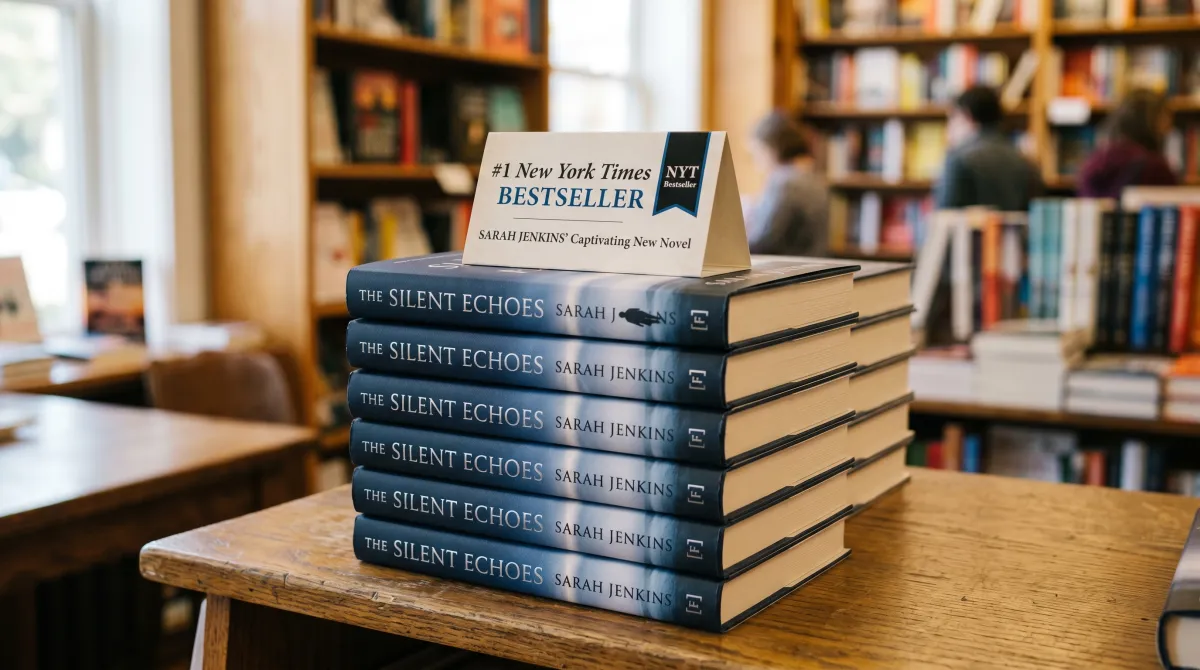
How fast did Original Sin book sales climb?
The book reached the top of the New York Times Best Seller list in its first week on sale. For nonfiction, debuting at #1 is the clearest signal of strong launch-week demand, because that list weighs concentrated early sales heavily.
Most of that velocity was set before launch day. Pre-orders accumulate for weeks, then report in a single burst when the book goes on sale. A title that sells this fast almost always built a large pre-order base first.
Speed matters more than total volume in the first week. A bestseller list rewards books that sell a lot of copies in a short window, not books that sell steadily over a year. That is why launch design, not just content, decides where a book debuts.
Topical nonfiction does not sell on quality alone. It sells when the argument is still live and the reader feels they need the answer now.
What actually drove the demand
Strong book sales rarely come from one cause. They come from several reinforcing each other. Here is the stack that powered this launch.
Timing matched the news cycle
The biggest lever was release date. The book arrived while the debate over Biden's decision to run again was still hot. Demand for a definitive account peaks during the argument, not months later.
Publishers often spend a year preparing a title, then ship it whenever production finishes. This launch did the opposite. It targeted the moment the question was loudest, which is when curious buyers convert fastest.
Author authority did the selling
Tapper and Thompson were not unknown writers chasing a trend. They were the reporters who had covered the story in real time. That track record let readers trust the book before opening it, which is the whole game in nonfiction.
Jake Tapper alone brings a national broadcast audience that most authors would pay millions to reach. Pairing him with a daily White House reporter doubled the credibility and the distribution at once.
Media access amplified everything
A CNN anchor can promote a book on the platform he hosts. An Axios reporter reaches a daily political audience. Between them, the marketing budget was partly replaced by owned media reach that competitors cannot buy.
Controversy extended the cycle
Pushback from former Biden allies kept the book in the headlines past launch week. Disagreement is free promotion. Every rebuttal sent more readers to judge the source for themselves.
| Sales driver | Why it worked | Effect on sales |
|---|---|---|
| Release timing | Landed mid-debate, not after | Peak demand at launch |
| Author credibility | Reporters who covered the beat | Pre-launch trust |
| Owned media reach | CNN + Axios platforms | Low-cost amplification |
| Controversy | Public rebuttals and coverage | Extended news cycle |

How pre-orders shaped the launch
Pre-orders are the quiet machine behind almost every fast debut. They let a publisher bank demand for weeks, then release it on a single day so the first-week count looks explosive.
For a topical book, the pre-order window doubles as a marketing test. Strong early orders tell the publisher to book more TV slots and print more copies. Weak ones trigger a quieter launch. This title clearly cleared the bar early.
The lesson for any creator is simple. Open the door to buy before launch day, then concentrate the fulfillment so the demand lands all at once. A scattered launch never charts.
Who bought the book?
The core buyers were politically engaged adults already following the story. That audience pre-orders, buys hardcover, and reads fast. They are also the readers most likely to recommend a title inside their own networks.
Secondary buyers came from the controversy itself. People who disagreed with the premise still bought it to argue with it. In commercial terms, a skeptic with a credit card sells just as well as a fan.
There is a third group worth naming: industry insiders. Journalists, staffers, and political operators bought it to know what their peers were reading. In a tight community, the fear of missing the conversation moves copies on its own.
What Original Sin teaches about launching a book
You do not need a political scandal to apply the lesson. The mechanics behind these original sin book sales work for any topical nonfiction launch, and they map cleanly onto wider business strategy.
- Launch into the conversation, not after it. The window for topical books is narrow. Ship while attention is high.
- Borrow credibility you already earned. Build the audience before the book, so launch day converts instead of introduces.
- Use owned channels first. A platform you control beats paid ads you rent.
- Do not fear disagreement. A clear, contestable argument travels further than a safe one.
These are the same forces that decide whether a product, a service, or a single launch succeeds. If you study the benefits and risks of innovation, you will see the same trade-off here: a bold claim sells faster but invites sharper scrutiny.
There is also a market-structure angle. As publishers cut middle layers and reach readers directly, the dynamics resemble reintermediation, where new players insert themselves between author and audience.
The risk hidden inside a fast launch
A launch this loud has a downside. When a book becomes the story, the authors absorb the blowback personally. The same controversy that drives sales can damage relationships and reputations.
It is a workplace dynamic at national scale. Reporters who publish hard truths about powerful people can find themselves frozen out, a version of the quiet pressure many feel when they notice the signs you are being set up to fail at work. Strong sales do not cancel professional cost.
Anyone building a personal brand should weigh that trade. The same boldness that sells the work can narrow your future access. That is the real price tag behind a number-one debut.
Frequently asked questions
Who wrote the Original Sin book?
Jake Tapper of CNN and Alex Thompson of Axios wrote it. Both covered the Biden White House, which gave the reporting its authority.
When was Original Sin published?
Penguin Press released it on May 20, 2025. It went on sale in hardcover, ebook, and audiobook formats at the same time.
Did Original Sin become a bestseller?
Yes. It debuted at #1 on the New York Times nonfiction bestseller list in its first week, the standard marker of a successful launch.
Why did Original Sin sell so well?
Timing, author credibility, owned-media reach, and controversy all reinforced each other. The book arrived while the debate was still live.
What is Original Sin about?
It reports on concerns about President Biden's decline during his term and how his decision to run for reelection was handled.