Software
Luxury Ecommerce in 2026: What Actually Sells Online
Luxury ecommerce now drives 15-18% of high-end sales. See the platforms, trends, and buyer shifts that win premium customers online in 2026.

Luxury ecommerce broke its old rules. The affluent buyer who once refused to click "add to cart" on a four-figure handbag now researches, compares, and checks out from a phone, often before ever setting foot in a boutique. If you sell premium goods and treat your store like a glorified catalogue, you are leaving money on the table.
This guide is for operators, not theorists. I will show you what is working in luxury ecommerce right now, what the data says about online penetration, and where most premium brands quietly lose the sale.
Quick answer
Luxury ecommerce is online retail for high-end goods where the experience itself is the product. In 2026 it means editorial storytelling, AI personalization, authentication, and sub-second performance, not just a checkout button. Online now drives roughly 15 to 18 percent of total luxury sales and is the fastest-growing channel.
Key takeaways
- Online is the fastest-growing luxury channel, near 15 to 18 percent of total sales in 2026.
- Editorial, AI personalization, and authentication beat discounting for high-end buyers.
- Platform choice matters: Shopify Plus for agility, Salesforce Commerce Cloud for enterprise, headless for full control.
- Speed is non-negotiable: every second of delay can cost about 7 percent in conversions.
- Gen Z is the growth engine, projected past 35 percent of luxury ecommerce revenue by 2034.
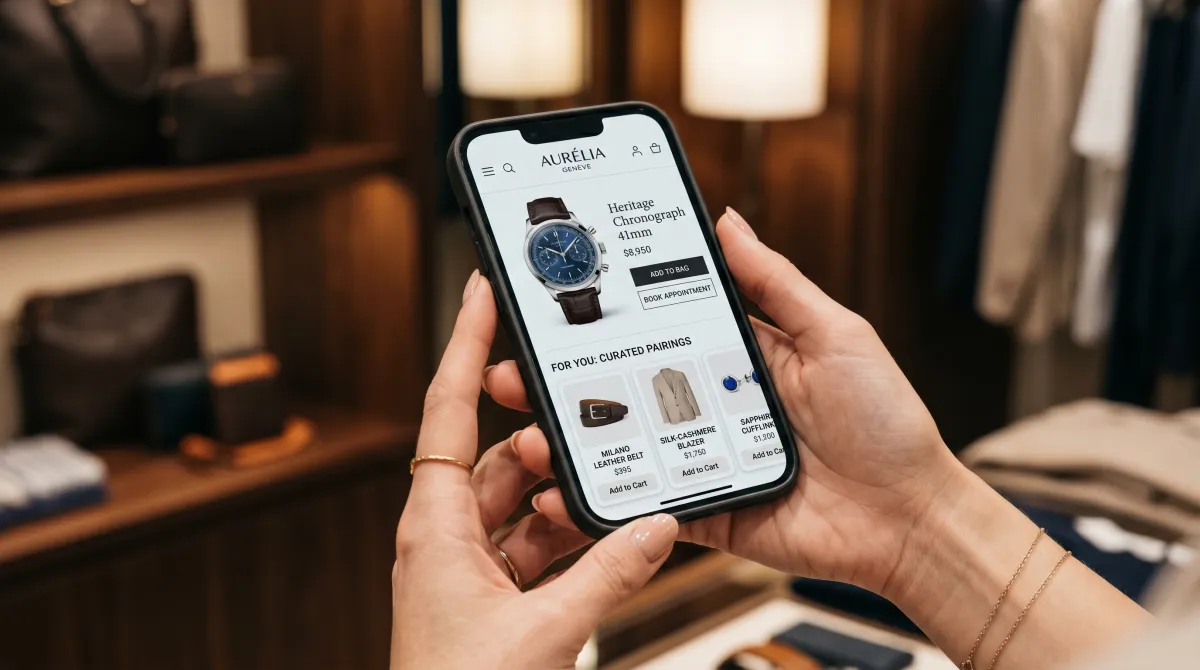
What luxury ecommerce really means in 2026
Luxury ecommerce is the sale of high-end goods online: fashion, watches, jewelry, leather goods, and beyond. The category sits inside the broader luxury goods market, but the digital version plays by different rules.
The mistake most brands make is treating it like ordinary e-commerce. It is not. A discount banner that lifts conversions for a mass retailer can quietly cheapen a heritage brand and erode the exclusivity buyers are paying for.
The numbers explain the urgency. Estimates put the 2026 luxury ecommerce market anywhere from $63 billion to nearly $100 billion, depending on definition. Most analysts forecast compound growth between 8.8 and 11 percent through the early 2030s.
Online penetration tells the same story. Roughly 15 to 18 percent of total luxury sales now happen online, and that share climbs each year. Run your storefront with the same rigor you would your team's core tools, because the channel is small but growing far faster than the stores beside it.
The trends reshaping high-end online retail
Five forces are pulling luxury onto the screen. If you run a premium store, each one is a lever you can actually pull this quarter.
Editorial commerce. Net-a-Porter pioneered the e-tailer model by making shopping feel like reading a fashion magazine. Trend reports, styling edits, and designer interviews wrap the product in context. The lesson holds: luxury online cannot feel transactional or rushed.
AI personalization. This is now the defining differentiator. Platforms with advanced recommendation engines report conversion improvements of 32 to 47 percent versus standard browsing. LVMH runs a "quiet tech" strategy with Google Cloud, while Dior partnered with Kahoona in 2025 to personalize online visits in real time.
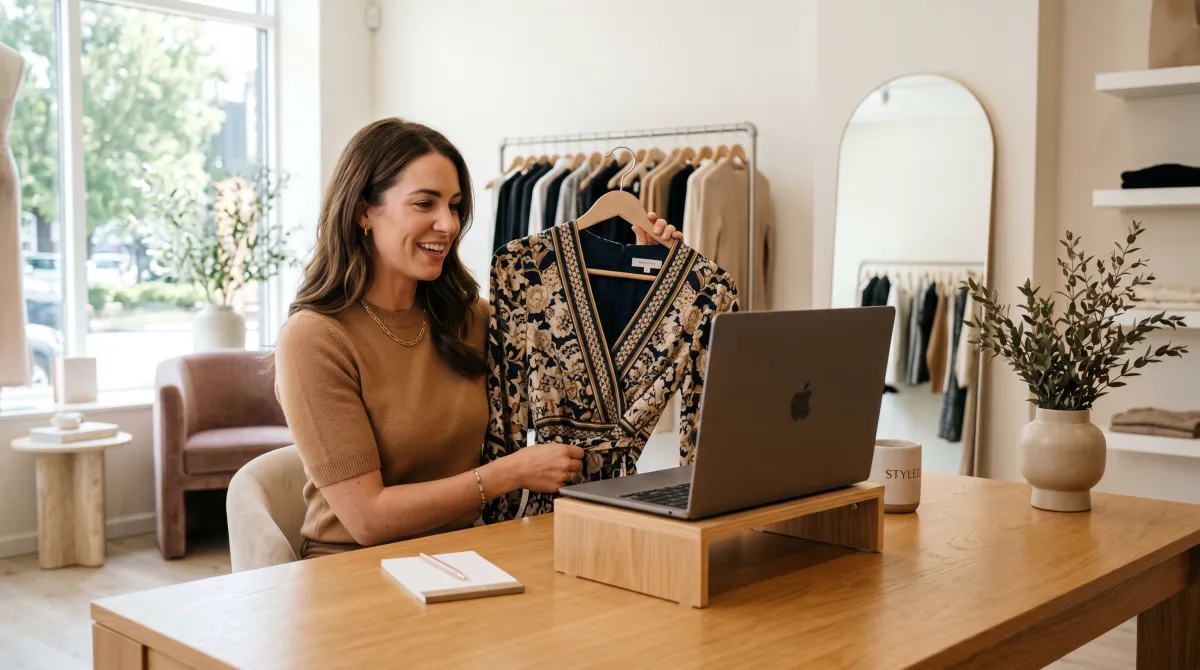
The same playbook arms human advisors. Tiffany, Louis Vuitton, and Sephora now equip client advisors with AI agents that surface each customer's history and preferences, extending boutique-level service into the browser without losing the personal touch.
Authentication and trust. Counterfeiting is the silent objection in every luxury cart. Brands under LVMH and Richemont now use blockchain verification to issue digital certificates of authenticity, removing a real barrier to buying expensive items unseen.
Virtual showrooms and appointments. Farfetch and Net-a-Porter built immersive digital boutiques with 3D renders and styling. Gucci, Prada, and Bulgari offer scheduled video consultations with personal shoppers, recreating in-store attention while keeping a sense of scarcity.
Resale and live commerce. A J.P. Morgan survey found 60 percent of U.S. and European consumers now buy second-hand luxury through resale platforms. McKinsey expects live commerce to drive 10 to 20 percent of all ecommerce by 2026.
In luxury, the storefront is not a sales channel. It is the brand itself, performing in public.
Who buys luxury online now
The buyer profile shifted, and that changes how you build. Nearly 64 percent of luxury shoppers research products online before any purchase, and about 52 percent rely on mobile for the actual buy.
Gen Z is the engine. This group contributed an estimated 19 percent of global luxury ecommerce revenue in 2025 and is projected to pass 35 percent by 2034 as their spending power grows. They expect digital-first, and they punish friction.
One pattern matters for revenue planning: a small slice of customers carries most of the sales. At Mytheresa, the top 3 percent of clients generate roughly 36 percent of annual revenue. Your VIP experience is not a nicety, it is the business.
Choosing a platform for a premium brand
Platform choice decides how much of the experience you can control. The right answer depends on your size, team, and how custom your storefront needs to be. The same discipline applies when picking any core business software stack.
| Platform | Best for | Trade-off |
|---|---|---|
| Shopify Plus | DTC luxury and fashion wanting speed and lower cost | Theme limits on highly bespoke, made-to-order items |
| Salesforce Commerce Cloud | Enterprise brands deep in the Salesforce stack, complex B2B | Long builds, GMV-based licensing that scales with revenue |
| Headless (commercetools, Shopify Hydrogen) | $10M+ brands where the storefront is the differentiator | Needs real engineering resources to build and maintain |
| Bespoke / custom | Ultra-luxury houses demanding total control | Highest cost and slowest iteration |
Shopify Plus has momentum, starting at $2,300 per month on a three-year term, shifting to a revenue-based fee above roughly $800,000 in monthly sales, capped at $40,000. It now powers many high-end stores and offers a headless path through Hydrogen when themes run out of room.
Salesforce Commerce Cloud still holds the enterprise fashion market, with users like Bvlgari, and wins on native CRM. Its licensing is pegged to gross merchandise value, so cost scales with success.
Headless is the 2026 sweet spot for brands that have outgrown templates. Burberry went headless for editorial freedom; Lancome saw a 17 percent conversion lift after moving to a progressive web app. Dior, by contrast, runs a fully custom platform.
Where luxury stores quietly lose the sale
Most premium brands fail in predictable places. Fix these before chasing new traffic, because they leak revenue from buyers you already paid to acquire.
Slow pages. Luxury demands rich imagery, yet every second of delay can cost about 7 percent in conversions. Heavy hero videos that never load are worse than no video at all.
Generic experiences. A templated storefront undermines a heritage brand. If your site looks like every other Shopify store, you have erased the exclusivity buyers came for. This is exactly when teams hit the template ceiling and consider headless.
Weak trust signals. No authentication, vague returns, and thin product detail all feed hesitation on a high-ticket purchase. Clear provenance and generous service convert browsers into buyers.
Strong fundamentals also depend on the tools behind the storefront, including the right security software for a small business. A premium experience is built on boring discipline behind the scenes.
An operator's playbook for 2026
If I were launching or fixing a luxury store this year, I would work in this order. It front-loads the changes that move revenue.
- Win on speed first. Target sub-second loads. Compress imagery, lazy-load, and test on mobile, where most buyers now check out.
- Layer editorial onto product. Pair every collection with styling, story, and context. Make browsing feel like an experience, not a search result.
- Personalize the return visit. Use AI recommendations and a real VIP track for the small group that drives most revenue.
- Remove doubt. Show authentication, provenance, and white-glove service clearly. Trust is the conversion lever at high price points.
- Plan for resale and channels. Decide where second-hand, social, and live commerce fit before competitors define it for you.
None of this requires a nine-figure budget. It requires choosing the experience over the discount, and treating scale and craft as partners rather than opposites.
Frequently asked questions
What counts as luxury ecommerce?
Luxury ecommerce is the online sale of high-end goods like designer fashion, fine jewelry, watches, and leather goods, where the digital experience itself is part of the product. It differs from mass ecommerce by prioritizing storytelling, exclusivity, and service over price and volume.
How big is the luxury ecommerce market in 2026?
Estimates range from roughly $63 billion to nearly $100 billion in 2026, depending on how the segment is defined. Most analysts project compound annual growth between 8.8 and 11 percent through the early 2030s, with online taking 15 to 18 percent of total luxury sales.
What is the best ecommerce platform for a luxury brand?
Shopify Plus suits agile DTC luxury brands, Salesforce Commerce Cloud fits enterprise players deep in the Salesforce ecosystem, and headless setups like commercetools or Shopify Hydrogen serve $10M+ brands where the storefront is the differentiator. Ultra-luxury houses like Dior often build fully custom platforms.
Why do affluent buyers shop luxury online now?
Convenience, mobile-first habits, and richer digital experiences have removed old objections. Nearly 64 percent of luxury shoppers research online before buying, and Gen Z, projected past 35 percent of category revenue by 2034, expects to discover and purchase digitally.
How do luxury brands prevent counterfeits online?
Leading houses under LVMH and Richemont use blockchain verification to issue digital certificates of authenticity, letting customers confirm provenance after purchase. Clear authentication, detailed product information, and strong service reduce the hesitation buyers feel on high-ticket items.