Business Concepts
How Napoleon Bonaparte Revolutionized Military Tactics
How Napoleon Bonaparte revolutionized military tactics: the corps system, massed artillery, speed, and merit, plus what each still teaches operators today.
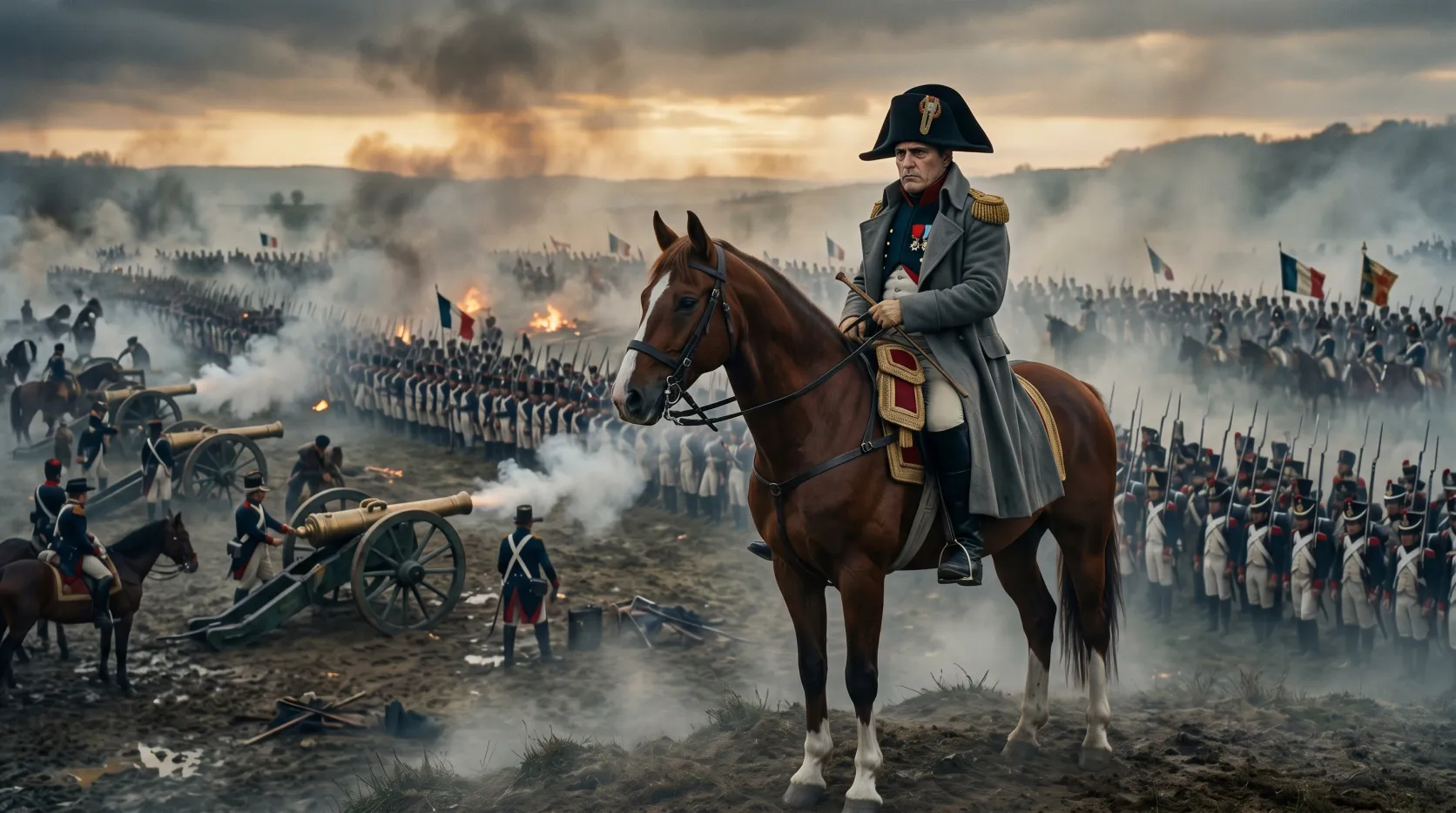
Understanding how Napoleon Bonaparte revolutionized military tactics is less about worshipping a general and more about studying the best operating system ever built for moving people fast and hitting hard. He did not invent most of his tools. He assembled them into a machine that outran every rival for fifteen years.
Quick answer
Napoleon revolutionized warfare by combining three things rivals kept separate: the self-contained army corps, massed artillery used as a decisive weapon, and relentless speed of movement. He turned slow, parade-ground armies into fast, flexible units that could march apart and strike together.
Key takeaways
- The corps system let independent units march separately and concentrate for battle, an early lesson in decentralized execution.
- He treated artillery as a strike force, not support, and aimed it at the enemy's weak point.
- Speed and the central position let a smaller army defeat two larger ones one at a time.
- He promoted on merit and motivated with morale, not just orders.
- His core ideas still map cleanly onto how modern organizations win.
The corps system: an army that ran itself
Before Napoleon, armies moved as one giant block. That block was easy to spot, slow to feed, and clumsy to maneuver. Napoleon broke his army into corps, each a miniature army of infantry, cavalry, and artillery under one commander.
Each corps could fight alone for a day against a much larger force. That single design choice changed everything. Corps marched on separate roads, foraged across a wider area, and covered ground a unified army never could.
The genius was in the recombination. Units spread out to move, then converged on the battlefield at the decisive moment. It is the same principle behind any team that operates with autonomy but aligns on outcomes.
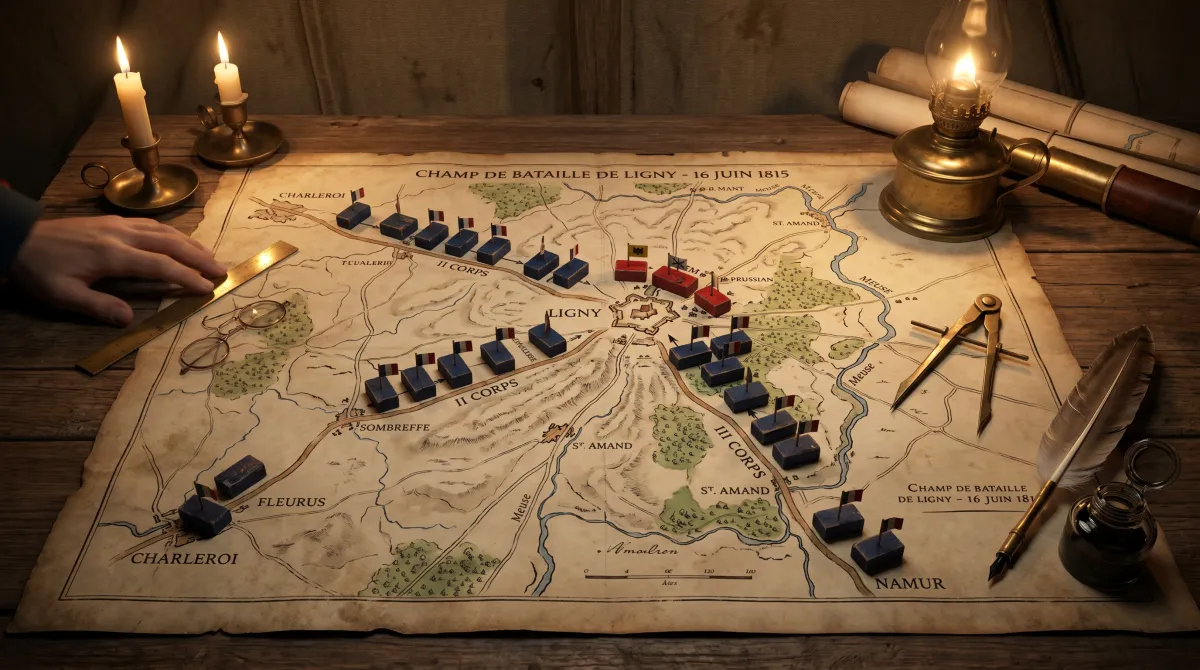
This is why the corps system reads like a management framework, not just a war diagram. Push decisions to the edge, trust your commanders, and concentrate force where it counts. The opposite, micromanaging every unit, is one of the quiet signs of a system designed to fail.
Artillery as a decisive weapon, not a sideshow
Napoleon trained as an artillery officer, and it shaped how he thought about force. Most generals of his era used cannon to soften lines politely. Napoleon massed his guns into grand batteries and pointed them at a single weak point.
At Austerlitz in 1805, this concentration of firepower helped shatter the allied center and split the enemy army in two. The lesson was brutal and simple: do not spread your strongest asset thin.
He standardized his guns too. The Gribeauval system gave him lighter, interchangeable cannon that moved with the army instead of lagging behind it. Mobility plus mass meant his artillery arrived in time to matter, then hit one spot until it broke.
Napoleon's real innovation was not a new weapon. It was the discipline to concentrate everything he had on the one place it would break the enemy.
You see the same instinct in any business that wins by focus. Pour resources into the one lever that moves the market, instead of dabbling everywhere. That kind of bold concentration carries real upside and real exposure, which is the heart of the trade-off between innovation and risk.
Speed and the central position
Napoleon's armies marched faster than anyone expected, sometimes covering distances rivals thought impossible. Speed was not a stunt. It bought him the single most valuable thing in war: the ability to choose where and when to fight.
The 1805 Ulm campaign is the cleanest example. He marched the Grande Armee from the Channel coast to the Danube in weeks, then swung behind an Austrian army and trapped it. Some 23,000 men surrendered before a real battle was even fought.
His favorite trick was the central position. When facing two enemy armies, he would drive between them, then turn and crush each one separately before they could unite. A smaller force beat a larger one by never fighting the whole thing at once.
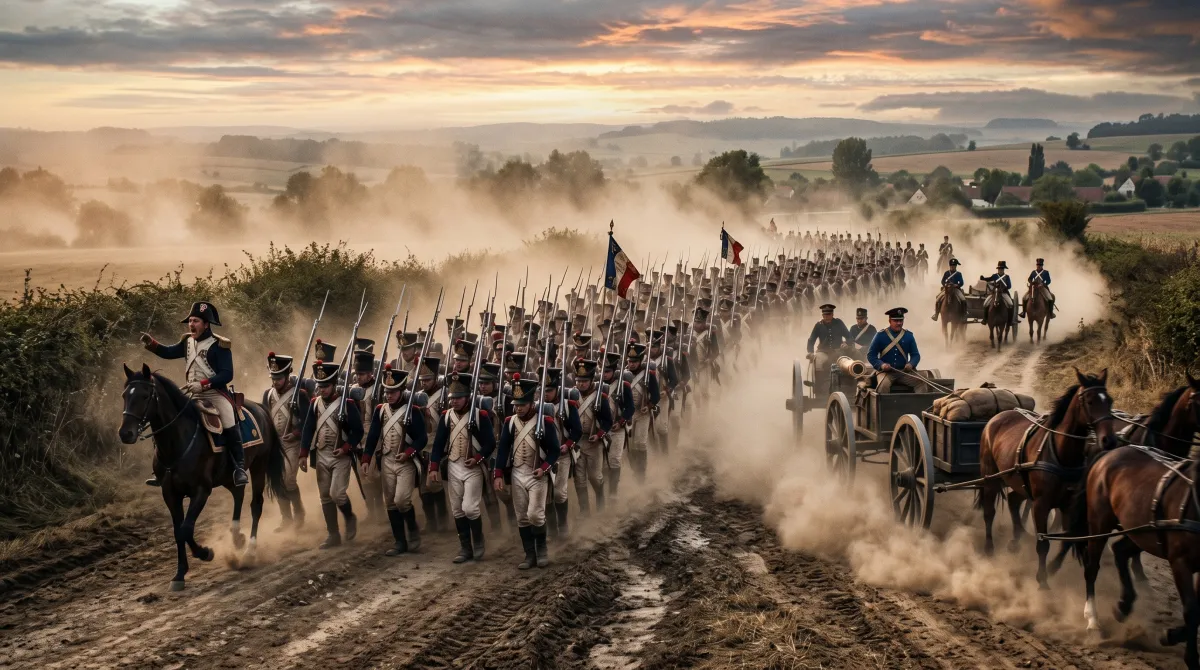
This is timeless strategy. Divide a problem too big to face head-on, then defeat it in pieces. The same logic shows up when a market gets rewired and incumbents are caught between channels, a shift close to what business writers call reintermediation.
Merit, morale, and the human engine
Napoleon understood that tactics fail without motivated people. He promoted officers on ability rather than birth, a radical break in an age of aristocratic privilege. A talented soldier could rise, and that hope was a weapon in itself.
He managed morale deliberately. He learned soldiers' names, handed out medals, and shared the hardship of the march. His famous line, that an army marches on its stomach, was really a reminder that logistics and morale decide battles before they begin.
The system rewarded initiative under fire. At Auerstadt in 1806, Marshal Davout faced the main Prussian army alone and beat it without help, because the corps doctrine trusted commanders to act. That trust turned good officers into independent operators.
That blend of merit and motivation is the part most retellings skip. Brilliant systems still need committed people to run them, whether you are commanding a corps or writing your first introduction as a new team member.
What Napoleon got wrong
Honesty matters here. The same traits that built the empire also broke it. Napoleon's speed and aggression became overreach in Russia in 1812, where distance, winter, and stretched supply lines destroyed the army that had conquered Europe.
His centralized brilliance was also a single point of failure. Marshals trained to execute his plans struggled to improvise without him. A system that depends entirely on one genius is fragile, and rivals eventually copied his methods and turned them against him.
The full arc is the real lesson. Study the rise for the playbook, and study the fall for the limits. For the wider strategic backdrop, the historical record of Napoleon's campaigns shows both the model and its breaking point.
The Napoleonic playbook, summarized
| Innovation | What it did | Modern parallel |
|---|---|---|
| Corps system | Self-sufficient units, march apart, fight together | Autonomous teams, aligned goals |
| Massed artillery | Concentrated firepower on weak points | Focus resources on one lever |
| Speed of movement | Dictated the time and place of battle | Operate faster than competitors |
| Central position | Beat larger forces one piece at a time | Divide and solve big problems |
| Merit and morale | Motivated, mobile leadership | Promote talent, manage culture |
Taken together, these were not five tricks. They were one integrated system where each part amplified the others. That is why understanding how Napoleon Bonaparte revolutionized military tactics still rewards anyone who has to win with limited resources.
Frequently asked questions
What was Napoleon's most important tactical innovation?
The corps system was his most important innovation. By making each corps a self-contained army able to fight alone, he gave his forces a speed and flexibility no rival could match, then concentrated them at the decisive point.
Did Napoleon invent the tactics he used?
No, he did not invent most of them. Ideas like the corps structure, the levee en masse mass conscription, and mobile artillery already existed. Napoleon's genius was combining them into one ruthless, fast-moving system.
How did Napoleon win battles against larger armies?
He used the central position to drive between two enemy forces and defeat each one separately before they could unite. Combined with speed and massed artillery, this let a smaller army beat larger ones in detail.
Why did Napoleon's military system eventually fail?
It failed through overreach and overdependence on one mind. The 1812 Russian campaign destroyed his army through distance and supply collapse, and his rivals had learned to copy and counter his methods.