Business Concepts
Global Coffee Chain Market Analysis: Size & Growth
A clear global coffee chain market analysis: coffee market size, segments, business models, and unit economics, plus where the next dollar of growth comes from.

A global coffee chain market analysis only matters if it answers one question: where does the next dollar of growth actually come from? Not the headline coffee market size, the underlying shifts that decide who wins shelf space in your morning routine.
Quick answer
The global coffee market is large, fragmented, and growing fastest in Asia, especially China, where price-aggressive digital-first chains scale faster than Western incumbents ever did. Maturity in North America and Europe pushes operators toward loyalty apps, drive-thru density, and premium coffee to defend margin.
Key takeaways
- Growth has shifted east: China is now the most contested coffee chain market on earth.
- Two models compete, the premium experience chain and the low-price, app-driven volume chain.
- Unit economics live or die on real estate, labor, and beverage attach rate, not coffee bean cost alone.
- Loyalty data and mobile ordering are now the real moat, not the logo.
- Mature markets grow through density and premium, not new-country expansion.
Coffee market size: how big the global coffee market really is
Estimates in any coffee market report vary by source and methodology, but the consensus is consistent. Branded coffee chains represent a multi-hundred-billion-dollar slice of the wider global coffee industry, and that slice keeps taking market share from independent cafes.
The number you should anchor on is not the total. It is market growth. Branded chains compound faster than the category because they convert fragmented, cash-only independents into standardized, data-rich, repeatable units.
That conversion is the whole game. A chain does not just sell coffee. It sells predictability, to coffee drinkers and to investors. If you want the toolkit for reading any market this way, the business concepts hub lays out the frameworks behind scale economics.
Anchor your reading on three layers, not one. Any size and forecast view starts with total addressable market, the room available. Branded penetration tells you how much room chains claimed. Same-store sales tell you whether existing units still grow once the land-grab slows.

Coffee market segmentation: how the market is segmented by product
A serious analysis reads the category by product, not just by brand. The coffee market is segmented across formats that each carry different margins and buyers, and every market segment answers to a different buyer.
Roasted coffee splits into whole bean coffee and ground coffee for the coffee-at-home consumer market. Buying coffee at home has become a category of its own, not a fallback. Instant coffee still dominates volume in many emerging markets.
Coffee pods and capsules built the premium at-home segment around coffee machines. Then there is the ready-to-drink coffee segment. RTD coffee, cold coffee, and cold brew coffee products are the fastest-moving retail coffee lines, aimed at younger coffee drinkers who never learned to brew.
| Coffee segment | Primary channel | Growth driver |
|---|---|---|
| Roasted coffee (whole bean, ground) | Retail, cafe | Premium and specialty coffee |
| Instant coffee | Retail | Convenience, emerging markets |
| Coffee pods and capsules | At-home | Coffee machines installed base |
| Ready-to-drink coffee products | Grocery, convenience | Cold brew, younger buyers |
| Specialty coffee | Cafe, direct | High-quality, traceable coffee |
Product mix decides margin. A chain leaning into specialty coffee consumption sells a different economic story than one built on instant coffee volume. Both are valid, but they attract different investors.
The two business models fighting for the global coffee market
Strip away the coffee brands and you find two playbooks competing in every key market.
The first is the premium experience model. Higher ticket, comfortable space, a brand people post about. Starbucks coffee built the template, and most Western coffee companies are variations on it.
Inside that premium tier sits a smaller, higher-margin niche. Artisanal coffee brands, small-batch roasters, and single-origin cafes chase quality and story over scale, and their playbook increasingly influences how the big chains market premium lines.
The second is the volume-and-velocity model. Smaller footprints, lower prices, aggressive app discounts, and a relentless store-opening pace. Luckin Coffee proved this can out-scale the premium model in its home market.
| Model | Premium experience | Volume and velocity |
|---|---|---|
| Average ticket | Higher | Lower |
| Store footprint | Larger, seating-led | Smaller, pickup-led |
| Primary moat | Brand and atmosphere | Price plus app data |
| Expansion speed | Measured | Rapid |
| Risk | Margin pressure | Discount dependence |
Neither model is universally right. The winner depends on the country, the rent, and the customer's willingness to pay for a chair and a real coffee experience.
Coffee market dynamics: why China is the center of the analysis
If you only read one section, read this one. The most important story in the global coffee trade is not happening in Seattle. It is in Chinese tier-1 and tier-2 cities.
China combines a low historical coffee consumption baseline with rising disposable income and dense urban centers. That is the textbook setup for explosive category growth and shifting coffee culture.
Local digital-first chains attacked that gap with prices Western operators could not match, funded by app-driven repeat ordering and tight store formats. The result reshaped global expansion of coffee plans almost overnight.
The United States still holds the largest market share by value and the highest per-capita coffee consumption among big economies, per the National Coffee Association. But the growth curve now points east, and the global market map is being redrawn around it.
The coffee chain that wins the next decade will own the app, not the armchair.
The coffee supply chain and unit economics nobody puts on the menu
Operators do not get rich on a single cup. They get rich on the spread between average ticket and the cost to deliver it, multiplied across thousands of coffee shop locations.
The coffee value chain starts far upstream. Coffee farming and coffee production determine green coffee bean supply. Arabica coffee dominates specialty; robusta anchors instant; niche beans like liberica coffee and excelsa coffee round out the traditional coffee map.
From there, a coffee roaster turns green coffee into roasted coffee, and coffee sourcing decides your story. Ethically sourced coffee, sustainable coffee, and traceable coffee products now shape brand trust as much as flavor. Coffee exports move the raw material across the world before roasting.
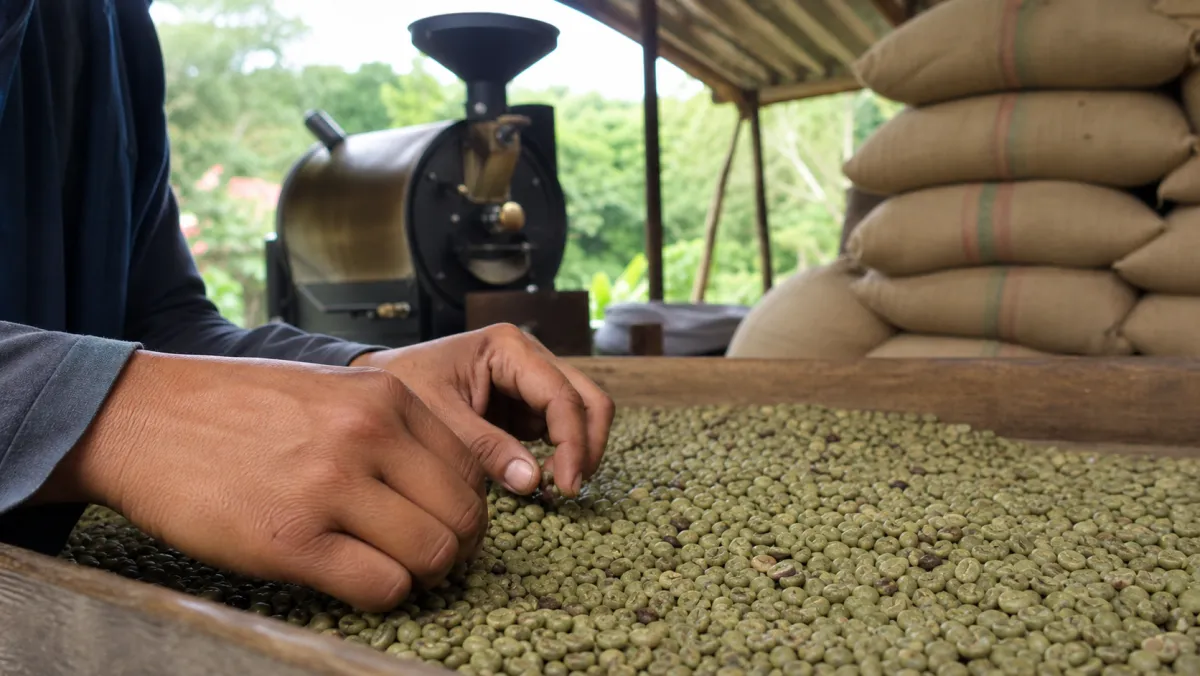
Three lines decide the retail spread. Real estate, labor, and attach rate. Coffee bean cost matters, but it is rarely the swing factor people assume, even with commodity swings.
Real estate sets your ceiling. A great store in the wrong location loses money quietly for years. A bad lease cannot be fixed by better coffee or a smarter app. It compounds for the length of the contract.
Labor is the variable everyone underestimates, especially where wages rise. Every minute shaved off drink preparation, every shift staffed to actual demand, drops straight to the bottom line across the whole fleet.
Attach rate is the quiet hero. The food item, the second drink, the loyalty upsell, that is where a marginal location becomes profitable and coffee sales actually compound.
This is the same trap that quietly kills people, not just stores. Ignoring the unglamorous fundamentals is one of the clearest signs you are being set up to fail, whether you run a cafe or a career.
Coffee market trends shaping the next decade
A few shifts will decide the leaderboard, and most are not about coffee at all. These coffee market trends cut across the whole market landscape.
Loyalty and mobile ordering are now the core moat. The chain that knows your order, your timing, and your price sensitivity can defend margin without cutting price for everyone.
Drive-thru and pickup-only formats keep spreading because they cut the most expensive variables: square footage and dwell time. Premiumization is the other lever, where mature markets sell specialty and premium coffee to grow ticket without new stores.
Sustainability practices in coffee are moving from marketing to requirement. Buyers reward corporate coffee brands that can prove their sourcing, and trade coffee programs that pay farmers fairly. That reshapes the whole coffee roasting and distribution stack.
There is also a quieter structural force. As chains cut out the middle layers between roaster, distributor, and counter, you see a kind of reintermediation, where the app and the brand become the new gatekeeper between bean and customer.
Reading the risks in the coffee industry honestly
Every growth story has a bill. Discount-led volume models carry a dependence risk: pull the promotions and the traffic can follow.
Premium models carry the opposite risk. They are exposed when consumers trade down, and they struggle once a market saturates. Even the largest coffee producer nations feel it when demand softens.
Both face commodity volatility and labor inflation. Weighing those tradeoffs is its own discipline, the same calculus behind the benefits and risks of innovation in any maturing industry.
How to actually use this coffee market analysis
If you are an investor, watch same-store sales and app penetration, not just store count. New stores can mask flat demand for a while.
If you are an operator, obsess over attach rate and location quality before you chase a new city. If you are a student framing the market, treat coffee as a clean case study in scale economics. A clear way to articulate that thinking is the same skill behind a sharp self-introduction: lead with the insight, then the evidence.
The category is not won by who roasts the best high-quality coffee. It is won by who turns a daily habit into a data relationship, offering the coffee options and coffee solutions each customer already wants.
Related guides
Frequently asked questions
What is the global coffee chain market analysis in simple terms?
It is the study of how branded coffee chains compete, grow, and make money worldwide. The core finding is that growth has shifted to Asia while mature markets defend margin through loyalty apps, premium coffee, and high-density formats.
Which region is growing the fastest?
Asia, led by China, is the fastest-growing region. A low coffee consumption baseline, rising incomes, and aggressive price-and-app chains created the steepest growth curve in the global coffee market.
How is the coffee market segmented by product?
The coffee market is segmented into roasted coffee (whole bean and ground coffee), instant coffee, coffee pods and capsules, ready-to-drink coffee, and specialty coffee. Each segment carries different margins and buyers.
What decides whether a coffee chain is profitable?
Real estate cost, labor cost, and attach rate, the value of food and second-item add-ons, decide profitability more than the price of coffee beans. Location quality is usually the single biggest factor.
Are independent coffee shops disappearing?
Not disappearing, but losing market share. Branded chains keep converting fragmented independents into standardized, data-rich units, which is the main engine of chain growth.