Business Concepts
Domestication Innovation Mod: Why Rollouts Stall (2026)
The domestication innovation mod explains how teams tame a new tool into daily habit across four stages. See where rollouts stall and how to fix yours.

Every breakthrough tool that now feels boring was once strange, awkward, and resisted. The domestication innovation mod describes that journey: the predictable model by which a disruptive idea moves from "weird new thing" to invisible daily habit inside a team or household.
Quick answer
The domestication innovation mod is a model of how people and organizations take a raw innovation and tame it, adapting the tool, the rules around it, and their own routines until it fits naturally into everyday work. "Mod" here means the model or mode of adoption, not a game patch.
Key takeaways
- Domestication is the gap between launching an innovation and people actually using it well.
- The model has four stages: appropriation, objectification, incorporation, and conversion.
- Adoption is social, not just technical. Norms and habits decide success.
- Skipping domestication is why most rollouts stall, even with great tools.
What the domestication innovation mod actually means
Domestication theory came from media and technology research, most notably Roger Silverstone's work in the 1990s. It borrowed a farming metaphor: wild ideas, like wild animals, have to be tamed before they live comfortably alongside us.
Applied to business, the mod (model) explains a frustrating truth. Buying the software is the easy part. Getting a team to fold it into how they already think and work is the real innovation challenge.
That challenge sits at the center of most core business concepts around change. People do not adopt tools. They adopt new versions of themselves that happen to use the tool.
You can read the academic roots in the domestication theory literature. The practical version is simpler, and it scales from a single household gadget to a thousand-person software rollout.
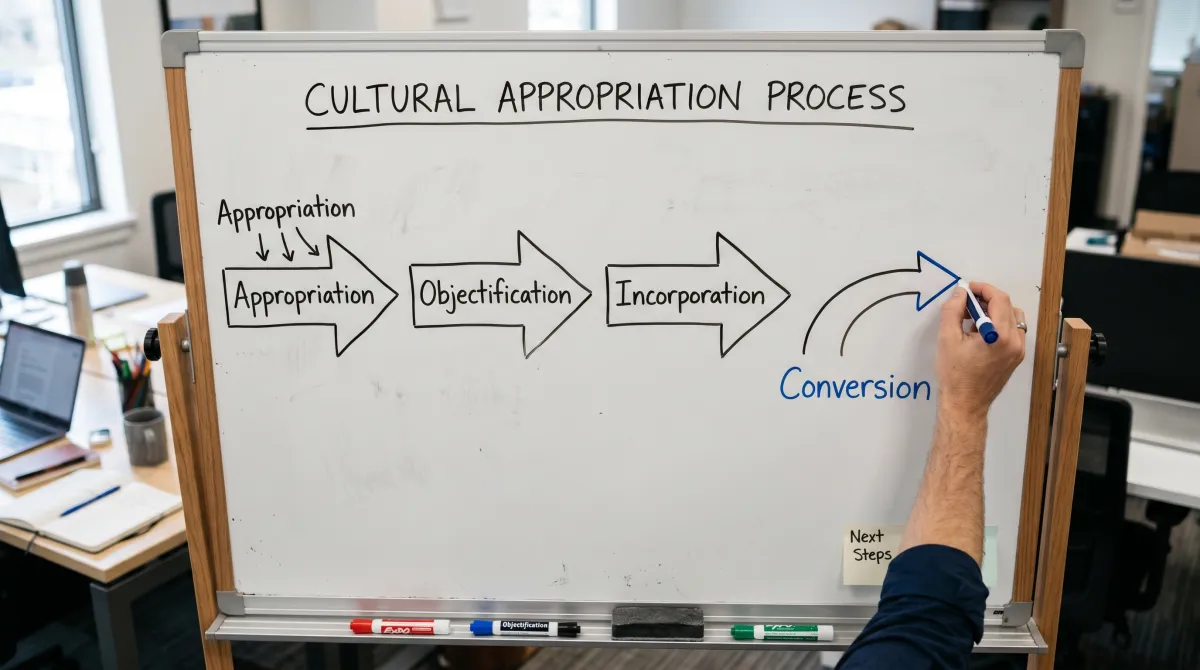
The four stages of the domestication model
The classic framing breaks domestication into four moves. Each one is a place where adoption either takes hold or quietly dies.
| Stage | What happens | Where it fails |
|---|---|---|
| Appropriation | The team acquires the tool and brings it inside. | Bought, never opened. |
| Objectification | It finds a physical or workflow place. | No clear owner or slot. |
| Incorporation | It enters daily routines. | Used once, then forgotten. |
| Conversion | It becomes part of identity and how you talk. | Stays "that thing IT made us use." |
Notice the pattern. The hardest stages are the last two, where the tool stops being an event and becomes a habit nobody questions.
Appropriation: bringing it in the door
This is the purchase or the download. It feels like progress, and leaders love it because it is visible. But owning an innovation is not the same as living with it. Most failed rollouts already passed this stage.
Objectification: giving it a place
Here the tool gets a slot in the workflow and a named owner. A project app that lives on one person's screen never domesticates. One that anchors the Monday standup starts to belong.
Objectification is also where the tool gets reshaped. Teams rename channels, build templates, and delete features they never touch. That editing is not misuse. It is the sign that people are claiming the innovation as theirs.
Watch where a new tool physically sits, too. A dashboard pinned to the shared screen in the standup room gets used. The same dashboard buried three clicks deep in a menu quietly dies, no matter how good the data inside it is.
Incorporation and conversion: when it disappears
Incorporation means the innovation shows up in daily routine without a reminder. Conversion is the finish line: the team defends the tool, teaches new hires on it, and speaks its language. At that point the innovation has gone fully invisible.
An innovation is only domesticated when nobody calls it new anymore.

Why the domestication model matters for innovation risk
Leaders obsess over picking the right innovation and underinvest in taming it. That imbalance is expensive, and it explains a lot of stalled change programs.
Consider a familiar pattern. A company spends six figures on a new CRM, runs one training webinar, then wonders why reps still live in spreadsheets a year later. The tool was fine. The domestication never happened.
Every adoption carries trade-offs worth weighing honestly, which is why understanding the benefits and risks of innovation should come before the rollout, not after it breaks. A great tool dropped without domestication still counts as a failed innovation.
There is also a human cost. When change is forced without the social work of domestication, people feel managed against, not led. That dynamic overlaps with the quiet warning signs that you are being set up to fail at work, where new mandates arrive without support or context.
How to apply the mod to your next rollout
Treat domestication as the real project, not an afterthought. The tool is the easy 20 percent. The other 80 percent is the slow work of fitting it into how people already operate.
- Name an owner per team. Objectification needs a person, not a policy. That owner answers questions, builds the first templates, and models the behavior others copy.
- Attach it to an existing ritual. Bolt the new tool onto a meeting that already happens, so the habit borrows momentum instead of fighting for a new slot.
- Let people modify it. Domestication includes reshaping the innovation to fit local habits. Lock it down too tightly and you block the very adaptation that drives adoption.
- Measure usage, not purchase. Licenses bought tells you nothing about conversion. Track weekly active users and where the tool shows up in real work.
Give the slow stages real time on the calendar. A common mistake is declaring victory at launch day, then moving the team's attention elsewhere. Incorporation and conversion play out over weeks, so the people who run the rollout need to stay close long after the kickoff email.
This is also why intermediaries matter. When a new layer sits between users and value, the model of reintermediation shows how adoption can stall or accelerate depending on who owns the handoff.
One honest contrarian note. Some innovations should never be domesticated. If a tool only survives because you forced it into routine, the domestication was a sunk-cost trap, not a success. Killing a bad rollout early is a leadership skill, not a failure.
Domestication beyond business
The same model explains smartphones, remote work, and AI assistants entering teams today. Each began as disruptive and strange, then got tamed until it felt ordinary.
AI chat tools are mid-domestication right now. Most teams have passed appropriation and bought access, yet few have reached conversion, where prompting is just how work gets done. The gap between those two stages is exactly where the value leaks.
The same lag showed up with email, video calls, and shared documents. Each felt intrusive at first, then turned into infrastructure nobody thinks about. Knowing that pattern helps you stay patient through the awkward middle, instead of abandoning a tool right before conversion would have happened.
It even shapes how newcomers present themselves. A candidate writing a confident self-introduction as a computer science student is domesticating new tools into their own identity story, exactly the conversion stage in miniature.
Related guides
FAQ
What does "mod" mean in domestication innovation mod?
Mod here means model or mode of adoption, the framework for how an innovation gets tamed into routine. It is not a game modification or software patch.
Who created domestication theory?
Roger Silverstone and colleagues developed domestication theory in media and technology studies during the 1990s, using a farming metaphor for how households tame new technologies.
What are the four stages of the domestication model?
Appropriation, objectification, incorporation, and conversion. They track an innovation from purchase to becoming an invisible part of identity and routine.
Why do innovations fail without domestication?
Because adoption is social, not just technical. Without owners, rituals, and room to adapt the tool, people never incorporate it into daily habits, so the innovation stalls.