Business Concepts
Petty Cash (2026): How the Fund Works, Step by Step
Petty cash is a small float of physical money for everyday business costs. See how the imprest system works, how to control it, and when to retire the box.
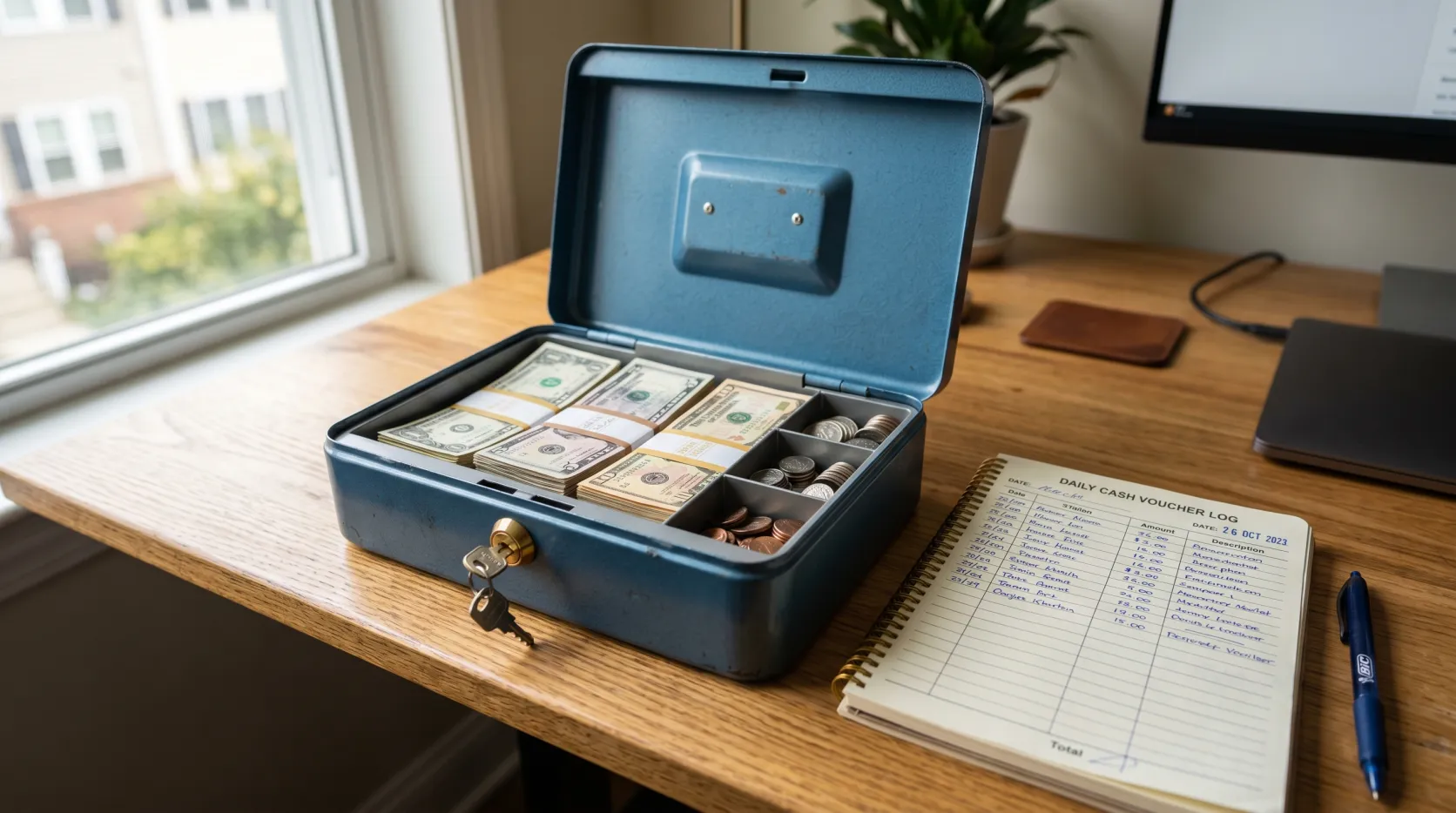
Every business runs into tiny costs that a card or an invoice cannot solve cleanly: a few dollars for stamps, milk for the office kitchen, a tip for a courier. Petty cash is the small, controlled fund of physical money you keep on hand for exactly these moments, so nobody fronts their own wallet and no minor expense slips through unrecorded.
Quick answer
Petty cash is a small reserve of physical currency a business keeps for low-value, everyday purchases. It runs on an imprest system: you start with a fixed float, record every withdrawal against a receipt, and top it back up to the original amount once it runs low.
Key takeaways
- Petty cash covers small, frequent costs, usually under $50, that are too minor for a card or an invoice.
- The imprest system keeps it honest: fixed float, a receipt for every outflow, replenish to the original sum.
- One named custodian should hold the box and the log, never the whole team.
- Receipts plus the cash left in the box should always equal the float. When they do not, you have a leak to trace.
- As card and app-based expense tools spread, many firms now shrink or retire petty cash entirely.
Petty Cash in 2026: What Has Changed
The mechanics have not changed for 2026: the imprest system, a receipt for every withdrawal, a fixed float, still work exactly as they did a decade ago. What has shifted is how many businesses still need a box at all.
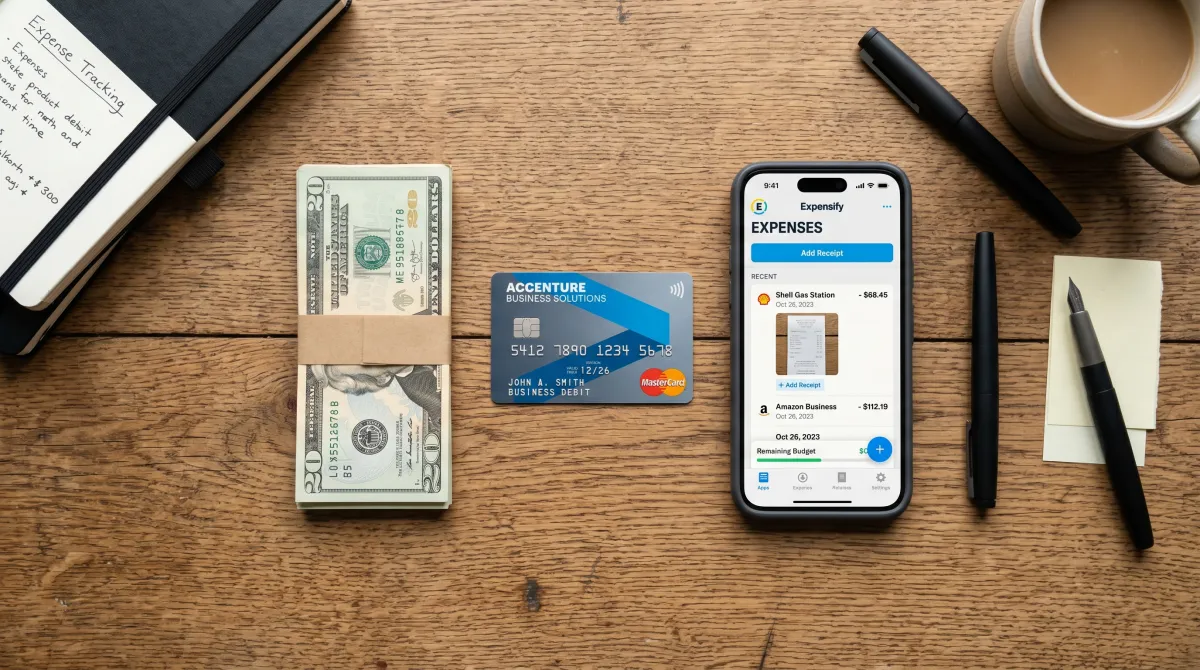
Costs that used to be cash-only, courier tips, small supplier payments, parking, increasingly clear through company debit cards, virtual cards, or expense apps that capture the receipt automatically. That leaves petty cash as a narrower tool: still useful for genuine cash-only situations and small offices without a full expense stack, but no longer the default way to handle minor spending.
If you already run a fund, the question for 2026 is less how to operate it and more whether you still need one this size.
What Is Petty Cash?
Petty cash, sometimes typed into search as cash petty, is the working name for a small amount of money a company keeps physically on the premises to pay for minor expenses. If you want the textbook line, our formal definition of petty cash covers the accounting wording.
It usually lives in a lockable box or drawer, and it sits on the balance sheet as a current asset, in the same family as the money in your bank account. The petty cash entry on Wikipedia frames it the same way.
The amount is deliberately modest. Most small businesses run a float somewhere between $100 and $500. The point is convenience, not capital.
You are not funding the business from the box, you are smoothing the friction of costs too small and too urgent to route through accounts payable. If your office spends $12 on cleaning spray, raising a purchase order is absurd. A hand in the box and a receipt back in its place settles it in seconds.

How a Petty Cash Fund Works
Almost every well-run fund uses the imprest system, and it is worth understanding, because it is what separates a controlled fund from a slush pile.
You decide on a float, say $200, and withdraw that sum from the bank in small denominations. That cash goes into the box. From then on, every dollar that leaves is replaced by a petty cash voucher and, ideally, a supplier receipt stapled to it.
At any moment, the cash remaining plus the value of the vouchers should add up to $200. That equation is the whole control. The imprest system exists precisely so a quick count tells you if money has gone missing.
When the box runs low, the custodian totals the vouchers, and the business writes a single cheque or transfer for that exact amount. That tops the float back to $200 and resets the cycle. Your bookkeeper then posts the expenses by category, postage, office supplies, staff refreshments, in one clean entry instead of chasing dozens of tiny transactions.
Petty Cash: The Practical Guide
Setting up a fund takes an afternoon, and getting the structure right on day one saves awkward conversations later. Work through these steps in order.
- Pick one custodian. The person physically responsible for the box, the key, and the log, often the office manager or bookkeeper.
- Set the float. Roughly one month of expected small spending, so you are not refilling every week.
- Lock it down. Buy a lockable box and keep the key with the custodian, not inside the box.
- Create a log. Paper or spreadsheet, with date, amount, who took it, the purpose, and a receipt reference.
- Set a per-item ceiling. Commonly $20 to $50, above which staff must use a card or claim a reimbursement instead.
The petty cash voucher is the heart of the system. Each time someone takes money, they fill a voucher, then return the change and the receipt. A voucher without a receipt is fine occasionally, for a parking meter say, but a box full of receiptless vouchers is the first sign of a control problem. Number the vouchers so a missing one is obvious.
Petty Cash Controls That Prevent Quiet Losses
Petty cash is small, which is exactly why it gets sloppy. The sums feel too trivial to police, and that attitude is what lets a fund bleed. A handful of habits keep it tight, and most of them sit squarely in basic management discipline rather than accounting wizardry.
- Separate duties. The person who approves a top-up should not be the one holding the box.
- Count on a schedule. Weekly or at month end, reconcile cash plus vouchers against the float.
- Keep it locked. Never leave the box in a shared, open drawer.
- Enforce the limit. So the fund is not quietly paying for lunches or fuel.
- Keep every receipt. Your tax authority may want to see them later.
None of this is heavy lifting, but it has to be routine. A control you run only when you remember is not a control. Tie the count to a fixed day, the last Friday of the month works well, and the box polices itself.
A petty cash fund is only as honest as the receipt you cannot find at month end.
Petty Cash Versus the Alternatives
Petty cash is not the only way to handle small spending, and for many teams it is no longer the best one. The table below compares the three common approaches so you can choose deliberately rather than by habit.
| Method | Best for | Main drawback |
|---|---|---|
| Petty cash | Tiny, in-person cash costs with no card terminal | Manual counting, theft risk, reconciliation work |
| Company card | Most modern spending, captures the receipt at source | Harder to cap impulse spend without good policy |
| Reimbursement | Occasional, one-off staff purchases | Pushes the cost onto employees and slows them down |
For a healthy team, the choice is rarely all or nothing. Most offices end up with a card for routine spending and a tiny float for the genuine cash-only edge cases, which keeps day-to-day workplace friction low without abandoning oversight.
When to Shrink or Retire Petty Cash
There is no rule that says you must keep a cash box, and plenty of modern teams have closed theirs. If almost every small purchase already happens online or through a supplier account, the box mostly sits idle while still demanding counts and reconciliation.
As headcount grows, controlling one shared box across departments gets harder, and a card per team or a per-person expense limit usually scales better. Treat petty cash as a tool for a specific stage, not a permanent fixture.
For the wider picture of how small processes like this fit a growing company, browse our other business concepts guides and revisit your spending policy every year or so. What suited a five-person office rarely fits a fifty-person one, and a quiet annual review beats discovering the box has gone stale during an audit.
FAQ
What is petty cash used for?
It pays for small, immediate business costs where a card or invoice would be overkill: postage, minor office supplies, refreshments, small reimbursements, and the occasional courier or parking fee.
What does "cash petty" mean?
Cash petty is simply an inverted way people search for petty cash. It refers to the same thing: the small float of physical money a business keeps for minor expenses.
How much petty cash should a business keep?
Enough to cover about one month of small spending without constant refills, commonly $100 to $500 for a small office. Set the float to your actual pattern, not a round number.
Is petty cash an asset?
Yes. It is cash the business owns, so it appears as a current asset on the balance sheet, alongside your bank balance.
What is the difference between petty cash and cash on hand?
Cash on hand is every liquid dollar the business holds, including bank balances. Petty cash is one specific, small, physical portion of that, ring-fenced for minor day-to-day expenses.