Business Concepts
Military Speeches That Changed History (8 Iconic Examples)
Explore influential speeches that changed history, from Lincoln to Churchill, and learn the four-part formula behind every unforgettable speech.
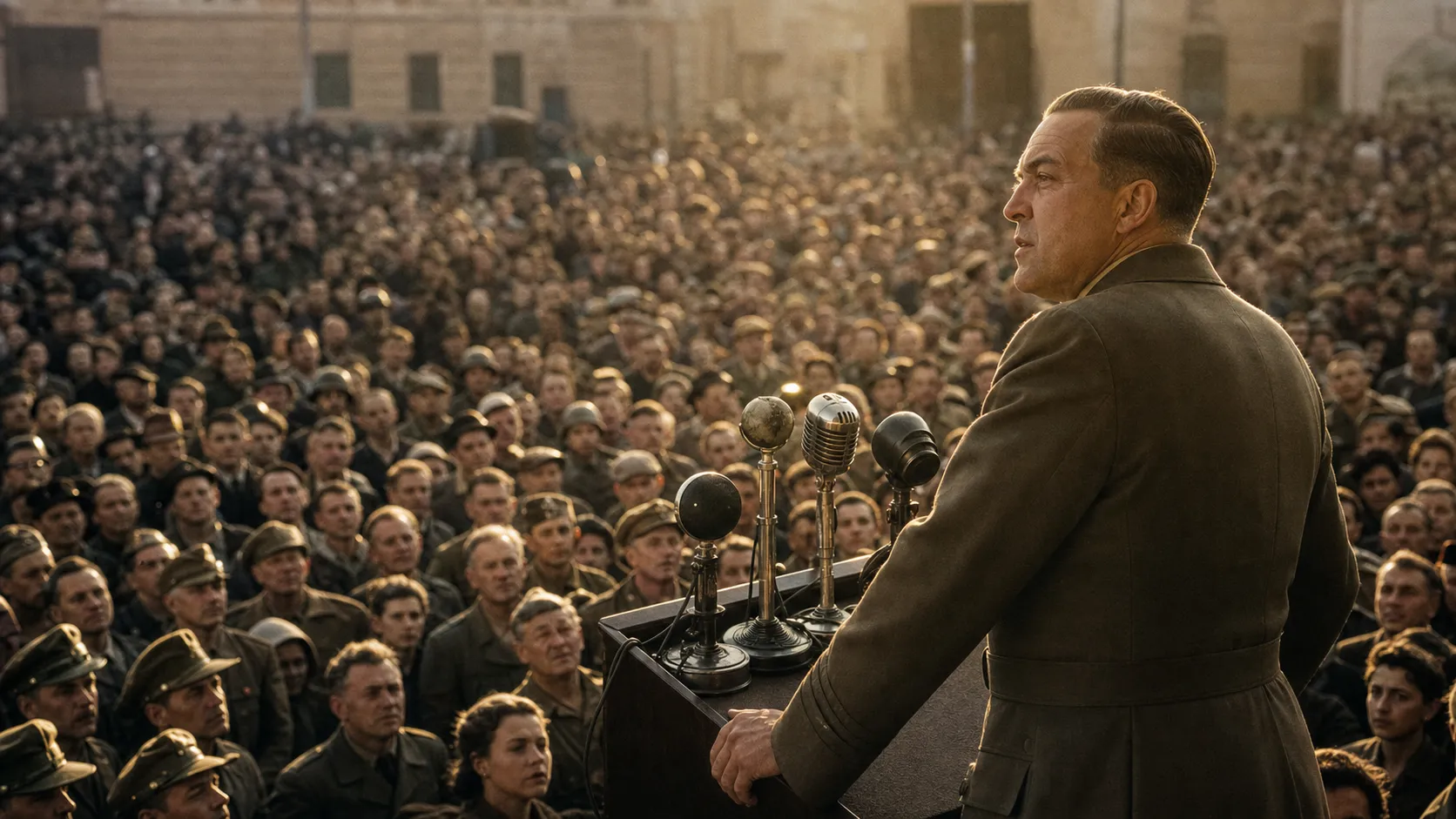
The influential military speeches that altered the course of history were not won by grammar. They were won by a leader who read the room, named the stakes plainly, and gave frightened people a reason to keep going.
I have studied dozens of these moments while writing about leadership communication. Truly great speeches share one pattern. The greatest speeches told the truth about danger, framed sacrifice as meaningful, and handed the audience a clear next action.
This guide breaks down the speeches that changed the world, what each leader did right, and the rhetorical move you can borrow for your own work.
Quick answer
The most influential military speeches in history, including Abraham Lincoln's Gettysburg Address, Churchill's vow to never surrender, and Martin Luther King Jr.'s "I have a dream" refrain, changed outcomes by reframing fear as resolve. Each paired an honest account of the danger with a concrete reason to act.
Key takeaways
- Great speeches name the threat honestly instead of hiding it.
- They give sacrifice a clear purpose, not vague glory.
- Rhythm and a single battle cry make one line impossible to forget.
- The strongest oration ends with one unmistakable action.
- These same techniques still drive persuasive leadership today.
Why oration changes the course of history
A field of battle is a crisis of morale before it is a crisis of tactics. Soldiers and citizens face death, doubt, and exhaustion. A speech cannot move an army by itself, but it can decide whether people choose to march at all.
That is the real lever. Words shift the internal story a person tells about why their suffering matters. When a leader gets that story right, ordinary people do extraordinary things. The same logic underpins the frameworks in our business concepts hub.
The speeches below span twenty four centuries and several continents. What unites them is structure, not era. Each one is a small masterclass in honest persuasion under pressure, and each still shapes how modern leaders open a difficult meeting.
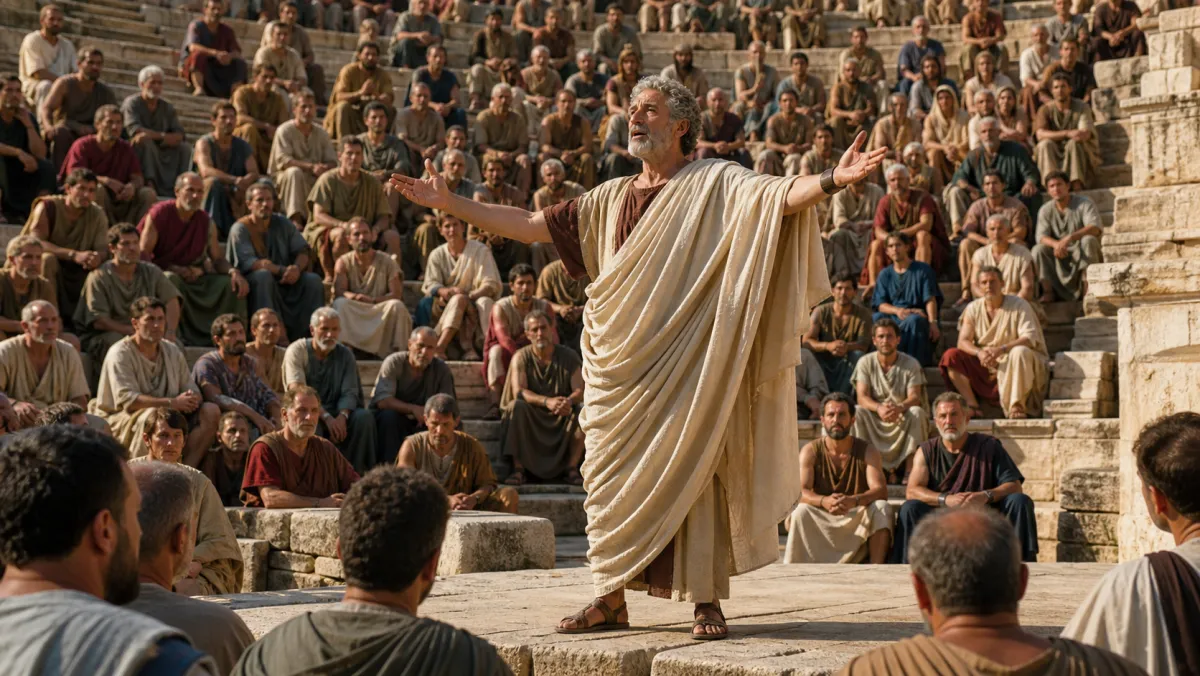
1. Pericles, the Funeral Oration (431 BC)
Recorded by the historian Thucydides, Pericles spoke at a public funeral for Athenian soldiers killed early in the Peloponnesian War. Rather than dwell on grief, he praised the democracy those men had died defending.
The move was subtle and powerful. By describing Athens as a society worth dying for, he turned private mourning into civic purpose. The dead were not victims, they were proof of what the city stood for.
The borrowable lesson: connect sacrifice to a larger identity. People endure hardship far better when it confirms who they are.
2. Patrick Henry's battle cry in the war of independence (1775)
Speaking to the Virginia Convention as revolution loomed, Patrick Henry pushed delegates off the fence at the dawn of America's war of independence. His closing framed the choice as binary and personal.
"Give me liberty, or give me death" removed the comfortable middle option. Neutrality suddenly felt like cowardice. You can read the full line in context via Give me liberty, or give me death!, and see how little this orator needed to say.
Every speech that changed a war did the same job: it made standing still feel more dangerous than fighting.
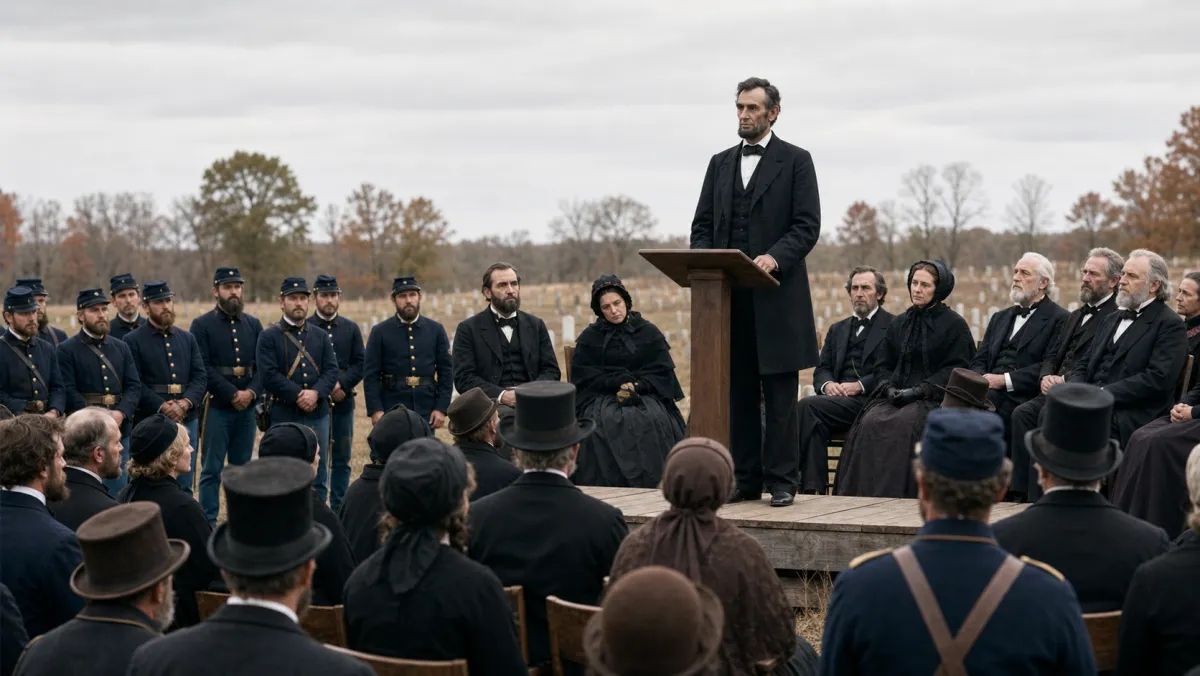
3. Abraham Lincoln's Gettysburg Address (1863)
Abraham Lincoln's speech at the dedication of a soldiers' cemetery lasted barely two minutes during the American Civil War. The featured orator that day, Edward Everett, talked for two hours. History remembers Lincoln.
In about 270 words he reframed the entire war. The fight was no longer about preserving a union of states, it was about whether a nation "conceived in liberty" could survive, a text you can read in full at the Gettysburg Address archive.
Abraham Lincoln's genius was compression. Brevity forced clarity, and clarity made the message portable. People could carry Abraham Lincoln's argument in their heads, which is why it ranks among the greatest speeches ever delivered.
4. Winston Churchill, "we shall never surrender" (1940)
Delivered to the House of Commons on June 4, 1940, after Dunkirk, Churchill faced a grim reality. In the second great world war, the United Kingdom stood largely alone, and invasion looked plausible.
He did not sugarcoat the danger. Then he piled clause on clause: "we shall fight on the beaches, we shall never surrender." The repetition built a wall of resolve, which is why it endures as a famous speech.
Lesson: honest acknowledgment of risk makes defiance credible. Rhythmic repetition makes a single phrase impossible to forget.
5. George S. Patton on foxholes, grenades and bayonets (1944)
Patton's profane, electric address to American soldiers before the Normandy campaign is the outlier here. Under the Supreme Command of Eisenhower, he spoke to scared young men who needed adrenaline more than poetry.
He talked about foxholes, grenades and bayonets, and the brutal arithmetic of combat to make death feel survivable and even purposeful. He framed the enemy fatherland as the thing standing between his men and home, turning fear into forward motion.
Lesson: match the register to the audience. The same message that inspires a parliament would fall flat in a muddy field.
6. President Ronald Reagan: "tear down this wall" (1987)
President Ronald Reagan stood at the Brandenburg Gate in West Berlin on June 12, 1987, with the Berlin Wall behind him. He aimed a single demand at the Soviet leadership.
"Mr. Gorbachev, tear down this wall." The call to tear down the wall named the regime that kept oppressed peoples on the far side of the concrete. The demand outlived the concrete itself, becoming shorthand for the entire Cold War standoff.
Lesson: one concrete demand, aimed at a named person, lands harder than a paragraph of policy.
7. Nelson Mandela and the real battle against apartheid (1964)
The real battle is not always fought with grenades and bayonets. In 1964, facing a possible death sentence, Nelson Mandela of the African National Congress addressed the court that tried him.
He calmly described a democratic future he was "prepared to die" to reach. His oration turned a courtroom into a stage and a defendant into the moral voice against apartheid. It armed a generation fighting for oppressed peoples worldwide.
Lesson: moral clarity, delivered without rage, can outlast any army.
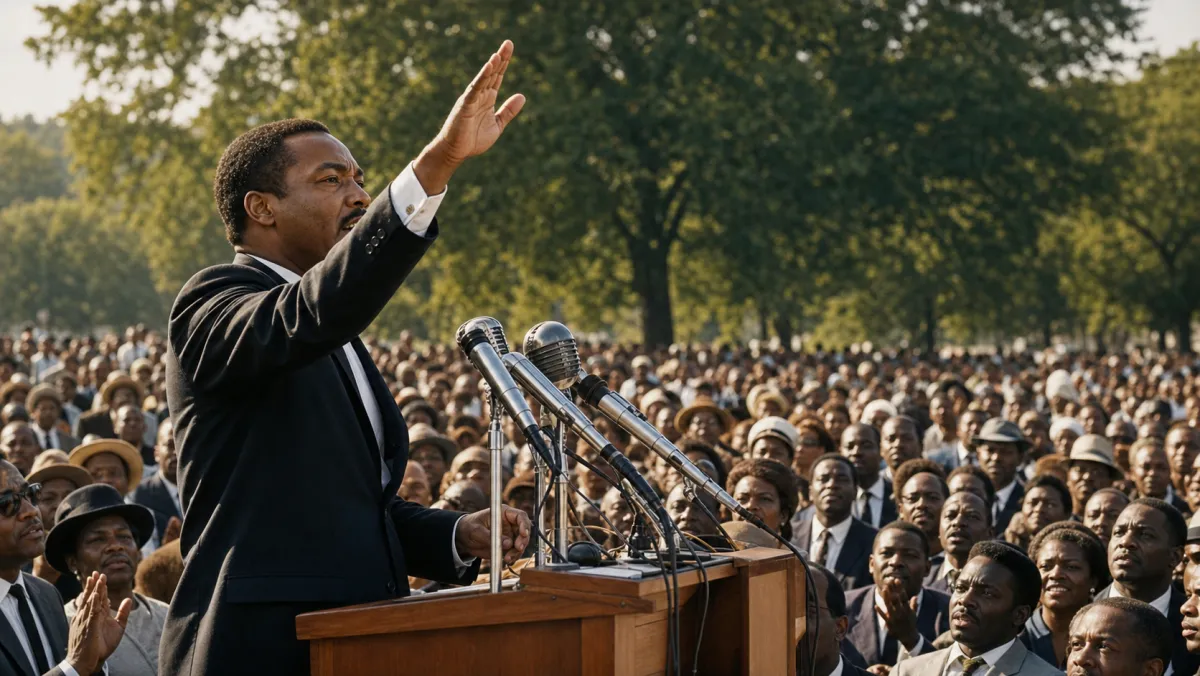
8. Martin Luther King Jr., "I have a dream" (1963)
The field of battle is sometimes a podium. Martin Luther King Jr. shared Abraham Lincoln's instinct exactly: name the injustice, frame a future worth the cost, then dare the audience to act.
The phrase "i have a dream" worked because King repeated it eight times in a row. Each repetition painted that future in plain, concrete language until an abstract hope felt near enough to touch.
He delivered it on the steps of the Lincoln Memorial, deliberately echoing Abraham Lincoln's promise of freedom a century earlier. The abolitionist Frederick Douglass made the same argument a century before King, proof that the greatest speeches often answer each other across generations.
What these speeches share: a reusable framework
Strip away the centuries, and great speeches follow the same four part structure. It works in any high stakes communication, not only war.
| Element | What it does | Example line |
|---|---|---|
| Name the danger | Builds credibility by refusing to lie | Churchill admitting invasion was possible |
| Frame the purpose | Makes sacrifice feel meaningful | Lincoln's "new birth of freedom" |
| Use rhythm | Makes the message stick and spread | King's repeated "I have a dream" |
| Demand one action | Removes the comfortable middle ground | Reagan's demand to tear down the wall |
You can see the same instincts in modern workplaces. Leaders who name hard truths early earn the right to ask for sacrifice later, a dynamic covered in our guide on the signs you are being set up to fail at work.
The same honesty principle separates leaders who push real change from those who manage decline. Weighing risk openly is exactly what good teams do when they assess the benefits and risks of innovation before betting on a new direction.
How to apply these lessons to your own communication
You will probably never address troops before a battle. You will, however, pitch ideas, deliver hard news, and ask people to commit to something uncomfortable.
Start by stating the real situation in one plain sentence. Then connect the work to a purpose your audience already cares about, not a slogan you invented this morning.
Close with a single, specific request. Vague calls to action are where most persuasion dies. The shortest path often outperforms the polished one, the same way removing a middleman can sharpen a message, a shift worth understanding through the lens of reintermediation.
If public speaking still rattles you, the fix is reps and structure, not talent. Even a confident self-introduction rehearses the same muscles these leaders mastered: name the stakes, connect to purpose, and close with one clear ask.
Related guides
Frequently asked questions
What famous speeches changed history?
Lincoln's Gettysburg Address, Churchill's "we shall never surrender," Patrick Henry's "give me liberty," Martin Luther King Jr.'s "I have a dream" address, Reagan's demand to tear down the wall, and Mandela's stand against apartheid are among the speeches that changed history. Each reframed a crisis and redefined what people were fighting for.
What is the greatest war speech of all time?
Churchill's June 1940 address is the most cited great war speech, because his vow to never surrender held a nation together when invasion looked likely. Patton's frontline address and Eisenhower's D-Day order rank close behind for raw battlefield impact.
What is considered the greatest speech in history?
Lincoln's Gettysburg Address is widely considered the greatest speech in history. In under 300 words it redefined the American Civil War and the meaning of the nation itself, which is why it still tops lists of the greatest speeches ever given.
What was George Washington's most famous speech?
Washington's most famous speech was his 1796 Farewell Address, a written farewell speech warning against political faction and foreign entanglement. His emotional address to mutinous officers at Newburgh in 1783 is his most dramatic spoken moment.
Can these speech techniques work outside the military?
Yes. Naming the real situation, tying effort to a genuine purpose, and ending with one clear request work in business pitches, crisis communication, and everyday leadership just as well as on a field of battle.