Business Concepts
How Costco's Business Model Actually Makes Money
Costco earns almost nothing on the goods it sells. Here's how membership fees, loss leaders, and scale turn a retailer into a subscription machine.
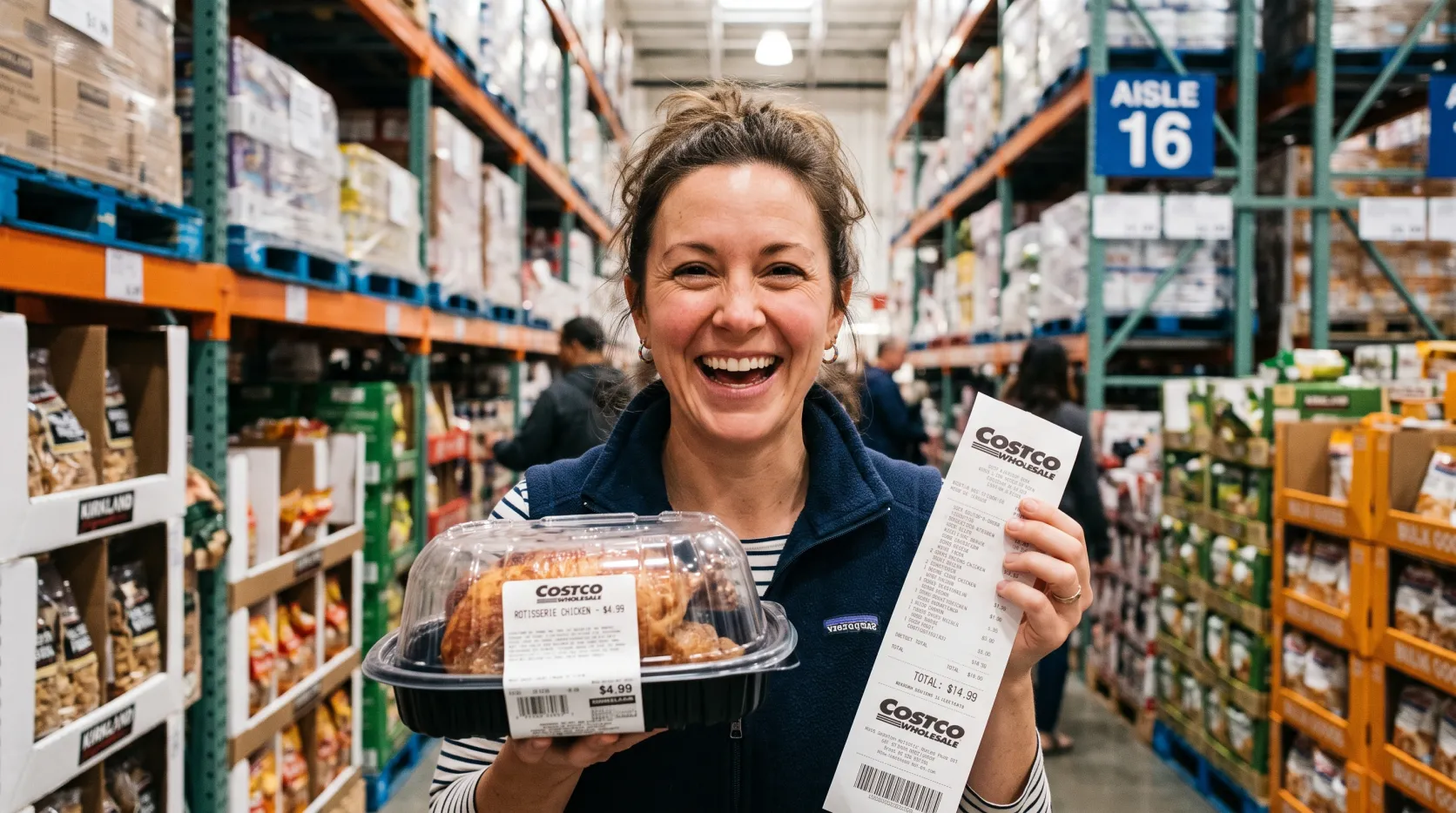
Walk into a Costco and you will see a business that appears to defy retail gravity: a $4.99 rotisserie chicken, a $1.50 hot dog that has not moved since 1984, and bulk goods sold at margins so thin they barely cover the shelf. Yet Costco is one of the most profitable retailers on earth. The trick is that Costco is not really a retailer at all.
Quick answer
Costco makes almost no profit on the products it sells. It sells merchandise at roughly 11% gross margin, near break-even after operating costs, and earns nearly all of its operating profit from recurring membership fees, which carry 75-80% margins. It is a subscription business wearing a retailer's clothes.
Key takeaways
- Membership fees hit about $1.33 billion in Q1 FY2026, up 14% year over year, and make up roughly two-thirds of net profit.
- Gross margin on goods sits near 11%, so the shelves run close to break-even by design.
- Loss leaders like the chicken and hot dog work because the profit already arrived through the fee.
- US and Canada membership renewal rates hold around 92%, giving Costco SaaS-like predictable revenue.
- The evergreen lesson: separate your traffic product from your profit product.
The membership fee is the real product
Here is the number that reframes everything. In its first quarter of fiscal 2026, the quarter ended November 23, 2025, Costco collected about $1.33 billion in membership fees, up 14% from a year earlier. Net income for the same quarter was roughly $2.0 billion, an 11.3% rise.
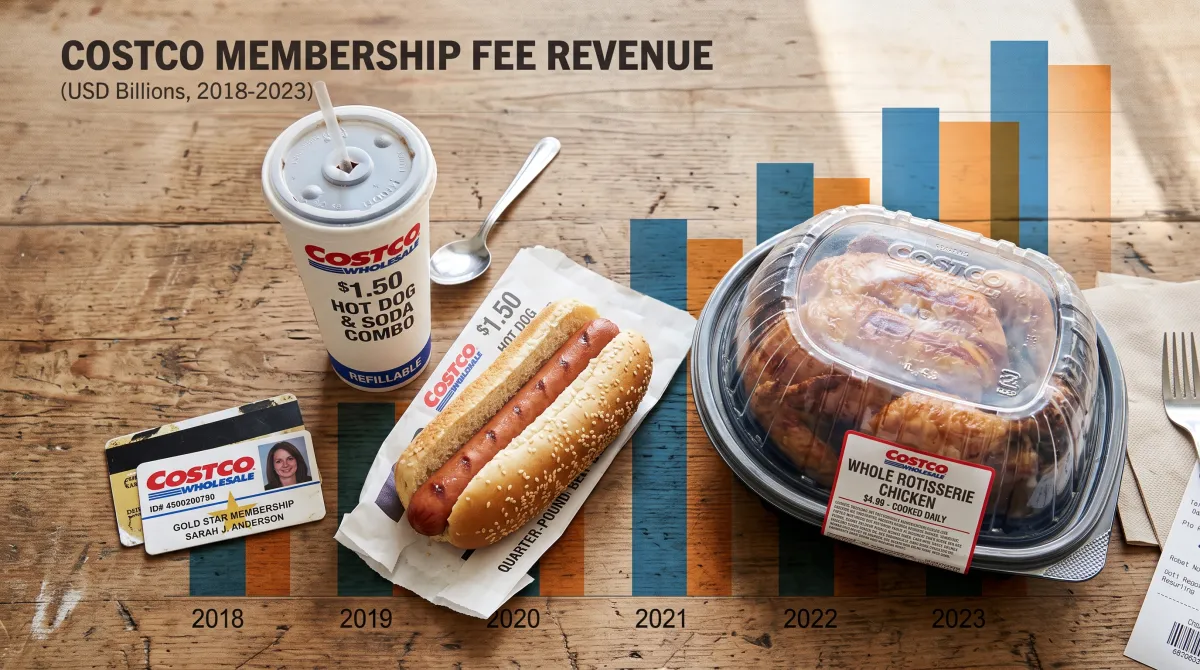
Do the math and the fees account for a huge share of the profit. Full-year membership fee revenue reached about $5.3 billion in fiscal 2025 and represents an estimated 66% to 73% of Costco's net profit. This is the kind of recurring revenue that underpins durable core business concepts investors reward.
Why do those fees matter so much? Because they cost almost nothing to collect. Once a warehouse is open and staffed, signing up one more member adds fee revenue with little extra variable cost. That is why membership margins run near 75-80%, closer to a software company than a grocer.
Costco does not sell you groceries to make money. It sells you the right to shop, then removes every reason to overprice the goods.
Why the shelves run near break-even
Most retailers survive on the spread between what they pay for a product and what they charge you. Costco flips that logic. Its fiscal 2025 gross margin was just 11.12%, and around 11.03% excluding gasoline.
That is thin. A traditional supermarket often runs gross margins in the mid-20s or higher. Costco deliberately caps its markup, holding most items to roughly 14-15% above cost even when it could charge more.
The logic only works because the profit already came in the door through the fee. Selling goods cheaply is not a bug in the model, it is the whole point. Cheap prices drive renewals, and renewals are where the money lives.
The loss leaders that build trust
The $4.99 rotisserie chicken is the most famous example. The price has held since the product launched roughly three decades ago, and the CFO has openly said Costco sacrifices $30 to $40 million a year in gross margin to keep it there.
To control that cost, Costco built a $450 million poultry complex in Fremont, Nebraska in 2019, producing around 2 million chickens a week in-house. That is vertical integration in service of a loss leader, a bet that cheap chicken pulls members through the door and into higher-margin aisles.
The $1.50 hot dog and soda combo tells the same story. Unchanged since 1984, it would cost well over $4 today if it had tracked inflation. Costco keeps it flat as a value signal, a promise to members that the deal is always real.
Compare this with Walmart or a standard supermarket. Those chains must profit on the transaction itself, so they cannot afford to lose money on staples the way Costco does. Costco can, because its profit does not depend on the chicken.
Scale is the moat under the model
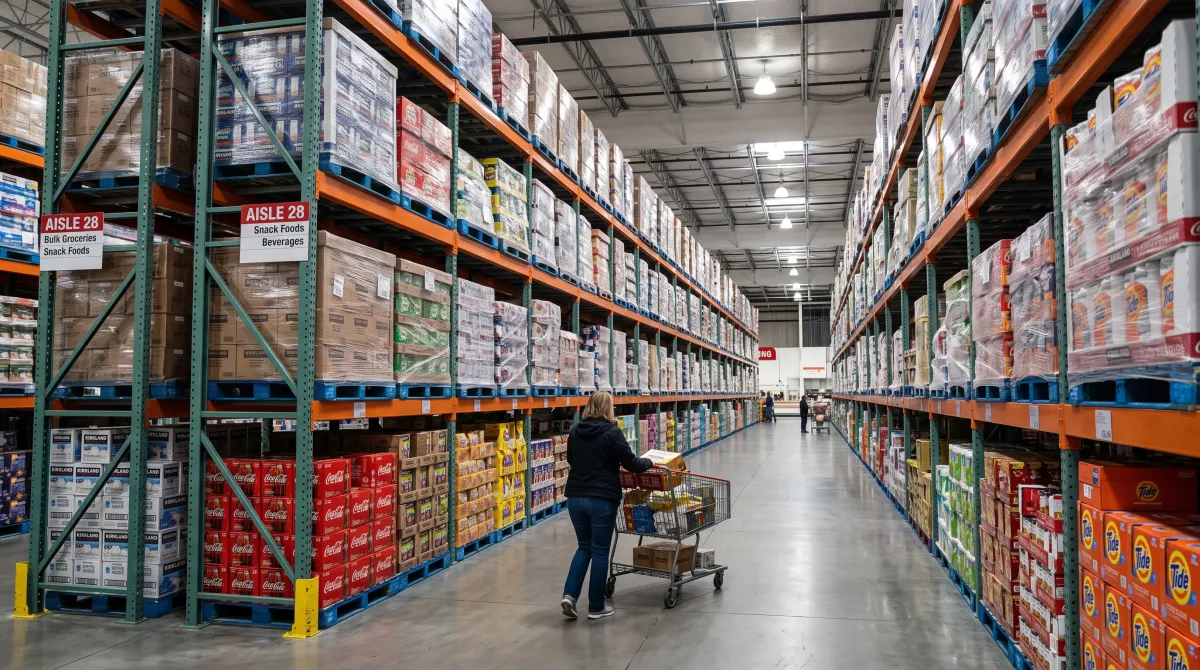
The economics only hold at enormous volume. A typical Costco carries about 4,000 SKUs, versus 30,000 or more at a full supermarket. Fewer products, bought in bulk, means massive per-item volume and heavy leverage over suppliers.
That concentration lets Costco negotiate lower prices, move inventory fast, and integrate vertically when it helps, as the Nebraska chicken plant shows. Scale is what turns a razor-thin markup into a durable, defensible business.
This is also where rivals feel the pressure. Warehouse competitors like Sam's Club, run by Walmart, chase the same model, and shoppers often compare Costco with Sam's on price and selection. Yet Costco's fee-driven engine and renewal loyalty have proven hard to copy, even for sams-scale operators with deep pockets.
The premium tier flywheel
Costco does not treat all members the same. Its Executive tier, the premium $130 membership that pays annual rewards, grew to 39.7 million members and now drives about 74.3% of total sales.
That is the flywheel. The most loyal members pay more for access, spend more per visit, and earn cash-back rewards that pull them back again. Tiered pricing upsells the customers who already love the brand, lifting lifetime value without much added cost. It mirrors how a strong predictable income stream is prized precisely because it compounds quietly.
The loyalty numbers back it up. Costco closed fiscal 2025 with roughly 81 million paid household memberships, and Q1 FY2026 renewal rates held near 92.2% in the US and Canada and 89.7% worldwide. Investors value that kind of sticky, predictable revenue the way they value a SaaS subscription base.
The lesson for any business
Strip away the warehouses and the model is simple and portable. Costco separates the traffic product from the profit product, and it charges for access rather than for markup.
The chicken and the hot dog exist to bring you in and prove the value is real. The fee is where the profit lives. Once you have paid it, Costco has every incentive to give you the lowest prices it can, because your renewal, not your basket, is what it is protecting.
For operators, the takeaway is worth writing down. Decide which part of your offer builds trust and drives traffic, and which part actually earns the margin, then design each one to reinforce the other. The same discipline that helps you nail a clear value pitch applies to pricing: lead with what earns attention, and let the durable revenue sit underneath.
Related guides
Frequently asked questions
How does Costco actually make its profit?
Costco's unit economics invert normal retail. Merchandise is sold at roughly 11% gross margin, near break-even after operating costs, so nearly all operating profit comes from high-margin membership fees running 75-80%. It behaves like a subscription business wearing a retailer's clothes.
How much do membership fees contribute to Costco's earnings?
Membership fees are the profit engine, about $5.3 billion annually in fiscal 2025 and an estimated 66% to 73% of net profit. With US and Canada renewal rates near 92%, they are predictable, sticky recurring revenue that investors value like a SaaS moat.
Why does Costco sell the $4.99 chicken and $1.50 hot dog at a loss?
Loss leaders like the $4.99 chicken and $1.50 hot dog work because the profit already came from the fee. Every low-margin item reinforces perceived value and renewal intent, unlike Walmart, which must profit on the transaction itself.
How does Costco's scale lower its costs?
Economies of scale compound the model. Bulk-only assortments of roughly 4,000 SKUs, versus 30,000 or more at a supermarket, drive massive per-item volume, supplier leverage, and vertical integration, such as the $450 million Nebraska chicken plant, which lowers per-unit cost.