Communication
Hard Would You Rather Questions (2026): 40+ Brutal Picks
Hard would you rather questions force real values tradeoffs, not jokes. Get 40+ ranked examples plus tips on when each level actually works.

Hard would you rather questions are forced-choice prompts where both options come with a real cost, not a joke answer. Unlike the goofy party version, a genuinely hard would you rather question makes you sit with the discomfort of picking between two things you actually value.
Quick answer
A hard would you rather question forces a real values tradeoff, where neither option is a joke and both cost you something. The difficulty comes from three things: no easy dodge, no clearly right answer, and a genuine emotional stake in both sides.
Key takeaways
- A would you rather question only counts as hard when both options carry a real cost and neither is obviously better.
- Crazy would you rather questions are built for laughs; hard ones are built for genuine reflection and tension.
- Research on forced-choice moral dilemmas shows the brain treats a truly hard tradeoff differently than an easy either-or pick.
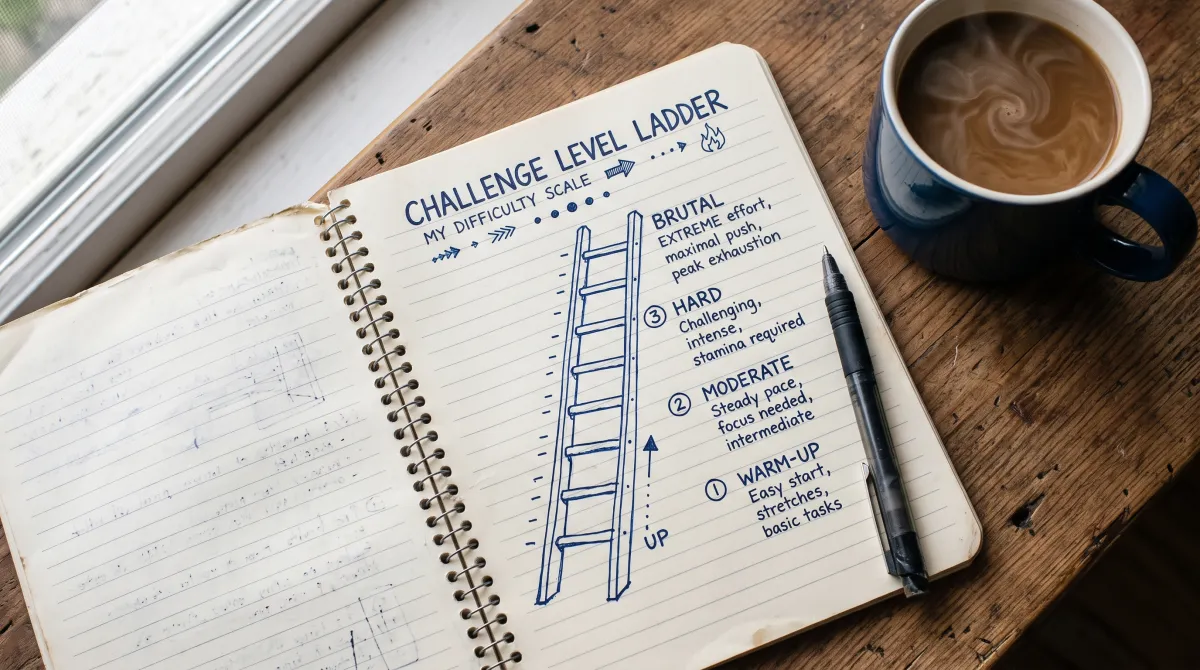
- A simple four-tier difficulty ladder, easy, medium, hard, brutal, makes it easy to match questions to the group and moment.
- The same reciprocal-question format that powers hard would you rather lists is also what researchers use to build closeness between strangers.
What Is a Hard Would You Rather Question?
A hard would you rather question is a forced binary choice where picking either option means giving something up that actually matters to you. It is not about pizza or tacos, it is about tradeoffs with real emotional, moral, or practical weight.
That is different from casual communication games meant only to fill silence. A hard version is built to expose how someone actually thinks, not just to pass ten minutes before dinner.
Hard Would You Rather Questions Explained
A would you rather question earns the word hard when it passes three tests: no easy dodge, no clearly correct answer, and a real cost on both sides. Miss any one of those and the question is just filler.
- No easy dodge. You cannot answer neither or both and still feel satisfied, the format forces a single pick.
- No clearly correct answer. Smart, reasonable people would split roughly down the middle on which option is worse.
- Real cost on both sides. Each option gives up something you value, whether that is money, time, relationships, or comfort.
That tension is the same mechanism behind classic intrapersonal conflict, where a single person weighs two incompatible values at once.
In a 2001 study published in Science, Harvard neuroscientist Joshua Greene and colleagues found that personal moral dilemmas, the footbridge version of the trolley problem, triggered more activity in emotion-related brain regions and took participants measurably longer to answer than impersonal versions.
Philosopher Philippa Foot first introduced the trolley problem in a 1967 paper in The Oxford Review, decades before its either-or structure became the backbone of hard would you rather questions.
Crazy vs. Hard Would You Rather Questions
Crazy would you rather questions are built to be absurd and funny, like choosing between fighting a horse-sized duck or a hundred duck-sized horses. Hard would you rather questions skip the absurdity and aim straight at a real values tradeoff instead.
Both formats use the same either-or structure, so a night of icebreaker games often mixes them on purpose. Open with a few crazy would you rather questions to loosen the group up, then move into the hard ones once people are comfortable.
- Crazy example: Would you rather have fingers as long as your legs, or legs as short as your fingers?
- Hard example: Would you rather know the exact date you will die, or never know how much time you have left?
Hard Would You Rather Questions Examples
The fastest way to pick the right question for the room is a difficulty ladder. Each tier below raises the emotional stakes, from a light warm-up to a question that can genuinely stall a conversation.
| Tier | Feel | Example question |
|---|---|---|
| 1. Warm-up | Light, quick to answer | Would you rather always be 10 minutes late or always be 20 minutes early? |
| 2. Medium | Requires a moment of thought | Would you rather lose all your old photos or all your future ones? |
| 3. Hard | Real values tradeoff | Would you rather have a career you love and mediocre health, or a career you hate and excellent health? |
| 4. Brutal | Sits with you after the game ends | Would you rather lose the ability to lie, or lose the ability to tell when others are lying? |

Moral and Ethical Would You Rather Questions
These force a values call with no comfortable middle ground.
- Would you rather always know when someone is lying to you, or always get away with your own lies?
- Would you rather save one stranger's life today or five strangers' lives in ten years?
- Would you rather report a close friend's serious mistake at work, or stay silent and share the blame?
- Would you rather always tell a painful truth, or always give a comfortable lie?
Relationship and Love Would You Rather Questions
Good for couples and close friends who already trust each other.
- Would you rather your partner always tell you what they are thinking, or keep a little mystery?
- Would you rather relive your first date on repeat, or never be able to remember it at all?
- Would you rather fight often but make up fast, or almost never fight but stay slightly distant?
- Would you rather your partner remember every important date, or forget dates but always show up when it counts?
Money and Career Would You Rather Questions
These test how someone actually ranks security against ambition.
- Would you rather double your salary in a job you dislike, or keep your current pay in a job you love?
- Would you rather retire at 40 with a modest income, or work until 70 for a wealthy retirement?
- Would you rather start a business that might fail, or keep a stable job that will never grow?
Survival and High-Stakes Would You Rather Questions
The crazy would you rather questions crowd tends to like this category most, since the stakes are hypothetical but extreme.
- Would you rather survive alone for a year, or survive with a group you do not get along with?
- Would you rather lose your sense of taste, or your sense of smell, permanently?
- Would you rather have unlimited food but no clean water, or unlimited water but no food, for a week?
A would you rather question is only hard if walking away without answering feels almost as bad as picking wrong.
How to Apply Hard Would You Rather Questions
Match the tier to the room before you match the topic. A brand-new group needs tier 1 and 2 warm-ups, a group that already trusts each other can handle tier 3 and 4 without it turning awkward.
For work teams, pull two or three hard questions into a stand-up or retro instead of a generic icebreaker. Psychologist Arthur Aron's 1997 study in the Personality and Social Psychology Bulletin used 36 escalating personal questions to build measurable closeness between strangers in a single 45-minute session, and the same reciprocal, either-or structure is what makes a hard would you rather list work on a team.
That extra bit of closeness matters more than it sounds. Gallup's workplace research has found that employees who say they have a best friend at work are roughly seven times more likely to be engaged in their job, which is a strong argument for spending five minutes of a meeting on a genuinely hard question instead of small talk.
- Couples: Save tier 3-4 questions for a relaxed one-on-one setting, not a group hangout.
- Classrooms: Stick to tier 1-2 with younger students, and use moral tier 3 questions with teens to spark debate.
- Parties: Open with crazy would you rather questions, then slide into hard ones once the group has warmed up.
Running a few rounds regularly is a low-effort way to practice how communication actually works inside a team or a relationship, since it forces both sides to explain reasoning out loud instead of just stating an opinion.
Pair it with the broader communication skills hub if you want more formats beyond would you rather.
Hard Would You Rather Questions: FAQ
What are good would you rather questions for couples?
Good would you rather questions for couples focus on values and daily life instead of abstract hypotheticals, like choosing between more free time together or more money for shared goals. Keep the tone playful at first, then let a few tier 3 questions surface what each partner actually prioritizes.
What is the hardest would you rather question?
The hardest would you rather questions are the ones where both options threaten something core to identity, like memory, honesty, or a relationship, with no safe third choice. Would you rather lose all your memories of the past, or never make a new memory again, is a common example.
Are hard would you rather questions appropriate for kids?
Most hard would you rather questions work best for teens and adults, since younger kids often lack the context to weigh abstract tradeoffs. For children, tier 1 and 2 questions about preferences and silly scenarios are a safer, still-fun starting point.
How many would you rather questions should you play in one round?
Ten to fifteen questions is usually enough for one sitting, mixing a few warm-up questions with two or three genuinely hard ones. Playing too many hard questions in a row tends to drain the group instead of keeping the energy up.