Workplace & Career
Does a PIP Mean You're Getting Fired? Odds + Signs (2026)
Does a PIP mean you're getting fired? Not always, but a performance improvement plan raises the odds. The warning signs and how to respond before termination.

If the meeting invite just landed and the document is sitting in your inbox, one question drowns out everything else: does a pip mean you are getting fired? The honest answer is no, not automatically, but a performance improvement plan is a signal you cannot ignore. It means your manager has put your performance in writing, and writing creates a paper trail.
Quick answer
A PIP does not guarantee termination, but it raises the odds. Some plans are a genuine attempt to help you improve. Many are the formal first step of a process that ends in termination. Treat every PIP as a job-at-risk situation: improve on the metrics, document everything, and start looking immediately for a new job in parallel.
Disclaimer: This article is general information, not legal advice. Laws vary by jurisdiction and change over time. For your specific situation, consult a qualified attorney.
Key takeaways
- A PIP is a formal warning, not an automatic firing, but it puts your job in jeopardy.
- PIP success rates are low at many companies because the plan is built to document, not to retain.
- The clearest PIP warning sign is vague or unreasonable targets you cannot realistically hit.
- "Managed out" and "quiet firing" describe PIPs designed to push you toward termination.
- Improve on the plan and update your resume and LinkedIn at the same time. Both, not either.
What Is a Performance Improvement Plan?
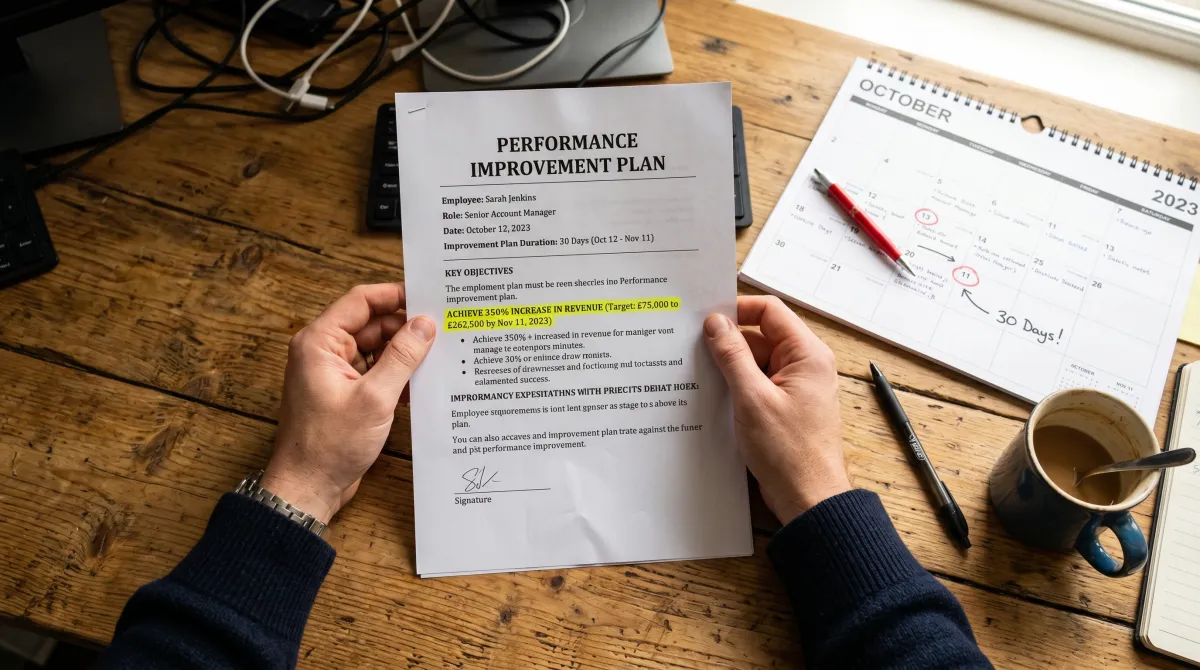
A performance improvement plan is a formal document from your employer that lists where your performance falls short, sets measurable targets, and gives you a window, usually 30, 60, or 90 days, to hit them. It explains what a PIP expects: specific metrics, a timeline, and check-in dates with your manager.
Getting a PIP at work is rarely a surprise on the employee's side. It usually follows weeks of feedback that you did not fully act on. A good-faith plan reads like guidance, with concrete expectations and a manager who is invested in helping you improve your performance.
If you have ever wanted a clear definition, our deeper guide on how a performance improvement plan works breaks down each section. The problem is that the same document can be used two completely different ways, and from the outside they look almost identical.

Does Being Put on a PIP Mean Going to Be Fired?
Here is the uncomfortable truth. Some companies use PIPs to genuinely retain people. Others use them as legal cover before termination. A documented plan protects the employer from a wrongful-dismissal lawsuit, because they can show they gave you a chance and a measurable target.
In the United States, most roles are at-will employment, which means your employer can terminate you for almost any lawful reason. A PIP is not legally required to fire you. When one appears anyway, it usually means human resources wants the documentation trail in place first.
A PIP is rarely about past performance. It is about building the paper trail for whatever comes next.
So when someone asks if a PIP is the first step to being fired, the accurate answer is: sometimes it is the help it claims to be, and sometimes it is the polite start of pip then termination. When a manager decides to put you on a PIP, your only real job is to figure out which one you are holding.
PIP Success Rate: What Are the Real Odds?
There is no single official PIP success rate, but the anecdotes on LinkedIn are blunt. Many employees report that once they got put on one, termination followed within months regardless of effort. That pattern is common enough that it shapes how people react.
Why are the odds against you? Because by the time a manager invests the effort to write a formal plan, the relationship is often already broken. The cost to hire and train a replacement is real, yet the decision to remove you can be emotional or political, and the plan simply formalizes it.
A smaller share of PIPs are sincere, and people do survive them, especially when the targets are fair and the manager genuinely wants to retain the employee. A person on a PIP is not doomed by default. Do not assume you are safe either. Read the warning signs instead.
PIP Warning Signs vs a Good-Faith Plan
The single biggest pip warning sign is an unreasonable target. If the plan asks you to fix six months of feedback in 30 days, or sets metrics no one on the team actually hits, the plan was built to fail. That is a red flag you cannot avoid noticing, not a roadmap.
Watch for these signals that the plan is cover for termination:
- Goals that are vague, shifting, or impossible to measure objectively.
- Your manager stops giving real guidance or skips the check-in discussions.
- You are suddenly excluded from projects, meetings, or decisions.
- The tone is documentation, not coaching, with everything moved to email.
Side by side, the two kinds of plan read very differently. Use this table to place yours before you assume the worst.
| Signal | Good-faith PIP | PIP built to fire you |
|---|---|---|
| Targets | Specific, measurable, realistic for the timeline | Vague or impossible to hit in the window |
| Manager's role | Coaching, regular check-ins, real guidance | Silence, skipped meetings, everything by email |
| Your access | Still in projects and key decisions | Quietly excluded, work reassigned |
| Tone | Helping you improve your performance | Building a paper trail toward termination |
| Severance | Not on the table, they want to retain you | HR hints at a severance package early |
A good-faith PIP gives you specific, measurable goals, regular feedback, and a manager who clearly wants you to pass. A PIP like that names the gap, then helps you address the issue with real support. If you need to reply formally, our walkthrough on how to respond to a performance improvement plan covers the email language that protects you.
Where a PIP Sits Among Disciplinary Actions
A PIP is one form of formal disciplinary action, and it usually sits near the end of the line. Before it, you might see verbal coaching or a written warning. Around it, employers sometimes use a demotion or a short suspension to signal that your job is at risk.
Understanding the consequence of each step matters. A demotion can be a way to keep you while lowering expectations. A PIP, by contrast, often points toward termination if the targets are not met. Some CEOs say publicly that they use PIPs to retain talent, but the lived experience of many employees is closer to a countdown.
If you are reading the PIP's clauses and the language feels like a script, that is a meaningful signal. The plan that tries to help you improve sounds different from the one written to prove your job is in jeopardy.
Managed Out, Quiet Firing, and Constructive Dismissal
When a PIP is designed to push you out rather than help you improve, people call it being "managed out" or a form of "quiet firing." The employer makes the conditions hard enough that you either fail the plan or resign first. Both outcomes get them the result they wanted without the optics of a layoff.
If the plan is a pretext, and especially if it followed a protected complaint, it can edge toward retaliation or constructive dismissal. That is a legal question, not a workplace one. If you suspect the PIP is retaliation for reporting harassment, discrimination, or safety issues, talk to an employment lawyer before you sign anything.
Managers and leaders should know this cuts both ways, because a PIP used as a weapon damages trust across the whole team. If you run people, our notes on fair performance management argue for honesty over theater.
The same logic shows up the moment you have to deliver one of these conversations yourself. Our guide on leading through hard conversations covers how to do it without burning the relationship when they're trying to help someone recover.
How to Respond If You Are Put on a PIP
Run two tracks at once. Track one: take the plan seriously and try to pass it. Ask your manager to confirm exactly what success looks like, in writing, with measurable metrics. Hit every check-in, document your progress, and keep a paper trail of your wins.
Track two: start looking for a new job the same week. Update your resume, refresh your LinkedIn, and treat the search as insurance. If the PIP was a sincere attempt to help, you lose nothing. If it was pip then termination in disguise, you're going to be weeks ahead instead of blindsided.
Before you sign, read the agreement carefully and ask whether a severance package is on the table if things do not work out. Understanding your severance options early gives you leverage in any exit discussion.
If you want the exact structure of a fair plan, our performance improvement plan template shows what one should contain so you can spot what yours is missing. Whatever you do, do not resign in a panic, because resigning can forfeit unemployment benefits and severance. Make the company own the decision.
This content is provided for general informational purposes only and does not constitute legal advice, nor does reading it create an attorney-client relationship. Consult a licensed attorney in your jurisdiction before acting.
Related guides
FAQ
Does a PIP always lead to termination?
No, a PIP does not always lead to termination. Some are good-faith plans that help an employee improve and keep their job. But many end in termination, so treat any PIP as a job-at-risk situation and prepare on both tracks.
What percentage of employees survive a PIP?
There is no official PIP success rate, but reports on LinkedIn suggest the odds are often against you, with many people terminated despite effort. Survival rates are higher when the targets are realistic and the manager genuinely wants to retain you.
Should I quit before a PIP ends?
Usually no. Resigning early can cost you unemployment benefits and any severance package. The smarter move is to work the plan, document everything, and run a quiet job search at the same time so you control the timing.
Is a PIP retaliation?
It can be. If a PIP appears soon after you reported harassment, discrimination, or a safety issue, it may be unlawful retaliation or constructive dismissal. Keep a documentation trail and speak with an employment lawyer before signing.
How serious is being put on a PIP?
Very serious. A PIP is a formal warning that puts your employment in jeopardy and creates a paper trail. Even when it is sincere, it means your performance is being formally evaluated, so respond with urgency.