Business Concepts
VR Gaming Arena Economics (2026): What Survives
See the real unit economics behind VR gaming arenas: how depreciation, cash flow and throughput decide which dynamic 3D environments actually survive.
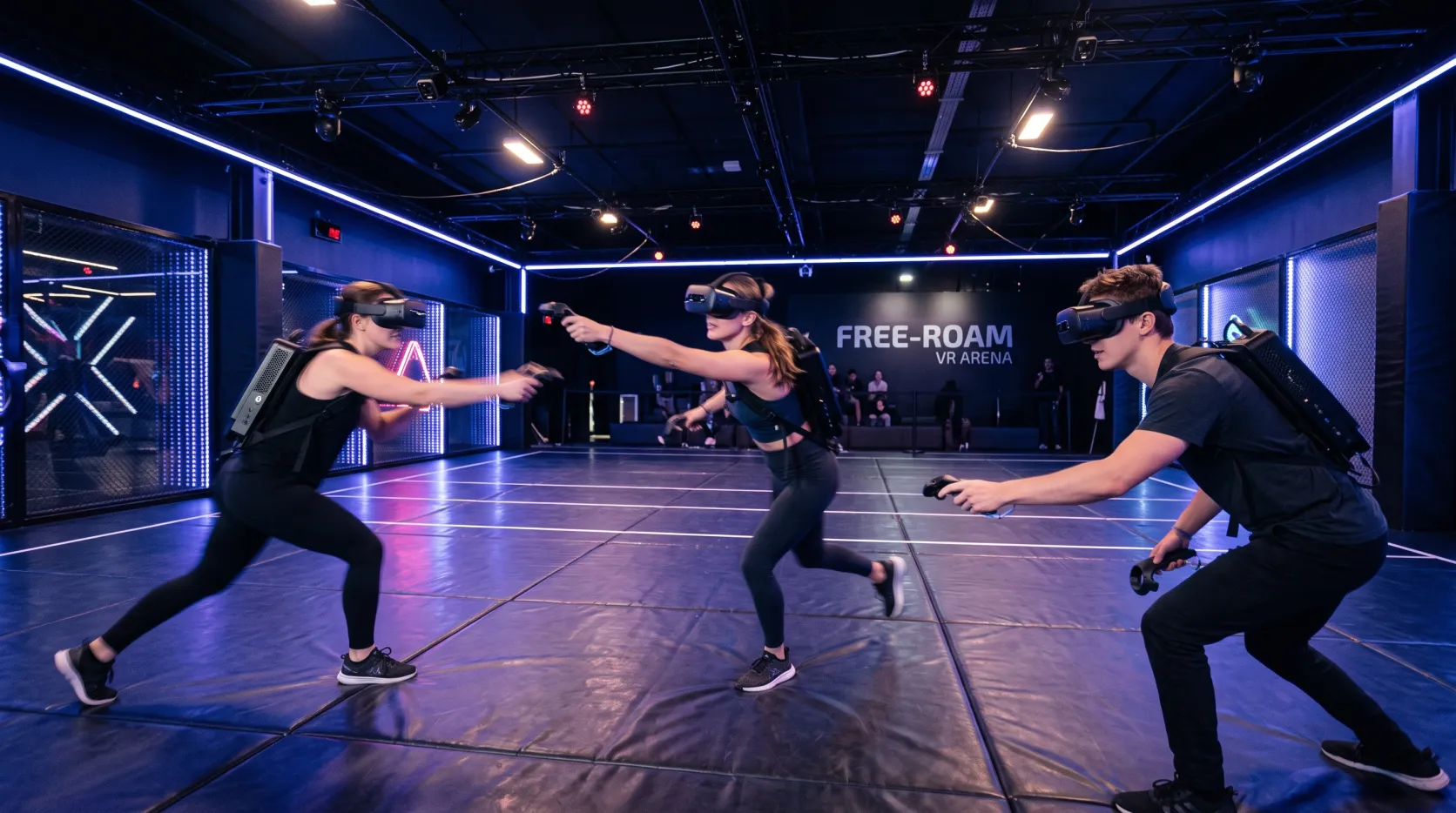
Walk into a virtual reality gaming arena and the magic feels effortless: untethered headsets, players ducking through laser corridors, a host resetting the room in ninety seconds. Behind that polish sits one of the least forgiving business models in location-based entertainment.
Quick answer
A virtual reality gaming arena is a physical venue where guests pay for short, immersive VR sessions, usually free-roam multiplayer experiences. As a business concept, it lives or dies on throughput per hour, hardware depreciation, and the cash flow needed to keep refreshing content before novelty fades.
Key takeaways
- Arenas sell time and immersion, not games, so revenue is capped by minutes of floor space per day.
- Headsets and sensors lose value fast, making the depreciation meaning very real on the balance sheet.
- Working capital and cash flow matter more than headline revenue in the first two years.
- Economies of scale reward chains; single locations fight thin gross margins.
- Overproduction of generic VR content, not weak demand, is the quiet killer of repeat visits.
What Is Virtual Reality Gaming Arenas?
A virtual reality gaming arena is a dedicated space, often 1,000 to 5,000 square feet, kitted with backpack PCs or standalone headsets, tracking sensors, and physical props. Guests book a slot, gear up, and play free-roam experiences alone or in teams.
The pitch to customers is simple: experiences you cannot replicate at home. The pitch to an operator is harder, because every square foot has to earn its keep across a finite number of hours each week.
That is why these venues belong in the business concepts conversation. They are a clean case study in how an exciting product can still struggle with unforgiving unit economics.
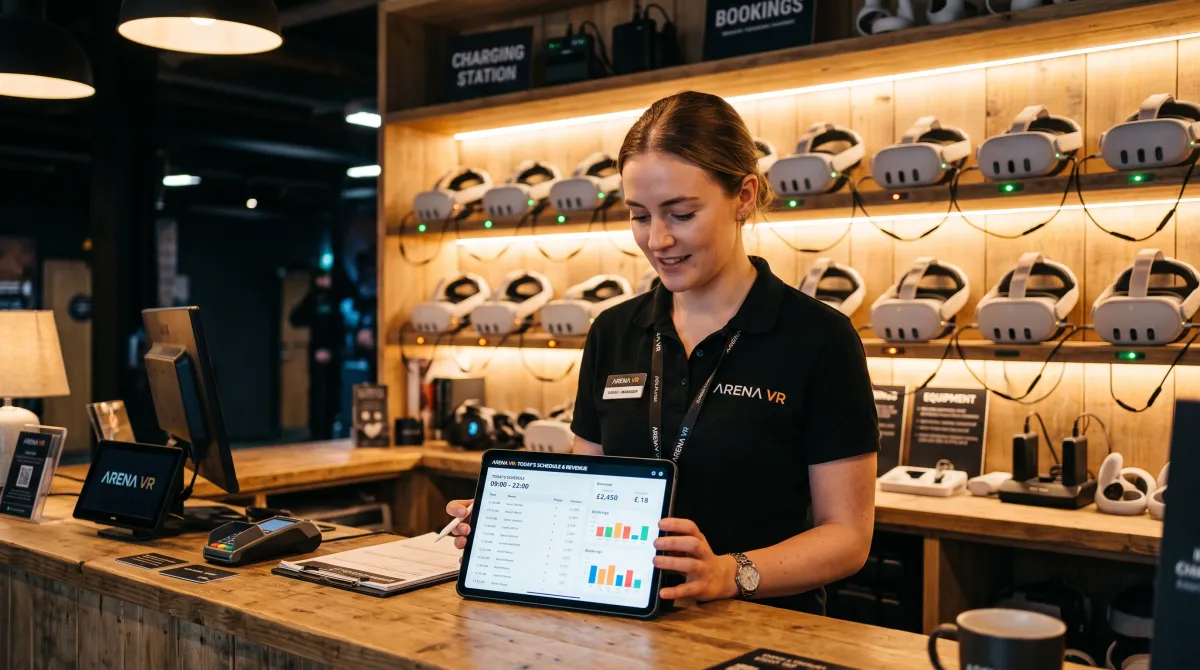
Virtual Reality Gaming Arenas Explained
Think of an arena as a perishable inventory business. Each headset-hour is a unit you can sell once. If a 6pm slot goes empty, that revenue is gone forever, exactly like an unsold airline seat.
Three forces shape the model. First, throughput: how many paying players you push through per hour. Second, content cost: licensing or building experiences guests will return for. Third, the steady erosion of your gear, which brings us to depreciation.
Depreciation: the cost nobody sees on the floor
The depreciation meaning here is straightforward. Your headsets, sensors, and PCs lose value every month from wear and obsolescence, and accounting spreads that cost across their useful life.
The textbook depreciation definition is the systematic allocation of an asset's cost over the period it earns money. For VR hardware, that period is short, often two to three years, because new headsets make old ones feel dated fast.
Ignore it and your profit looks great until a refresh cycle wipes out a year of earnings. A serious operator reads the risks of innovation into every purchase order, not just the upside.
The balance sheet view
The balance sheet definition is a snapshot of what a business owns and owes at a single moment. For an arena, the asset side is dominated by depreciating equipment and a lease.
Put plainly, the balance sheet meaning for owners is this: a pile of headsets booked at cost today is worth far less in eighteen months. Pair that with the working capital definition, current assets minus current liabilities, and you see why cash gets tight before profit appears.
Virtual Reality Gaming Arenas Examples
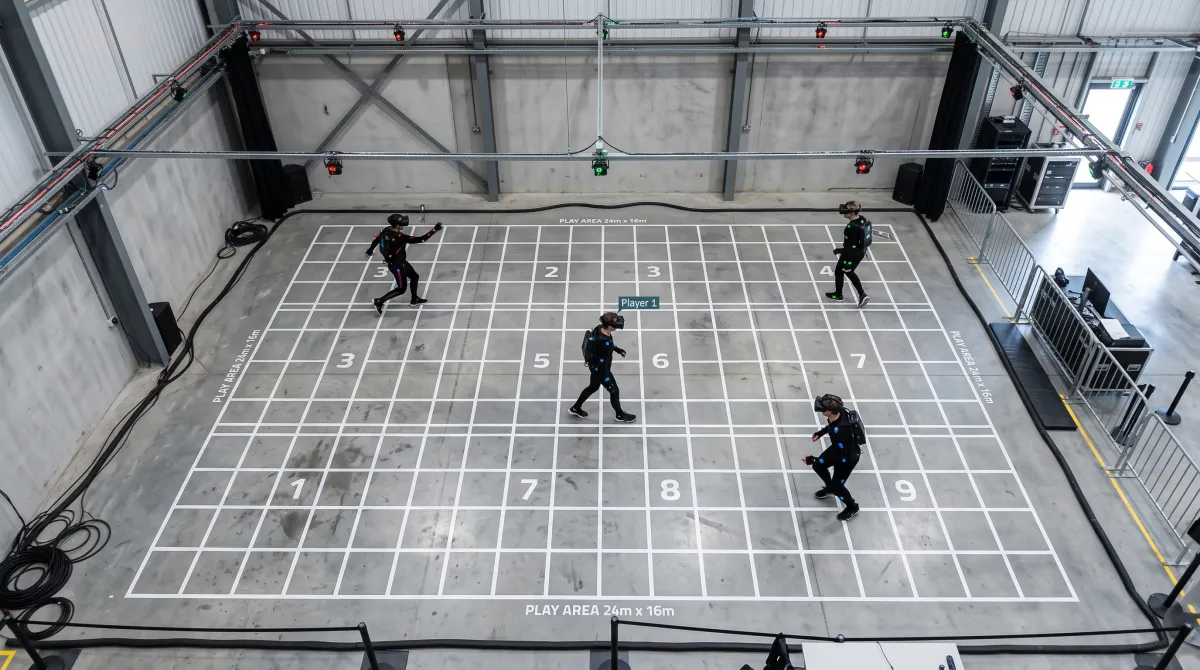
Free-roam arena formats, where players walk a tracked space in motion-capture gear, are the headline category. Esports-style competitive lounges and smaller pod-based setups round out the market.
Across these formats the financial pattern repeats. High upfront capital, modest recurring software costs, and revenue that swings hard with foot traffic and local events.
| Format | Upfront cost | Throughput | Main risk |
|---|---|---|---|
| Free-roam arena | High | Medium | Content fatigue |
| Pod / booth | Low to medium | High | Commodity feel |
| Esports lounge | Medium | Variable | Event dependency |
Notice the trade-off. Cheaper formats scale throughput but feel generic, which is a form of overproduction: flooding the floor with sessions guests no longer find special.
Repeat visits collapse when every session feels interchangeable. The smart operators rotate a small library of strong experiences rather than chasing volume, treating content like a menu, not a warehouse.
A VR arena does not sell games. It sells minutes of wonder, and wonder depreciates faster than the hardware.
How to Apply Virtual Reality Gaming Arenas
If you are weighing one as an investment or a venue addition, run the numbers before the vibes. Start with cash, because cash, not excitement, keeps the doors open.
Mind your cash flow first
The cash flow definition is the movement of money into and out of the business over time. An arena can be profitable on paper and still fail if cash lands too late to cover rent and refresh cycles.
Group bookings often pay in advance, which helps. But corporate clients on net terms create receivables, and the accounts receivable definition, money owed to you for services already delivered, becomes a real lever.
The accounts receivable meaning in practice: every unpaid corporate invoice is revenue you earned but cannot yet spend. Chase it tightly or your working capital starves.
Watch margins and scale
The gross margin definition is revenue minus the direct cost of delivering each session, before rent and overhead. Strong arenas hit healthy gross margins because the marginal cost of one more player is tiny once the room exists.
The gross margin meaning for owners is leverage: high gross margin lets fixed costs get absorbed quickly as volume grows. That is the heart of the economies of scale definition, where cost per unit falls as output rises.
Chains exploit this by spreading content, branding, and staff training across many sites. A single location rarely captures the same advantage, which is why so many independents stall after year one. The same dynamics that reshape distribution in reintermediation reward whoever controls scale and supply.
Protect your throughput math
Throughput is the metric that quietly decides everything. A room that turns over eight groups a night beats a fancier room that manages five, even if the fancier one charges more per head.
Tighten the reset time between sessions, train hosts to brief players fast, and price peak slots to fill them. Small gains in turnover compound into the difference between a thin year and a profitable one.
One human warning: do not let optimism set the staffing plan. Operators who feel pressured into impossible targets often recognize the early signs of being set up to fail, and arenas with burnt-out hosts churn customers fast.
For the underlying technology and its history, the Wikipedia overview of virtual reality and the accounting basics in this primer on depreciation are solid, non-commercial starting points.
Related guides
Virtual Reality Gaming Arenas: FAQ
What is a balance sheet example for a VR arena?
A simple balance sheet example lists assets like headsets, sensors, and a leasehold on one side, and liabilities like loans and supplier bills on the other, with owner equity as the difference. The headsets appear at cost minus accumulated depreciation.
What is accounts receivable in this business?
Accounts receivable is the money customers, usually corporate or group bookings on payment terms, owe you for sessions already played. It is revenue earned but not yet collected, so it ties up cash.
What is working capital and why does it matter here?
Working capital is current assets minus current liabilities, the short-term money you can actually use. Arenas need enough of it to cover rent, payroll, and content updates while waiting on receivables.
What does a profit and loss statement example look like?
A profit and loss statement example for an arena shows session revenue at the top, then direct costs and depreciation, then rent, staff, and marketing, leaving net profit at the bottom. Depreciation is the line most owners underestimate.
What is gross margin for a VR arena?
Gross margin is the percentage of revenue left after the direct cost of running each session, before rent and overhead. Arenas usually post high gross margins because one extra player costs almost nothing once the room is staffed and powered.