Leadership
Team Building Activities (2026): 15 That Actually Work
The best team building activities are short, frequent, and tied to a real gap. Get 15 tested picks sorted by what they build. See which fits your team.

Most team building activities fail for the same reason: they treat connection like a scheduling problem. Book a room, order pizza, run a trust fall, done. But the teams that actually gel do something different, and it has almost nothing to do with the activity itself.
I have run team building and activities for groups of five and groups of fifty. The pattern is consistent. The activity is just the container. What fills it is whether people feel safe being a little bit real with each other.
This guide skips the corporate filler. You get 15 team-building activities that work, sorted by what they actually build, plus a simple rule for choosing the right one. If you want the bigger picture, our communication skills hub covers the foundation these activities rest on.
Quick answer
The best team building activities are short, low-stakes, and tied to a real outcome your team cares about. Pick activities that create shared problem-solving or genuine conversation, not forced fun. Run them often in small doses rather than once a year as a big event.
Key takeaways
- Frequency beats intensity: 15 minutes weekly outperforms one annual retreat.
- Match the activity to the gap, whether that is trust, communication, or collaboration.
- Fun team building activities work best when participation is genuinely optional.
- Remote teams need structure; in-person teams need permission to be informal.
- Debrief matters more than the game itself, so always ask what people noticed.
What Is Team Building Activities?
Team building activities are structured exercises designed to strengthen relationships, trust, and collaboration inside a group of people who work together. They range from quick icebreakers to multi-day retreats.
The goal is not entertainment. Good activities for team building create conditions where people communicate more openly, understand each other's working styles, and build the trust that makes real work faster.
Think of team building building activities as deliberate practice for the human side of work. You are rehearsing communication and cooperation in a low-pressure setting so it holds up under pressure later.
There is real science underneath this. Research on team building traces the practice back to the human relations movement of the 1920s and 30s, when studies first showed that social conditions at work shape performance as much as technical skill.

How to Choose the Right Activity
Before you pick anything, name the gap. Different building team activities solve different problems, and running the wrong one wastes everyone's time.
Ask which of these your team is missing right now:
- Trust: people hold back, hedge, or avoid honest feedback.
- Communication: signals get crossed, context gets lost, silos form.
- Collaboration: people work near each other but not with each other.
- Connection: the team is new, distributed, or just never talks off-topic.
Once you know the gap, the activity almost picks itself. That is the entire method behind good activities in team building: diagnosis first, then the game.
Skipping this step is the most common mistake. Managers grab whatever is trendy, run it once, and wonder why nothing changed. A five-minute diagnosis saves an hour of pointless setup and a room full of people quietly checking their phones.
The activity is never the point. The conversation it starts is.
Team Building Activities: The Practical Guide
Here are 15 team building activities for teams, grouped by what they build. Each one includes when it works and when it flops, because context decides everything.
Activities That Build Trust
Trust is the foundation. Without it, every other kind of collaboration stays shallow. These team building activities for teamwork put small, safe vulnerability on the table.
- Personal timelines: each person shares three moments that shaped how they work. Deep fast, and it sticks.
- Two truths and a lie: a classic for a reason. Low stakes, reveals surprising things, works remotely.
- Fear in a hat: anonymous worries dropped in, read aloud, discussed. Only for teams with some existing safety.
- Peer appreciation round: everyone names one specific thing a colleague did well this month.
Trust activities flop when leadership does not go first. If the manager stays guarded, everyone else will too. Vulnerability travels downhill, so whoever holds the most authority sets the ceiling for how honest the room gets.
Activities That Sharpen Communication
Communication breaks down in predictable ways. These activities for a team building surface those breakdowns so people can see them.
- Back-to-back drawing: one person describes an image, the other draws it blind. Instant lesson in assumptions.
- The silent lineup: order yourselves by a trait without speaking. Forces nonverbal signaling.
- Telephone with a twist: pass a detailed instruction down a chain, then compare start and end.
- Perfect square: blindfolded team forms a square with a rope. Pure coordination under constraint.
The magic in these is the reveal. When people see how badly a simple message degraded across four handoffs, they stop blaming each other and start fixing the process. That shift is the whole point.
Fun and Funny Team Building Activities
Sometimes the goal is just to break tension and let people be human. Fun activities team building sessions do not need a hidden lesson to be worth it.
Laughing together is its own kind of glue. These funny team building activities lower defenses without anyone feeling managed.
- Office pictionary: draw inside jokes and project mishaps. Chaotic and genuinely fun.
- Themed trivia: build a quiz from your own team's history and running jokes.
- Desert island debate: what three things would you bring? Reveals personalities fast.
- The compliment battle: two people out-compliment each other until someone laughs. Deceptively warm.
A word of caution: fun team building activities only land when they grow from the team's own culture. Generic party games feel imposed. A trivia round built from your actual shared history feels like an inside joke everyone gets to be part of.
Activities That Force Real Collaboration
These building team building activities give the group a shared problem with a shared stake, which is the closest simulation of actual teamwork.
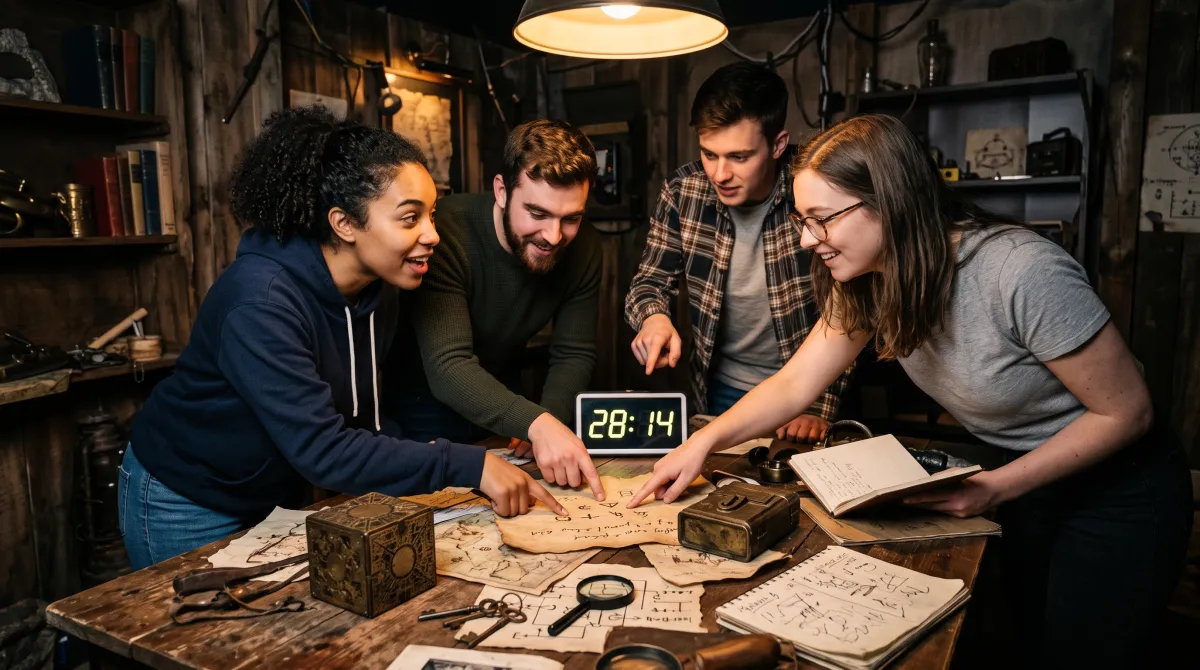
- Escape room: in-person or virtual, it demands division of labor under a clock.
- Build a bridge: two sub-teams build halves separately, then connect them. Tests planning and alignment.
- Hackathon or fix-it day: solve a real internal problem together. The most valuable of all team activities building.
Collaboration exercises expose your team's real operating habits. Who takes charge, who gets talked over, who quietly does the work nobody noticed. Watch closely, because those roles usually mirror how the team behaves on live projects.
Making It Stick: The Debrief
The activity generates the raw material. The debrief turns it into a lesson. Skip this step and you have run a game, not a team-building session.
Keep it to three questions after any of these teamwork team building activities:
- What did you notice about how we worked together?
- What would you do differently next time?
- What does this tell us about our real work?
Five minutes of honest reflection beats an hour of elaborate setup. This is where team building ideas activities become behavior change. Write down one commitment the team makes out loud, then revisit it at the next session so the loop actually closes.
Remote and Hybrid Team Building
Distributed teams need more intentional connection, not less. The mistake is copying in-person games onto a video call and hoping for the same energy.
What works remotely: shorter sessions, clear structure, and cameras-on optionally. Async options like a shared photo challenge or a virtual coffee roulette respect time zones while still building connection.
Remote activities should lean on tools people already use rather than forcing a new platform every week. Every extra login is a reason for someone to skip, so meet the team where their workflow already lives.
Common Mistakes to Avoid
Even well-meaning team-building activities backfire when they ignore the basics. A few patterns show up again and again.
- Mandatory fun: forcing participation kills the point. Make it genuinely optional.
- One-and-done events: a single retreat fades in a week. Small and frequent wins.
- No follow-through: if nothing changes at work afterward, people stop believing in it.
- Ignoring introverts: high-energy games exclude quiet contributors. Vary the format.
Strong management practices treat team building as a habit woven into normal work, not a separate department initiative.
The same logic applies to broader workplace culture: connection compounds when it is regular. A team that talks freely on a Tuesday handles a crisis on Friday far better than one that only bonds at the annual offsite.
Related guides
FAQ
What is the difference between team building and activities?
Team building is the goal, and activities are the method. Team building and activities work together: the activity is the exercise you run, while team building is the lasting trust and collaboration it produces over time.
What are the most effective team-building activities?
The most effective team-building activities are short, frequent, and tied to a real gap like trust or communication. Escape rooms, personal timelines, and shared problem-solving sessions consistently outperform one-off events because they create genuine interaction and a follow-up debrief.
What are good activities for a team building day?
Good activities for a team building day mix a warm-up icebreaker, one collaborative challenge, and a relaxed social close. Keep the whole day flexible, make participation optional, and always end with a short reflection on what the team learned about working together.
How often should teams do team building activities?
Run small team building activities weekly or biweekly rather than one large annual event. Fifteen minutes of consistent connection builds far more trust than a single retreat, because relationships strengthen through repeated low-stakes contact, not occasional intensity.