Communication
Escape Room Team Building (2026): 7 Formats to Try
Escape room team building activities expose how your team communicates under pressure. See 7 formats and how to run a debrief that sticks.
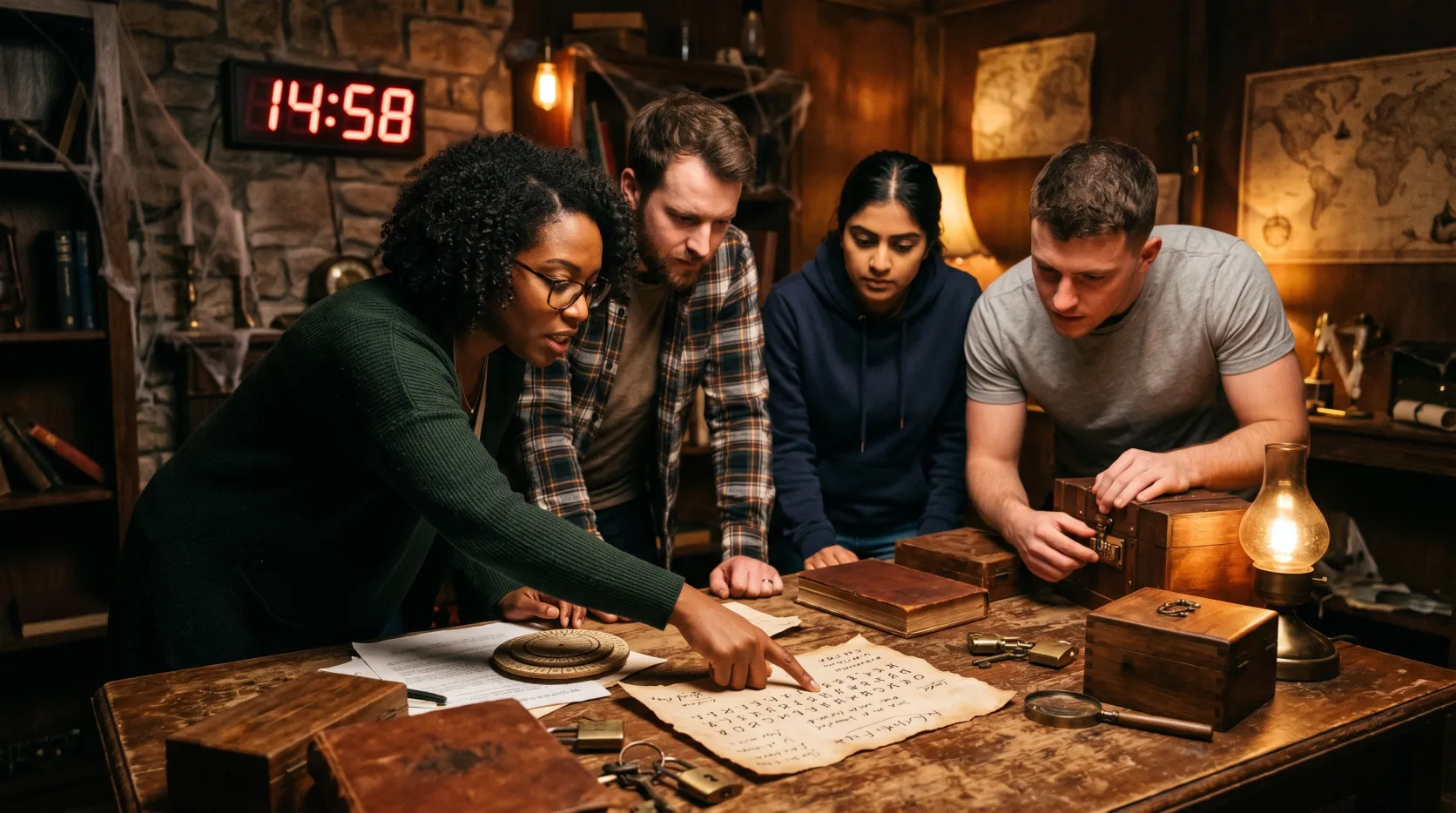
Team building activities escape room sessions, whether for engineering, sales, or support teams, are easy to dismiss as a novelty. Done right, a locked room exposes exactly how your people communicate under pressure, who leads, who hoards information, and who freezes. That signal is worth more than the trophy.
Quick answer
Escape room team building activities put 4-8 people in a timed, puzzle-driven room where they must share clues, delegate, and decide fast to escape. They work best for small teams, with a structured debrief after, because the real value is watching communication patterns surface, not the escape itself.
Key takeaways
- Keep groups to 4-6 people so everyone has a real role and nobody hides.
- The debrief is the activity. Skip it and you just played a game.
- Theme and difficulty should match the team's comfort, not the booking site's hype.
- Mixed-seniority groups reveal more than peer-only groups.
- Virtual and DIY formats deliver 80% of the benefit at a fraction of the cost.
What Is Team Building Activities Escape Room?
An escape room is a physical or virtual space where a team solves a chain of puzzles against a clock, usually 45 to 60 minutes, to unlock a final exit. Each clue depends on shared information, so progress stalls the moment communication breaks down.
As a team building format, the room is a controlled stress test. People reveal their default behaviour: the natural facilitator, the lone solver, the one who narrates everything. You see it in real time, no survey required.
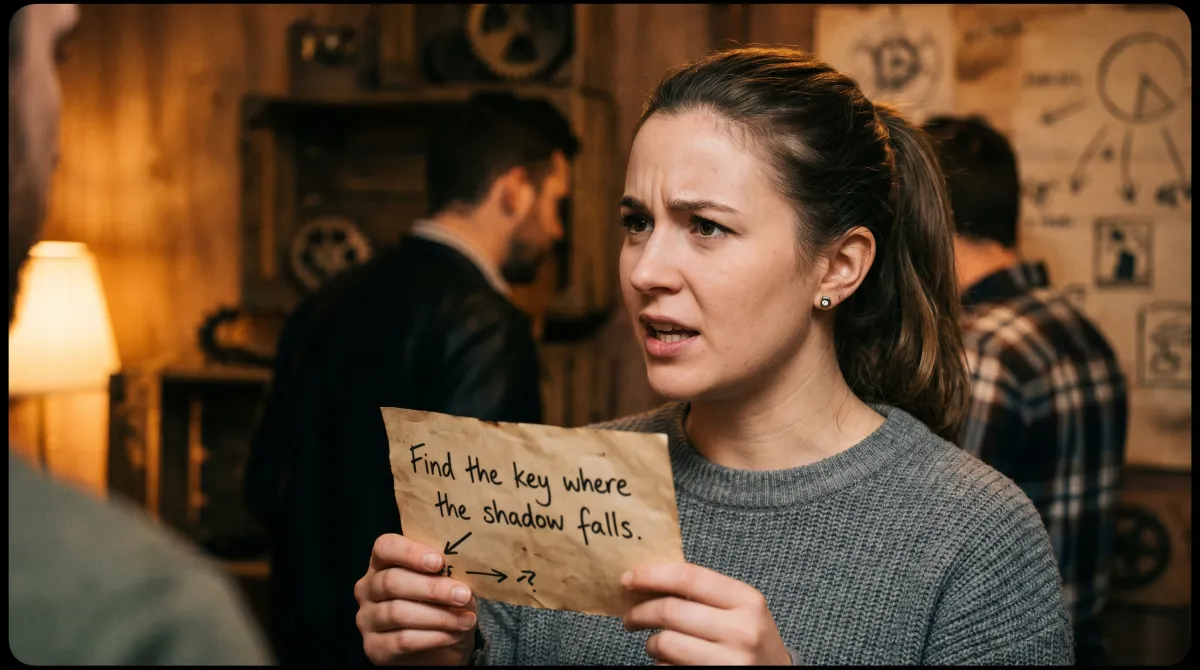
The mechanic maps neatly onto everyday work. A blocked puzzle is a blocked ticket. A hoarded clue is a siloed Slack thread. That is why these sessions sit so well inside a broader workplace communication strategy rather than as a one-off party.
There is also a low-stakes honesty to it. Nobody loses a deal or ships a bug if they fumble a cipher. People take risks they would never take in a real meeting, and those risks are exactly the behaviour you want to study.
Why Escape Rooms Beat Generic Team Building
Most corporate activities reward the loudest person and bore everyone else. Escape rooms punish that. A single dominant voice that ignores the quiet teammate holding the key clue will cost the group the win, and people feel it immediately.
The constraints do the coaching for you. Time pressure forces delegation. Hidden information forces sharing. A locked door forces a decision. You do not have to lecture anyone about collaboration when the room enforces it.
The escape is the bait. The communication you witness in those 60 minutes is the actual product.
Compare that to a trust fall or a ropes course. Those produce a story, not a pattern. An escape room produces a repeatable signal: how does this specific group route information when the clock is real and the answer is hidden?
That repeatability is why escape rooms work as a recurring ritual rather than a one-off outing. One session is a snapshot; a rhythm of them shows whether the patterns are actually improving over a quarter.
7 Escape Room Team Building Activities Compared
Below are the most common formats, with an honest note on when each one works and when it flops.
1. Classic in-person themed room
The standard heist, prison, or laboratory room. Best for teams that already get along and want a high-energy shared memory. It flops when the group is over eight people, because half stand around with nothing to touch.
2. Murder mystery room
Slower, narrative-heavy, and reliant on reading and reasoning together. Great for analytical teams who like to talk through logic. Less ideal for groups that need physical movement to stay engaged.
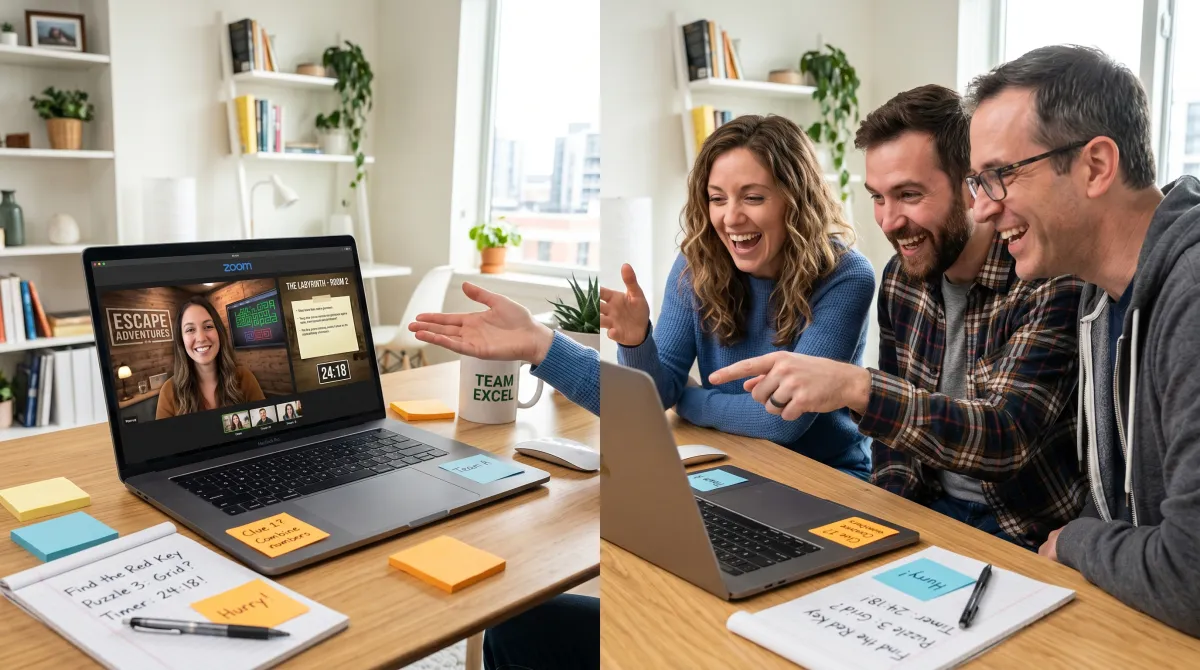
3. Virtual escape room
A host runs a remote room over video while the team directs them through puzzles. Perfect for distributed teams, and it removes travel cost entirely. The catch: a weak host kills it, so vet the facilitator first.
4. DIY office escape kit
Printable puzzle packs you set up in a meeting room. Cheap, controllable, and ideal when budget is tight. You become the game master, which means you watch the team instead of competing, a quiet advantage for the debrief.
5. Outdoor city quest
A GPS or app-led puzzle trail through a neighbourhood. Good for larger groups split into squads, with a natural leaderboard. Weather and walking pace are the obvious risks.
6. Tech-themed room for technical teams
Cipher, logic, and systems-style puzzles land better with engineers than a generic pirate room. If you run a dev or ops group, lean into formats built for technical problem-solving so the challenge feels native, not gimmicky.
7. Competitive parallel rooms
Two identical rooms, two squads, same clock. The rivalry sharpens focus and surfaces leadership fast. Use it only with teams secure enough that losing will not sting for a week.
If you are choosing between these, start with the format that lowers friction for your group. Remote teams default to virtual. Tight-budget teams default to DIY. Everyone else gets more from a commercial room with a strong narrative.
How to Run It So It Actually Works
The booking is the easy part. The value lives in how you frame, group, and debrief the session. Get these three right and a mediocre room still delivers.
| Element | Do this | Avoid this |
|---|---|---|
| Group size | 4-6 per room | Cramming 10 in for cost |
| Mix | Blend seniority and function | Manager-only or intern-only squads |
| Framing | Set a communication goal upfront | "Just go have fun" with no purpose |
| Debrief | 20 minutes, structured questions | Skipping straight to drinks |
| Follow-up | Tie lessons to real workflows | One-and-done novelty |
Build the right groups
Mixed-seniority, cross-function squads reveal the most. You learn whether a junior will challenge a director's wrong guess, and whether the director will listen. Peer-only groups are comfortable but tell you less.
Resist the urge to stack your strongest puzzlers together. A balanced squad surfaces more useful behaviour than a fast one. The goal is insight into the team, not a record time on the leaderboard.
Run a real debrief
Block 20 minutes after. Ask who took charge, who got ignored, where information stalled, and what they would do differently on Monday. This is where escape room team building activities convert into lasting behaviour change.
Keep the questions concrete and time-boxed. Vague prompts like "how did that feel" drift into small talk. Specific prompts tied to moments in the room keep people honest and the lessons sticky.
What to watch while they play
Stand back and track three things. Who narrates clues out loud versus who solves silently. How fast the group abandons a dead-end. Whether anyone gets stuck holding information nobody asks for.
Those three patterns predict more about your day-to-day than any personality test. The silent solver is your siloed expert. The group that clings to a dead puzzle is the team that will not kill a failing project.
A Quick Example From a Real Session
Consider a support team working through a heist room that stalls for fifteen minutes on a lock. The answer is on a card a junior has read aloud twice. Nobody acknowledges her, so she stops repeating it.
That single moment was the whole debrief. We did not need a workshop on inclusive meetings. The room had already shown the team exactly how good information dies when the speaker is low in the room's pecking order.
The fix was small and specific: one person owns repeating back what they heard before the group moves on. Two months later that habit had migrated into their standups, which is the entire point of doing this.
Escape Room Team Building Activities on Any Budget
You do not need a premium venue to get the communication payoff. Match the format to what you have to spend and the room still does its job.
- Under $20/person: printable DIY kit in your own meeting room.
- $25-40/person: hosted virtual room for remote or hybrid teams.
- $30-45/person: standard in-person commercial room.
- $50+/person: premium themed or competitive parallel rooms.
The cheaper end is not the weaker end. A DIY kit you control often beats a flashy venue, because you set the difficulty and you get to watch instead of play. Spend on the venue only when the experience itself is the morale goal.
Rotate escape rooms with quieter formats too. A full booking is overkill for every quarter, so keep a few low-cost alternatives in the bench for the months when a light touch is enough.
Common Mistakes Managers Make
The room rarely fails. The setup does. These are the most common errors from well-meaning managers planning team activities for the first time.
Booking one giant room for the whole department is the classic. Twelve people in a six-person puzzle means most spectate, and spectators learn nothing about their own communication.
Skipping the debrief is the second. Without it, the day is entertainment, not development. The puzzles fade by Friday and no workflow changes.
The third is treating it as morale glitter instead of insight. A thoughtful session feeds directly into how you run the day-to-day workplace, from meeting hygiene to how blockers get raised.
The fourth is forcing it. If you have someone with claustrophobia or real anxiety about being timed and locked, give them the game-master seat or a virtual format. A coerced teammate learns nothing useful and remembers the resentment, not the lesson.
Frequently Asked Questions
What are escape room team building activities?
They are timed, puzzle-based challenges where a small team must share clues, delegate, and make decisions together to escape a themed room within roughly an hour. They are used to surface and improve real communication patterns.
How many people should be in one escape room?
Four to six is the sweet spot. Below four lacks energy, above eight leaves people idle. Split larger teams into parallel squads rather than overloading a single room.
Do escape rooms actually improve teamwork?
The room itself is a catalyst, not the cure. The improvement comes from a structured 20-minute debrief that ties what happened in the room to how the team communicates at work.
What is the best escape room theme for work teams?
Match the theme to the team. Analytical groups enjoy mystery and cipher rooms, while technical teams respond better to logic and systems-style puzzles than generic adventure settings.
Can escape room team building work remotely?
Yes. Hosted virtual escape rooms run over video and work well for distributed teams. The host quality matters most, so vet the facilitator before booking.