Business Concepts
Management Information Systems (2026): How the Pieces Fit
Management information systems turn CRM, project, and workforce data into decisions you can act on. See how the pieces actually fit together.

Management information systems turn scattered business data into decisions someone can actually act on. If you have ever pulled a sales report from Salesforce, checked a project timeline in Asana, or logged a ticket in Jira, you were using one. The concept sounds academic, but it describes tools most companies already run every day.
Quick answer
A management information system (MIS) combines people, software, and data to turn daily business activity into reports managers can act on. In practice, it is rarely one program: think CRM software like Salesforce, project tools like Asana or Jira, plus a reporting layer that pulls those numbers into one view.
Key takeaways
- An MIS is a system, not a single app: people, hardware, software, data, and procedures working together.
- Most companies already run pieces of an MIS through CRM, project management, and workforce management software.
- The classic pyramid runs from transaction systems at the bottom to executive dashboards at the top.
- Choosing the right MIS setup depends on company size, not on chasing the newest platform.
- Supply chain management is one of the most data heavy branches of business management information systems.
What Is Management Information Systems?
Management information systems sit at the intersection of business management and computer science. The field studies how organizations collect data from daily operations, process it, and turn it into information that supports decisions, from a weekly staffing tweak to a multi million dollar expansion.
Business school curricula built around this idea typically break it into five components: people, hardware, software, data, and procedures. That framework comes from textbooks like Laudon and Laudon's Management Information Systems, a standard business school text for more than two decades.
For a deeper academic definition, Wikipedia's entry on management information systems traces the term back to 1960s corporate mainframes, long before anyone called it software.
Most professionals who design or run these systems study business management or a business management degree with an information systems concentration. The coursework blends accounting, operations, and enough programming to speak the same language as the engineers building the actual software.
It is one of the core business concepts every operator eventually runs into, whether they studied it formally or picked it up by fixing broken spreadsheets at 11pm.
Management Information Systems Explained
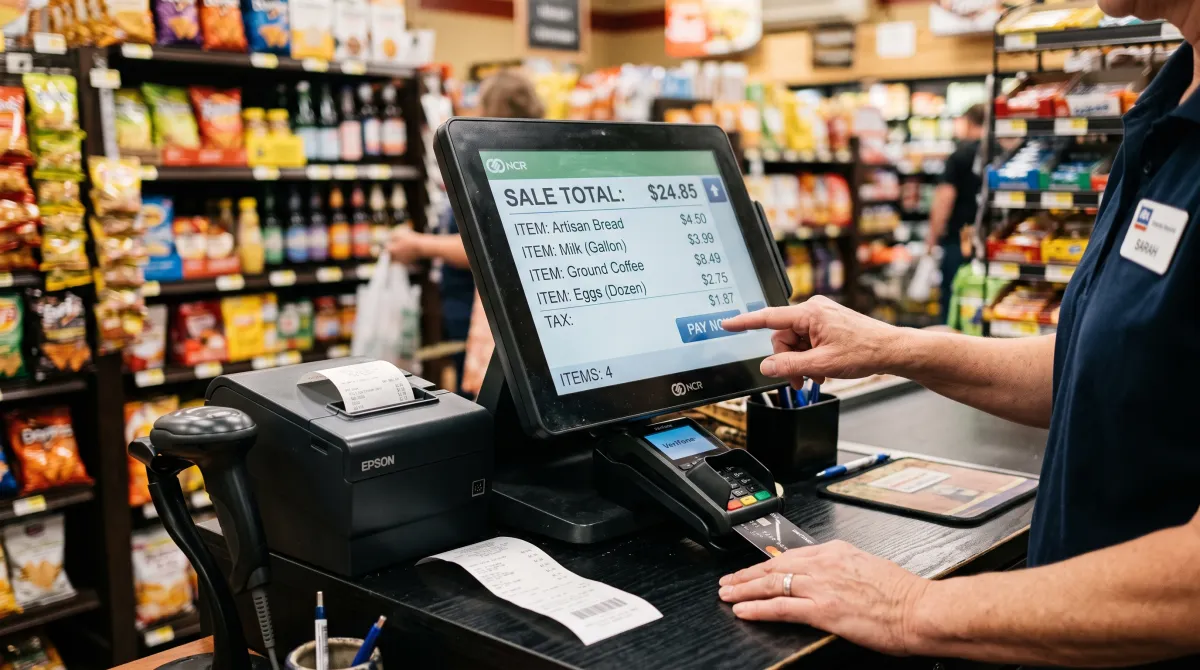
At the bottom of the classic pyramid sits the transaction processing system: the cash register at a retail store, the payroll run, the point of sale terminal that records a sale. This layer never stops. It just captures what happened.
Different roles live at different layers. Frontline staff generate the transaction data, middle managers consume the weekly reports, and department heads run the decision support scenarios before asking finance for budget.
One level up is the reporting layer people usually mean when they say MIS: scheduled summaries that turn thousands of transactions into a weekly sales report or a monthly expense sheet a department head can actually read.
Above that sits decision support: what if models, resource management dashboards, and scenario tools that help an operations manager decide whether adding a third shift pays for itself.
At the top, executive support systems strip everything down to the handful of numbers a CEO checks before a board meeting: revenue, churn, and cash runway.
Some of these layers shift with reintermediation, when a new software layer inserts itself between a company and its suppliers or customers and changes what the MIS needs to track.
Companies that skip layers, jumping straight from spreadsheets to executive dashboards without ever fixing the transaction layer, run into the same risks that come with rushing any new technology: polished reports built on dirty data.
Management Information Systems Examples
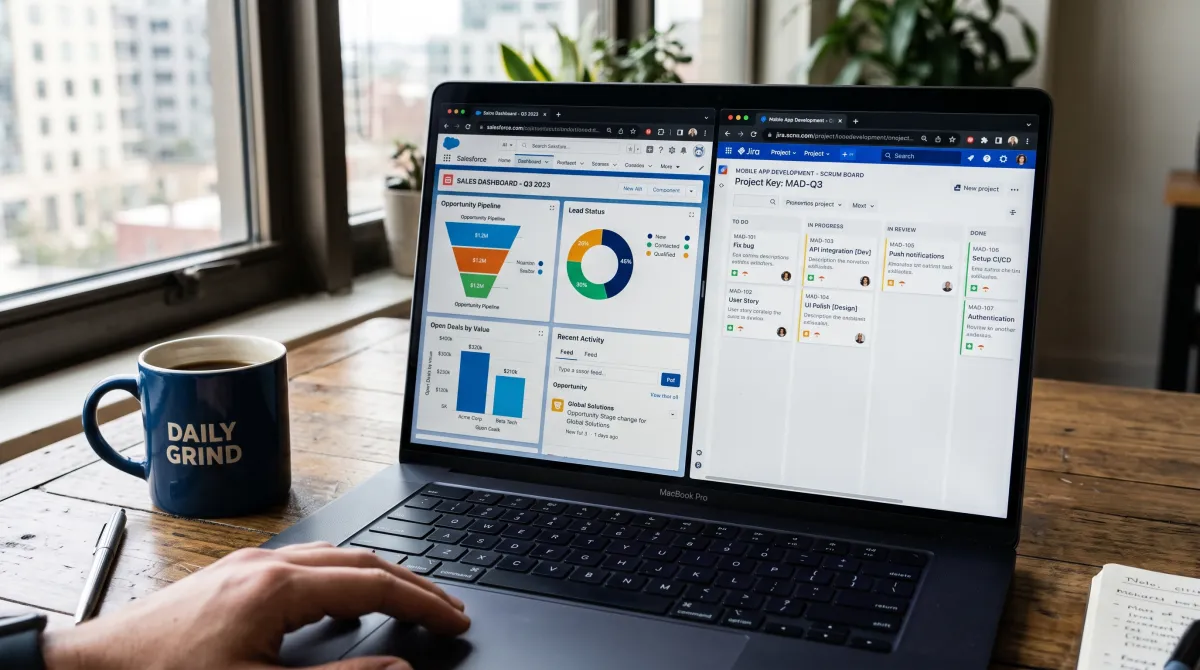
The easiest way to see management information systems in action is to look at what a mid size company actually has open in its browser tabs on a Tuesday.
Among CRM systems Salesforce remains the default choice, since it captures the deals and customer history that feed everything else in the stack.
| Business function | Example tool | What it feeds into the MIS |
|---|---|---|
| Sales and customer data | CRM systems like Salesforce | Pipeline reports, revenue forecasts |
| Project and task tracking | Asana project management, Trello project management, Jira project management | Team workload and delivery timelines |
| IT and internal support | Jira service management | Ticket volume, response time dashboards |
| Staff scheduling and payroll | Workforce management software | Labor cost and overtime reports |
| Property and community operations | Software used by HOA management companies | Dues collection, maintenance requests |
| Investment and asset oversight | Firms like Wellington Management | Portfolio performance reporting |
Notice the pattern. Each tool captures one slice of the business, and the actual management information system is however those slices get stitched into a single report someone reads before making a call. Swap out any single tool for a competitor and the underlying MIS concept barely changes, only the vendor logo does.
Atlassian bought Trello for 425 million dollars in 2017, folding it into the same company behind Jira. That is why a business tracking work in Trello and running support tickets in Jira service management is really feeding two products from one vendor into its MIS.
That kind of consolidation is common on the CRM side too. IDC's worldwide CRM applications tracker has ranked Salesforce the global market share leader for more than a decade, a streak the company reiterates in its own investor materials every year.
How to Apply Management Information Systems
A five person startup does not need a management information system. A shared spreadsheet and a group chat cover most of what matters, and adding software here just adds overhead nobody has time to maintain. The goal at this stage is speed, not structure.
Once a company hits roughly ten to fifty employees, a project management tool plus a basic CRM usually becomes the first real MIS layer. This is where Asana, Trello, or a lightweight Salesforce setup starts paying for itself.
Employees stuck manually reconciling three disconnected spreadsheets every Friday are often quietly set up to fail by processes nobody fixed, not by their own performance.
Between fifty and five hundred employees, dedicated resource management and workforce management software usually joins the stack, along with a payroll integration that stops finance from re-typing numbers by hand.
Past five hundred employees, most companies build or buy a proper data warehouse and business intelligence layer, with a small team whose entire job is maintaining the management information system itself.
A management information system is only as good as the layer nobody wants to fix: the transaction data at the bottom.
Management Information Systems FAQ
What is supply chain management?
Supply chain management is the coordination of everything involved in getting a product from raw material to the customer: sourcing, manufacturing, warehousing, and delivery. It is one of the most data intensive branches of business management information systems because it depends on real time visibility across multiple companies at once. Wikipedia's overview of supply chain management covers the field's history in more depth.
What are examples of supply chain management?
Examples include a retailer forecasting demand before the holiday season, a manufacturer tracking raw material shipments from multiple suppliers, and a grocery chain routing perishable goods through regional warehouses to cut spoilage.
Why is supply chain management important?
Supply chain management matters because a delay or shortage at any single link, a late shipment, a stockout, a customs hold, ripples forward and shows up as lost revenue or frustrated customers days or weeks later.
How does supply chain management work?
It works by connecting planning, sourcing, production, and delivery data into one system, so a shortage in raw materials shows up as a delivery date warning before a customer ever notices, rather than after.
What point of sale systems work well for a small business?
Small businesses generally do best with point of sale systems that plug directly into their accounting and inventory software rather than standalone registers, since that connection is what turns a sale into usable management information instead of just a receipt.