Management
IT Outage Lessons: Business Continuity Planning Guide
United Airlines' technology outage showed how a legacy system fails twice in a year. See what it teaches about business continuity planning.
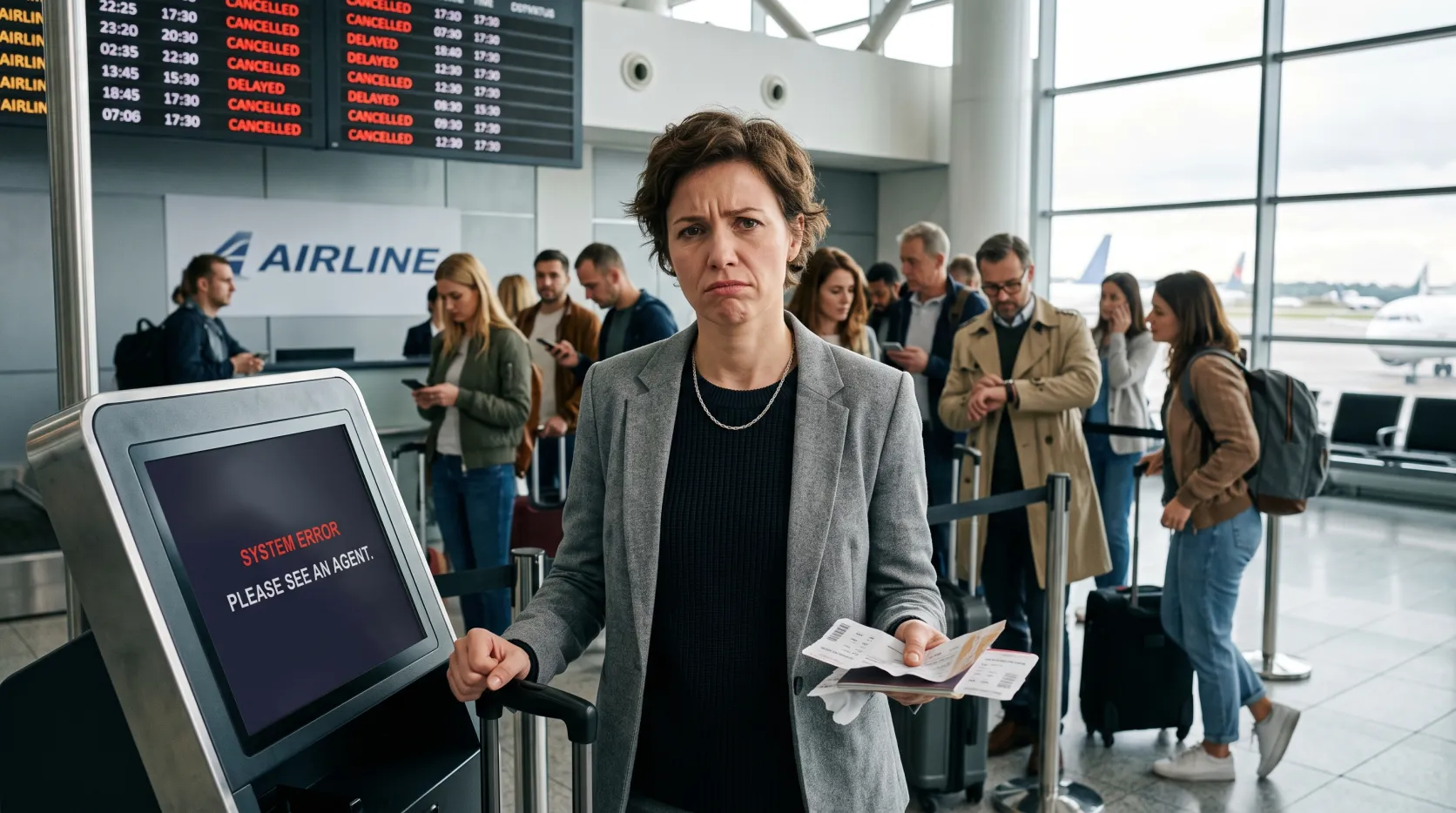
On Saturday, July 18, 2026, gate agents at Newark, Chicago O'Hare and San Francisco pulled out paper boarding passes and started checking in passengers by hand. The United Airlines technology outage had just knocked out the reservation system behind check-in, boarding and bag drop nationwide. For roughly 75 minutes, one of the largest carriers in the country ran on manual workarounds.
Quick answer
The United Airlines technology outage on July 18, 2026 was a roughly 75-minute failure in the airline's legacy SHARES reservation system, which handles check-in, boarding and bag drop. It hit major hubs including Newark and Chicago O'Hare and forced staff back to manual processes, though no flights already in the air were delayed. The lesson for any business: a legacy system can fail again even after a planned modernization effort.
Key takeaways
- A fault in United's SHARES reservation system halted check-in, boarding and bag drop at major hubs for about 75 minutes on July 18, 2026.
- The same system had gone through a planned, rehearsed migration to cloud infrastructure just five months earlier, in February 2026, and still failed.
- Ground operations, not flights already in progress, took the full hit: a blind spot many continuity plans underweight.
- United's fast public statement helped contain reputational damage even before the root cause was fixed.
- Manual fallback procedures, like handwritten boarding passes, kept some operations moving during the outage.
What Happened in the United Airlines Technology Outage
The first reports came in around 7:40 a.m. Eastern. By 8:23 a.m., Down Detector had logged more than 430 complaints from travelers stuck at check-in counters and gates.
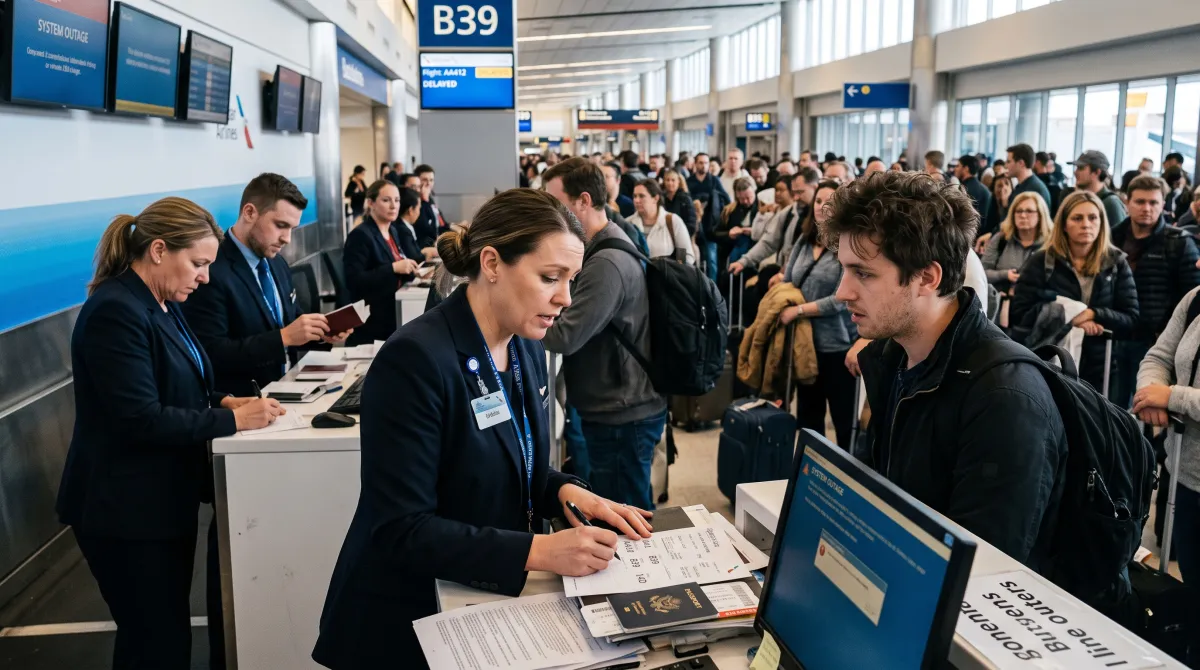
United Airlines confirmed the cause: a fault in SHARES, the reservation platform that processes check-in, prints boarding passes and coordinates bag drop. Contact centers went down too, so travelers calling for help faced long holds.
Airports from Washington Dulles and Newark to Houston's Bush Airport and cities across the country felt the impact. Staff at some locations switched to manual check-in to keep lines moving.
The outage lasted about an hour and fifteen minutes. Flights already in the air were never affected; the failure was strictly a ground-operations problem. By early afternoon United said operations were back to normal, but the pattern it exposed is one every management team should study before a similar failure hits their own systems.
The SHARES System: A Legacy Backbone That Keeps Breaking
SHARES is a legacy system, built long before cloud infrastructure was the default and running as United's reservation backbone for years. Modernizing a platform that touches every check-in counter and gate is a slow, careful project, not a weekend sprint.
In February 2026, United executed exactly that kind of careful project. Over an overnight window, the airline moved SHARES data from a data center in North Carolina to cloud infrastructure in Chicago. The team rehearsed the migration in advance and paused bookings for about three and a half hours, canceling roughly 600 flights in the process.
That planned cutover went smoothly. Five months later, the same system failed anyway, this time with no warning and no rehearsal. It was also United's second major technology disruption in about a year, after a separate outage grounded departures in August 2025.
| Detail | February 2026 migration | July 2026 outage |
|---|---|---|
| Type | Planned, scheduled maintenance | Unplanned failure |
| Duration | About 3.5 hours overnight | About 75 minutes, mid-morning |
| Flights affected | ~600 canceled in advance | None canceled; ground delays only |
| Preparation | Rehearsed migration, advance notice | No warning |
| Root system | SHARES reservation platform | SHARES reservation platform |
Why Ground Operations Are the Blind Spot in Continuity Planning
Most continuity plans focus on the dramatic scenario: a plant fire, a data breach, a full network shutdown. Fewer plans war-game what happens when a single reservation or check-in system goes dark while everything else keeps running.
That is exactly what happened on July 18. Aircraft, pilots and air traffic control were unaffected; the failure sat entirely in ground operations: check-in kiosks, boarding scanners, bag tags and contact centers. Those are the systems that touch customers first, and they are often the last ones covered in a disaster recovery plan.
Any business with a customer-facing operations layer, retail checkout, appointment booking, order fulfillment, has the same exposure. The core product can be fine while the system that delivers it to the customer fails completely.
A system does not have to be down everywhere to shut a business down somewhere.
Crisis Communication Lessons From United's Response
United posted a public update within hours, acknowledging the outage and confirming operations were returning to normal. The statement did not explain the root cause in detail, but it was fast, clear and visible on the channels travelers were already checking.
That speed mattered more than a polished explanation. In a crisis, silence reads as loss of control even when a team is actually making progress behind the scenes. Leaders who own a collaborative decision-making process ahead of time can approve and publish that first statement in minutes, not hours.
Manual fallback also did real work here. Gate agents who could still check in passengers by hand kept some flights on schedule while engineers worked the fix. That kind of fallback only works when a team already practices deliberate time management around risk reviews, instead of improvising after the fact.
Building a Business Continuity Plan That Survives Legacy System Failure
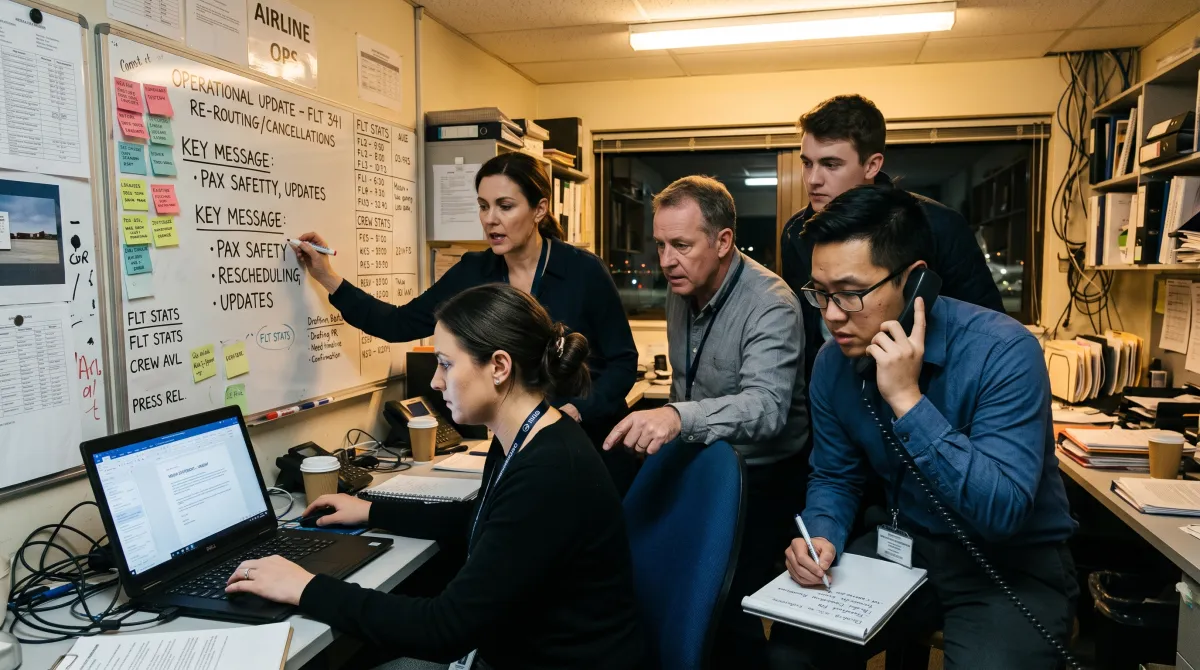
Four practices separate teams that recover fast from teams that freeze:
- Map the ground layer, not just the core system. List every customer-facing process that depends on a single platform: check-in, checkout, scheduling, support. Treat each one as its own point of failure.
- Test unplanned failure, not just planned maintenance. A rehearsed migration proves a team can execute a plan. It does not prove the system survives an unannounced fault five months later.
- Keep a manual fallback current. Paper processes, offline checklists and trained staff are not old-fashioned, they are the layer that keeps revenue moving when software cannot.
- Pre-approve the first public statement. Draft the structure of a crisis update in advance so a clear decision-making process can get it published within the first hour.
None of this requires predicting the exact failure. It requires accepting that a legacy system a business has already modernized once can still fail again, and building the response muscle for that reality now. The FEMA business continuity guidance at Ready.gov recommends exactly this kind of unplanned-failure testing, not just rehearsed maintenance windows.
Leaders who treat this kind of event as a one-off news story miss the pattern. The conceptual skills that let a manager see a legacy dependency as a systemic risk, not an IT department problem, are what separate teams that adapt fast from teams that scramble every time.
Frequently Asked Questions
Did United's February 2026 system migration prevent the July outage?
No. The February 2026 migration moved United's SHARES reservation system to cloud infrastructure and was executed successfully, but it did not eliminate the underlying fragility. The same system failed again five months later, on July 18, 2026, this time without warning.
Why did United's public statement matter if it did not explain the cause?
Fast, visible communication contained the reputational damage even before engineers understood the root cause. United acknowledged the outage and confirmed a return to normal operations within hours, which kept the story from spiraling on its own.
Did the outage affect flights that were already in the air?
No. The failure was limited to ground operations, including check-in, bag drop, boarding and contact centers. No flights already airborne experienced delays as a result of the SHARES outage.
Does rehearsing a system migration guarantee it won't fail later?
No. Rehearsing a planned migration reduces execution risk during the cutover itself, but it does not remove deeper systemic fragility in a legacy platform. Contingency testing should also cover unplanned failure scenarios, not only the maintenance window.