Workplace & Career
Is Natural Gas Distribution A Good Career Path (2026)
Is natural gas distribution a good career path? See real pay signals, career development strategies, and the skills that decide who gets promoted fastest.

Is natural gas distribution a good career path? For people who like hands-on technical work, steady demand, and a clear ladder from entry-level to supervisor, the honest answer is usually yes.
The industry keeps homes and businesses heated and running, which means the work does not disappear in a downturn the way some office jobs do. This guide breaks down the real roles, the pay signals, and the workplace skills that decide whether you rise quickly or stall out.
Quick answer
Natural gas distribution is generally a good career path for people who want stable, essential-service work with strong on-the-job training and a realistic path from technician to supervisor. Pay tends to sit above the median for roles that do not require a four-year degree, though physical demands and safety requirements are real trade-offs to weigh.
Key takeaways
- Demand stays steady because gas utilities are essential infrastructure, not discretionary spending.
- Most entry roles train on the job, so a four-year degree is not required to start.
- Technicians, operators, and engineers each follow a different pay and promotion track.
- Career development in this field rewards certifications and safety record over job-hopping.
- The biggest risk is physical wear and shift work, not job insecurity.
Is Natural Gas Distribution a Good Career Path?
Natural gas distribution covers the utilities and contractors that move gas from pipelines into homes and businesses, then maintain that network for decades. It is essential infrastructure, which is why hiring stays relatively stable through recessions.
That stability is the main argument for treating it as a good career path. Utilities plan workforce needs years in advance, and a large share of the current workforce is nearing retirement, which keeps entry-level hiring active in most regions.
The trade-off is physical demand. Field roles involve outdoor work, on-call rotations, and safety-critical procedures, so this path suits people who want structure and do not mind working with their hands.
Natural Gas Distribution as a Career Path, Explained
Most people enter through a technician or operator role, then move toward supervisory, engineering, or compliance tracks as they build experience. The path is more linear than in many white-collar fields, which makes planning easier.

| Role | Typical entry point | Growth direction |
|---|---|---|
| Distribution technician | High school diploma plus apprenticeship | Senior technician, crew lead |
| Gas system operator | Technical training or associate degree | Control room supervisor |
| Pipeline or utility engineer | Engineering degree | Project engineer, engineering manager |
| Safety and compliance specialist | Field experience plus certification | Compliance manager |
| Customer service and billing | Entry-level, no field work | Operations coordinator |
According to the U.S. Bureau of Labor Statistics Occupational Outlook Handbook, utility and pipeline roles tend to pay above the median for jobs that do not require a bachelor's degree, largely because of the safety training and certification involved.
Career Development Definition and Meaning in This Field
The career development definition that matters here is simple: the ongoing process of building skills, credentials, and experience so you can move into roles with more responsibility and pay. It is not a single training day, it is a multi-year process.
The career development meaning shifts slightly by industry. In office jobs it often centers on soft skills and networking. In natural gas distribution, it centers on certifications, safety record, and hands-on competence that a supervisor can verify.
In utility work, your career development record is your safety record and your certifications, not your resume buzzwords.
Natural Gas Distribution Career Path Examples
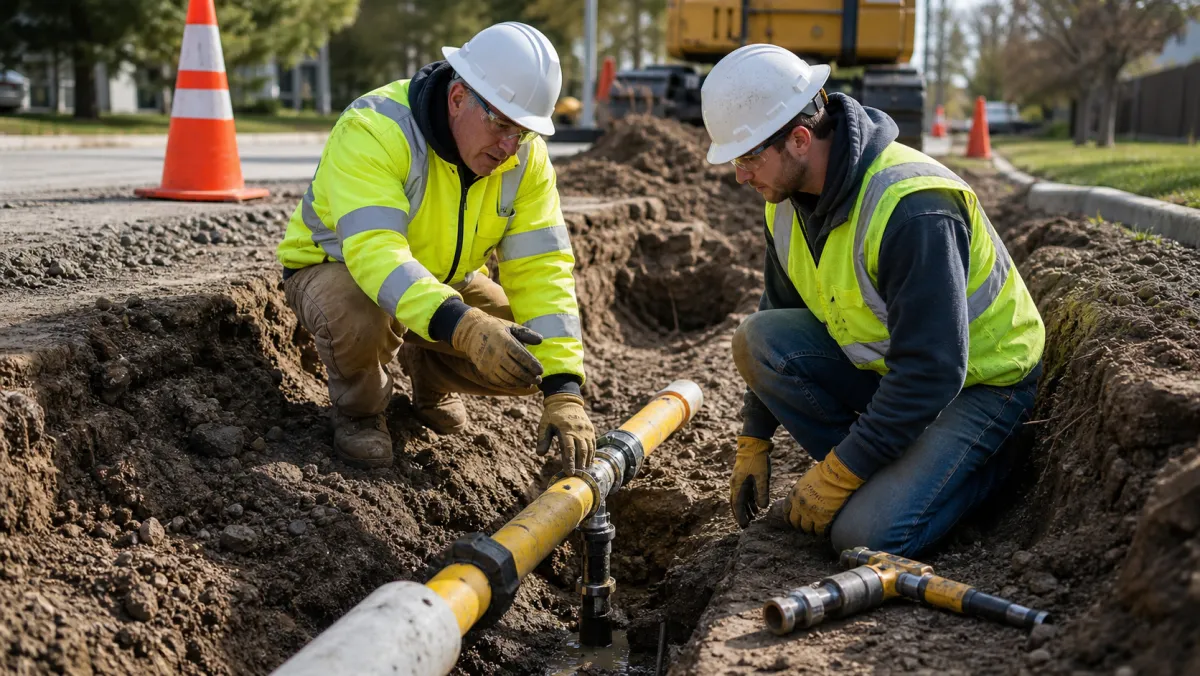
A distribution technician who starts by locating and repairing gas lines can move into crew lead within a few years, then into a supervisor role once they hold the required safety certifications.
A gas system operator who starts monitoring pressure and flow from a control room can move toward shift supervisor, then operations manager, as they prove they can handle emergency response under pressure.
An engineer hired to design pipeline replacement projects can move from project engineer to engineering manager within five to ten years, especially if they build a track record on regulatory compliance work.
Career Development Skills and Motivators in This Industry
The career development skills that matter most here are technical: reading schematics, operating pressure control equipment, and following lockout and tagout procedures without error. Communication matters too, especially during emergency calls.
The career motivators that keep people in this field long term are usually job security, decent pay without a four-year degree, and the satisfaction of keeping essential service running. Ambition for a corner office is rarely the driver.
Career Development Strategies, Types, and Best Practices
There are two broad types of career development in this field: vertical, moving up into supervisory or engineering roles, and lateral, becoming a specialist in areas like leak detection or regulatory compliance. Both are valid strategies.
The benefits of career development show up fastest when you stack certifications early. Utilities often pay for training, so the best career development strategies here involve saying yes to every certification offered in your first few years.
Some career development best practices apply regardless of industry: track every certification, ask for stretch assignments, and document safety wins ahead of review time. The same career development techniques used in office settings, like requesting structured feedback and shadowing a supervisor, translate directly to the field.
Career development in the workplace also depends on relationships. The same signals that tell you someone is ready for a promotion in any office, like being handed harder assignments and more visibility, apply on a gas crew too. If you want to read those cues, our guide to signs your boss wants to promote you breaks down the pattern.
How to Apply These Career Development Strategies
Start by asking your employer directly what certifications lead to the next pay grade, since utilities usually have a defined ladder even if it is not advertised. Write the answer down and treat it as your plan.
When you interview for advancement, expect career development interview questions about how you have handled a safety incident, a difficult customer, or a scheduling conflict. Concrete examples beat general statements every time.
One of the most common career development mistakes is assuming tenure alone earns a promotion. Crews are close-knit, and the workplace dynamics matter, including how you handle friction with coworkers. If a peer becomes cold after your visibility rises, the patterns in jealous coworker behavior apply just as much on a utility crew as in an office.
Finally, build a reference network early. When you move employers within the industry, a strong answer to in what capacity you know the candidate from a former supervisor can matter more than your resume.
Related guides
Is Natural Gas Distribution a Good Career Path: FAQ
What is career development?
Career development is the ongoing process of building the skills, credentials, and experience needed to move into roles with more responsibility. In natural gas distribution, it usually means stacking certifications and safety experience over several years.
What are examples of career development?
Career development examples in this field include earning a pipeline safety certification, moving from technician to crew lead, or training into a control room operator role. Each step adds a specific, verifiable skill.
Why is career development important?
Career development is important because it is what separates workers who stay at entry-level pay from those who move into supervisory or engineering roles. Without it, tenure alone rarely leads to promotion.
How can you improve your career development?
You can improve career development by asking your employer which certifications unlock the next pay grade, volunteering for cross-training, and keeping a clean safety record, since that record is what supervisors check first.
How does career development work in natural gas distribution?
Career development in natural gas distribution works through structured, employer-paid training: apprenticeships for technicians, certification ladders for operators, and project experience for engineers, with promotions tied to verified competence.