Workplace & Career
Illustrator Quit Unexpectedly (2026): First 48 Hours
An illustrator quit unexpectedly? Secure files first, tell the client within 24 hours, and fill the gap fast. See the exact first 48 hours playbook here.

Illustrator quit unexpectedly is the scenario every creative manager dreads: an artist leaves a project or role with no notice, often mid-deliverable, leaving files, deadlines, and client relationships in limbo.
No handoff call, just a resignation email and a half-finished project sitting in a shared drive. It happens more often than studios and small business owners admit, and it always lands at the worst possible moment: mid-sprint, mid-launch, or mid-client-deadline.
This guide walks through what to do in the first 48 hours, how to keep the client relationship intact, and how to build a team that survives the next sudden exit, a pattern that shows up across most areas of workplace management.
Quick answer
When an illustrator quits unexpectedly, secure the files and accounts first, then triage active deliverables by deadline. Tell the client within 24 hours with a revised timeline, not an apology. Fill the gap with a freelancer or an internal promotion before you open a slow full-time search.
Key takeaways
- Lock down shared drives, brand assets, and login credentials within the first hour, before offboarding is even official.
- Most illustrators who quit unexpectedly cite burnout, scope creep, or unpaid overtime, not a single dramatic incident.
- A freelance illustrator can usually fill an urgent gap in three to seven days; a full-time hire takes 30 to 60+ days.
- Clients forgive a missed illustrator far more easily than a missed deadline explanation, so communicate early.
- Written contracts with kill fees and notice clauses prevent most of the financial damage next time.
What Is an "Illustrator Quit Unexpectedly" Situation?
Illustrator quit unexpectedly describes any case where an in-house artist, staff designer, or freelance illustrator leaves a role or project with little or no warning, often mid-deliverable. It differs from a planned departure because there is no transition period or handoff documentation.
For agencies, comic studios, and marketing teams, this usually means a shared drive full of half-layered files, a client waiting on concept art, and no clear owner for the next milestone.
Why Illustrators Quit Unexpectedly: The Real Reasons Explained
Illustrators rarely quit over one bad meeting. Most walk away after months of scope creep, unpaid revisions, or a workload that quietly doubled without a rate or title change.
Freelancers make up a large and growing share of the illustration industry. A freelancer is a self-employed worker who takes on jobs for multiple clients instead of one employer, and that arrangement makes leaving nearly frictionless.
More than one in three U.S. workers now freelance in some capacity, according to Wikipedia's overview of freelance work. Walking off a project costs them a client, not a paycheck.
Staff illustrators quit for the same reasons any employee does. The Bureau of Labor Statistics tracks voluntary resignations every month through its Job Openings and Labor Turnover Survey, and the national quits rate has hovered near 2 percent of total employment through most of the past few years, per BLS JOLTS data.
That same JOLTS series shows total nonfarm quits topping 3 million per month through most of 2023 and 2024, evidence that sudden departures are an economy-wide pattern, not something unique to creative teams.
Creative roles sit inside a broader pattern of workplace turnover that most managers underestimate until it hits their own team, which is why general workplace management habits matter as much as art-department policy.
An illustrator who quits without notice is not being dramatic, they are telling you the notice period stopped feeling worth it.
Your First 48 Hours: How to Handle It When an Illustrator Quits Unexpectedly
Move in this order: secure access, triage deliverables, contact the client, then start sourcing a replacement. Skipping the sequence is how studios lose files and clients in the same week.
- Revoke and re-secure access. Change shared drive, Slack, and brand-asset permissions the same day, even if the exit was amicable.
- Pull every open file. Download layered source files before access changes lock you out of a personal account.
- Triage by deadline. Sort active projects into due this week, due this month, and not started, and staff only the first bucket immediately.
- Call the client within 24 hours. Lead with the revised timeline, not the backstory. Clients forgive delays; they do not forgive silence.
- Loop in a freelancer or promote internally. A vetted freelance illustrator can usually start within three to seven days.
- Document the handoff gap. Note what was missing, such as briefs, references, or brand guides, so the next hire does not repeat the scramble.

Vetting a replacement fast still means vetting properly. Ask how a candidate knows any references they list, since knowing in what capacity you know the candidate tells you whether a reference is a collaborator, a client, or a friend doing a favor.
Your Replacement Options at a Glance
| Option | Speed to Fill | Typical Cost | Best For |
|---|---|---|---|
| Promote a junior team member | 1-3 days | Low (raise, not new salary) | Teams with backup talent already in-house |
| Hire a freelance illustrator | 3-7 days | Medium (project rate) | One-off deliverables and tight deadlines |
| Open a full-time requisition | 30-60+ days | High (salary, benefits, ramp time) | Ongoing, high-volume illustration needs |
| Renegotiate scope with the client | Immediate | None | When no replacement is feasible short term |
Promoting from within is often the fastest fix, but only if the candidate actually wants the bigger role. Watch for the usual signs your boss wants to promote you in reverse: reliability, ownership of tough briefs, and clients who already ask for that junior artist by name.
Illustrator Quit Unexpectedly: Real-World Examples From Studios and Agencies
The pattern repeats across agencies, comic studios, and game studios: one illustrator, one overloaded pipeline, one Friday-afternoon resignation email.
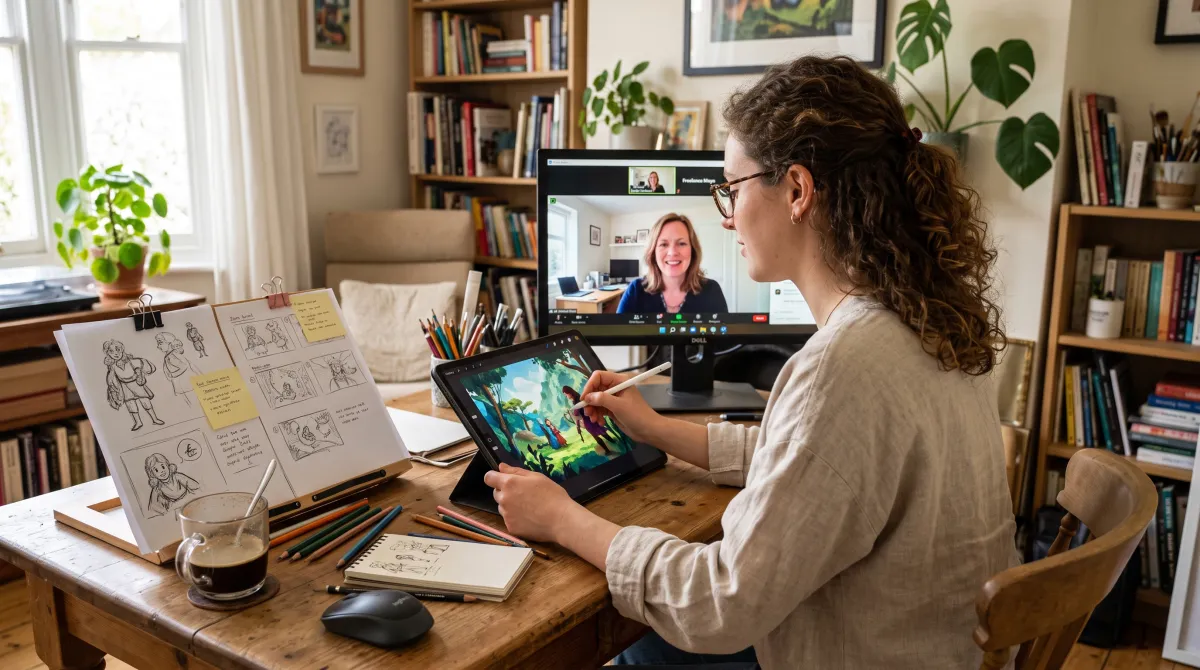
A marketing agency mid-campaign. A contract illustrator finishing a 12-piece ad campaign quit after the client added four unpaid revision rounds. The agency lost six days finding a freelance replacement and extended the deadline by a week.
A webcomic studio between story arcs. A staff artist left without notice after being asked to cover both pencils and colors following a layoff. The studio paused new pages for two weeks and promoted an assistant illustrator to lead.
A game studio during pre-production. A concept artist quit after a scope change tripled the number of character designs due, without adjusting the rate. Production split the backlog across two freelancers instead of replacing one role with one person.
How to Prevent an Illustrator From Quitting Unexpectedly Next Time
Prevention comes down to three contract habits: a notice clause, a kill fee, and a documented handoff checklist signed before work starts, not after someone quits.
Turnover is expensive even when it is planned. SHRM has long estimated that replacing a skilled employee can cost six to nine months of that person's salary once recruiting, ramp-up, and lost productivity are counted.
SHRM's broader benchmarking work also puts the average cost-per-hire in the U.S. at roughly $4,700, a figure that does not include the weeks of lost output while a role sits empty.
Redistributing a departed illustrator's workload also strains the team left behind. Watch for the same jealous coworker signs that show up whenever one person absorbs another's credit, deadlines, or client relationships without a raise.
- Put a 2-4 week notice clause in every freelance and staff contract, with a partial kill fee if it is broken.
- Keep a shared, living brief for every active project so a stand-in illustrator can pick it up in under a day.
- Run a short monthly check-in on workload and scope, not just deadlines, since scope creep is the top quiet trigger.
- Cross-train at least one other person on brand style guides and file organization before you need them.
Illustrator Quit Unexpectedly: FAQ
What should I do first when an illustrator quits unexpectedly?
Secure their file access and shared drives within the first hour, before anything else, so no in-progress work gets locked or lost.
Can a client sue if an illustrator quits mid-project?
Rarely over the illustrator quitting itself; the real risk is the studio or agency missing its own contractual deadline, so a fast revised timeline matters more than legal exposure.
What are the early warning signs an illustrator is about to quit unexpectedly?
Watch for slipping communication, missed check-ins, declined extra projects, and a sudden drop in revision requests, since disengaged illustrators often go quiet before they leave.
Should I ask a freelance illustrator for a kill fee if they quit early?
Only if the contract already includes a kill fee or notice clause; adding one after the fact rarely holds up and mainly damages your reputation with other freelancers.
How do I tell a client their illustrator quit without losing the account?
Call within 24 hours, lead with the revised timeline and your replacement plan, and skip the internal backstory, since clients react to certainty, not explanations.