Workplace & Career
Hostile Architecture: What It Is & Real Examples (2026)
Hostile architecture uses spikes, sloped benches, and leaning bars to block sleeping and loitering in public space. See real examples and alternatives.
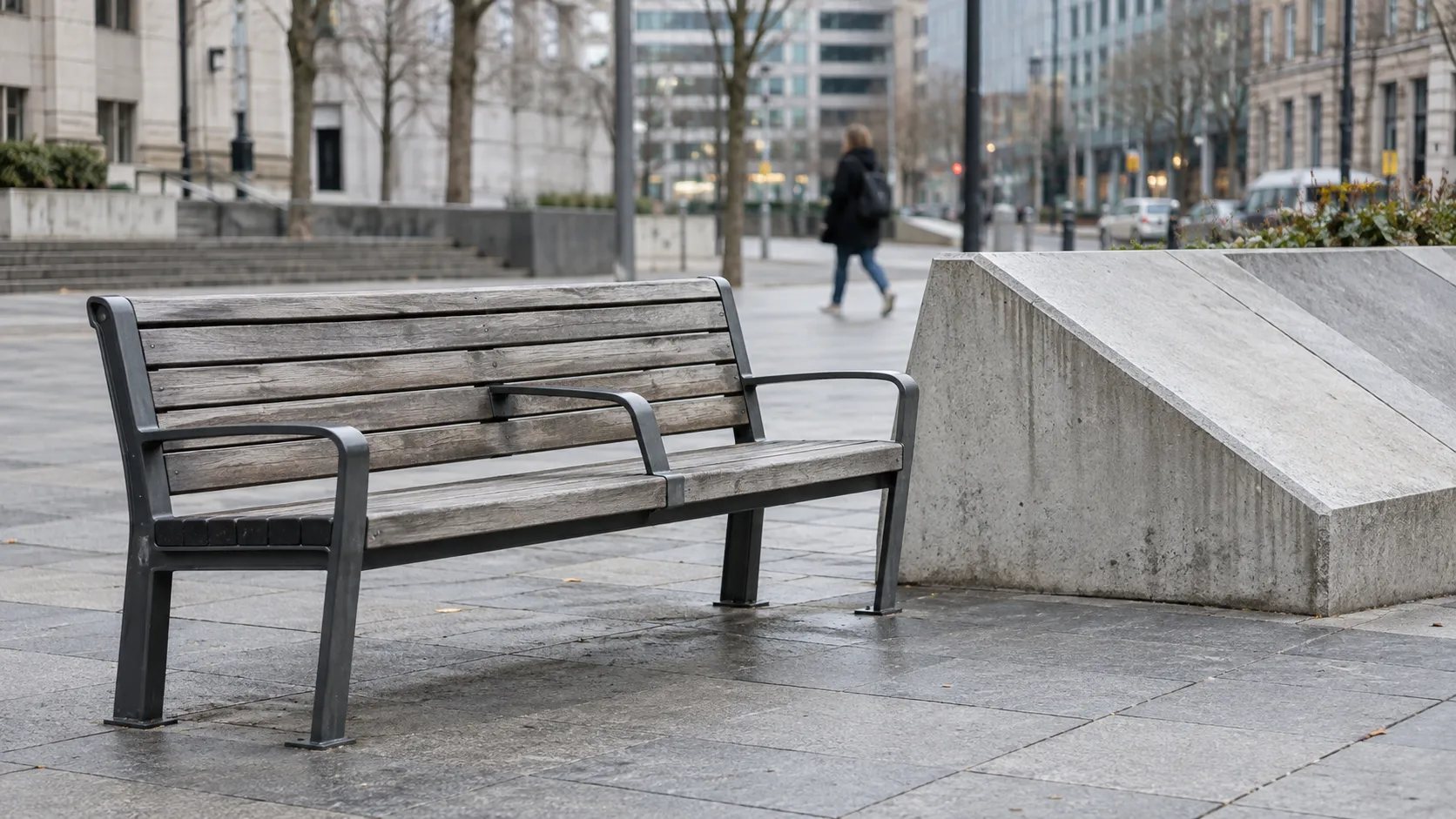
Look under a bridge, on a subway bench, or outside a bank lobby and you'll often find a design choice hiding in plain sight: hostile architecture. It's the spikes, slants, and armrests built into public furniture specifically to stop people from sitting too long, sleeping, or skating.
City planners and property owners use it quietly, rarely announcing the intent on a plaque. Understanding how it works, and why it draws so much criticism, changes how you read every bench, ledge, and doorway you pass.
Quick answer
Hostile architecture is the use of urban design features, like spiked ledges, segmented benches, and sloped surfaces, to restrict specific behaviors in public spaces, most often sleeping, skateboarding, or loitering. It targets unhoused people and skaters more than any other group, and critics argue it treats a social problem as a design nuisance.
Key takeaways
- Hostile architecture (also called defensive or exclusionary design) blocks specific uses of public space, usually sleeping, loitering, or skating.
- Common tools include anti-homeless spikes, segmented armrest benches, sloped ledges, leaning bars, and blue lighting.
- The term went mainstream after anti-homeless spikes in London went viral in June 2014.
- Critics, including philosopher Robert Rosenberger, argue it displaces rather than solves homelessness.
- Alternatives like public restrooms, supportive housing, and inclusive seating address the same behaviors without excluding people.
What Is Hostile Architecture?
Hostile architecture is a design strategy that shapes benches, ledges, sidewalks, and other public fixtures to prevent specific uses, most commonly sleeping, sitting for long periods, skateboarding, or gathering in groups. It works by removing comfort rather than posting a rule.
The term overlaps with "defensive architecture," "exclusionary design," and "unpleasant design." All four describe the same idea: a physical object doing the job a sign or a security guard would otherwise do, without ever stating its purpose out loud.
It shows up in cities, transit systems, and increasingly around corporate buildings and workplace campuses that want to control who lingers near an entrance after hours.
Hostile Architecture Explained
Designers Selena Savic and Gordan Savicic popularized the term "unpleasant design" in a 2013 book and exhibition that catalogued dozens of these interventions across European cities, framing them as a distinct design category rather than isolated accidents.
The term reached a mass audience in June 2014, when anti-homeless spikes installed outside a private residential building in London were photographed by a resident and shared widely online, according to reporting from the BBC and The Guardian. Public backlash forced the property to remove them within days.
Academic attention followed. Georgia Tech philosopher Robert Rosenberger's 2017 book, Callous Objects: Designs Against the Homeless (University of Minnesota Press), documents dozens of North American examples and argues these objects encode judgments about who deserves to rest in public.
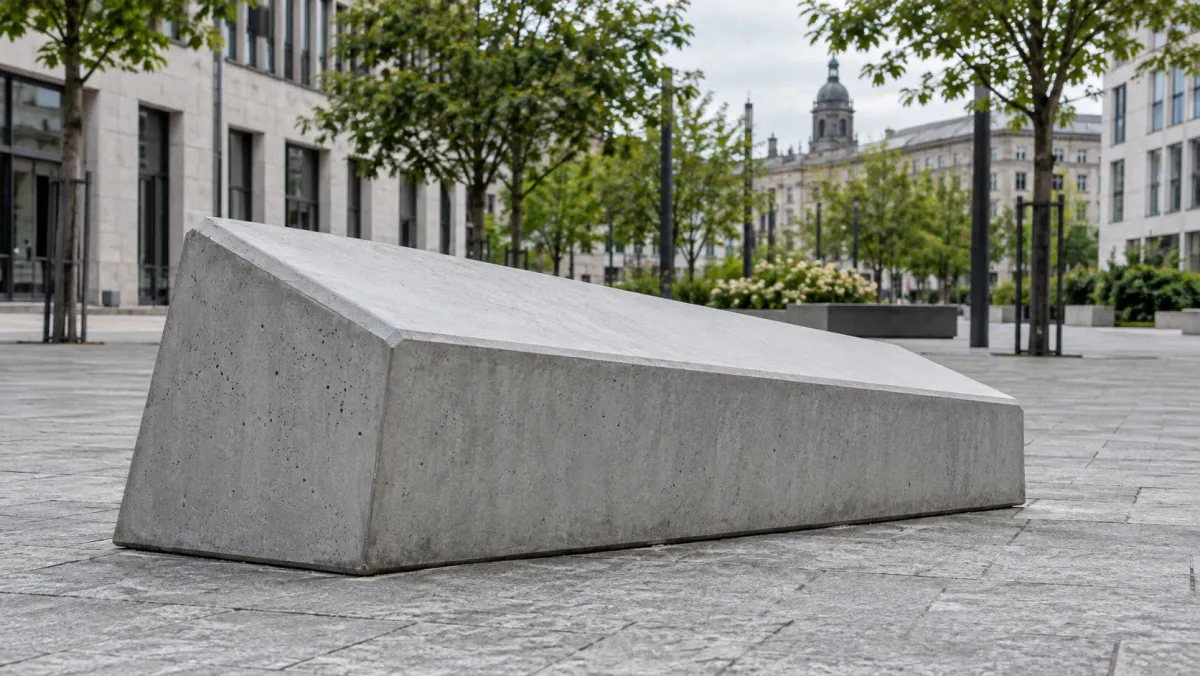
One of the clearest early case studies is London's Camden Bench, installed by Camden Council starting in 2012. Designed by Factory Furniture, its single sloped concrete block has no corners, crevices, or flat surface long enough to lie down on. Wikipedia notes it was built to resist skateboarding, graffiti, theft, and sleeping in one object.
Common Types and Techniques
Hostile architecture takes a handful of recurring forms. Most fall into one of these categories, each aimed at a specific behavior.
Anti-homeless spikes and studs
Metal studs or spikes embedded in flat ledges, doorways, and window sills prevent anyone from sitting or lying down. They're the most visually aggressive version, which is also why they draw the most public criticism.
Segmented and armrest benches
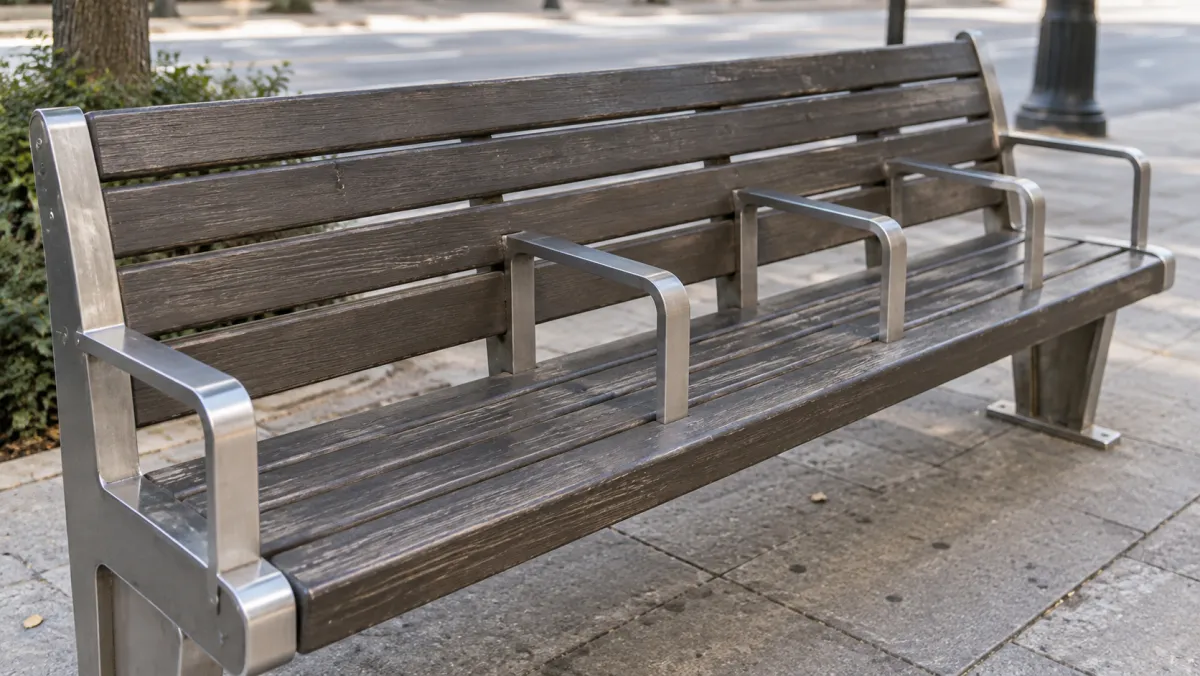
Adding a center armrest, or splitting a bench into individual seats, stops a person from lying across the full length. It looks like ordinary street furniture, which makes it the most common and least noticed form.
Sloped or curved surfaces
Ledges, planters, and low walls built at an angle make it physically uncomfortable to sit or sleep on them for more than a few minutes, without ever needing a "no sitting" sign.
Leaning bars instead of seats
Some transit stations and bus stops replace benches with narrow bars set at hip height. Riders can lean but not sit, which keeps waiting areas moving without inviting anyone to settle in.
Blue lighting and piped sound
Blue-toned lighting in public restrooms and alleys is used because it makes veins harder to find, discouraging intravenous drug use. Looping music or white noise in the same spots aims to make lingering unpleasant.
Boulders, bars, and barriers under bridges
Large rocks, metal cages, and sprinkler systems placed under overpasses and in underused lots target encampments directly, removing the flat, dry ground that made the spot usable for shelter.
Hostile Architecture Examples
These design choices show up worldwide, in cities that otherwise have little in common. The table below groups a few widely reported cases by the behavior they target.
| Example | Location | Behavior it targets |
|---|---|---|
| Camden Bench | London, UK | Sleeping, skating, graffiti, theft |
| Anti-homeless spikes | Residential entrances, various cities | Sleeping, sitting |
| Leaning bars | Transit stations, Tokyo and European cities | Sitting, lingering |
| Bike racks under overpasses | Seattle, US | Camping, encampments |
| Blue restroom lighting | Public restrooms, multiple cities | Intravenous drug use |
| Armrest-divided benches | Parks and transit hubs, worldwide | Sleeping, lying down |
In Seattle, the Department of Transportation installed bike racks under an Interstate 5 overpass in 2017 at a site that had been used as a homeless encampment, a move local outlets like The Stranger and the Seattle Times covered as a clear case of defensive design.
Hostile architecture never announces itself. It just makes one choice, sitting, sleeping, staying, quietly impossible.
How Cities and Businesses Use Hostile Architecture
Most hostile architecture gets added for one of three stated reasons: reducing loitering near entrances, discouraging encampments, or cutting maintenance and liability costs tied to long-term occupation of a space.
Property managers often frame it as a security or cleanliness decision rather than a response to homelessness directly. A retail entrance with spiked ledges, a transit stop with leaning bars, or an office courtyard with segmented seating all follow the same logic: shape the object so the unwanted behavior becomes uncomfortable on its own.
The intent is never printed on a plaque, the same quiet-signal logic behind subtler office cues like signs a boss is already grooming someone for promotion: nobody states it outright, but the environment tells you anyway.
Municipal governments sometimes fold these features into broader public order policy, pairing them with loitering ordinances or camping bans so the physical design reinforces the legal one.
The Ethics and Criticism
The core criticism is simple: hostile architecture displaces people instead of solving the problem underneath. Removing a bench doesn't house anyone, it just pushes the same person to a less visible, often less safe location.
Disability advocates raise a second concern. Armrests and leaning bars that block sleeping also remove seating that older adults and people with mobility limitations rely on to rest, which means the design excludes far more people than it targets.
This kind of unannounced exclusion isn't unique to public furniture. Coworkers read the same silent signals when a jealous coworker starts controlling shared office space or resources, using social pressure instead of concrete and steel to push someone out.
Rosenberger and other critics argue these objects carry a moral message baked into concrete and steel: that unhoused people's presence is the problem to design away, not the housing shortage or lack of shelter beds behind it.
Supporters counter that some interventions, like leaning bars at a busy transit stop, are about throughput and safety rather than excluding anyone specific. The debate usually comes down to intent and context, not the object itself.
Alternatives to Hostile Architecture
Cities that move away from purely defensive design tend to pair fewer restrictions with more infrastructure: public restrooms, day shelters, storage lockers, and supportive housing that address the underlying need instead of the symptom.
Inclusive seating design, benches with full backs and no dividers, plus shaded rest areas, keeps public space usable for everyone, including the elderly, parents with strollers, and workers on a break, not just people passing through quickly.
Some cities now require a social impact review before installing defensive features, forcing planners to weigh who gets excluded before a design goes in, rather than discovering it after public backlash.
Hostile Architecture FAQ
What is another name for hostile architecture?
It's also called defensive architecture, exclusionary design, or unpleasant design, a term popularized by designers Selena Savic and Gordan Savicic in a 2013 book and exhibition of the same name.
Is hostile architecture illegal?
No, in most cities hostile architecture is legal because it's installed on public or private property by the owner or municipality. A few cities have restricted specific features, like anti-homeless spikes, after public backlash, but no broad national ban exists in the US or UK.
Why do cities use hostile architecture?
Cities and property owners use it to reduce loitering, discourage encampments, and lower maintenance or liability costs, often as a cheaper alternative to increased staffing, restrooms, or shelter beds.
What are examples of hostile architecture on benches?
Center armrests that split a bench into individual seats, sloped or curved seating surfaces, and narrow slats spaced to prevent lying down are the most common bench-based examples.
Does hostile architecture actually work?
It reduces the targeted behavior at that specific spot, but research and advocacy groups argue it mostly displaces people to nearby areas rather than reducing homelessness or loitering citywide.