Business Concepts
HOA Management (2026): What Boards Actually Do
HOA management means overseeing an association's budgets, vendors, maintenance, and rules, whether a volunteer board runs it or a hired company does.

Hoa management is the day-to-day and long-term work of running a homeowners association: budgets, vendor contracts, maintenance schedules, and resident communication. Boards that treat it as a business management function, not a volunteer favor, tend to get better results with fewer surprises. The tools have shifted too: many boards now borrow project-tracking software built for offices and software teams, not property managers, to keep capital projects on schedule.
Quick answer
HOA management means overseeing a community association's finances, vendors, maintenance, and rule enforcement, either through a volunteer board, a professional HOA management company, or a hybrid of both. It borrows directly from business management practice, using budgeting discipline and project tracking tools originally built for offices to run community operations.
Key takeaways
- HOA management blends business management skills, budgeting, vendor oversight, compliance, with hands-on property operations.
- Many boards now track maintenance and capital projects using the same tools as software teams: Trello, Asana, and Jira.
- Hiring a professional HOA management company shifts day-to-day resource management off volunteer boards for a monthly per-unit fee.
- A business management degree helps board members and managers read financial statements and negotiate vendor contracts with confidence.
- A documented management information systems setup and workforce management software for on-site staff cut down on disputes and audit headaches.
What Is Hoa Management?
An HOA is a legal entity that owns and maintains shared property inside a community, funded by dues from every homeowner. Hoa management is the practical work of running that entity: setting budgets, hiring vendors, enforcing rules, and keeping records straight.
Board members are usually volunteers, but the job itself is business management without the title. Larger associations often hire a manager who holds a business management degree or a community association credential, because the finance and contract work mirrors running a small company.
Some communities keep management entirely in-house with a volunteer board and a part-time bookkeeper. Others hand the whole function to a professional HOA management company for a monthly per-unit fee. Most fall somewhere in between, with a board that sets policy and a hired manager who executes it.
For boards new to the finance and governance side, it helps to review core business management concepts before diving into association-specific rules. The vocabulary overlaps more than most new board members expect.
The scope is broad by design. It covers the homeowner association structure itself, its bylaws, its reserve fund, and every vendor relationship the community depends on to function.
Hoa Management Explained
Day to day, hoa management covers budgets, reserve studies, vendor contracts, dues collection, architectural rule enforcement, and monthly or quarterly meetings. None of it is glamorous, but skipping any piece shows up fast in deferred maintenance or angry owners.
Larger associations and management companies now rely on management information systems, software that centralizes owner records, maintenance history, and financial data in one dashboard. These systems replace the spreadsheet-and-paper-file approach that used to make audits painful. Most also bundle online dues payment, so collections and expense tracking live in the same platform instead of three separate tools.
Resource management is central too. Staff time, vendor availability, and shared amenities are all finite, so resource management means scheduling landscaping crews, pool staff, and reserve dollars so nothing runs out mid-project.
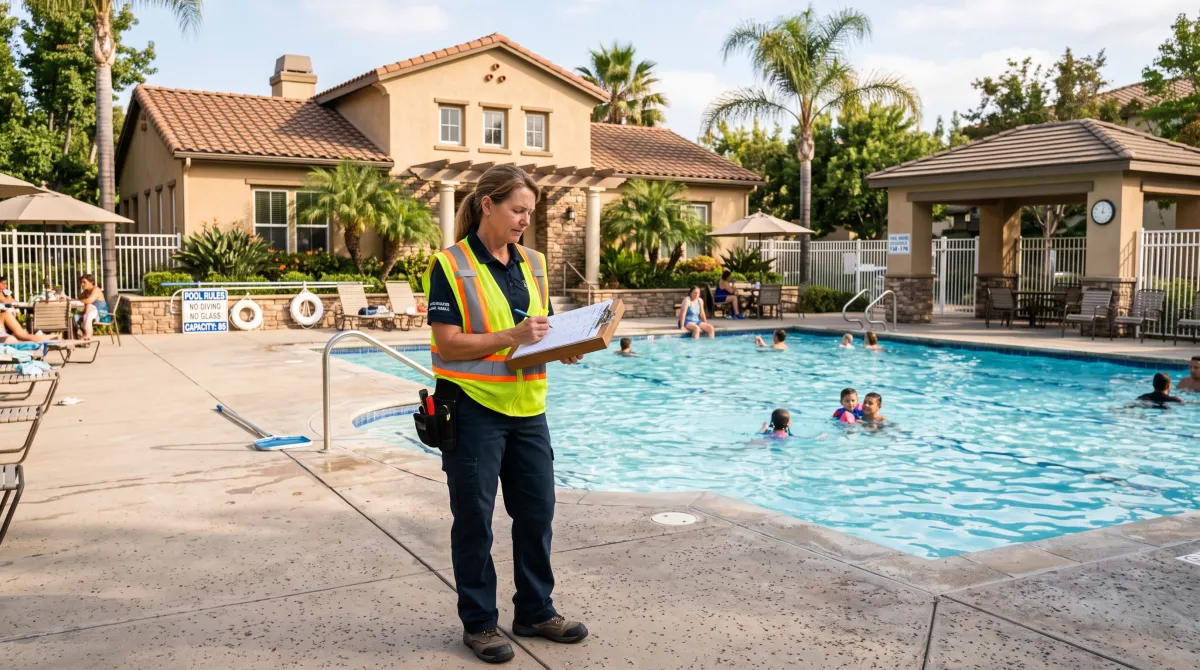
Communities with gatehouses, pools, or clubhouses often lean on workforce management software to schedule shifts and track certifications like lifeguard licenses, controlling labor costs without a full HR department. Volunteer board members who absorb that scheduling load alone risk the classic warning signs of being set up to fail at work: no budget, no authority, and an open-ended task list. Professional HOA management companies avoid this by assigning a dedicated staff member to scheduling instead of leaving it to volunteers.
Hoa Management Examples
National hoa management companies oversee thousands of communities, from small townhome associations to high-rise condos with full-time front desk staff. Scale lets them negotiate bulk vendor pricing that a single self-managed community never could.
Front desk, concierge, and amenity operations in large condo buildings often mirror hospitality management, borrowing systems built for hotels to handle package rooms, guest access, and reservations for shared spaces. Some high-rise associations even hire staff with a hospitality management background instead of a traditional property management resume, because the guest-service skills transfer directly to a resident concierge desk.
The shift toward professionalized, data-driven oversight echoes what happened decades ago in institutional finance. Wellington Management has operated as an independent investment manager since 1928, and its century-long emphasis on disciplined, process-driven handling of other people's assets is the model HOA finance committees increasingly point to when they professionalize reserve-fund oversight.
A board that runs HOA management like a business, with real budgets and real project tracking, spends fewer meetings arguing and more time actually maintaining the property.
How to Apply Hoa Management
Once a board decides who manages day to day, self-managed, a professional company, or a hybrid, the right tools carry the plan forward. Tool choice depends mostly on community size and how many active projects run at once.
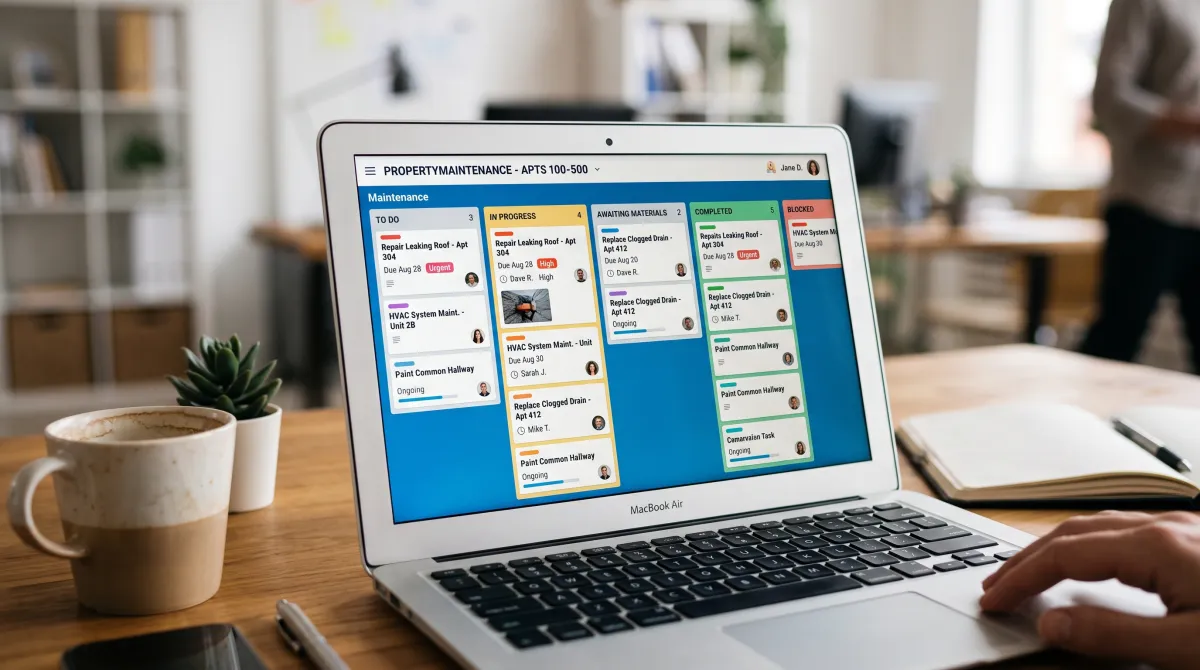
Some self-managed boards run capital projects, like roof replacements or pool resurfacing, through asana project management boards, assigning tasks such as bid collection and permit filing to specific board members with due dates.
Smaller associations often prefer trello project management for its simple Kanban boards. Fog Creek Software launched Trello in 2011, and that same free, drag-and-drop board format is still what most self-managed HOAs use to track maintenance requests from reported to scheduled to done.
Larger management companies handling dozens of properties sometimes adapt jira project management or jira service management. Atlassian released Jira in 2002 as a bug-tracking tool for software teams, and its ticketing workflow now logs resident maintenance requests with service-level agreements and escalation paths instead of software bugs.
Adopting software built for another industry is not automatic or risk-free. Boards weighing a new tool should look at both the benefits and risks of innovation before switching systems mid-year.
| Tool | Best For | Typical HOA Use |
|---|---|---|
| Trello | Simple Kanban boards | Tracking individual maintenance requests |
| Asana | Project timelines with owners | Capital improvement projects like roofing or paving |
| Jira / Jira Service Management | Ticketing at scale | Management companies handling many properties at once |
Hoa Management FAQ
What is supply chain management?
Supply chain management is the coordination of everything needed to move materials, goods, and services from suppliers to the end user, including sourcing, logistics, and inventory. For an HOA, the relevant slice is vendor and materials sourcing, ordering pool chemicals, landscaping supplies, and repair parts on schedule so maintenance work does not stall.
What are examples of supply chain management?
Classic examples include a manufacturer sourcing raw materials, a retailer managing warehouse inventory, and a hospital stocking medical supplies. HOA equivalents include a management company negotiating bulk landscaping contracts across several properties. Some associations even see reintermediation in their vendor chain, bringing back a single general contractor instead of managing five subcontractors directly.
Why is supply chain management important?
It matters because a delay or shortage anywhere in the chain stops the finished project or service from reaching the end user, driving up cost and missing deadlines. In HOA terms, one delayed vendor shipment can stall a pool reopening or leave a building without a required repair part for weeks.
How does supply chain management work?
It works by linking planning, sourcing, delivery, and logistics into one coordinated process, usually tracked through software that flags delays early. HOA management companies apply a lighter version of this: standing vendor contracts, approved supplier lists, and reserve budgeting that assumes realistic lead times for parts and labor.
What is supply chain management for beginners?
For beginners, it comes down to three questions: who supplies what, how fast can they deliver, and what happens if they cannot. Board members new to hoa management can apply those same three questions to every vendor contract before signing it.