Business Concepts
Greek Gathering Or Assembly Place Used For Business (2026)
The Greek gathering or assembly place used for business is the agora, ancient hub of trade, debate, and civic life. See how it shaped modern commerce.
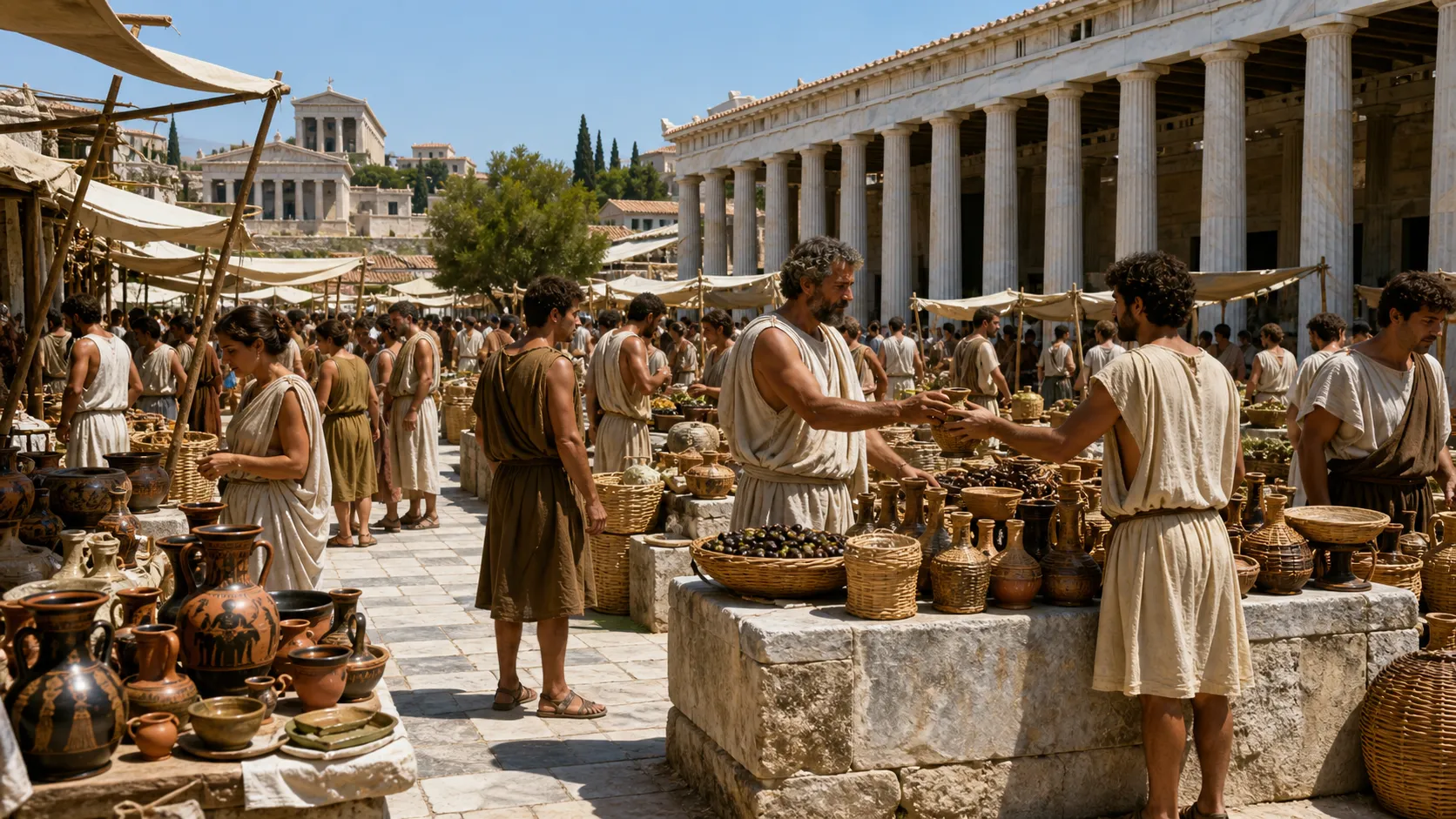
If you searched for the Greek gathering or assembly place used for business, you found the agora: the open square in ancient Greek cities where merchants sold goods, citizens debated politics, and commerce first organized itself into something recognizable today.
Quick answer
The agora was the central marketplace and public square in ancient Greek city-states, the true Greek gathering or assembly place used for business, politics, and social life. Merchants traded there daily, and the layout influenced how Western commerce later organized itself around shared marketplaces.
Key takeaways
- The agora is the Greek gathering or assembly place used for business, trade, and civic debate.
- It combined commerce, government, and social life in one open public square.
- Modern markets and shared business hubs trace their concept back to the agora model.
- Understanding the agora helps explain foundational business terms like economies of scale and working capital.
- Ancient traders already dealt with issues modern businesses track: overproduction, depreciation of tools, and cash flow.
What Is Greek Gathering Or Assembly Place Used For Business?
The Greek gathering or assembly place used for business was the agora, a name that comes from the verb "ageirein," meaning to gather. Every polis built one near its center, and it functioned as market, courthouse, and town square at once.
Merchants set up stalls under covered walkways called stoas. Farmers, potters, and metalworkers sold directly to buyers, and officials used the same space to post laws and collect taxes. You can trace the roots of today's core business concepts straight back to that single open square.
Greek Gathering Or Assembly Place Used For Business Explained
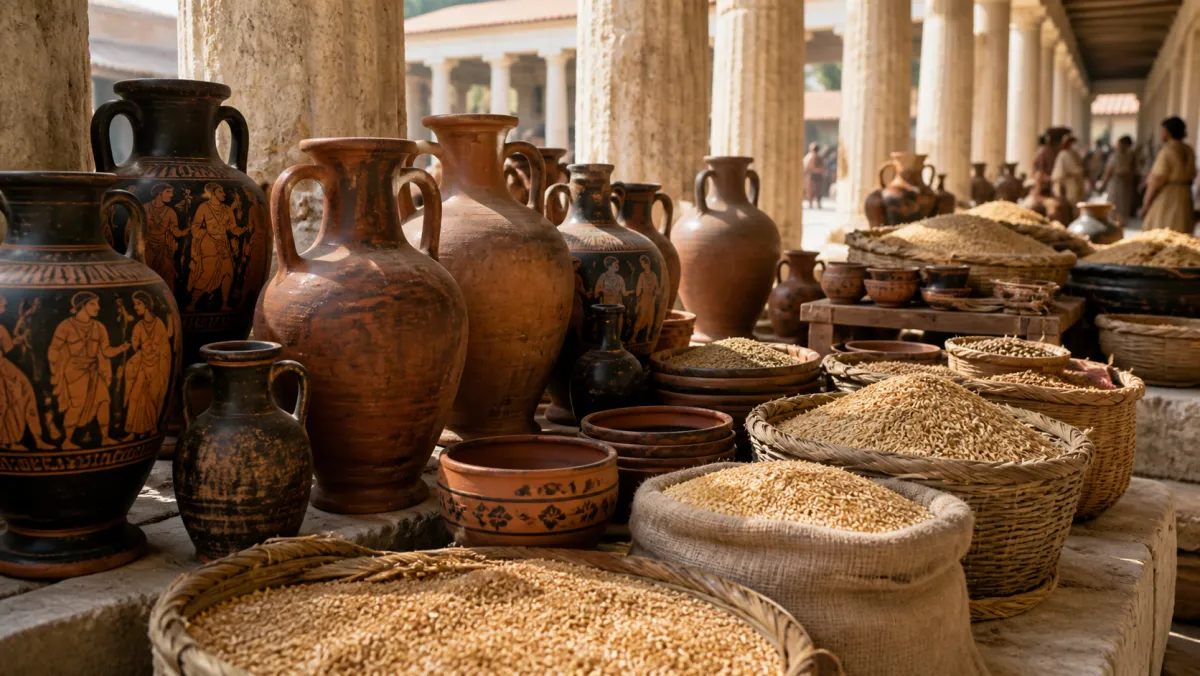
By the 5th century BCE, the Athenian agora had grown into a full commercial district. Stalls sold grain, wine, olive oil, pottery, and imported goods from across the Mediterranean. Bankers called trapezitai even offered currency exchange and short-term loans.
The agora was not only for trade. Socrates debated philosophy there, assemblies gathered to vote, and citizens settled disputes in nearby courts. That mix of commerce and civic life is why the term still gets used loosely for any hub where business and community overlap.
According to the Wikipedia entry on the agora, the design spread across Greek colonies and later influenced the Roman forum, which shaped how Western cities still lay out their commercial cores.
Greek Gathering Or Assembly Place Used For Business Examples
Several agoras survive well enough in the archaeological record to study their layout and function.
- Agora of Athens, the best documented example, with foundations of shops, a mint, and a council building still visible today.
- Agora of Corinth, known for its role in regional trade between mainland Greece and the colonies.
- Agora of Ephesus, later expanded under Roman rule into a major commercial forum.
- Agora of Delos, which became a major hub for the shipping trade in the Hellenistic period.
Each site shows the same pattern: shops ringing an open square, a place for public speech, and easy access from the roads merchants used to bring in goods.
How to Apply Greek Gathering Or Assembly Place Used For Business
The agora's traders were not doing modern accounting, but they were solving the same problems. Looking at their daily routine is a fast way to understand the business terms still taught today.
A cart or set of scales lost value every season it got used. That is the depreciation meaning in plain terms: an asset wears down with use and time. The formal depreciation definition in accounting spreads that same decline as an expense across the asset's useful life, instead of taking the full cost as a loss in year one.
A potter who fired too many amphorae in one batch faced overproduction: unsold jars piling up in the stall, tying up cash that should have gone toward new clay and fuel. Overproduction is still one of the fastest ways a business bleeds working capital today.
Traders who bought olive oil straight from a large press, instead of a small grove, paid less per jar because the seller spread fixed costs across more volume. That is the economies of scale definition in action: unit costs drop as output rises.
Economists studying long-run cost curves still point back to marketplace bulk-buying as a clear real-world case of the economies of scale concept on Wikipedia, the same idea that explains why big-box retailers underprice small shops today.
Every morning, a stallholder needed enough coins on hand to buy fresh stock before the day's sales came in. That reserve is close to the working capital definition used today: current assets minus current liabilities, the buffer that keeps daily operations running.
Tracking coins in and coins out, day by day, is the ancient version of the cash flow definition: the movement of money through a business over a set period, separate from paper profit.
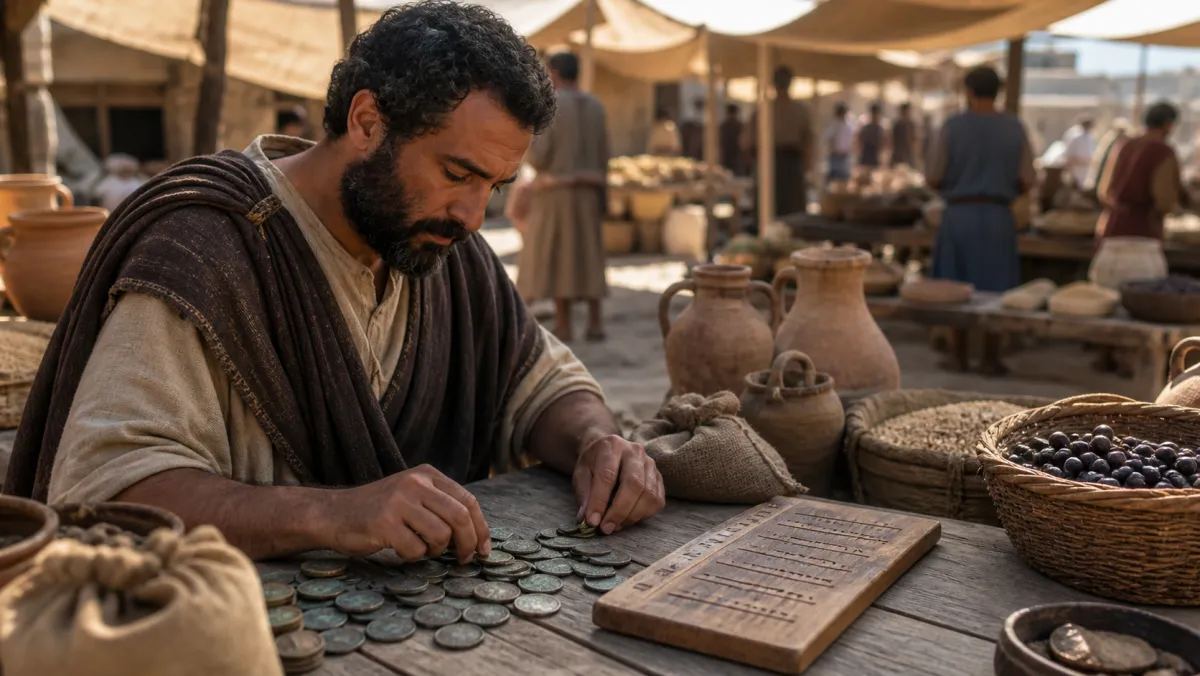
When a merchant let a trusted buyer take goods now and pay next market day, that unpaid balance matched the accounts receivable definition. The accounts receivable meaning has not changed since: money a business is owed but has not yet collected.
A trader's monthly tally board, listing goods owned against debts owed to suppliers, worked like a simple balance sheet definition. The balance sheet meaning is still a snapshot: what you own, what you owe, and what is left over as equity, all on one date.
The wine seller who bought a jar for ten coins and sold it for fifteen kept a third of the sale as profit. That markup is the gross margin definition, and the gross margin meaning is simply revenue left after subtracting the direct cost of what was sold.
The same square that hosted these deals also hosted power struggles. Some traders got squeezed out by rivals with better political connections, not unlike the signs you are being set up to fail at work that show up in modern offices when politics override merit.
As Greek trade routes matured, new classes of brokers and agents inserted themselves between producers and buyers, a pattern economists now call reintermediation. Middlemen added cost, but they also added trust and reach that a lone farmer could not offer alone.
The agora also rewarded traders who tried new layouts, new credit terms, or new goods first. That willingness to experiment, and to accept the occasional failed idea, lines up with the benefits and risks of innovation that still apply to any business testing something unproven.
The agora proves markets never needed algorithms to work, just a shared square, honest weights, and traders willing to show up every day.
Greek Gathering Or Assembly Place Used For Business: FAQ
What is a balance sheet, and what are some balance sheet examples?
A balance sheet is a snapshot of what a business owns, owes, and retains in equity on a single date. Balance sheet examples typically list cash, inventory, and equipment as assets, loans and accounts payable as liabilities, and the owner's stake as equity.
What is accounts receivable?
Accounts receivable is money customers owe a business for goods or services already delivered but not yet paid for. It sits on the balance sheet as an asset until the customer settles the invoice.
What is working capital?
Working capital is the cash and short-term assets a business keeps on hand to cover daily expenses, calculated as current assets minus current liabilities. It is what keeps the lights on between sales.
What do profit and loss statement examples usually include?
Profit and loss statement examples typically show revenue at the top, followed by cost of goods sold, operating expenses, and a final net income or loss figure. It covers a set period, such as a month or a quarter, unlike the balance sheet's single-day snapshot.
What is gross margin?
Gross margin is the percentage of revenue left after subtracting the direct cost of producing or acquiring what was sold. A trader who bought oil for ten coins and sold it for fifteen kept a gross margin of about 33 percent.