Workplace & Career
Follow Up Email After Interview (2026): Templates That Work
Send a follow up email after interview within 24 hours. Get templates, subject lines, and timing that turn silence into real replies from hiring managers.

A follow up email after interview is the short, specific note you send within a day of meeting a hiring team to restate interest and add one detail the interview didn't cover. Most candidates skip it or send something generic, which is exactly why a sharp one stands out. This guide covers timing, subject lines, and full-length templates for standard, behavioral, and promotion interviews.
Quick answer
Send a follow up email after interview within 24 hours, referencing one specific moment from the conversation and restating why you fit the role. Keep it under 150 words, use a clear subject line, and send a separate note to each interviewer on a panel.
Key takeaways
- Send your follow up email after interview within 24 hours, not a week later.
- Reference one specific detail from the conversation, not a generic thank you.
- If the interview covered behavioral interview questions or star interview questions, echo the story you told.
- Promotion interview questions call for a follow-up tied to team goals, not just gratitude.
- An interview thank you email and a follow-up email do different jobs: one closes the loop, the other opens the next one.
What Is Follow Up Email After Interview?
A follow up email after interview is a short message sent after a job interview that thanks the interviewer, reinforces your fit for the role, and adds anything you did not get to say. It is not the same as a generic interview thank you email, which usually stops at gratitude.
Hiring teams read dozens of these a week, and most workplace follow-up habits fail for the same reason: they repeat what the interviewer already knows. Employer expectations have shifted toward follow-ups that reference the actual conversation, not a template with the company name swapped in.
A CareerBuilder survey of hiring managers found that 22% are less likely to hire a candidate who never sends any follow-up after the interview, which is exactly the gap a specific note closes.
Follow Up Email After Interview Explained
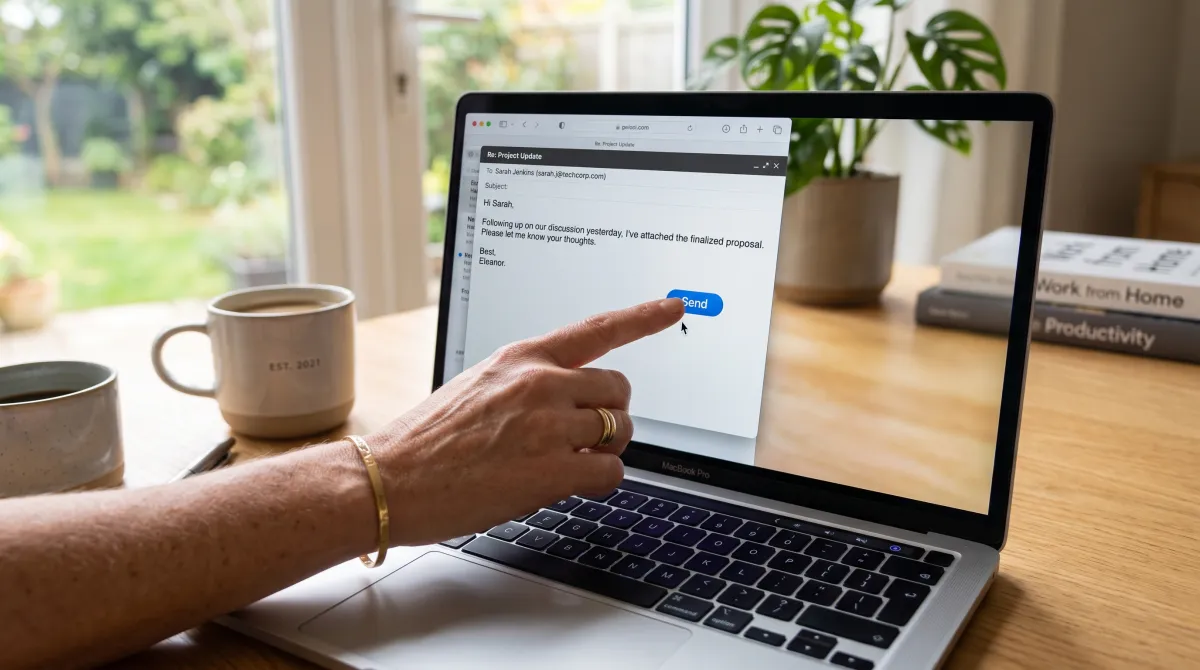
The mechanics matter as much as the message. Send it within 24 hours, use a subject line that names the role, and keep the body under 150 words so it reads on a phone in under 30 seconds.
Subject Line Formula
Use "Thank you, [Your Name], [Role Title] interview" or "Following up: [Role Title] interview on [Date]." Both formulas let a busy recruiter find your email in a crowded inbox without opening it first.
Timing Rules
Same-day is fine if the interview ended in the morning. Anything past 48 hours reads as an afterthought, since most hiring teams debrief and rank candidates within two days of the conversation, according to Indeed's hiring guides. If you interviewed with a panel, send a separate note to each person referencing something they specifically asked.
Behavioral and STAR Interview Follow-Ups
If the interview leaned on behavioral interview questions, your follow-up should echo the story, not restate that you "enjoyed the conversation." Behavioral interview questions ask how you handled a real situation, and interviewers remember the story more than the resume line.
Most behavioral interview questions expect a star interview questions structure: Situation, Task, Action, Result. Your follow-up email is the second chance to sharpen the Result line if you rushed it live, since a specific outcome number often lands better in writing than out loud.
Example line: "Thinking more about the team-conflict question, the result was a 15% drop in missed deadlines over the next quarter, which I did not mention in the room."
Follow Up Email After Interview Examples
Below are three short templates. Swap the bracketed details, keep the length, and send within 24 hours of the interview.
Standard Follow-Up Example
"Hi [Name], thank you for walking me through the [team] structure today. Your point about [specific detail] confirmed this is the kind of problem I want to work on. Happy to send anything else that helps the decision. [Your name]"
Behavioral or STAR-Reference Example
"Hi [Name], thanks for the conversation about [project]. One number I left out on the conflict question: the fix cut missed deadlines by 15% over the following quarter. Let me know if a reference or work sample would help."
Promotion Interview Follow-Up Example
"Hi [Name], thank you for discussing the [role] move today. The team goal you mentioned, [goal], lines up with what I have been building in [current project]. I would welcome the chance to keep contributing at that level."
Promotion interview questions typically probe how you will grow the team, not just yourself, so make sure your follow-up answers that instead of only expressing gratitude. If you are unsure whether the internal move is even on the table, the signs your boss wants to promote you before this conversation started are worth checking first.
How to Apply Follow Up Email After Interview
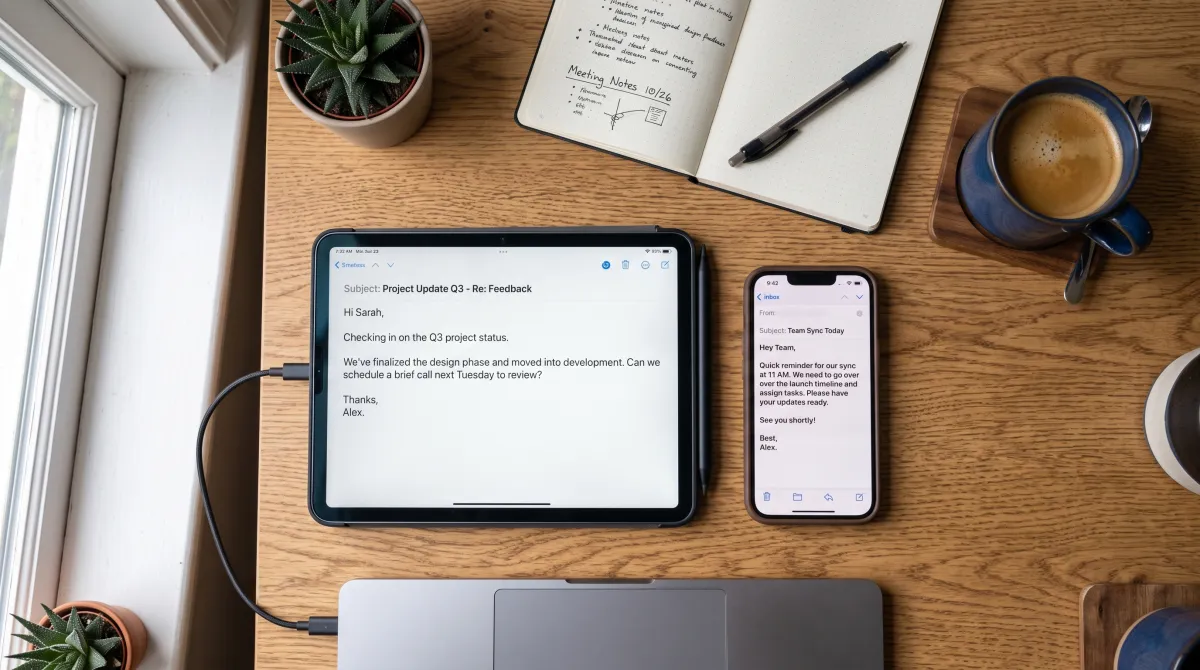
Match the follow-up to the interview type. A standard first-round interview, a panel, and a promotion interview each call for a different timing and channel, summarized below.
| Interview Type | When to Send | Channel | What to Reference |
|---|---|---|---|
| Standard first interview | Within 24 hours | One detail from the conversation | |
| Behavioral or STAR-heavy interview | Within 24 hours | The result you may have rushed live | |
| Panel interview | Within 24 to 48 hours | Separate email per panelist | Something specific each person asked |
| Promotion or internal interview | Within 24 hours | Email, or the tool your team already uses | How your case ties to team goals |
| Final-round interview | Within 24 hours | Email, cc the recruiter | Salary or start-date logistics if raised |
Copy the "What to Reference" column into your draft before you write a single sentence. It forces specificity, which is the one thing a generic interview thank you email never has.
A follow up email after interview that could have been sent to any candidate gets read like it was.
What Happens After You Send It
Your follow-up is not the last step. Most hiring teams move straight into reference checks, and employer expectations there are more specific than candidates assume. The Society for Human Resource Management reports that filling an open role takes an average of 44 days, so staying visible after your interview still matters weeks later.
Recruiters calling your references almost always open with some version of "in what capacity do you know the applicant" or "in what capacity have you known the applicant," before asking about work life balance interview questions and workplace culture interview questions the candidate raised.
Coach your references ahead of time. If a recruiter asks in what capacity you know the candidate, a one-line, confident answer, "we worked on the same product team for two years," lands better than a pause. See the full breakdown of the in what capacity you know the candidate answer patterns recruiters actually use.
Some companies now fold employee retention interview questions into this stage too, asking references how long the candidate typically stays in a role. If workplace culture interview questions came up in your interview, and you are weighing whether the team itself is healthy, it is worth reading the warning signs in jealous female coworkers signs before you accept, since culture problems rarely show up in the interview room.
Follow Up Email After Interview: FAQ
How long should I wait to send a follow up email after interview?
Send it within 24 hours. Waiting past 48 hours reads as an afterthought to most hiring teams.
What should an interview thank you email include that a follow-up should not repeat?
An interview thank you email says thanks and confirms interest; a follow-up email adds one new detail, like a number you left out during a STAR interview questions answer.
What are good questions for an exit interview?
Good questions for an exit interview ask what made the employee start looking, what would have kept them, and how manager support compared with the employer expectations set at hiring.
Is there a difference between a question for exit interview and interview exit questions?
No, both phrases describe the same thing: the structured questions HR asks a departing employee, distinct from the interview exit questions asked of finalists who withdraw before an offer.
What does interview exit mean if I already sent my follow-up email?
Interview exit refers to leaving the hiring process, either by withdrawing or being declined, and it has no effect on a follow-up email you already sent in good faith.