Business Concepts
Construction Project Management: Steps & Software (2026)
Construction project management explained: the 6 steps, free tools like Trello and Asana, real examples, and interview questions for construction PMs.
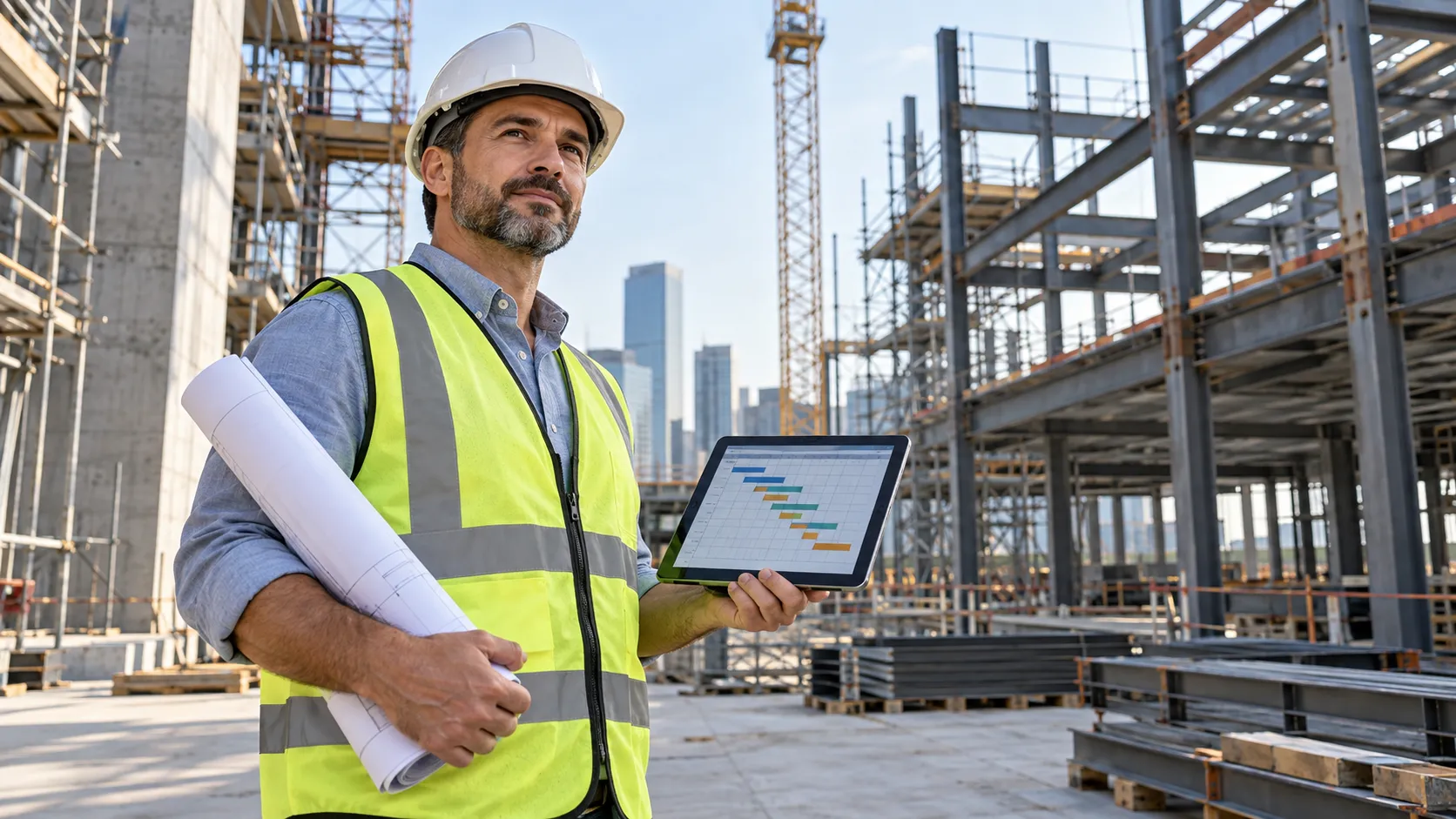
Construction project management is the discipline that keeps a building project on schedule, on budget, and within scope, from the first blueprint to the final walkthrough. It borrows tools from general project management but adds trade coordination, permits, and jobsite safety into the mix. Get it wrong and a six-month job turns into a year of change orders.
Quick answer
Construction project management is the process of planning, scheduling, and overseeing a construction project from design through handover, covering budget, subcontractors, permits, and safety. It follows the same phases as general project management, initiation, planning, execution, monitoring, and closing, but adds construction-only steps like submittals, RFIs, and punch lists that generic software rarely models well.
Key takeaways
- Construction project management follows the same five phases as standard project management, plus construction-only steps like submittals and punch lists.
- The project management definition PMI uses, applying knowledge, skills, and tools to meet requirements, still holds on a jobsite, just with trades instead of departments.
- Free project management software like Trello and Asana can run a small renovation; larger general contractors usually need dedicated construction platforms or enterprise project portfolio management software.
- Agile project management tools borrowed from software teams now show up on construction sites for punch-list sprints, not full agile ceremonies.
- Interview questions for a construction project manager role test schedule recovery and subcontractor conflict skills more than software knowledge.
What Is Construction Project Management?
Construction project management is the planning and coordination of a building project's schedule, budget, and trades from design through occupancy. It applies general project management skills to a physical site where weather, permits, and subcontractors add risk that an office project rarely faces.
The project management definition most teams use, laid out by the Project Management Institute, describes it as applying knowledge, skills, tools, and techniques to project activities to meet requirements. PMI's version maps directly onto a jobsite: requirements become drawings and specs, and project activities become framing, rough-in, and finishes.
The project management meaning shifts slightly once concrete and steel enter the picture. A missed software sprint costs a team a few days; a missed concrete pour can cost weeks, since a new pour date depends on weather, inspectors, and a crew's next open slot. For more foundational business concepts like this one, see our business concepts hub.
Construction Project Management Explained
A construction project manager runs the same core project management skills as any other PM: scope control, scheduling, budget tracking, and stakeholder communication. The difference is who sits across the table, architects, subcontractors, inspectors, and owners, often all in one meeting.
A general contractor's core job is a form of reintermediation: standing between an owner and dozens of specialized trades so the owner never has to coordinate framers, electricians, and inspectors directly.
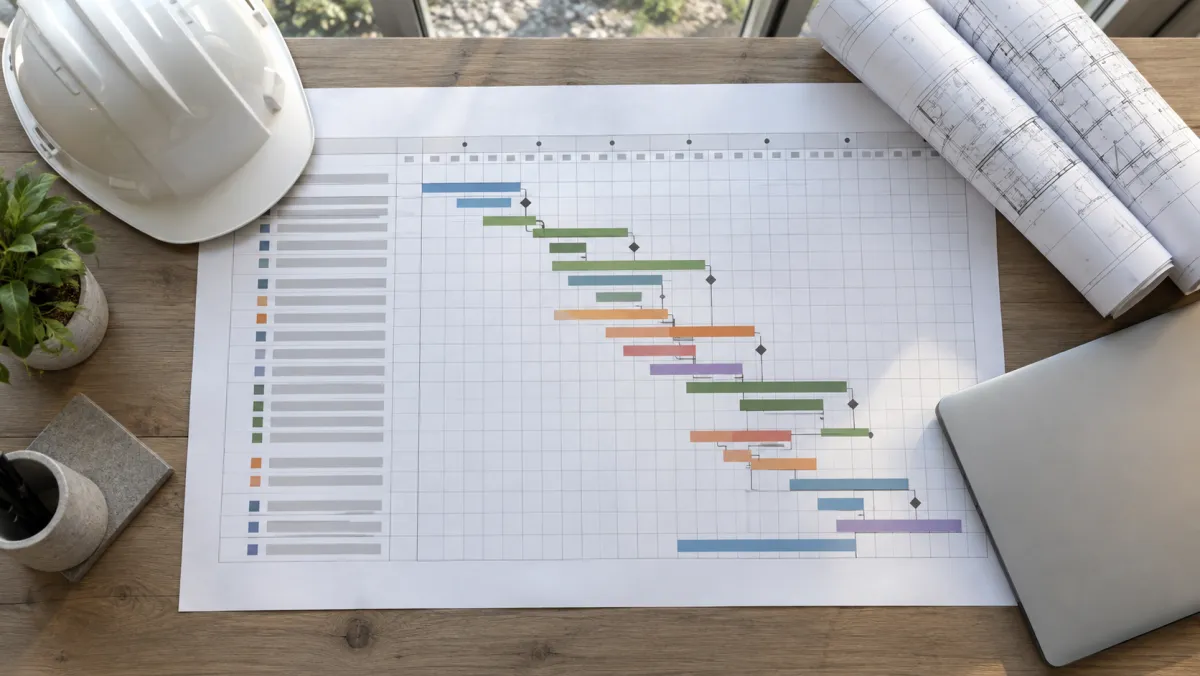
Textbooks describe several types of project management, including waterfall, agile, and hybrid approaches. Construction has run a waterfall-style process for centuries: design, then permit, then build, then close out, because you cannot frame a wall before the foundation cures.
The critical path method, still used to schedule construction projects today, was developed in the late 1950s by DuPont and Remington Rand, according to Wikipedia. The Gantt chart, still the default way many builders visualize that schedule, was popularized by engineer Henry Gantt in the 1910s, according to Wikipedia. Every modern construction schedule, whether built in a spreadsheet or enterprise software, still traces its logic back to these two methods.
Large general contractors managing dozens of active jobs often outgrow single-project tools and move to enterprise project portfolio management software. These platforms roll every job's schedule, budget, and risk into one dashboard so an executive can see which sites are behind before a client calls to ask.
How to Apply Construction Project Management
Most crews follow the same project management step by step sequence, even if nobody writes it down. Skipping a step is usually where budgets slip.
- Define scope and budget. Lock drawings, specs, and a budget before permits go in, since every change after this point costs time and money.
- Secure permits and bids. Submit for permits while collecting subcontractor bids in parallel, not in sequence, to save weeks.
- Build the schedule. Sequence trades on the critical path, framing before drywall, rough electrical before insulation, and build in float for inspections.
- Run submittals and RFIs. Approve materials and answer requests for information before the trade that needs them shows up on site.
- Track progress and change orders. Log daily progress, compare it to the schedule weekly, and price every change order before work starts, not after.
- Close out with a punch list. Walk the finished space, list every remaining item, and confirm the owner signs off before final payment and retainage release.
Some general contractors now borrow agile project management tools, short sprints and daily stand-ups, for the punch-list phase, where dozens of small fixes need fast tracking. Full agile rarely fits the earlier design-and-permit phases, since those still run in a fixed sequence.
A construction schedule is only as good as the last trade that showed up on time, software does not pour concrete.
Free Project Management Software for Construction Teams
A small remodeling crew rarely needs a dedicated construction platform. Free project management software built for general teams often covers the basics: task lists, a shared calendar, and file storage for permits and photos.
Asana project management works well for a general contractor's office side, tracking bids, contracts, and client communication across a small team. Trello project management fits site supervisors who just need a visual board for open punch-list items and daily tasks. Jira project management, built for software issue tracking, rarely fits a jobsite, but some larger builders adapt its ticketing model for RFI tracking anyway.
Jira launched in 2002 as a bug and issue tracker before evolving into a broader work-tracking platform, according to Wikipedia, which is why its workflow still feels foreign on a construction site built around trades, not tickets.
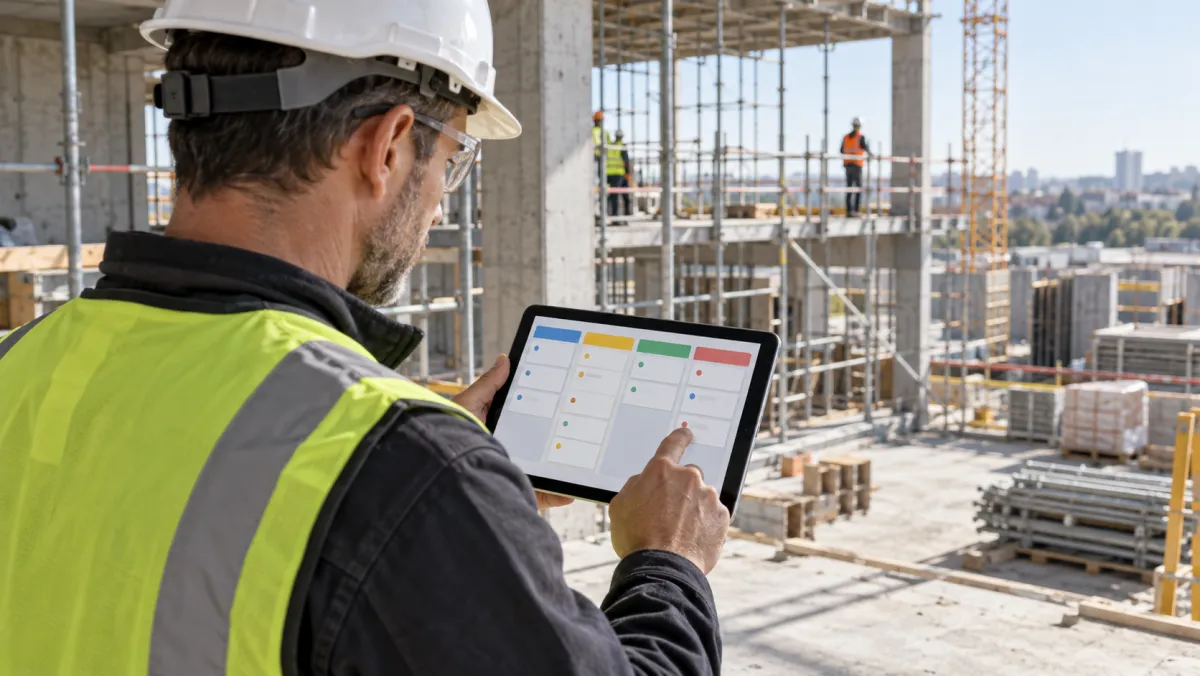
| Tool | Best fit on a jobsite | Free tier |
|---|---|---|
| Trello | Site supervisors, punch lists, kanban boards | Yes |
| Asana | Office side: bids, contracts, client updates | Yes, small teams |
| Jira | RFI and ticket tracking on larger builds | Yes, small teams |
Adopting any of these tools carries the same benefits and risks of innovation as any new jobsite process: faster fixes and better visibility on one hand, an unfamiliar workflow for crews on the other. Once a builder runs several active sites at once, dedicated construction software with Gantt views, budget tracking, and daily logs usually replaces these general tools.
Construction Project Management Examples
A kitchen remodel is the simplest construction project management example: one general contractor, three or four trades, and a schedule measured in weeks. The PM's main job is sequencing plumbing and electrical before drywall closes the walls.
A mid-size commercial build adds layers: an architect, a structural engineer, a mechanical contractor, and a city inspector all touch the same schedule. Change orders here often trace back to a design detail nobody caught before permits were pulled.
A hospital or school addition sits at the top of the complexity scale, with life-safety code, phased occupancy, and dozens of subcontractors running in parallel. These projects lean hardest on enterprise project portfolio management software, since one missed inspection can delay an entire wing's opening.
Across all three examples, the PMs who catch problems early share one habit: they read the schedule handed to them on day one skeptically. Candidates who spot signs you are being set up to fail at work, like a schedule with no float built in, should raise it before accepting the role.
Project Management Interview Questions
Hiring managers testing for a construction project manager role lean on scenario questions more than software trivia. A candidate who can talk through a real schedule recovery says more than one who lists every tool on their resume.
- Walk me through a time a subcontractor fell behind schedule. What did you do?
- How do you handle a change order the owner disputes mid-project?
- Describe how you track submittals and RFIs on a live job.
- What is your process when an inspection fails?
- How do you decide between a schedule recovery plan and paying for overtime?
These project management interview questions work because they surface judgment under pressure, the part of the job no software license teaches. Strong answers usually include a number: days recovered, dollars saved, or trades re-sequenced.
Construction Project Management FAQ
What is project management?
Project management is the practice of planning, organizing, and overseeing resources to complete a specific goal within a set scope, budget, and timeline. In construction, that goal is a finished, inspected building.
What is the best project management software for construction?
There is no single best project management software for every builder; small crews often do fine with free tools like Trello or Asana, while larger general contractors need dedicated construction platforms with daily logs and budget tracking built in.
What are some project management examples in construction?
Common examples include a kitchen remodel, a mid-size commercial build-out, and a hospital or school addition, each adding more trades, inspections, and coordination as scope grows.
What project management tools work for a construction startup?
A new construction business usually starts with free project management software, a shared calendar, and a simple spreadsheet for budgets, then adds a dedicated construction platform once it juggles more than two or three active jobs.
What is the top project management software in 2026?
Rankings shift by category: Asana and Trello lead for general task tracking, Jira leads for engineering ticket workflows, and dedicated construction platforms lead once a builder needs daily logs, RFIs, and budget tracking in one place.